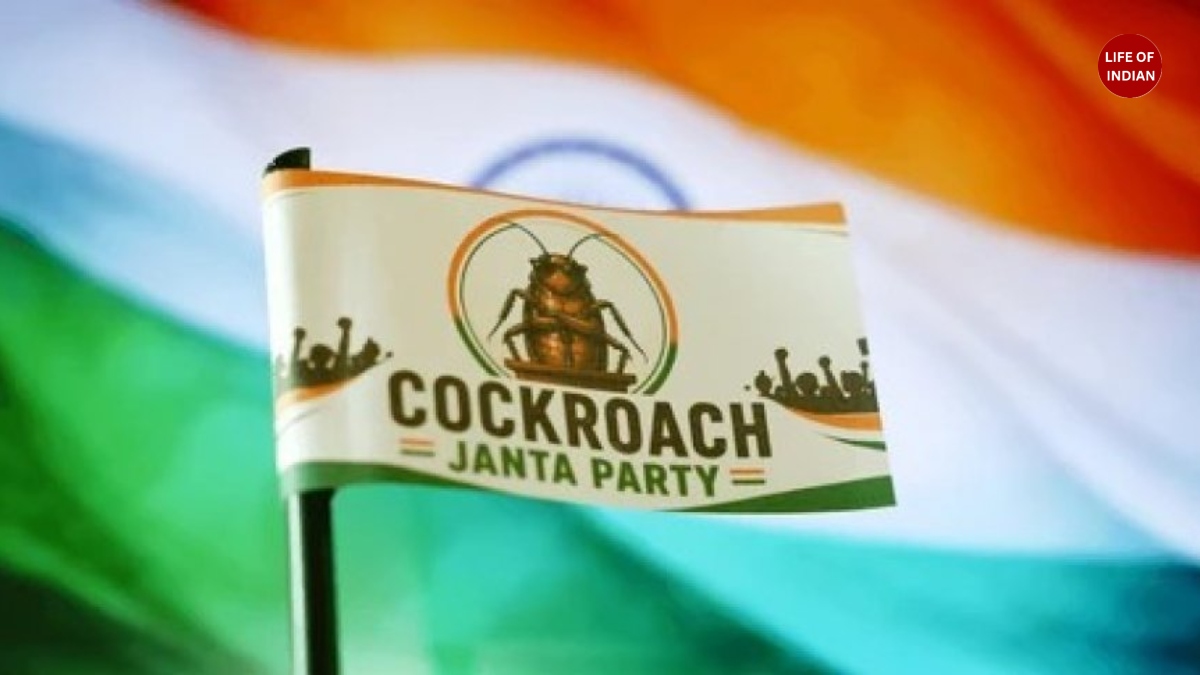
A mic and a mobile phone—that was all it took for a group of young protesters calling themselves the “Cockroach Janata Party (CJP)” to turn Jantar Mantar into a space of defiance and disquiet on June 20. Thousands of students, many of them aspirants of fiercely competitive examinations like NEET, gathered in Delhi to protest what they describe as a repeating cycle of paper leaks, abrupt cancellations, systemic fraud, and technical failures that have come to define India’s examination landscape.
Their message was not wrapped in restraint. It was sharp, sometimes uncomfortable, and deliberately unfiltered. But it was precisely this bluntness that seemed to unsettle many. Was the discomfort triggered by their direct attack on corruption in the education system? By their demand for the resignation of the Union Education Minister? Or by the larger unease surrounding a youth-led, satirical political identity challenging institutional authority?
The tension engulfed more in Jaipur on June 15, CJP founder Abhijeet Dipke was allegedly assaulted during a protest, an incident that further amplified the group’s sense of being both unheard and unwelcome. He was reportedly attacked while being carried on the shoulders of supporters, addressing a gathering on exam leaks and unemployment.
The origins of the movement itself trace back to controversial remarks allegedly attributed to Chief Justice of India Surya Kant, where critics and unemployed youth were described in a manner that sparked outrage and satire-driven political expression.
The remarks, later clarified as being “misinterpreted” and directed at individuals with fraudulent credentials, nevertheless became a rallying point for the protesters, who adopted the term “cockroach” in defiant irony.
The protest also saw participation from activist Sonam Wangchuk, who struck a reflective tone, saying, “I don’t like protest, but we have to do it for justice.”
Meanwhile, the backdrop to the agitation remains grimly familiar. The NEET UG 2026 examination was cancelled following allegations of irregularities, with a re-examination scheduled shortly after. For over 22 lakh candidates, the cancellation was not just an administrative decision—it was a disruption of months, sometimes years, of preparation, uncertainty, and emotional strain.
Despite enhanced security measures involving central forces for the handling of examination material, questions persist. Can surveillance restore trust once it is broken? Can logistics fix what is fundamentally a crisis of credibility?
For many students, especially those from modest backgrounds, each cancelled exam carries consequences beyond academics, delayed futures, financial strain, and in some cases, intensified social pressure.
An investigation cited by The Indian Express highlighting 45 major paper leak incidents between 2002 and 2025 only deepens the sense of systemic fatigue. Convictions remain rare, and accountability even rarer.
Yet, what the protesters demanded was not revolution, but reliability, a system where examinations are not suspense dramas and where merit does not dissolve in administrative failure.
Ironically, as voices rose in protest across two cities, much of mainstream media attention appeared muted or selective. But the symbolism of the moment lingered, the slap on the protest leader Dipke, the silence of institutions, and the louder question of who gets heard in a system increasingly defined by distrust.
In the end, the protest was not just about exams. It was about faith, slowly eroding, repeatedly tested, and increasingly difficult to restore.