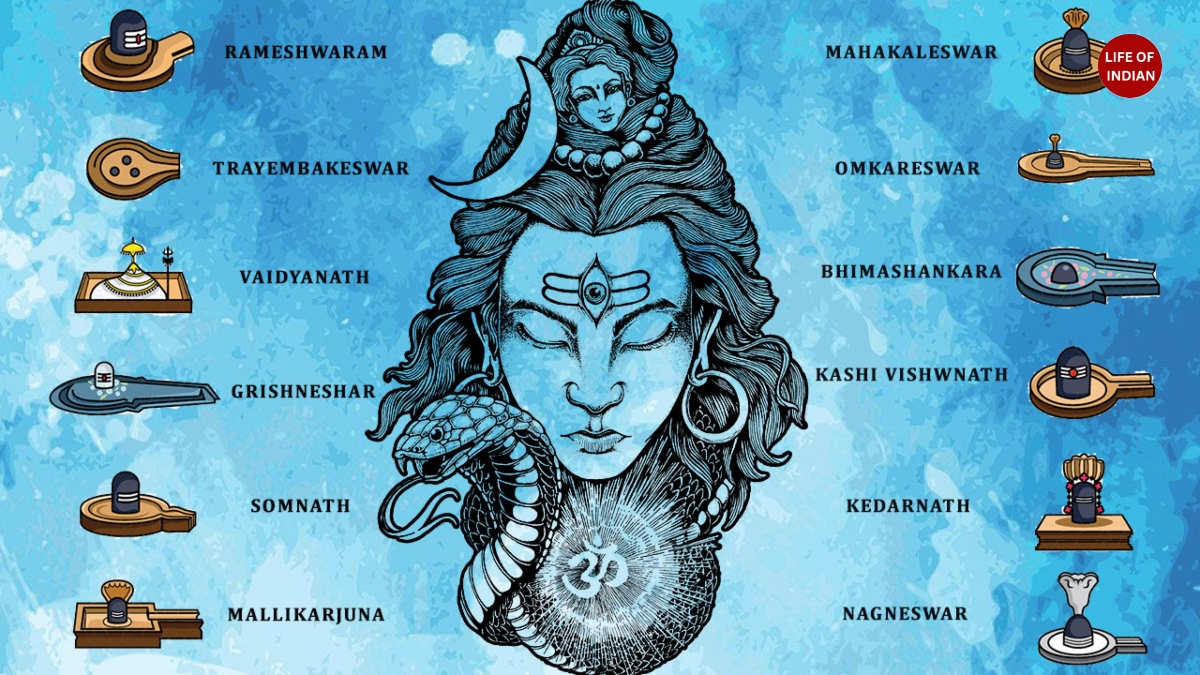
There are places where people go to admire history. There are places where people seek peace. And then there are places where people believe they can experience the presence of the Divine itself. Across the length and breadth of India, millions of devotees undertake arduous journeys every year—crossing mountains, walking through dense forests, standing in long queues for hours, and enduring every hardship with unwavering faith. Their destination is not just a temple; it is one of the 12 sacred Jyotirlingas, where Lord Shiva is believed to have manifested Himself as an infinite pillar of divine light.
For centuries, these holy shrines have attracted saints, kings, scholars, and ordinary devotees alike. Empires have risen and fallen, temples have been destroyed and rebuilt, yet the faith surrounding the Jyotirlingas has remained unshaken. Even today, the chant of “Har Har Mahadev” echoes through these sacred sites, reminding millions that some lights can never be extinguished.
But what makes a Jyotirlinga so special? Why are there only twelve Jyotirlingas in India? What is the difference between a Shivling and a Jyotirlinga? Why did Lord Shiva appear in the form of an infinite pillar of light? And what is the spiritual significance behind these sacred shrines that continue to inspire millions across generations?
To answer these questions, we must journey back thousands of years into the pages of the Shiva Purana, where one of Hinduism’s most profound and fascinating legends unfolds.
What Is a Jyotirlinga?

The word Jyotirlinga is derived from two Sanskrit words:
- Jyoti means divine light, radiance, or eternal brilliance.
- Linga means symbol or the cosmic manifestation of Lord Shiva.
Together, the word Jyotirlinga means “The Radiant Symbol of Lord Shiva” or “The Infinite Pillar of Divine Light.”
Unlike an ordinary Shivling installed in temples by devotees, a Jyotirlinga is believed to be Swayambhu—self-manifested by Lord Shiva Himself. According to the Shiva Purana, these sacred shrines mark the places where Lord Shiva appeared in the form of an endless column of divine light, revealing that He is infinite, formless, and beyond the limits of time and space.
The Story Behind the First Jyotirlinga
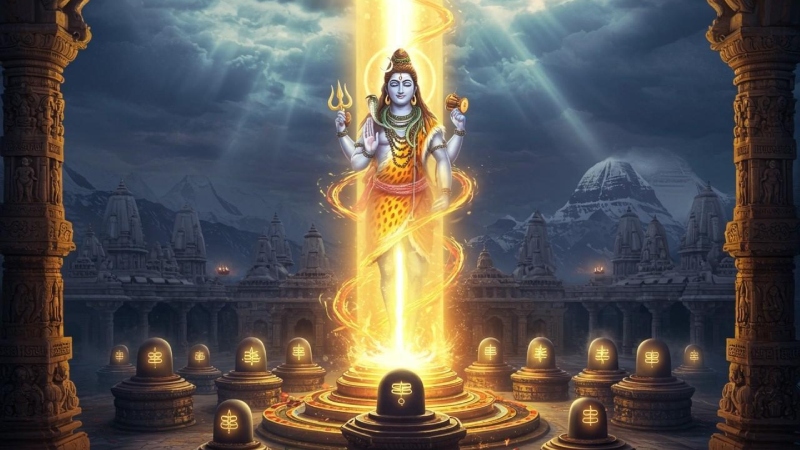
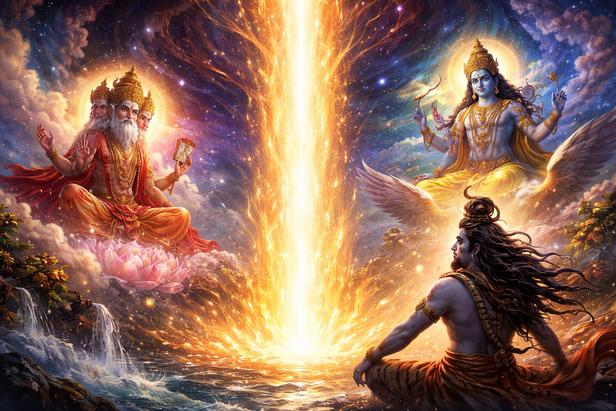
The origin of the Jyotirlinga is beautifully described in the Shiva Purana. Long ago, Lord Brahma, the creator of the universe, and Lord Vishnu, the preserver, entered into an argument. Both believed they were supreme.
Their debate soon turned into a contest of power. As the conflict intensified, the entire universe trembled. At that very moment, an unimaginably brilliant pillar of light appeared between them. The light stretched infinitely toward the heavens and infinitely into the depths below. Neither its beginning nor its end could be seen. The pillar radiated such divine energy that even Brahma and Vishnu were astonished. To settle their dispute, they agreed on a challenge.
- Lord Brahma flew upward in the form of a swan to find the top of the pillar.
- Lord Vishnu transformed into a boar (Varaha) and journeyed downward to find its base.
They searched for what seemed like eternity. But neither could discover the beginning nor the end of the divine light. Lord Vishnu returned and humbly admitted his inability to find the end. Lord Brahma, however, falsely claimed that he had reached the top. At that moment, the infinite pillar of light transformed into Lord Shiva. Shiva revealed that the endless pillar was His true cosmic form. Because Brahma had spoken falsely, Lord Shiva declared that Brahma would never be widely worshipped on Earth.
Lord Vishnu, who accepted the truth with humility, received Shiva’s blessings. This infinite pillar of light became known as the Jyotirlinga. The story teaches that God has neither beginning nor end. He is beyond time, beyond space, and beyond human understanding.
What Does the Jyotirlinga Symbolize?
The Jyotirlinga is not merely a sacred stone or temple idol. It represents profound spiritual truths.
It symbolizes:
- The infinite nature of the universe.
- The formless existence of God.
- The union of creation, preservation, and destruction.
- The victory of truth over ego.
- The eternal light of consciousness.
In Hindu philosophy, Shiva is not simply a deity. He is considered the Supreme Consciousness that exists within every living being. The Jyotirlinga reminds devotees that the divine light they seek outside already exists within themselves.
Why Is It Called a Linga?
Many people mistakenly associate the word Linga with only its physical appearance. However, ancient Sanskrit texts describe a much deeper meaning.
The word Linga means:
- Symbol
- Sign
- Mark
- Cosmic representation
According to Hindu philosophy, the Shivling represents the infinite universe. Its rounded upper portion symbolizes endless cosmic energy, while the circular base represents Shakti, the divine feminine energy. Together, Shiva and Shakti represent the balance that sustains creation.
What Is the Difference Between a Shivling and a Jyotirlinga?
Although both are sacred symbols of Lord Shiva, they are not the same.
Shivling
A Shivling may be installed in any Shiva temple. It can be carved from stone, marble, crystal, metal, or other sacred materials. Devotees worship these Shivlings daily across India and around the world.
Jyotirlinga
A Jyotirlinga is believed to be Swayambhu, meaning self-manifested by Lord Shiva Himself. Each Jyotirlinga is associated with a specific divine event described in ancient scriptures. These twelve shrines are considered the most sacred abodes of Lord Shiva.
Simply put, Every Jyotirlinga is a Shivling, but not every Shivling is a Jyotirlinga.
Why Are There Exactly 12 Jyotirlingas?
One of the most common questions is:
Why only twelve?
According to the Shiva Purana, Lord Shiva manifested Himself in the form of divine light at twelve different places to bless His devotees. Each Jyotirlinga represents a unique aspect of Shiva’s cosmic power.
These twelve sacred manifestations symbolize qualities such as:
- Compassion
- Protection
- Healing
- Wisdom
- Liberation
- Courage
- Forgiveness
- Prosperity
- Spiritual awakening
Together, they form a spiritual journey across India, guiding devotees toward self-realization.
The 12 Jyotirlingas of India
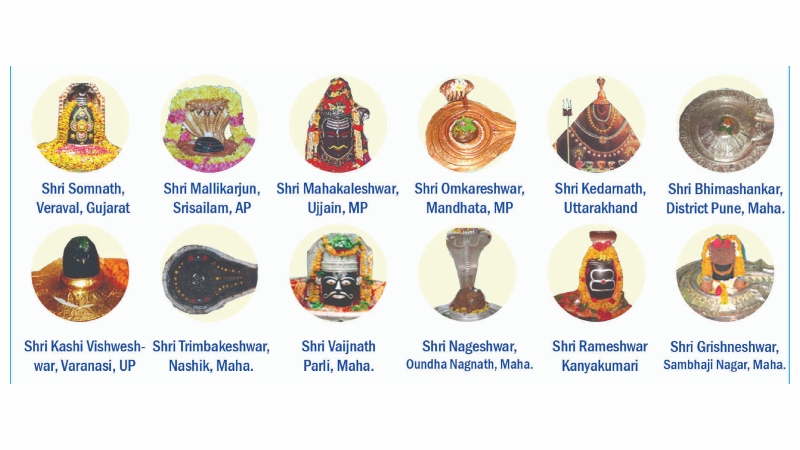
The twelve Jyotirlingas are spread across different regions of India, each carrying its own legend and spiritual significance.
- Somnath – Gujarat
- Mallikarjuna – Andhra Pradesh
- Mahakaleshwar – Madhya Pradesh
- Omkareshwar – Madhya Pradesh
- Kedarnath – Uttarakhand
- Bhimashankar – Maharashtra
- Kashi Vishwanath – Uttar Pradesh
- Trimbakeshwar – Maharashtra
- Vaidyanath (Baidyanath) – Jharkhand
- Nageshwar – Gujarat
- Rameshwaram – Tamil Nadu
- Grishneshwar – Maharashtra
Each of these temples tells a different story of devotion, miracles, and Lord Shiva’s compassion.
Why Do Devotees Visit the Jyotirlingas?
For devotees, visiting a Jyotirlinga is not merely a pilgrimage. It is considered a journey of inner transformation.
According to Hindu belief, worshipping a Jyotirlinga helps devotees:
- Seek Lord Shiva’s blessings.
- Remove negative karma.
- Attain spiritual peace.
- Overcome fear and obstacles.
- Gain wisdom and inner strength.
- Progress toward Moksha (liberation from the cycle of birth and death).
Many devotees undertake the complete 12 Jyotirlinga Yatra, believing it brings immense spiritual merit and deepens their connection with the Divine.
Spiritual Significance of the Jyotirlingas
The Jyotirlingas remind humanity of one timeless truth:
- God cannot be confined to a single form.
- The divine is infinite, eternal, and present everywhere.
- The pillar of light seen by Brahma and Vishnu symbolizes consciousness that has no beginning and no end.
- It teaches us that pride blinds us, while humility leads us closer to the Divine.
- This message remains as relevant today as it was thousands of years ago.
Scientific and Symbolic Perspective
Many scholars view the Jyotirlinga not only as a religious symbol but also as a philosophical representation of the universe. The upward form of the Linga represents infinite energy rising toward the cosmos, while the circular base symbolizes the creative power of nature.
Together, they illustrate the harmony between Shiva (Consciousness) and Shakti (Energy)—the two fundamental principles believed to sustain the universe. Whether interpreted spiritually, philosophically, or symbolically, the Jyotirlinga continues to inspire seekers from every walk of life.
Lesser-Known Facts About the Jyotirlingas
- The word Jyotirlinga literally means “Linga of Divine Light.”
- The origin of the Jyotirlingas is described in the Shiva Purana.
- Millions of devotees undertake the 12 Jyotirlinga pilgrimage every year.
- Some Jyotirlinga temples, such as Somnath and Kashi Vishwanath, have been destroyed and rebuilt multiple times throughout history, symbolizing resilience and unwavering faith.
- The Kedarnath Jyotirlinga, located in the Himalayas, is among the highest and most revered Shiva shrines in the world.
Why Are the Jyotirlingas Important Even Today?
In an age dominated by technology and fast-paced living, the Jyotirlingas continue to attract millions because they offer something timeless—faith, hope, and inner peace.
People visit these sacred temples not only to seek blessings but also to reconnect with themselves.
Standing before a Jyotirlinga reminds devotees that beyond worldly achievements, the true journey is the journey within.
The divine light that appeared before Brahma and Vishnu is believed to shine eternally in the hearts of those who seek truth with humility and devotion.
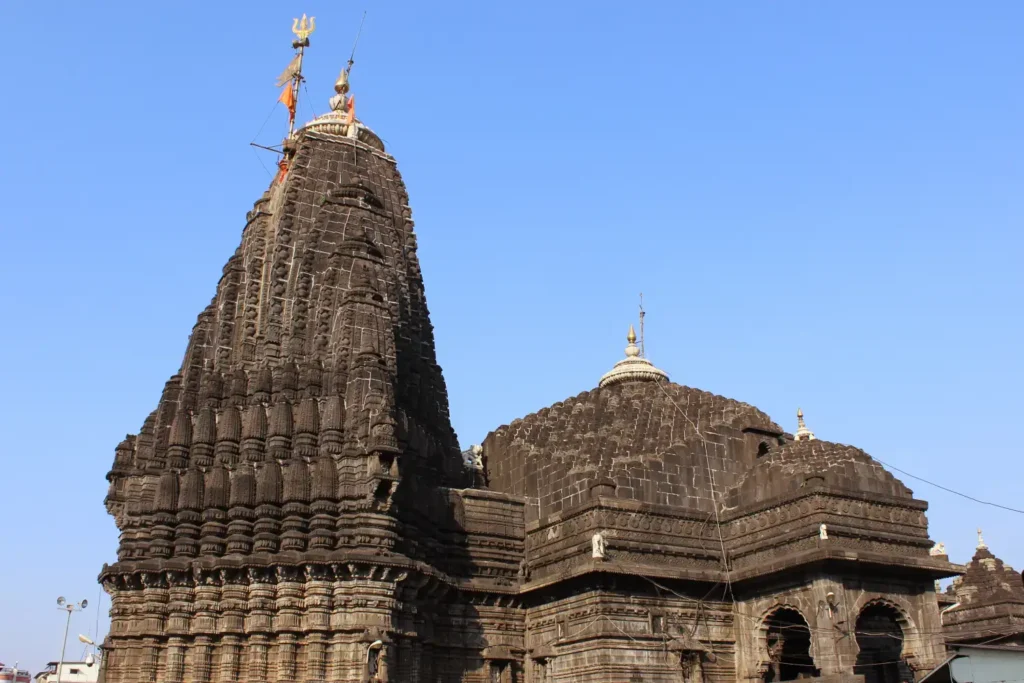
The Jyotirlingas are far more than ancient temples—they are living symbols of India’s spiritual heritage and Lord Shiva’s eternal presence. Their stories teach us that true greatness lies not in power or pride, but in humility, devotion, and the pursuit of truth.
Whether you are a devotee, a traveler, or simply someone curious about India’s rich traditions, understanding the Jyotirlingas offers a deeper glimpse into one of the oldest spiritual philosophies in the world. As you begin exploring each of the 12 Jyotirlingas, you will discover that every shrine has its own unique legend, miracle, and message—yet all of them ultimately lead to the same truth:
The light of Lord Shiva is infinite, eternal, and present in every soul.