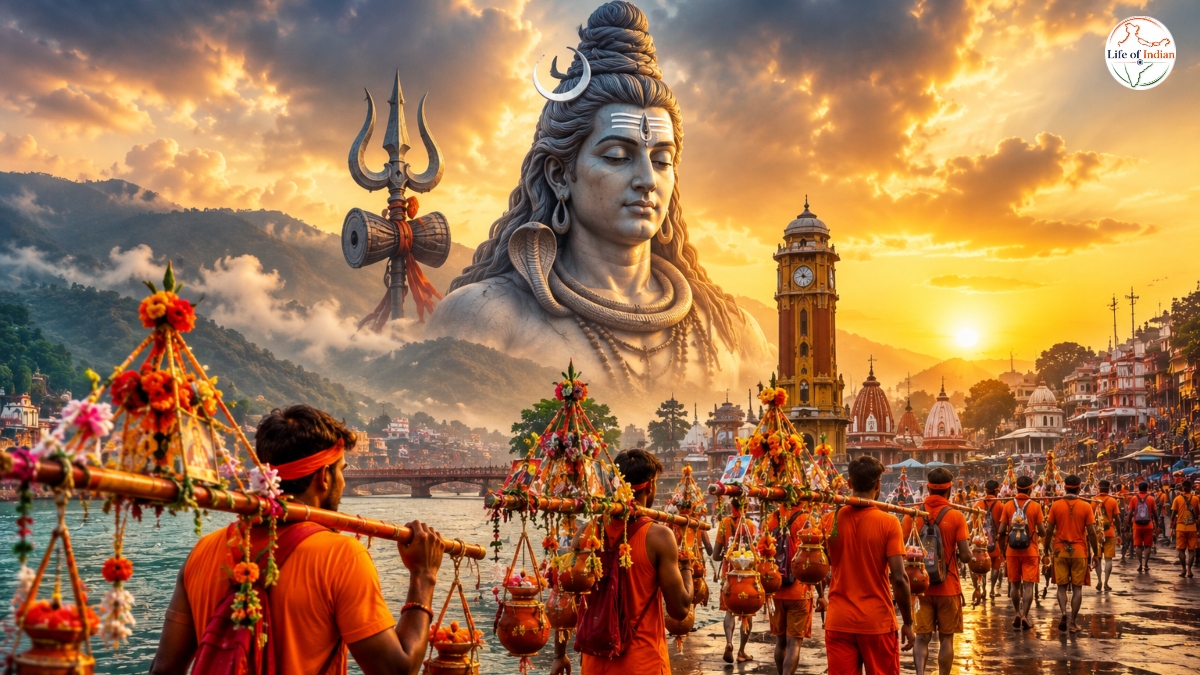
Every year during the holy month of Shravan (Sawan), millions of devotees of Lord Shiva, known as Kanwariyas, undertake one of the world’s largest annual religious pilgrimages—the Kanwar Yatra. Carrying sacred water from holy rivers such as the Ganga, devotees walk hundreds of kilometres to offer the water to Lord Shiva at temples across India.
In 2026, the Kanwar Yatra is expected to begin on 30 July 2026, coinciding with the start of the month of Shravan in many North Indian calendars. During the pilgrimage, highways, towns, and villages across northern India transform into vibrant paths of devotion, with chants of “Har Har Mahadev” echoing everywhere.
This centuries-old tradition is not just a religious ritual but a powerful symbol of faith, discipline, sacrifice, and devotion.
What is the Kanwar Yatra?
The Kanwar Yatra is a sacred pilgrimage dedicated to Lord Shiva. Devotees collect holy water—primarily from the River Ganga—and carry it in a decorated bamboo structure called a Kanwar. The water is then offered on a Shivling at a Shiva temple, especially on Shravan Shivratri or during the month of Shravan.
The word “Kanwar” refers to a bamboo pole balanced across the shoulders with two containers hanging from each side. These containers hold the holy water collected from rivers.
Kanwariyas often travel barefoot while observing strict religious discipline, including fasting, vegetarian food, celibacy, and avoiding intoxicants throughout the pilgrimage.
Why is the Kanwar Yatra Celebrated?
The pilgrimage is performed to seek the blessings of Lord Shiva.
Devotees believe that offering sacred Ganga water to Lord Shiva helps:
- Fulfil sincere wishes
- Bring peace and prosperity
- Remove obstacles in life
- Seek forgiveness for past mistakes
- Gain spiritual purification
- Express gratitude towards Lord Shiva
Many devotees also undertake the pilgrimage after making a personal vow that they wish to fulfil.
The Mythological Story Behind the Kanwar Yatra
The origin of the Kanwar Yatra is closely associated with the famous Samudra Manthan (Churning of the Ocean).
According to Hindu scriptures, during the churning of the cosmic ocean, a deadly poison called Halahala emerged. The poison threatened to destroy the entire universe. To save creation, Lord Shiva consumed the poison. The poison settled in Shiva’s throat, turning it blue and earning Him the name Neelkanth.
The intense heat generated by the poison caused immense suffering. To cool Lord Shiva, the gods offered sacred water from the River Ganga over the Shivling. This divine act eventually became the tradition of offering holy water to Lord Shiva during the month of Shravan.
Another Popular Legend
Another widely believed legend states that Lord Parashurama was among the earliest devotees to perform Jal Abhishek using sacred river water.
Many religious traditions also associate Ravana, the king of Lanka and a great devotee of Lord Shiva, with carrying holy water for Shiva worship. While different regions preserve different stories, all of them emphasise devotion and surrender to Lord Shiva.
Historical Background of the Kanwar Yatra
Although the pilgrimage has deep roots in Hindu tradition, historians believe that organised Kanwar pilgrimages became increasingly common during the medieval period. Ancient Hindu scriptures mention the practice of carrying sacred water for rituals, but there is limited historical evidence identifying the exact person who first carried a Kanwar.
Over the centuries, local traditions across northern India gradually evolved into the massive pilgrimage seen today. In recent decades, improvements in roads, transportation, communication, and community participation have significantly increased the number of devotees. Today, the Kanwar Yatra attracts millions of pilgrims every year, making it one of the largest annual religious gatherings in the world.
Who Was the First Kanwariya?
This is one of the most frequently asked questions.
The truth is that there is no historical record identifying the first person who carried a Kanwar.
Different traditions attribute the beginning of the practice to:
- Lord Parashurama
- Ravana
- Ancient sages
- Devotees inspired by the story of Samudra Manthan
Since these accounts belong to religious tradition rather than documented history, historians do not recognise a single confirmed “first Kanwariya.”
Why is the Kanwar Yatra Held During Shravan?
The month of Shravan is considered the most sacred month dedicated to Lord Shiva.
According to Hindu belief:
- The month is especially dear to Lord Shiva.
- Continuous worship during Shravan brings special blessings.
- Mondays (Shravan Somwar) are considered highly auspicious.
- Jal Abhishek during this period is believed to be particularly rewarding spiritually.
This is why millions of devotees choose Shravan for the Kanwar pilgrimage.
Types of Kanwar Yatra
Over time, different forms of the pilgrimage have emerged.
General Kanwar
Pilgrims walk at their own pace and complete the journey over several days.
Dak Kanwar
This is the fastest form of the pilgrimage.
Devotees run continuously without placing the Kanwar on the ground. The water is delivered as quickly as possible.
Khadi Kanwar
In this tradition, the Kanwar must remain upright throughout the journey. It requires assistance from fellow devotees whenever the pilgrim rests.
Major Pilgrimage Routes
The most popular Kanwar routes include:
- Haridwar (Uttarakhand)
- Gaumukh
- Gangotri
- Rishikesh
- Sultanganj (Bihar)
- Garhmukteshwar (Uttar Pradesh)
After collecting holy water, devotees travel to Shiva temples across:
- Uttar Pradesh
- Delhi
- Haryana
- Rajasthan
- Punjab
- Madhya Pradesh
- Bihar
- Jharkhand
One of the most famous destinations is the Baba Baidyanath Temple in Deoghar, where pilgrims from Sultanganj offer Ganga water after walking over 100 kilometres.
Rules Followed by Kanwariyas
Many devotees observe strict spiritual discipline throughout the pilgrimage.
Common practices include:
- Walking barefoot
- Maintaining cleanliness
- Eating only vegetarian food
- Avoiding alcohol and tobacco
- Observing celibacy
- Speaking respectfully
- Avoiding anger and violence
- Not placing the Kanwar directly on the ground
- Performing regular prayers
These disciplines are considered an essential part of the spiritual journey.
The Spiritual Meaning of the Kanwar
The Kanwar represents much more than carrying water.
It symbolises:
- Devotion
- Self-control
- Sacrifice
- Patience
- Faith
- Simplicity
- Service
- Spiritual discipline
The long walk reminds devotees that spiritual growth requires dedication and perseverance.
Kanwar Yatra Today
The Kanwar Yatra has grown into one of India’s largest religious events.
Every year:
- Millions of devotees participate.
- Thousands of volunteers organise free food camps (Bhandaras).
- Medical camps provide healthcare.
- Local communities offer drinking water and resting facilities.
- Governments implement traffic management and security arrangements.
The pilgrimage showcases both India’s spiritual traditions and the spirit of community service.
Safety Tips for Pilgrims
Devotees participating in the Kanwar Yatra should:
- Stay hydrated.
- Wear comfortable clothing.
- Follow official traffic advisories.
- Use designated pilgrimage routes.
- Avoid overcrowded areas whenever possible.
- Respect local regulations.
- Travel in groups when undertaking long journeys.
These precautions help ensure a safe and peaceful pilgrimage.
The Kanwar Yatra is far more than a religious procession. It is a journey of faith, discipline, and unwavering devotion to Lord Shiva. Every step taken by a Kanwariya reflects dedication, sacrifice, and spiritual commitment.
Whether viewed through mythology, history, or cultural tradition, the Kanwar Yatra continues to inspire millions of devotees every year. As the chants of “Bol Bam” and “Har Har Mahadev” fill the air during Kanwar Yatra 2026, the pilgrimage once again reminds the world of India’s rich spiritual heritage and the enduring bond between devotees and Lord Shiva.
FAQ
1. When will Kanwar Yatra 2026 begin?
Kanwar Yatra 2026 is expected to begin on 30 July 2026, marking the start of the holy month of Shravan in many parts of India.
2. Why is Kanwar Yatra celebrated?
Devotees undertake the Kanwar Yatra to offer holy Ganga water to Lord Shiva, seek His blessings, fulfil vows, and express their devotion during the sacred month of Shravan.
3. What is the history of Kanwar Yatra?
The tradition is rooted in Hindu mythology, especially the story of Samudra Manthan, and has evolved over centuries into one of the world’s largest annual religious pilgrimages.
4. Who can participate in the Kanwar Yatra?
Anyone with faith in Lord Shiva—men, women, and young devotees—can participate while following the religious customs and safety guidelines of the pilgrimage.
5. Which are the most popular Kanwar Yatra routes?
The most popular routes begin from Haridwar, Rishikesh, Gangotri, Gaumukh, and Sultanganj, where devotees collect holy Ganga water before offering it at Shiva temples across India.