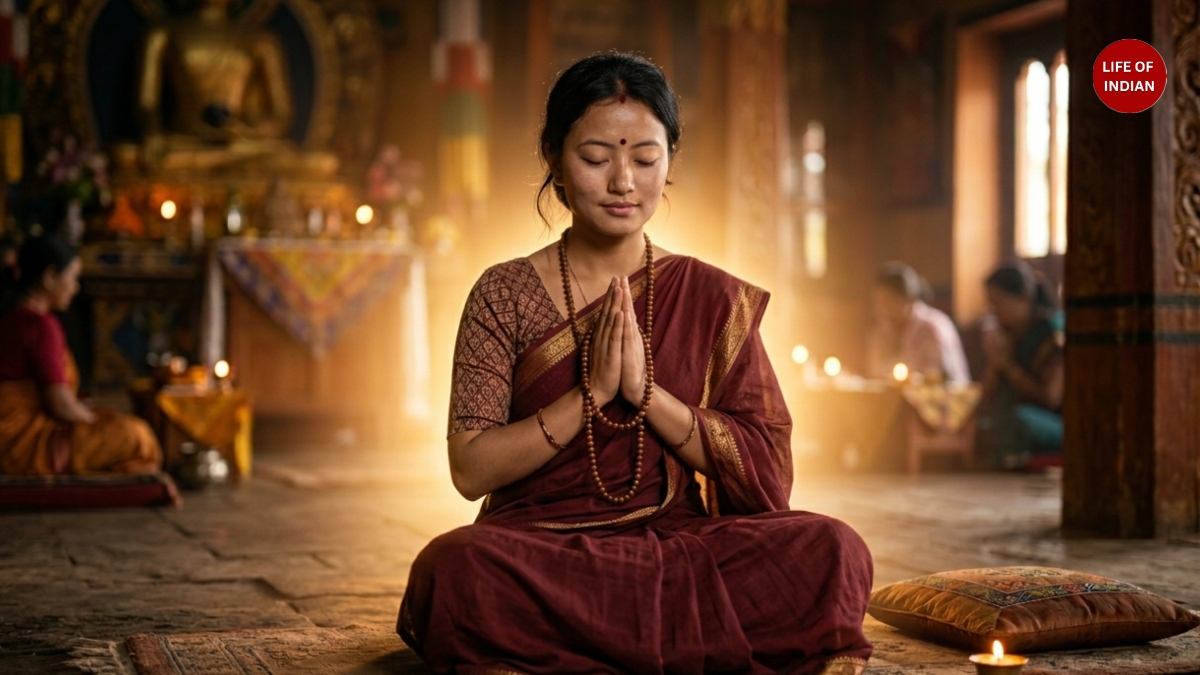
Across temples, mosques, churches, and quiet corners of homes, one scene repeats itself with striking familiarity: a person folds their hands, bows their head slightly, and gently closes their eyes. It feels natural—almost automatic. But have you ever paused to wonder why we do this?
At first glance, it may seem like a small ritual, something we learned as children and continued without question. Yet this simple act carries layers of meaning—psychological, emotional, and spiritual—that go far deeper than habit. In fact, closing the eyes during prayer reveals a fascinating truth about how the human mind connects with faith.
A Silent Shift from the Outer World to the Inner One
We live in a world full of constant movement—colors, sounds, notifications, people passing by. Our brain is wired to notice all of it. Even the smallest flicker of light or movement can pull our attention away without us realizing it. Now imagine trying to pray in that environment.
This is where the act of closing the eyes becomes powerful. The moment we shut them, the outside world begins to fade. The visual noise disappears. Suddenly, there is space—space for thoughts to settle, for emotions to surface, and for focus to deepen.
It’s not just a spiritual idea; it’s rooted in how the brain works. When visual input reduces, the mind naturally redirects its energy inward. Thoughts become clearer. Feelings become more accessible. In that quiet mental space, prayer transforms from routine words into a meaningful conversation—whether with God, the universe, or one’s own inner self.
More Than Focus: A Gesture of Surrender
Closing the eyes during prayer is not only about concentration—it also carries a powerful symbolic message. When we close our eyes, we temporarily let go of control over the outside world. We stop observing, judging, comparing. We stop worrying about how we look or who might be watching. In that moment, the act becomes deeply personal and honest. It reflects humility—the acknowledgment that there is something greater than us.
This symbolism quietly appears across cultures. In Hindu traditions, devotees often close their eyes during darshan or chanting, immersing themselves in the presence of the divine. In Christianity, it is a common practice during prayer to encourage reverence and sincerity. In Islam, while not required, many people instinctively close their eyes during dua to deepen their emotional connection.
Different paths, same instinct: withdraw from the world to connect with something beyond it.
Creating a Private World—Even in Public Spaces
Prayer is one of the most personal experiences a person can have. It is where people express gratitude, confess fears, seek guidance, or simply sit with their thoughts. But what happens when prayer takes place in a crowded temple, mosque, or church?
Closing the eyes becomes a kind of invisible boundary. It creates a sense of privacy—even when surrounded by hundreds of people. It allows individuals to step into their own emotional space without feeling exposed.
Think about it: we often close our eyes when we are overwhelmed, when we’re trying to remember something important, or when we feel deeply. Prayer taps into that same instinct. It gives the mind permission to open up without distraction or self-consciousness.
The Power of Imagination and Inner Vision
There is another, lesser-known reason behind this gesture—one that connects to the imagination. For many people, prayer is not just about speaking words; it’s also about visualizing. Some imagine a divine figure, others picture light, energy, or a sense of protection. These mental images make the experience more vivid and emotionally real. But visualization becomes difficult when the eyes are open and constantly processing external images.
Closing the eyes removes that competition. It allows the mind to create its own world—one shaped by faith, memory, and belief. This is why prayer can sometimes feel deeply immersive, almost like stepping into another dimension of awareness. Interestingly, meditation practices around the world rely on the same principle. When the eyes close, the brain often shifts into a calmer, slower rhythm—one associated with relaxation, introspection, and heightened awareness.
A Habit We Learn… or an Instinct We Already Have?
Many of us were taught to close our eyes while praying as children. It was part of “doing it correctly.” Over time, it became automatic—something we rarely question.
But here’s the intriguing part: even without being taught, humans tend to close their eyes when they want to concentrate, feel deeply, or connect internally. Whether it’s listening to music, making a wish, or recalling a powerful memory, the gesture appears naturally. This suggests that closing the eyes during prayer is not just a cultural habit—it’s also a human instinct. Tradition may have shaped it, but psychology explains why it has survived across generations and religions.
A Small Act That Changes the Entire Experience
In the end, closing the eyes during prayer might seem like a minor detail. But it quietly holds the essence of what prayer truly is.
It is a pause.
A withdrawal from noise.
A movement inward.
By shutting out the external world, even for a few moments, we allow ourselves to enter a space where thoughts are clearer, emotions are deeper, and connection feels more real.
It is in that darkness behind closed eyes that many people find light—whether in the form of faith, clarity, hope, or peace.And perhaps that is why, across centuries and civilizations, this simple gesture continues to exist—unchanged, unnoticed, yet profoundly meaningful.
FAQ
1. Why do people close their eyes during prayer?
People close their eyes to reduce distractions and focus better. It helps the brain shift attention inward, making prayer more meaningful and emotionally engaging.
2. Is closing eyes during prayer necessary?
No, it is not necessary in most religions. It is a personal choice that helps improve concentration and emotional connection during prayer.
3. What happens in the brain when we close our eyes while praying?
Closing the eyes reduces visual input, allowing the brain to focus more on thoughts, emotions, and internal reflection. This enhances concentration and mindfulness.
4. Do all religions practice closing eyes during prayer?
Not all religions require it, but many people across Hinduism, Christianity, and Islam naturally adopt this gesture to deepen focus and spiritual connection.
5. Does closing eyes help in meditation as well?
Yes, closing the eyes is commonly used in meditation because it helps calm the mind, reduce distractions, and improve inner awareness.
6. Why does prayer feel more intense with closed eyes?
With fewer distractions, emotions and thoughts become clearer. This makes the experience feel deeper, more personal, and spiritually powerful.