


Sarnath is one of the most sacred and historically significant places in the world. Located near Varanasi in India, it is the site where Gautama Buddha delivered his first sermon after attaining enlightenment. This moment marked the formal beginning of Buddhism as a global spiritual tradition.
More than just an archaeological site, Sarnath represents the transition of spiritual realization into universal teaching. It is where wisdom was first shared, transforming individual enlightenment into a path for humanity.
Bodh Gaya: The Place Where Buddha Found Enlightenment
From Enlightenment to Mission: Buddha’s Journey to Sarnath
After attaining enlightenment under the Bodhi Tree in Bodh Gaya, Buddha spent several weeks in deep contemplation. He then decided to share his newfound understanding with others. His first thought was to seek out his former companions—five ascetics who had once practiced severe penance with him.
These disciples were staying in a deer park at Sarnath, known in ancient times as Isipatana. Buddha traveled there with a clear purpose: to communicate the truth he had realized. This journey was not just physical but symbolic—it marked the beginning of a teaching tradition that would eventually spread across continents.
The First Sermon: Turning the Wheel of Dharma

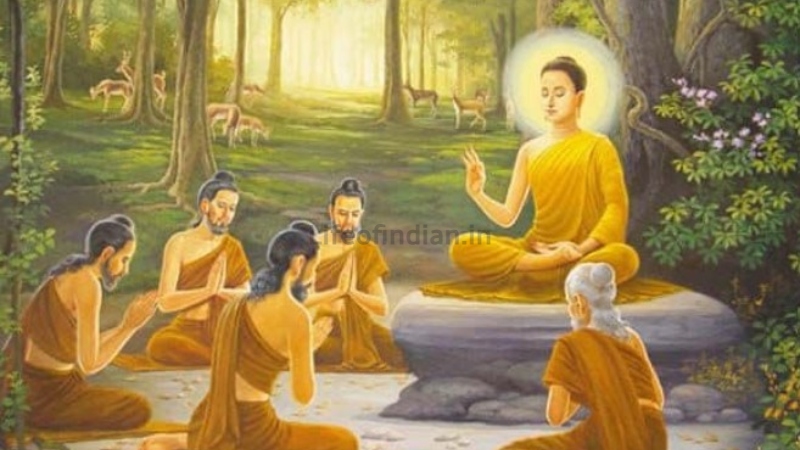
At Sarnath, Buddha delivered his first sermon, known as the Dharmachakra Pravartana, or “Turning the Wheel of Dharma.” This event is regarded as the foundation of Buddhist philosophy.
In this sermon, Buddha introduced the core principles of his teachings:
- The existence of suffering (Dukkha)
- The cause of suffering (Tanha or desire)
- The cessation of suffering (Nirvana)
- The path leading to the cessation (the Eightfold Path)
These teachings, collectively known as the Four Noble Truths, laid the groundwork for a practical and ethical way of life. The five ascetics—Kaundinya, Bhaddiya, Vappa, Mahanama, and Assaji—became the first members of the Buddhist Sangha (monastic community).
This moment represents one of the most important turning points in religious history, where a personal realization evolved into a universal doctrine.
Buddha Purnima: Why This Day Still Matters in Today’s World
Sarnath Under Emperor Ashoka: A Flourishing Spiritual Center
The importance of Sarnath continued to grow in the centuries following Buddha’s lifetime. Its most significant period of development came during the reign of Emperor Ashoka in the 3rd century BCE.
Ashoka, a devoted follower of Buddhism, played a crucial role in transforming Sarnath into a major center of learning and pilgrimage. He commissioned several monuments, including stupas and pillars, to commemorate Buddha’s teachings.
One of his most famous contributions is the Ashokan Pillar, crowned by the Lion Capital. This sculpture, now preserved in the Sarnath Museum, was later adopted as the National Emblem of India. It symbolizes power, courage, pride, and confidence.
Under Ashoka’s patronage, Sarnath became not only a religious hub but also a center of education where monks studied philosophy, ethics, and meditation.
Buddha Purnima: Why Buddha Purnima Is More Than Just a Festival
Architectural Heritage: Monuments that Tell a Story
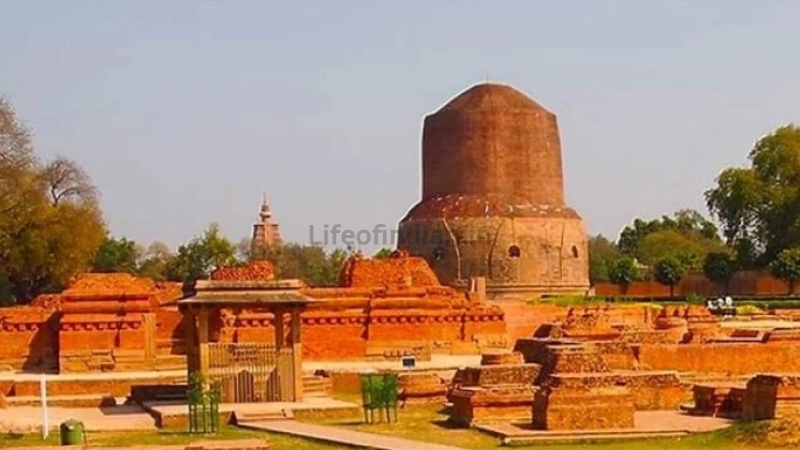
The ruins of Sarnath still preserve the grandeur of its past. Its monuments stand as silent witnesses to centuries of devotion, learning, and artistic excellence.
The Dhamek Stupa is the most prominent structure in Sarnath. It is believed to mark the exact spot where Buddha delivered his first sermon. Built with intricately carved stones, it reflects the high level of craftsmanship achieved in ancient India.
The Chaukhandi Stupa commemorates the meeting of Buddha with his five disciples. Its elevated structure provides a historical context to the beginning of his teaching journey.
The remains of the Ashoka Pillar continue to attract attention, while its Lion Capital remains one of the finest examples of Mauryan art.
The Sarnath Archaeological Museum houses an exceptional collection of Buddhist sculptures, including the famous image of Buddha in the preaching posture, which is considered a masterpiece of Gupta-era art.
Decline and Rediscovery: A Forgotten Legacy Reawakened
Despite its early prominence, Sarnath faced a period of decline. During the 12th century, invasions led to the destruction of many of its structures. Over time, the site was abandoned and gradually buried under layers of earth.
For several centuries, Sarnath remained largely forgotten. Its revival began in the 18th and 19th centuries when British archaeologists initiated excavations in the region. These efforts uncovered stupas, monasteries, inscriptions, and sculptures, bringing Sarnath back into historical and cultural awareness.
Today, it stands as a restored heritage site, carefully preserved for future generations.
Lumbini: Why Lumbini Is One of the Most Peaceful Places in the World
Sarnath Today: A Living Spiritual Destination
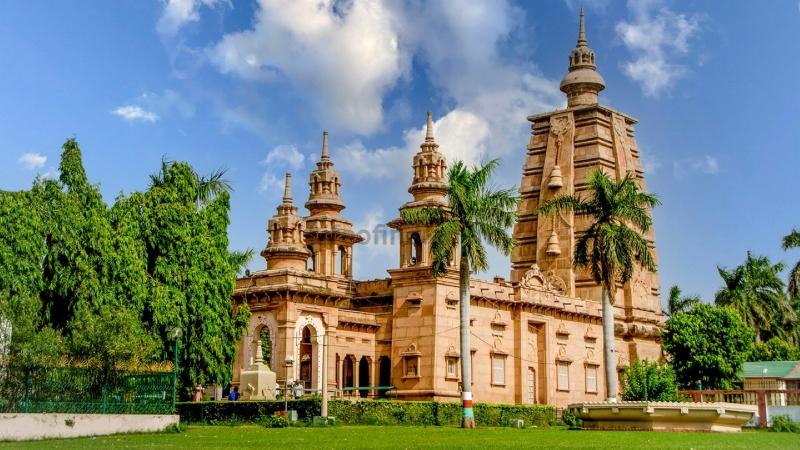
Modern-day Sarnath is both a pilgrimage destination and a center for global tourism. Visitors from around the world come here to experience its serene environment and spiritual significance.
The site features temples and monasteries built by different Buddhist countries, reflecting the global reach of Buddha’s teachings. The peaceful gardens and meditation areas provide an ideal setting for reflection and inner peace.
Sarnath continues to inspire millions, offering a space where history, spirituality, and culture converge.
The Eternal Message of Sarnath
Sarnath is not merely a historical location; it is a symbol of wisdom, compassion, and transformation. It is the place where a single sermon set in motion a philosophy that continues to guide humanity.
When Gautama Buddha spoke in Sarnath, he did more than teach—he offered a path toward understanding life itself.
Even today, Sarnath reminds us that true knowledge gains its meaning when it is shared. It stands as a timeless beacon of peace and enlightenment in an ever-changing world.
FAQ
Q1. Why is Sarnath important in Buddhism?
Sarnath is important because it is the place where Gautama Buddha delivered his first sermon after enlightenment, marking the beginning of Buddhism.
Q2. What is the meaning of Dharmachakra Pravartana?
Dharmachakra Pravartana means “Turning the Wheel of Dharma,” referring to Buddha’s first teaching that introduced the core principles of Buddhism.
Q3. Where is Sarnath located?
Sarnath is located near Varanasi in India.
Q4. Which are the main attractions in Sarnath?
Major attractions include the Dhamek Stupa, Chaukhandi Stupa, Ashoka Pillar, and Sarnath Archaeological Museum.
Q5. Who developed Sarnath as a major Buddhist site?
Emperor Ashoka played a key role in developing Sarnath by building stupas, pillars, and monasteries.