


Some places don’t become important because of what they look like—but because of what began there. Lumbini is one such place.
There is no grand mountain, no dramatic landscape, no overwhelming architecture. And yet, it holds a quiet power. Because in this simple, peaceful land, a child was born over 2,500 years ago—who would one day change how humanity understands life, suffering, and peace. This is not just the story of a birthplace. This is the beginning of a journey that shaped the world.
Buddha Purnima: Why This Day Still Matters in Today’s World
A Sacred Beginning in the Heart of Nepal

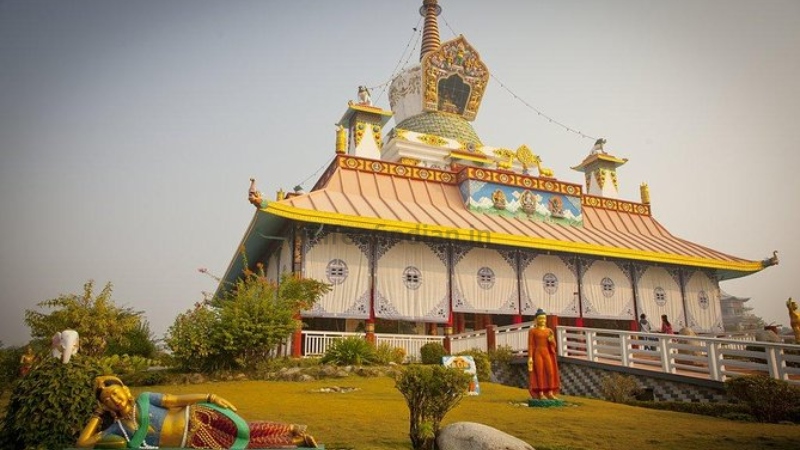
Lumbini is located in present-day Nepal, near the Indian border. It is universally recognized as the birthplace of Gautama Buddha, who was born here as Prince Siddhartha around the 6th century BCE.
According to historical and religious accounts, Queen Maya Devi gave birth to Siddhartha in a garden while on her way to her parental home. It is said that she held a branch of a tree as the child was born—a moment that has been symbolically represented in art for centuries. Today, this exact location is marked by the sacred Maya Devi Temple, which stands as the heart of Lumbini’s spiritual identity.
Not Just a Birthplace, But a Symbol of Potential
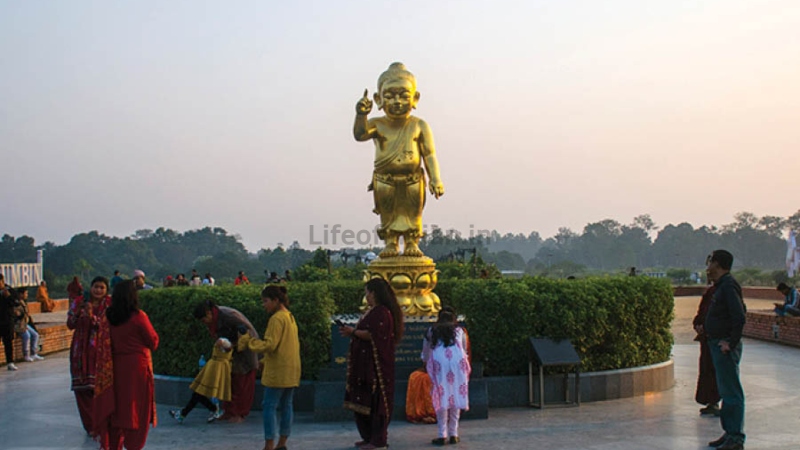
Lumbini is often described simply as the birthplace of Buddha. But if you look deeper, it represents something much more meaningful. It reminds us that even the most extraordinary journeys begin in the simplest of places.
At the time of his birth, Siddhartha was just a prince—protected, privileged, and unaware of the suffering that existed in the world. There was nothing outwardly extraordinary about the moment. And yet, within that ordinary beginning, lay the potential for something profound. Lumbini stands as a quiet reminder that every life holds the possibility of transformation.
The Ashokan Connection: History That Confirms Faith
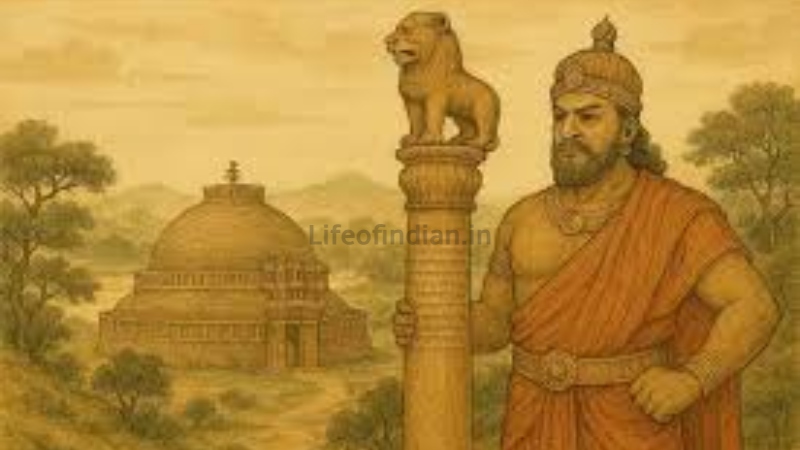
One of the strongest pieces of historical evidence supporting Lumbini’s significance comes from the Mauryan emperor Ashoka.
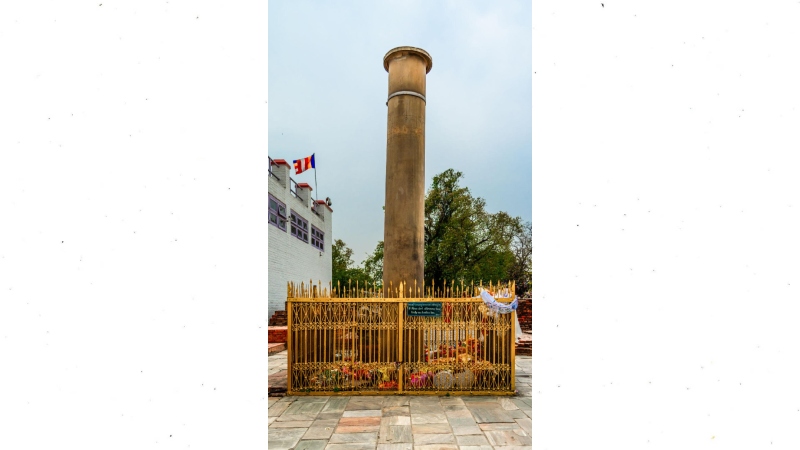
In the 3rd century BCE, after embracing Buddhism, Emperor Ashoka visited Lumbini. To mark the importance of the site, he erected the famous Ashoka Pillar, which still stands today. The inscription on the pillar clearly identifies Lumbini as the birthplace of Buddha, making it one of the earliest recorded confirmations of this sacred site. This moment connected history with belief—turning Lumbini from a place of memory into a place of documented significance.
Buddha Purnima: Why Buddha Purnima Is More Than Just a Festival
The Sacred Landscape: Simplicity That Speaks
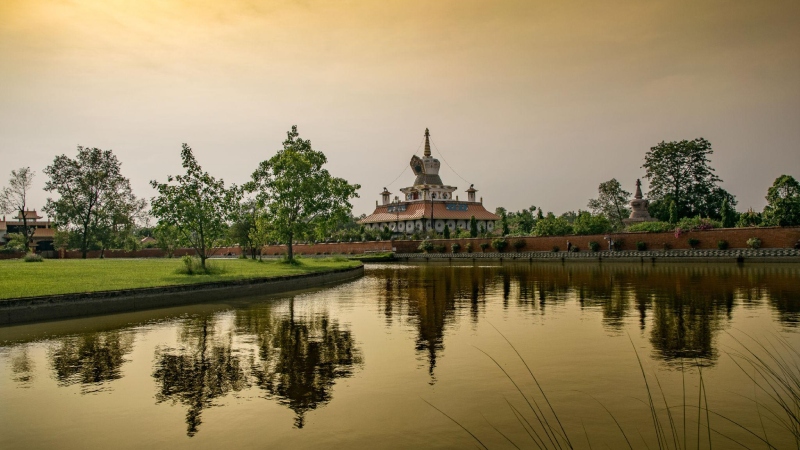
Unlike many religious sites that impress with grandeur, Lumbini offers something different—stillness.
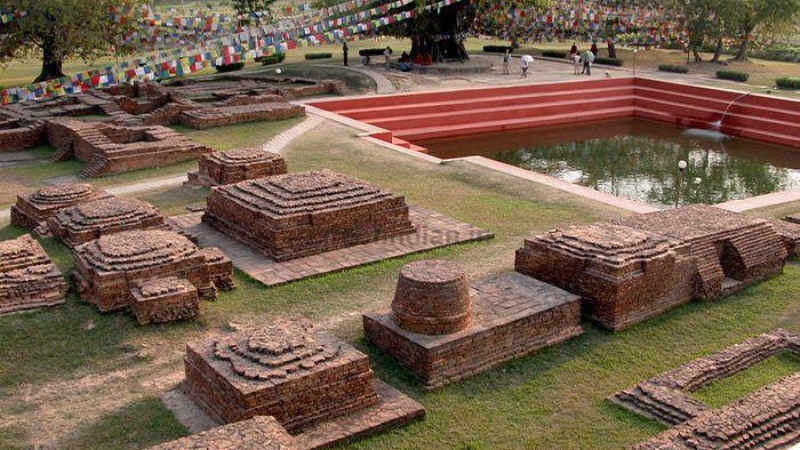
The area is surrounded by gardens, monasteries, and open spaces designed to maintain peace and harmony. At the center lies the Maya Devi Temple, along with a sacred pond where it is believed Queen Maya Devi bathed before giving birth.
There is no rush here. No noise. No overwhelming rituals. Instead, there is space—to walk slowly, to sit quietly, and to observe. Visitors often find themselves doing less… and feeling more.
A Global Spiritual Center
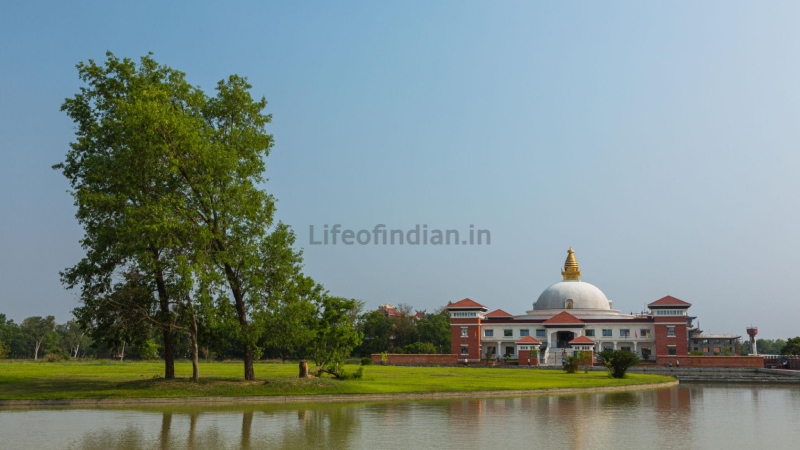
Over time, Lumbini has grown into an international pilgrimage site. Countries from across the world—such as Thailand, Japan, Sri Lanka, Germany, and Myanmar—have built monasteries here, each reflecting their own architectural style.
These monasteries are not just places of worship—they are cultural expressions of how different parts of the world understand and honor Buddha’s teachings. Walking through Lumbini’s monastic zone feels like traveling across countries without leaving one place. And yet, despite the diversity, there is a shared sense of unity. Because at its core, Lumbini belongs to everyone seeking peace.
The Emotional Experience: What Lumbini Feels Like
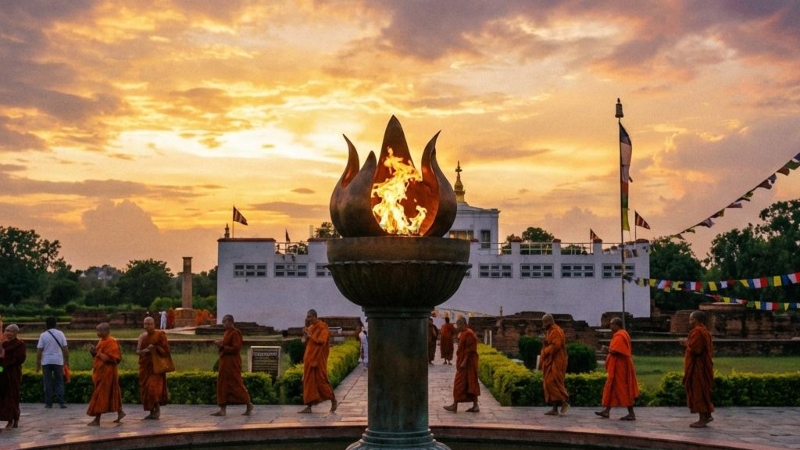
Lumbini does not overwhelm you—it slowly settles into you. There is a softness in the air. A kind of silence that is not empty, but full of presence. People walk gently. Voices are low. Even time seems to move differently. You may not feel a sudden transformation. But something subtle happens. You begin to notice things you usually ignore—the sound of footsteps, the movement of leaves, the rhythm of your breath. And in that awareness, you start to understand why this place matters.
Why Lumbini Still Matters Today
In a world where people are constantly chasing success, recognition, and speed, Lumbini offers a completely different perspective.
It tells us that:
- Greatness does not come from where you start
- True understanding comes from within
- Peace is not something you find—it is something you cultivate
Lumbini is not about enlightenment—it is about beginnings. It reminds us that before wisdom, there is curiosity. Before awakening, there is questioning. And every journey starts somewhere.
Bodh Gaya: The Place Where Buddha Found Enlightenment
The Power of a Beginning
Lumbini is not just where Buddha was born.
It is where a journey began—a journey that would lead to enlightenment, compassion, and a philosophy that continues to guide millions.
Standing in Lumbini, you don’t just think about Buddha—you think about beginnings.
Because in the end, Lumbini teaches us something simple yet powerful:
Every life starts ordinary…
but what it becomes, depends on the path it chooses.
FAQ
Q1. Where is Lumbini located?
Lumbini is located in Nepal, near the India-Nepal border, and is recognized as the birthplace of Gautam Buddha.
Q2. Why is Lumbini important?
Lumbini is important because it is the birthplace of Gautam Buddha and one of the most sacred pilgrimage sites for Buddhists worldwide.
Q3. What is the Maya Devi Temple?
The Maya Devi Temple is the main temple in Lumbini, marking the exact spot where Buddha was born.
Q4. What is the significance of the Ashoka Pillar in Lumbini?
The Ashoka Pillar, built by Emperor Ashoka, confirms Lumbini as the birthplace of Buddha through its historical inscription.
Q5. Can tourists visit Lumbini?
Yes, Lumbini is open to tourists and pilgrims from all over the world, offering a peaceful and spiritual experience.