


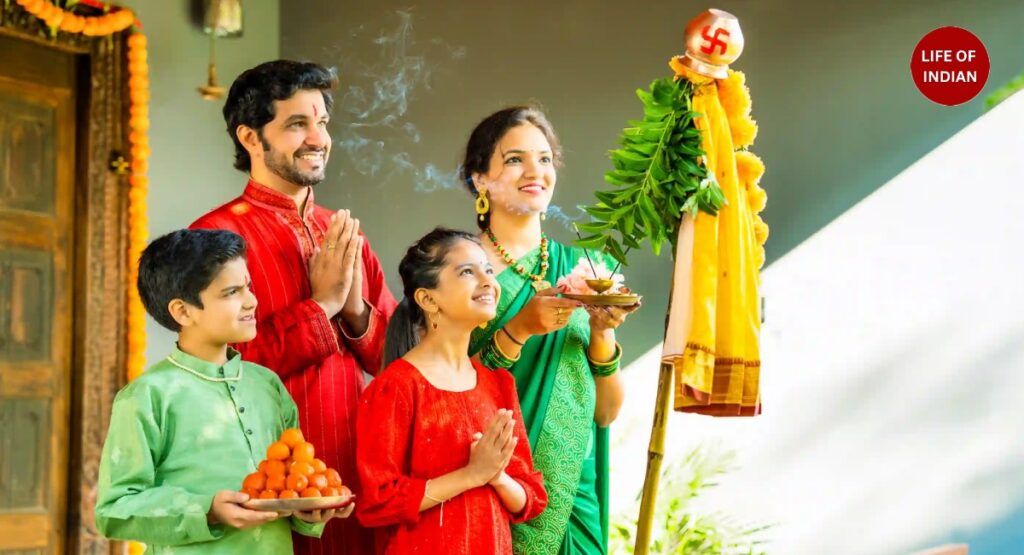
Gudi Padwa is one of the most significant Hindu festivals in India, especially celebrated with great enthusiasm in the states of Maharashtra and the Konkan region. More than just a religious observance, it represents a beautiful blend of cultural heritage, historical traditions, and social unity.
Marking the first day of the Hindu lunisolar calendar, Gudi Padwa symbolizes the beginning of a new year—often associated with fresh hopes, new opportunities, and spiritual awakening. It arrives during the vibrant season of spring, when nature itself undergoes a transformation: trees bloom with new leaves, flowers blossom, and the environment feels alive with positivity and energy.
This festival reflects the deep connection between human life and nature’s cycles. Just as the earth renews itself, Gudi Padwa encourages people to embrace new beginnings, leave behind the past, and step into the future with optimism and confidence. It is not only a time for celebration but also for reflection, gratitude, and setting new intentions for the year ahead.
What is Gudi Padwa?
Gudi Padwa is the traditional New Year festival for Marathi and Konkani Hindus, celebrated on the first day (Pratipada) of the bright fortnight (Shukla Paksha) in the month of Chaitra.
According to the Hindu calendar, this day marks the beginning of a new year and is considered highly auspicious. It also signifies the start of the Vikram Samvat, one of the traditional Hindu calendars followed in India.
The word “Gudi” means a victory flag, while “Padwa” refers to the first day of the lunar month.
Thus, Gudi Padwa literally means celebrating victory and welcoming the New Year with positivity and triumph.
Connection with the Spring Season
Gudi Padwa is deeply connected with the arrival of spring—a season that symbolizes renewal, growth, and vitality.
During this time:
- Trees sprout fresh leaves and colorful flowers
- The weather becomes pleasant and refreshing
- Harvesting of rabi crops begins
This natural transformation makes the festival a symbol of new beginnings, prosperity, and progress. Just as nature renews itself, people also see this time as an opportunity to start afresh in life.
Mythological and Religious Significance
(1) Creation of the Universe
It is believed that on this day, Lord Brahma, the creator of the universe, began the process of creation. Therefore, Gudi Padwa is considered the first day of the cosmic cycle.
(2) Victory of Lord Rama
According to another belief, when Lord Rama returned to Ayodhya after defeating Ravana, people hoisted victory flags (Gudi) to celebrate his triumph.
(3) King Shalivahana’s Victory
Historically, it is said that King Shalivahana defeated the Shakas and celebrated his victory by raising a Gudi, symbolizing pride and success.
Significance of the Gudi (Why is it Hoisted?)
The Gudi is the central element of this festival and is considered a sacred symbol of victory and good fortune.
It is traditionally made using:
- A bamboo stick
- A bright silk cloth (often a sari)
- Neem and mango leaves
- A garland of flowers
- An inverted copper or silver pot placed on top
The Gudi is placed outside homes, usually at a height, where it is clearly visible.
Symbolic Meaning:
- Victory and success
- Protection from negative energies
- Welcoming prosperity and happiness
- Spreading positive vibrations in the home
How is Gudi Padwa Celebrated?
(1) Cleaning and Decoration
Homes are thoroughly cleaned and decorated with rangoli, symbolizing purity and positivity.
(2) Gudi Installation
After an early morning bath, people hoist the Gudi at an auspicious time, often accompanied by prayers.
(3) Rituals and Worship
Devotees perform पूजा (ritual worship) of deities like Lord Vishnu, Lord Brahma, or their family deity, seeking blessings for the new year.
(4) Traditional Food
Special dishes are prepared, such as:
- Puran Poli
- Shrikhand
- A mixture of neem leaves and jaggery
Eating neem and jaggery signifies accepting both the bitter and sweet experiences of life with balance and maturity.
Different Forms of New Year Across India
Gudi Padwa is not limited to Maharashtra. The same day is celebrated as the New Year in different parts of India under various names:
| Region | Festival Name |
|---|---|
| Maharashtra | Gudi Padwa |
| Karnataka & Andhra Pradesh | Ugadi |
| Kashmir | Navreh |
| Sindhi Community | Cheti Chand |
| Manipur | Sajibu Nongma Panba |
This diversity reflects India’s rich cultural unity in celebrating new beginnings.
One Festival, Many Names: How India Celebrates Hindu New Year Differently
Social and Cultural Significance
Gudi Padwa is not just a religious festival; it is a vibrant expression of social unity, cultural identity, and collective joy. It plays an important role in strengthening relationships and bringing communities together.
From early morning, homes are filled with excitement and positivity. People dress in new and traditional attire—women often wear the elegant Nauvari saree, while men dress in dhoti-kurta. These traditional outfits are not merely decorative but symbolize pride in cultural heritage and identity.
One of the most beautiful aspects of the festival is the spirit of togetherness. People visit friends, relatives, and neighbors, exchange greetings, and share sweets. This simple act strengthens bonds and fosters a sense of belonging and harmony within society.
The festival also reinforces family values. In today’s fast-paced life, where people are often busy with work and responsibilities, Gudi Padwa offers a chance for families to come together, perform rituals, enjoy meals, and celebrate as a unit. Such moments deepen emotional connections and create lasting memories.
Moreover, Gudi Padwa is considered an ideal time for new beginnings. Many people choose this day to start new businesses, launch projects, or make important life decisions. It is believed that any work initiated on this day brings success and prosperity.
Thus, Gudi Padwa serves as a powerful medium to preserve traditions, promote social harmony, and inspire positive transformation in life.
Astrological Significance of Gudi Padwa
In Hindu tradition, festivals are closely linked with astrology and cosmic rhythms, and Gudi Padwa holds a special place in this regard.
It falls on the first day of the bright fortnight of Chaitra, marking the beginning of the Hindu New Year. This day is considered astrologically powerful, as it aligns with seasonal and cosmic transitions.
The arrival of spring signifies balance in nature, and the position of the sun during this period is considered favorable. The environment is believed to be filled with positive energy, which has a beneficial effect on both mental and physical well-being.
Astrologically, planetary movements on this day are seen as indicators of new beginnings. It is believed that actions taken on Gudi Padwa are more likely to succeed and yield fruitful results.
For this reason, people often begin new ventures, make investments, purchase property, or plan important life events on this day. Many also consult the पंचांग (Hindu almanac) to understand the planetary influences for the year ahead and plan accordingly.
Additionally, this day is considered ideal for self-reflection and setting intentions. It encourages individuals to evaluate their past actions, learn from them, and set meaningful goals for the future.
Gudi Padwa in Modern Times
Despite rapid changes in lifestyle, Gudi Padwa continues to be celebrated with the same enthusiasm and devotion in modern times. In fact, it has evolved into a beautiful blend of tradition and modernity.
In Maharashtra and Konkan regions, grand processions and cultural parades are organized. People dressed in traditional attire participate in dances to the beats of dhol and tasha, creating a festive and energetic atmosphere. These celebrations reflect not only religious devotion but also cultural pride.
Even in urban areas, where life is fast-paced, people make efforts to maintain traditions—whether it is hoisting the Gudi, performing rituals, or preparing traditional dishes.
Technology has also added a new dimension to celebrations. Today, people share greetings through social media platforms like WhatsApp, Facebook, and Instagram, spreading festive cheer beyond geographical boundaries.
Cultural organizations and communities also host events featuring music, dance, and traditional art forms. These initiatives help the younger generation stay connected with their roots and understand the significance of their heritage.
Thus, Gudi Padwa continues to thrive as a living tradition, adapting to modern life while preserving its core values.
Why Navratri Comes Twice a Year: The Spiritual and Scientific Reasons Behind the Festival
Gudi Padwa is more than just a festival—it is a celebration of hope, renewal, and a positive outlook on life. It teaches us that every new beginning is an opportunity to grow, improve, and move forward with determination.
The festival reminds us to embrace change with an open heart and to welcome each new phase of life with optimism and courage.
As nature blossoms during the spring season, Gudi Padwa inspires us to rejuvenate our own lives with fresh energy and enthusiasm. It beautifully conveys the message of balancing tradition with modernity while staying rooted in our cultural values.
That is why Gudi Padwa is often called the “Festival of New Beginnings”—a celebration that brings new hope, fresh energy, and a renewed sense of direction to every individual.