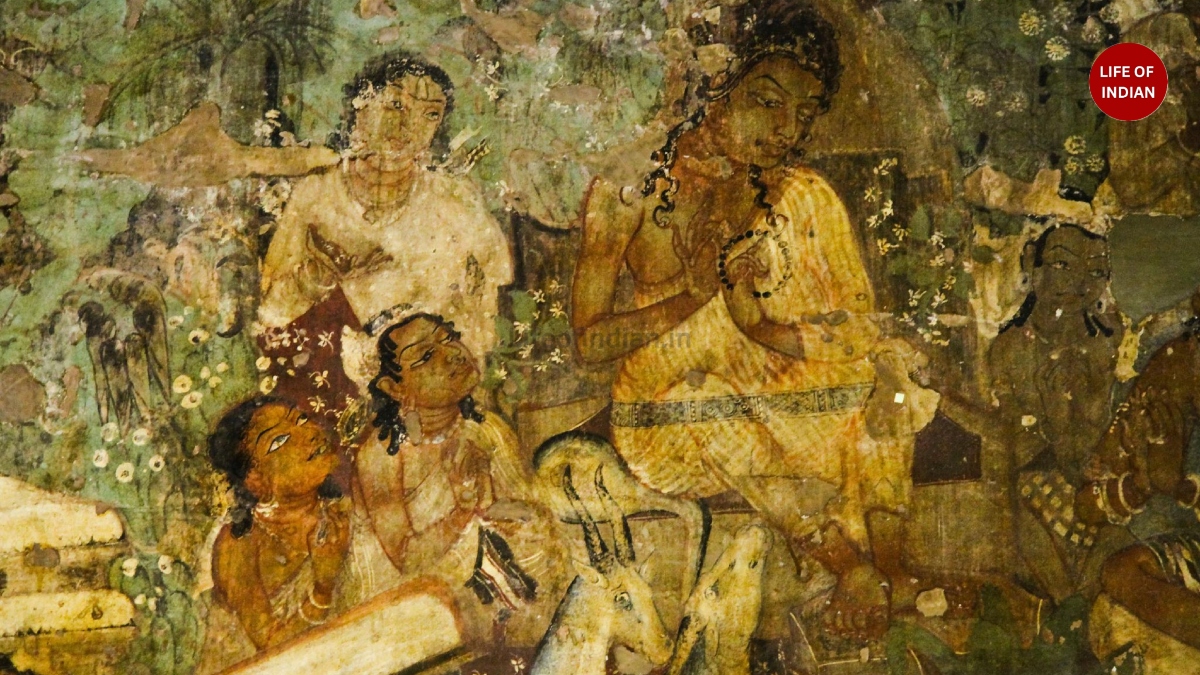
Ancient Art of India: Long before paper, canvas, or modern tools existed, humans expressed their thoughts, beliefs, and stories on stone walls. In India, this artistic journey began thousands of years ago inside caves and temples, where walls became living stories of faith, life, and imagination. These ancient paintings are not just artworks—they are windows into the past, revealing how people lived, believed, and understood the world around them.
The Beginning of Indian Cave Paintings
Ancient Indian paintings began in natural caves and rock shelters, where early humans first started drawing simple figures of animals, hunting scenes, and daily life. Over time, as civilizations grew and religions evolved, these simple drawings transformed into highly detailed and meaningful artworks.
India has more than 10,000 sites with ancient cave paintings, showing how widespread and important this tradition was.
These paintings were not created for decoration—they were created for expression, storytelling, and spirituality.
Ajanta Caves: The Peak of Ancient Indian Painting
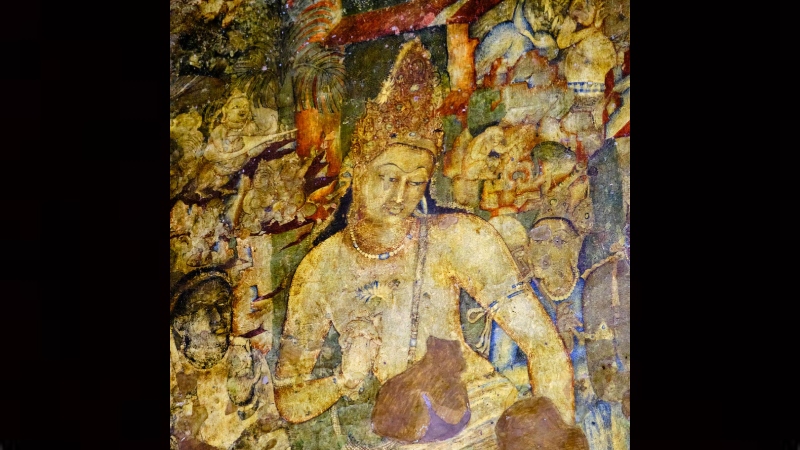
Among all ancient Indian paintings, the Ajanta Caves in Maharashtra are considered the finest example of mural art.
These caves were created between the 2nd century BCE and the 6th century CE, mainly by Buddhist monks and artists.
Inside these caves, the walls are covered with detailed paintings that narrate the Jataka tales, which describe the previous lives of Lord Buddha.
What makes Ajanta paintings extraordinary is their emotional depth. The artists used body language, facial expressions, and colors to show feelings like love, sacrifice, compassion, and sorrow.
Technically, these paintings were created using a method called “dry fresco”, where colors were applied on dry plaster.
Even after more than 1,500 years, many of these paintings still remain visible, showing the advanced skills of ancient Indian artists.
Ajanta is not just an art site—it is a masterpiece that represents the golden age of Indian painting.
Ellora Caves: A Blend of Art and Faith
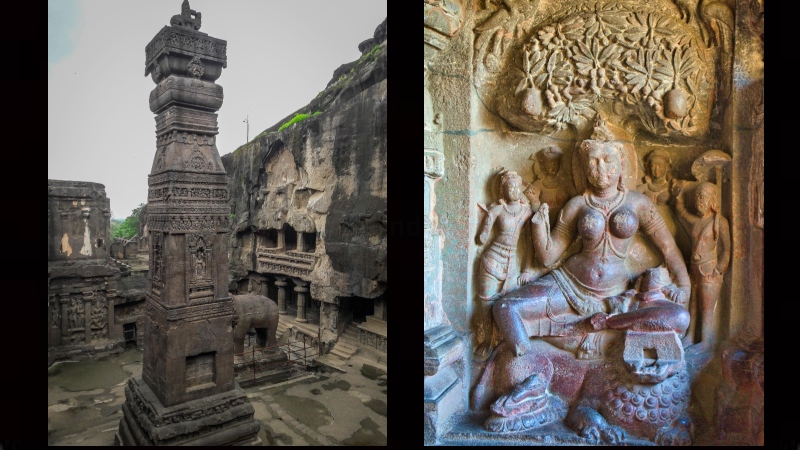
Located near Ajanta, the Ellora Caves present a different but equally important chapter in Indian art history.
Unlike Ajanta, which is mainly Buddhist, Ellora includes caves from three religions—Buddhism, Hinduism, and Jainism.
Although Ellora is more famous for its sculptures, traces of paintings can still be found on the walls and ceilings.
These paintings show that ancient Indian artists did not work within one religious boundary—they expressed multiple beliefs through a shared artistic language. This makes Ellora a symbol of religious harmony and cultural unity.
The Ancient History of Diya : 5000 Years Old Indian Tradition from Mohenjo-Daro
Other Important Cave Painting Sites in India
Bhimbetka Rock Shelters: The Earliest Human Art
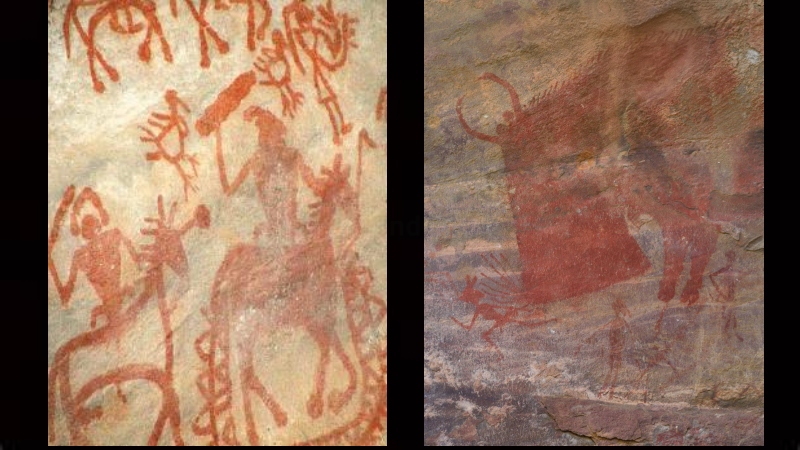
The Bhimbetka Rock Shelters in Madhya Pradesh contain some of the oldest paintings in India, dating back nearly 30,000 years.
These paintings are very different from Ajanta. They show simple figures of animals, hunting scenes, and daily life. Despite their simplicity, they carry deep meaning—they represent the earliest form of human creativity and communication.
Bagh Caves and Sittanavasal: Hidden Artistic Treasures
Apart from Ajanta and Ellora, other sites like the Bagh Caves (Madhya Pradesh) and Sittanavasal (Tamil Nadu) also contain beautiful ancient paintings.
These paintings are similar to Ajanta in style, showing religious themes, human figures, and decorative patterns. They prove that painting was not limited to one region but was a widespread cultural practice in ancient India.
Themes and Meaning Behind Ancient Paintings
Ancient Indian paintings were not random decorations. They were deeply connected to life and spirituality.
Most paintings focused on:
- Religious stories (Buddhist, Hindu, Jain)
- Moral lessons and teachings
- Royal life and social customs
- Nature, animals, and daily activities
For example, Ajanta paintings show kings, queens, dancers, and common people, giving us a glimpse into ancient Indian society.
These artworks served as a form of visual storytelling, especially in a time when most people could not read or write.
Techniques Used by Ancient Artists
One of the most fascinating aspects of ancient Indian painting is the technique used by artists.
Before painting, they prepared the rock surface by applying layers of mud and lime plaster. Then, outlines were drawn using natural colors like red ochre, followed by detailed coloring.
The colors were made from natural materials such as minerals, plants, and stones. Despite the limited resources, the artists achieved remarkable precision, shading, and depth.
Their understanding of proportion, movement, and expression shows that art in ancient India was highly developed and sophisticated.
Why These Paintings Still Matter Today
Ancient Indian paintings are not just historical artifacts—they are a part of India’s cultural identity.
They help us understand:
- The evolution of art and creativity
- Religious and philosophical beliefs
- Social life in ancient times
- The advanced skills of early artists
Many of these sites, like Ajanta and Ellora, are now recognized as UNESCO World Heritage Sites, attracting visitors from all over the world.
A Living Legacy of Art
Standing inside these caves today, surrounded by paintings that are thousands of years old, you don’t just see art—you feel history.
These walls have witnessed centuries of devotion, creativity, and human emotion. Even in silence, they continue to tell stories.
Ancient Indian paintings remind us that art is not just about beauty—it is about connection. A connection between the past and the present, between humans and their beliefs, and between imagination and reality.
And perhaps that is why, even after thousands of years, these paintings still speak to us.
FAQ
Q1. What are ancient Indian paintings?
Ancient Indian paintings are artworks created on cave walls and temple surfaces thousands of years ago, depicting religious stories, daily life, and early human activities.
Q2. Which are the most famous ancient cave paintings in India?
The most famous examples include the paintings of Ajanta Caves, Ellora Caves, and Bhimbetka Rock Shelters.
Q3. How old are ancient Indian cave paintings?
Some of the oldest paintings, like those in Bhimbetka, are around 30,000 years old, while Ajanta paintings date between the 2nd century BCE and 6th century CE.
Q4. What themes are shown in ancient Indian paintings?
These paintings mainly depict religious stories, royal life, nature, animals, and scenes from everyday life, reflecting the beliefs and culture of ancient India.
Q5. What techniques were used in ancient Indian paintings?
Ancient artists used natural colors made from minerals and plants and applied them on prepared rock surfaces using techniques like fresco and dry plaster painting.