


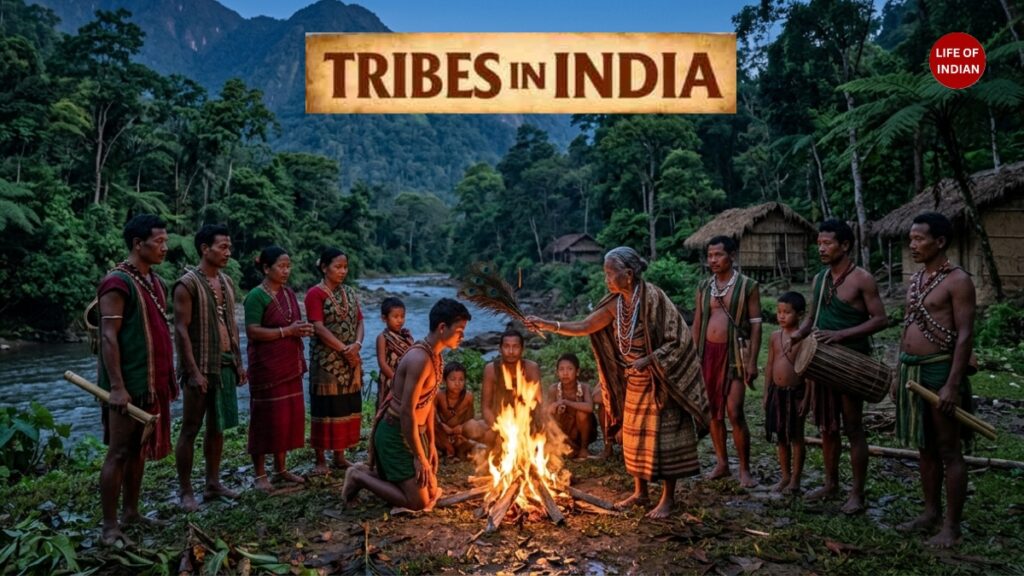
Tribal Communities: Long before the modern world began talking about climate change, environmental conservation, and sustainable living, India’s tribal communities were already living in harmony with nature. Deep inside forests, hills, deserts, and remote valleys, tribal societies developed a way of life where rivers were treated like mothers, mountains like protectors, and forests like sacred homes.
For centuries, these indigenous communities have survived without destroying the environment around them. While modern civilization often views nature as a resource to exploit, tribal cultures see nature as a living spirit that must be respected and protected.
Today, when the world is facing deforestation, pollution, rising temperatures, and disappearing wildlife, many researchers and environmentalists believe tribal communities hold some of humanity’s oldest and most valuable ecological wisdom.
India is home to one of the largest tribal populations in the world. These communities are not merely “forest dwellers” or isolated groups — they are the living keepers of ancient traditions, languages, healing systems, and environmental knowledge that have survived for thousands of years.
But who are India’s tribes? Why do many of them still prefer living separately from modern society? How have they managed to preserve their culture despite globalization? And why are tribal communities considered among the greatest protectors of nature?
The answers reveal a fascinating and deeply emotional side of India that many people still know very little about.
Banjaras: The Tribe That Once Fed Empires but Was Later Branded Criminals
Who Are Tribal Communities?
Tribal communities, often referred to as Adivasis in India, are indigenous groups with distinct cultures, traditions, languages, and social systems. The word “Adivasi” roughly means “original inhabitants.”
According to the Government of India, there are more than 700 officially recognized Scheduled Tribes spread across the country.
These communities are found in:
- Dense forests
- Mountain regions
- Desert areas
- Northeastern hills
- River valleys
- Remote islands
Each tribe has its own identity, customs, spiritual beliefs, dress, music, food habits, and relationship with nature.
Unlike urban societies, tribal life is often community-centered rather than individual-centered. Decisions are commonly made collectively, and many tribes continue to follow traditions passed down through oral storytelling for generations.
How Many Tribes Are There in India?
India officially recognizes more than 700 Scheduled Tribes under the Constitution. These tribes form around 8–9 percent of India’s total population.
Some tribes are large and spread across multiple states, while others are extremely small and isolated.
India also has 75 Particularly Vulnerable Tribal Groups (PVTGs), communities considered highly vulnerable because of declining populations, low literacy, and geographical isolation.
Major Tribes of India and Where They Live
India’s tribal diversity is extraordinary. Every region has tribes with completely different lifestyles and traditions.
1. Bhil Tribe
One of India’s largest tribal groups, the Bhils are mainly found in:
- Rajasthan
- Gujarat
- Madhya Pradesh
- Maharashtra
The Bhils are historically known for their warrior skills and archery traditions. They are also famous for vibrant Pithora paintings and strong forest-based lifestyles.
2. Gond Tribe
The Gonds mainly live in:
- Madhya Pradesh
- Chhattisgarh
- Maharashtra
- Telangana
They are famous for:
- Gond art
- Nature worship
- Agricultural traditions
- Forest conservation practices
The Gond community has one of the richest tribal artistic traditions in India.
3. Santhal Tribe
Found mainly in:
- Jharkhand
- West Bengal
- Odisha
- Bihar
The Santhals are known for:
- Folk music and dance
- Agricultural culture
- Resistance movements against British rule
They played a major role in the Santhal Rebellion during colonial rule.
4. Toda Tribe
The Todas live in the Nilgiri Hills of Tamil Nadu.
They are famous for:
- Unique barrel-shaped homes
- Buffalo-centered culture
- Sacred dairy rituals
- Embroidered shawls
Their small population and distinct customs make them one of India’s most fascinating tribes.
5. Jarawa Tribe
The Jarawas live in the Andaman Islands and remain one of the world’s most isolated indigenous communities.
For decades, they have resisted outside interference and continue to depend heavily on hunting, fishing, and forest resources.
6. Konyak Tribe
The Konyaks of Nagaland are known for:
- Facial tattoos
- Warrior traditions
- Wood carving
- Rich oral storytelling
Historically, they were feared as headhunters, though such practices disappeared long ago.
7. Khasi Tribe
The Khasi tribe of Meghalaya is famous for its matrilineal society, where family lineage passes through women.
They are also known for:
- Living root bridges
- Forest protection traditions
- Deep ecological awareness
Why Tribal Communities Live Separately From Modern Society
One of the biggest questions people often ask is: why do many tribal communities choose isolation?
The answer is deeply connected to history, survival, and cultural identity.
1. Protection of Culture
Many tribes fear losing their language, rituals, and traditions due to outside influence.
Modernization often brings:
- Cultural erosion
- Religious conversion
- Loss of traditional knowledge
- Language extinction
By remaining geographically separate, tribes protect their identity.
2. Deep Connection With Nature
For many tribal groups, forests are not simply places to live — they are sacred spaces connected to ancestors, spirits, and gods.
Destroying forests is seen as spiritually wrong in many tribal belief systems.
This emotional relationship with nature is one reason tribal communities have historically protected ecosystems better than industrial societies.
3. Historical Exploitation
Many tribal communities have experienced:
- Land displacement
- Forced labor
- Colonial exploitation
- Mining-related displacement
- Social discrimination
As a result, some tribes developed distrust toward outsiders and government systems.
How Tribal Communities Protect Nature
Perhaps the most remarkable aspect of tribal culture is their environmental wisdom.
Unlike industrial systems that often take from nature without limits, tribal societies traditionally believe humans are only one part of nature — not its owners.
1. Sacred Forests and Sacred Groves
Many tribes protect certain forests as sacred areas where cutting trees or hunting is forbidden.
These sacred groves often become natural biodiversity hotspots, preserving rare plants, birds, and animals for centuries.
In several tribal regions of:
- Meghalaya
- Odisha
- Maharashtra
- Chhattisgarh
such traditions still exist today.
2. Sustainable Hunting and Farming
Tribal communities traditionally avoid excessive hunting or overuse of resources.
They usually:
- Hunt seasonally
- Use every part of an animal
- Avoid destroying breeding populations
- Practice rotational farming
This balance helps ecosystems recover naturally.
3. Natural Medicine and Forest Knowledge
Many tribes possess ancient knowledge of:
- Medicinal plants
- Herbal healing
- Forest ecosystems
- Animal behavior
- Weather patterns
Modern scientists continue studying tribal medicinal systems because some remedies have proven highly effective.
4. Water Conservation Traditions
Several tribal communities developed traditional systems to:
- Store rainwater
- Protect rivers
- Preserve wetlands
- Prevent soil erosion
These techniques were sustainable long before modern environmental science existed.
5. Minimal Waste Lifestyle
Unlike urban consumer culture, tribal societies traditionally produce very little waste.
They mostly use:
- Bamboo
- Clay
- Natural fibers
- Wood
- Leaves
- Recyclable materials
Plastic-based lifestyles were almost absent in traditional tribal communities.
Tribal Culture and Spirituality
One of the most unique aspects of tribal culture is spirituality centered around nature.
Many tribal religions involve:
- Sun worship
- Moon worship
- River worship
- Ancestor worship
- Forest spirits
- Animal symbolism
Rather than separating religion and nature, tribal belief systems combine them deeply.
This spiritual respect often becomes a powerful force for environmental protection.
Are Tribal Cultures Disappearing?
Unfortunately, many tribal cultures today face serious threats.
These include:
- Deforestation
- Mining projects
- Urban expansion
- Climate change
- Tourism pressure
- Loss of tribal languages
- Forced displacement
As younger generations move toward cities, traditional lifestyles and oral histories are slowly disappearing in some regions.
Experts warn that when tribal cultures vanish, humanity also loses ancient ecological wisdom developed over thousands of years.
Why the Modern World Is Learning From Tribal Communities
Today, environmentalists and climate experts increasingly recognize the importance of indigenous knowledge.
Tribal lifestyles teach valuable lessons about:
- Sustainable living
- Respect for ecosystems
- Community-based life
- Low-waste living
- Balance between humans and nature
In many ways, tribal communities were practicing “eco-friendly living” centuries before the modern world invented the term.
India’s tribal communities are not relics of the past — they are living civilizations carrying some of humanity’s oldest surviving knowledge systems.
From the forests of Central India to the hills of the Northeast and the islands of the Andaman Sea, tribal societies continue to preserve traditions that modern civilization is only beginning to understand and appreciate.
Their songs, rituals, art, languages, and environmental practices tell a powerful story: human beings can live with nature instead of against it.
At a time when climate change and environmental destruction threaten the future of the planet, the wisdom of tribal communities may be more important than ever before.
Because perhaps the people modern society once considered “backward” were actually protecting the future all along.
FAQ
1. How many tribal communities are there in India?
India officially recognizes more than 700 Scheduled Tribes across different states and regions.
2. What are tribal communities called in India?
Tribal communities in India are often referred to as Adivasis, which means “original inhabitants.
3. Why do tribal communities live separately from cities?
Many tribal groups prefer preserving their traditional culture, language, beliefs, and close connection with forests and nature. Historical exploitation and outside interference have also contributed to their isolation.
4. How do tribal communities protect nature?
Tribal communities traditionally protect forests through sacred groves, sustainable farming, limited hunting, herbal medicine systems, water conservation, and eco-friendly lifestyles.
5. Are tribal cultures disappearing in India?
Many tribal cultures face threats from deforestation, urbanization, mining, climate change, and loss of traditional languages and customs.