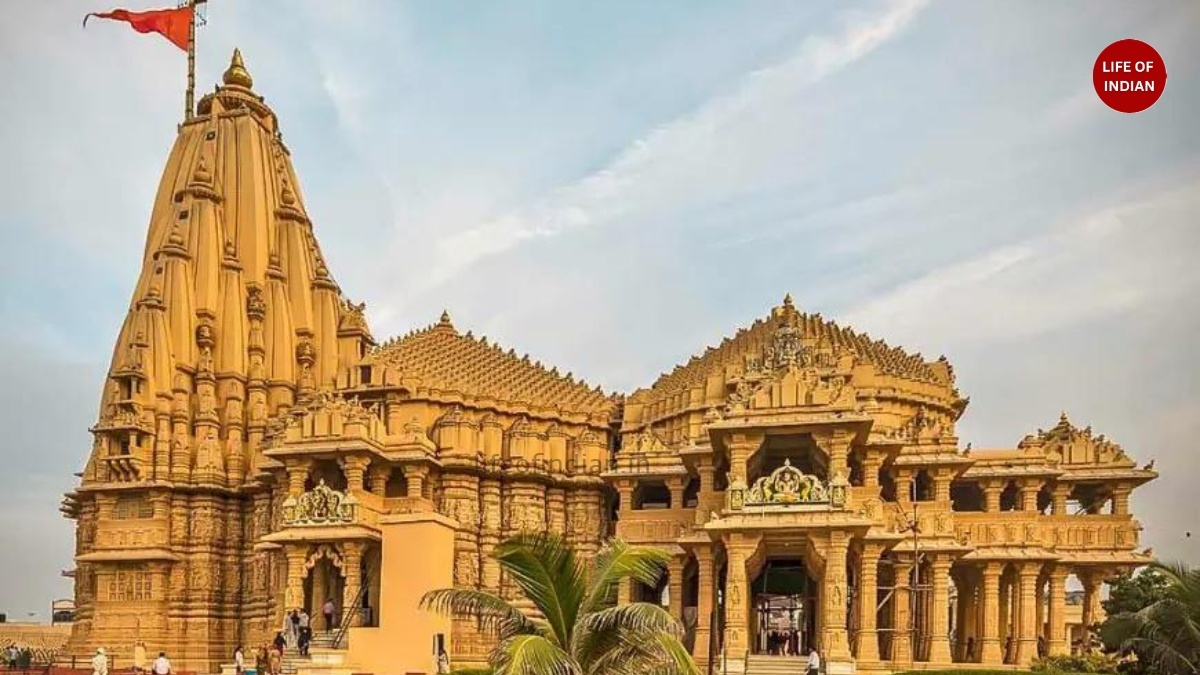
Somnath Amrit Mahotsav: A historic and deeply emotional moment is unfolding in India’s spiritual history as Somnath Temple witnesses an event never seen before in centuries of its existence. For the first time in history, the sacred pinnacle (Shikhar Kalash) of the Somnath Temple is being ceremonially anointed with 1100 liters of holy water collected from 11 major pilgrimage sites across India. This grand spiritual ritual is being performed on the sacred occasion of the Somnath Amrit Mahotsav in the presence of Narendra Modi.
The ceremony is not merely a religious ritual. It is being viewed as a powerful symbol of India’s cultural continuity, spiritual awakening, and civilizational pride. Standing 155 feet above the ground, the majestic temple pinnacle has become the center of national attention as priests, devotees, and scholars gather to witness this once-in-history “Kumbhabhishek” ceremony.
What makes this event even more significant is its timing. The year marks 75 years since the consecration of the modern Somnath Temple by India’s first President, Rajendra Prasad, on May 11, 1951. At the same time, the ceremony also symbolically approaches the completion of 1000 years since the destruction of Somnath by Mahmud of Ghazni in 1026 — an event that deeply scarred Indian history but never succeeded in breaking the spirit of Somnath.
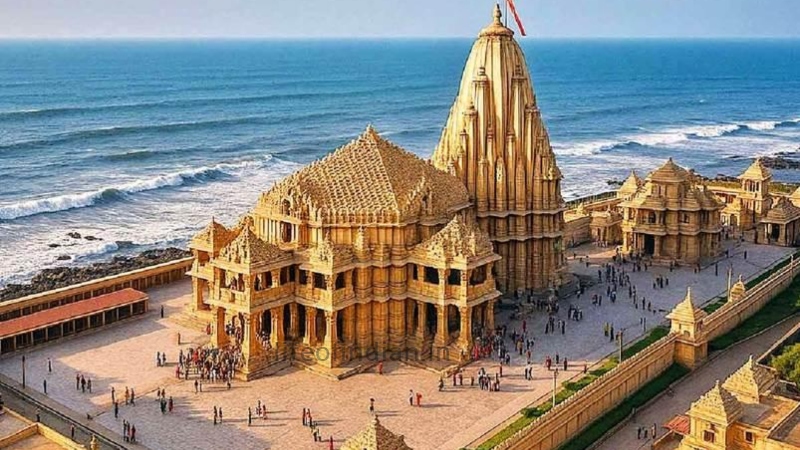
Today, the temple once again stands tall beside the Arabian Sea, carrying a message that has survived centuries: faith can never be destroyed.
Why Somnath Is Called the First Jyotirlinga of Lord Shiva—The Fascinating Story Behind It
The Historic Jalabhishek of Somnath’s Shikhar Kalash
A Ritual Happening for the First Time in History
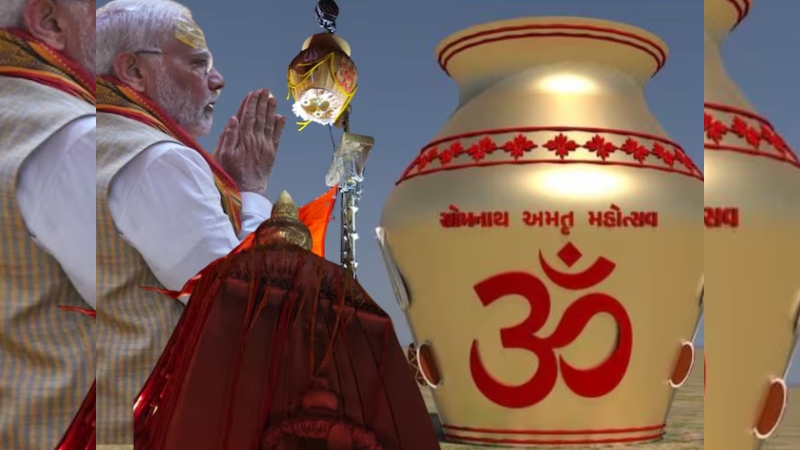
The highlight of the Somnath Amrit Mahotsav is the grand Jalabhishek being performed on the temple’s sacred Shikhar Kalash — the pinnacle structure at the top of the temple. According to temple authorities, this is the first time such a large-scale ceremonial ablution of the pinnacle is being conducted using holy water brought from eleven revered pilgrimage sites across India.
For this ritual, a specially designed Kalash with a capacity of 1100 liters has been prepared. The engineering behind the ritual itself reflects a combination of spirituality and modern technology. The empty ceremonial vessel weighs around 760 kilograms, and once filled with holy water, its total weight reaches approximately 1.86 tons.
Since the temple’s Shikhar rises 155 feet high, a special crane system has been installed to safely carry the Kalash to the top without putting pressure on the ancient temple structure. Reports suggest that a massive 350-ton all-terrain crane is being used for the operation to ensure complete protection of the temple’s architectural heritage.
The ceremony also includes the hoisting of a new sacred flag atop the temple in the presence of Prime Minister Narendra Modi, followed by a grand Mahapuja dedicated to Lord Somnath.
Why the Shikhar Jalabhishek Is Spiritually Significant
The Spiritual Energy of the Temple Pinnacle
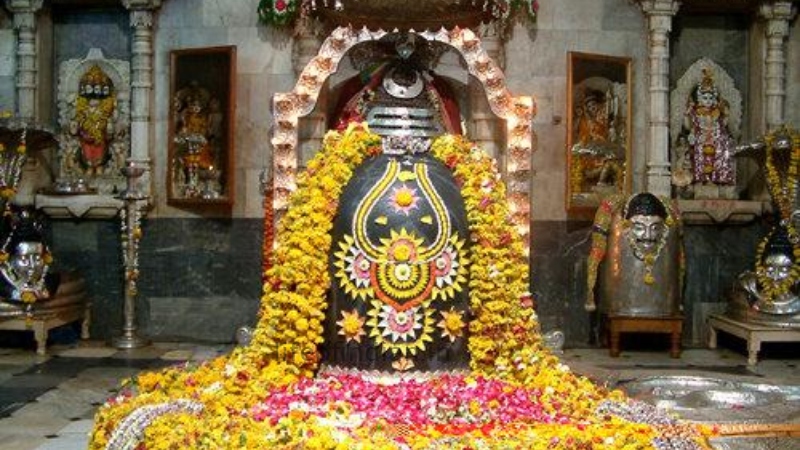
In Hindu temple architecture and spiritual tradition, the temple’s Shikhar and the Kalash placed upon it are believed to hold immense spiritual importance. Ancient scriptures describe the pinnacle as a center that attracts and radiates cosmic energy.
According to traditional beliefs, natural disasters, environmental changes, and the passage of time can weaken the spiritual vibrations of a sacred structure. Rituals like Kumbhabhishek are therefore performed to spiritually recharge and reawaken the divine energy of the temple.
During the Jalabhishek, sacred water from holy pilgrimage sites is poured over the pinnacle while Vedic mantras are chanted continuously by priests. Devotees believe this process purifies not only the temple but also the spiritual environment surrounding it. There is also a deeply rooted belief associated with Somnath that says:
“Shikhar Darshanam Paap “Nashanam”—merely looking at the temple pinnacle destroys sins.
Because of this belief, the Jalabhishek of the Shikhar is considered spiritually powerful not only for the temple but also for the millions of devotees emotionally connected to Somnath.
The Sacred Timing of the Ceremony
75 Years Since the Consecration of Modern Somnath
The date chosen for the ceremony carries enormous historical importance. On May 11, 1951, the modern Somnath Temple was formally consecrated by Dr. Rajendra Prasad, the first President of independent India. His presence at the ceremony was symbolic because Somnath represented not only a temple rebuilt after destruction, but also the rebirth of India’s cultural confidence after colonial rule.
Now, seventy-five years later, the grand Jalabhishek ceremony is being viewed as a continuation of that spiritual and national legacy. Prime Minister Narendra Modi’s participation connects modern India with its ancient civilizational roots and highlights Somnath’s role as a symbol of cultural identity. For many devotees and historians, the moment feels larger than a religious event. It represents continuity — a reminder that civilizations survive through faith, memory, and cultural preservation.
1000 Years Since Mahmud of Ghazni’s Attack
From Destruction to Rebirth
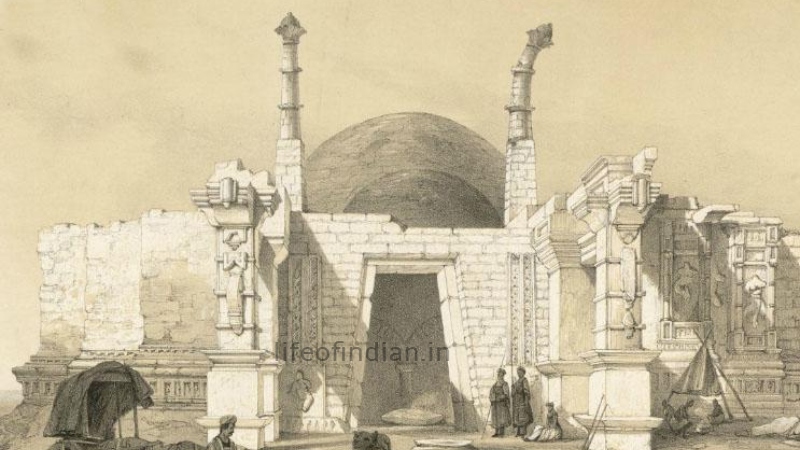
The year 2026 will mark 1000 years since the infamous invasion of Somnath by Mahmud of Ghazni in 1026 CE. His attack on the temple remains one of the most discussed and emotional chapters in Indian historical memory. The temple was looted and destroyed, but what followed became even more important than the destruction itself — Somnath rose again.
Over centuries, the temple faced repeated invasions and demolitions, yet every time it was rebuilt by devotees, rulers, and communities determined to preserve their spiritual heritage. Because of this extraordinary history, Somnath today symbolizes far more than religion. It stands as a monument to resilience, cultural survival, and collective faith.
The current Jalabhishek ceremony sends a powerful message to the world: Somnath may have been attacked many times, but its spirit remained immortal. This is why the celebration is also being described as a “Swabhiman Parv” — a festival of self-respect and civilizational pride.
A Blend of Ancient Faith and Modern Technology
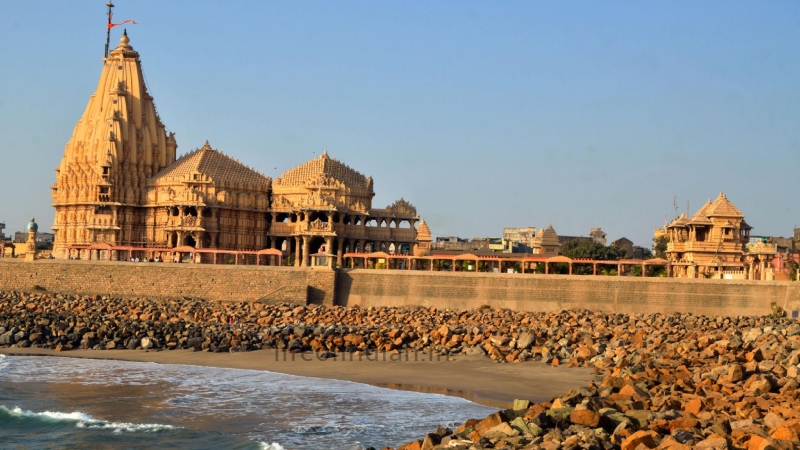
One of the most fascinating aspects of the ceremony is the way ancient rituals are being combined with modern engineering. While Vedic traditions guide the spiritual side of the event, advanced cranes and structural planning ensure the safety of the temple.
This blend perfectly reflects the larger vision surrounding Somnath today — preserving ancient heritage while embracing modern capabilities. The image of a giant crane carefully lifting a sacred Kalash filled with holy water toward the towering temple pinnacle creates a rare visual moment where devotion and technology appear together in harmony.
Why Somnath Continues to Inspire Millions
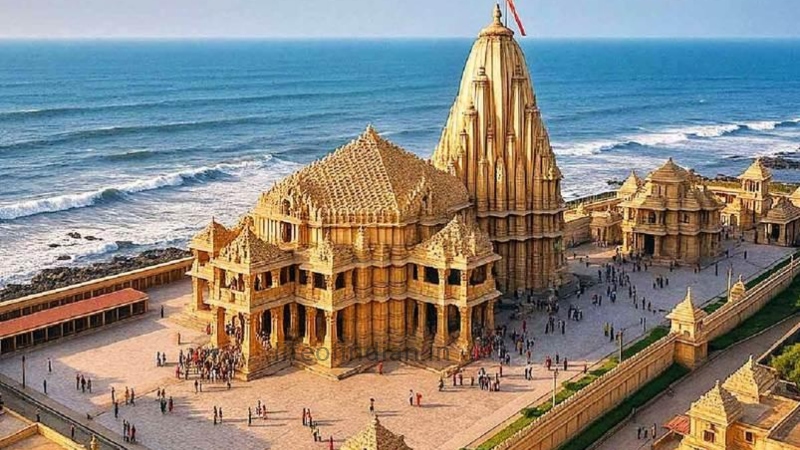
For devotees, Somnath is not just one of the twelve Jyotirlingas of Lord Shiva. It is a place where history, spirituality, struggle, and rebirth coexist. The sound of ocean waves beside the temple, the sight of the towering Shikhar, and the memory of its repeated reconstruction create an emotional experience that goes beyond ordinary pilgrimage.
Perhaps that is why every generation continues to return to Somnath. Because Somnath is not only about worship.
It is about endurance.
It is about identity.
And above all, it is about the belief that even after destruction, faith can rise stronger than before.
FAQ
1. What is the Somnath Shikhar Jalabhishek?
The Somnath Shikhar Jalabhishek is a historic ritual in which the sacred pinnacle of Somnath Temple is ceremonially bathed with holy water collected from 11 pilgrimage sites across India.
2. Why is the Somnath Jalabhishek historic?
This is believed to be the first time in history that such a grand-scale Jalabhishek of the Somnath Temple Shikhar is being performed.
3. How much holy water is being used in the ritual?
Around 1100 liters of holy water from various pilgrimage sites are being used for the Jalabhishek ceremony.
4. Why is the Shikhar important in Hindu temples?
According to Hindu beliefs, the temple Shikhar and Kalash are considered centers of spiritual and cosmic energy.
5. Why is 2026 important for Somnath Temple?
The year 2026 marks 1000 years since Mahmud of Ghazni’s attack on Somnath Temple in 1026 CE.
6. Who consecrated the modern Somnath Temple?
The modern Somnath Temple was consecrated on May 11, 1951, by India’s first president, Dr. Rajendra Prasad.