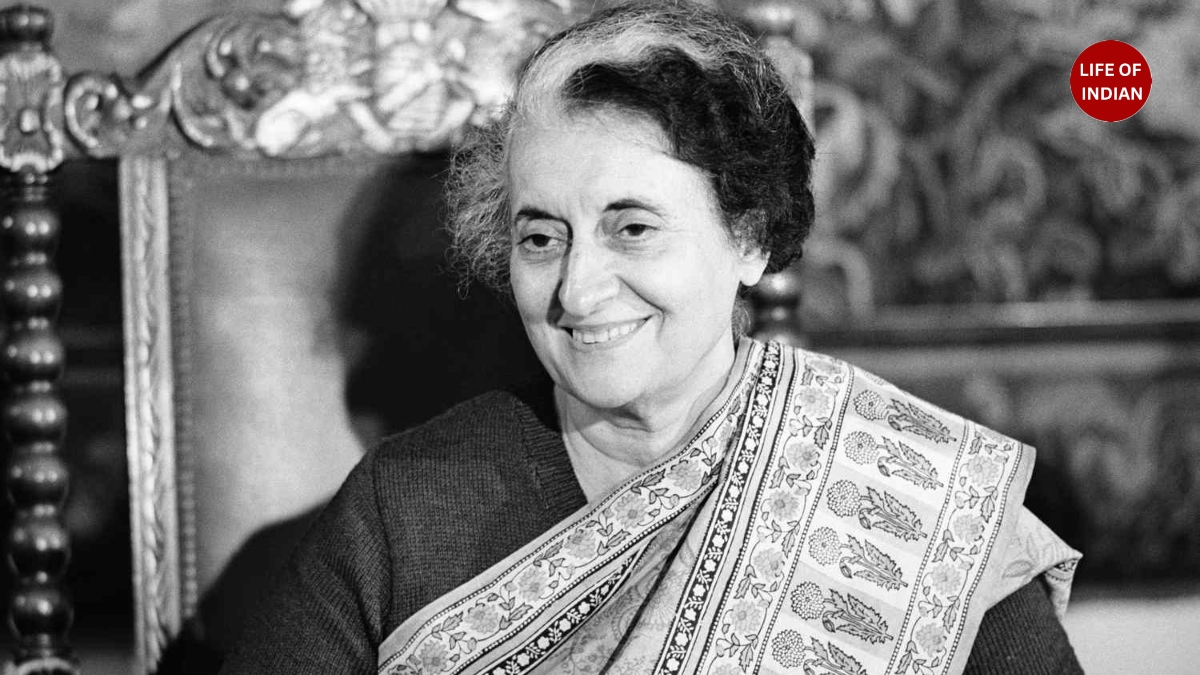
Indira Gandhi: There are some leaders who simply govern a country, and then there are leaders who become a chapter of history themselves. Indira Gandhi was one such figure. Strong, fearless, controversial, intelligent, emotional, and fiercely determined—she was not just India’s first woman Prime Minister, but also one of the most powerful women the world had ever seen in the 20th century.
At a time when politics across the world was dominated almost entirely by men, Indira Gandhi stood at the center of global diplomacy with extraordinary confidence. She led India through wars, economic struggles, political rebellions, and international pressure. To millions, she was “Iron Lady of India.” To others, she was a symbol of courage, discipline, and national strength. Even decades after her death, her name still inspires discussions about leadership, patriotism, women’s empowerment, and political power.
Her life was not easy. Behind the image of a powerful Prime Minister was a woman who faced loneliness, criticism, betrayal, political attacks, and personal tragedies. Yet she continued to move forward with unmatched determination. Her journey from being the shy daughter of Jawaharlal Nehru to becoming one of the most influential leaders in world politics remains one of the most remarkable stories in Indian history.
Usha Mehta Biography: The Woman Behind Congress Radio in India’s Freedom Struggle
Early Life: Born Into Politics
Indira Gandhi was born on November 19, 1917, in Allahabad (now Prayagraj), into one of India’s most influential political families. Her full name was Indira Priyadarshini Nehru. She was the only child of Jawaharlal Nehru and Kamala Nehru.
Her childhood was unlike that of ordinary children. While most children grew up surrounded by games and school routines, Indira grew up in an environment filled with political meetings, freedom fighters, and discussions about India’s independence movement. British police frequently visited her home because her father and grandfather were deeply involved in the struggle against British rule.
From a very young age, she witnessed sacrifice and patriotism closely. Her father spent long periods in prison during the freedom movement. Her mother suffered from poor health and eventually passed away when Indira was still young. These experiences made her emotionally strong but also deeply lonely.
Indira studied at institutions such as Visva-Bharati University and later attended Oxford University in England. Although she was intelligent and politically aware, she was initially considered quiet and reserved. Few people imagined that this young woman would one day become one of the most powerful political figures in the world.
Marriage and Personal Life
In 1942, Indira married Feroze Gandhi, a journalist and politician. Interestingly, Feroze Gandhi was not related to Mahatma Gandhi despite sharing the surname. Their marriage faced opposition from some sections of society because they belonged to different communities.
The couple had two sons:
Although Indira Gandhi later became known as a strong political leader, her personal life was filled with emotional struggles. Her relationship with Feroze Gandhi experienced tensions over time, and she also carried the burden of balancing family responsibilities with political duties.
Despite all this, motherhood remained deeply important to her. Her sons played major roles in her emotional and political life, especially Sanjay Gandhi, who became highly influential during the Emergency period.
Entry Into Politics
After India gained independence in 1947, Jawaharlal Nehru became the country’s first Prime Minister. Indira Gandhi began assisting her father in political and diplomatic matters. She traveled with him internationally and observed world politics closely. This exposure shaped her understanding of governance and diplomacy.
In 1959, she became the President of the Indian National Congress. After the death of Prime Minister Lal Bahadur Shastri in 1966, Congress leaders selected Indira Gandhi as Prime Minister. Many senior politicians believed she would remain weak and controllable. Some even mocked her as a “goongi gudiya” (silent doll). But history soon proved them completely wrong.
Becoming India’s First Woman Prime Minister
In 1966, Indira Gandhi officially became the first female Prime Minister of India.
At that time, even developed nations rarely trusted women with top political leadership. India was still a young democracy struggling with poverty, food shortages, unemployment, and political instability. The idea of a woman leading such a massive and diverse nation seemed unbelievable to many people around the world.
But Indira Gandhi gradually transformed public perception through decisive leadership. She did not try to behave like male politicians to gain acceptance. Instead, she created her own style of leadership — calm but firm, emotional yet strategic, compassionate yet fearless. For Indian women especially, her rise to power became historic. Millions of women saw, perhaps for the first time, that leadership was not limited by gender.
The “Garibi Hatao” Vision
One of Indira Gandhi’s most famous political slogans was “Garibi Hatao” (Remove Poverty). She focused heavily on helping poor citizens and strengthening the role of the central government in economic development. During her leadership, several major reforms were introduced, including bank nationalization in 1969. This decision brought major banks under government control so that loans and financial support could reach ordinary people, farmers, and rural areas.
She also abolished the “privy purse” system, ending special privileges and payments given to former royal families after independence. To many ordinary Indians, especially the poor and rural population, Indira Gandhi became a symbol of hope and strength.
The Green Revolution: Saving India From Hunger
One of Indira Gandhi’s greatest achievements was supporting the Green Revolution. During the 1960s and 1970s, India faced severe food shortages and depended heavily on foreign grain imports.
Under her leadership, the government promoted:
- High-yield crop varieties
- Modern farming techniques
- Irrigation projects
- Fertilizer subsidies
- Agricultural modernization
These reforms dramatically increased food production in India. The Green Revolution transformed India from a food-deficient nation into a country capable of feeding its own population. This achievement remains one of the most important milestones in independent India’s history. Even today, many people remember Indira Gandhi for strengthening India’s self-reliance in agriculture.
The 1971 War and the Birth of Bangladesh
Perhaps the defining moment of Indira Gandhi’s leadership came during the 1971 India-Pakistan War. At that time, East Pakistan (now Bangladesh) was facing extreme political violence and humanitarian crisis. Millions of refugees entered India. Indira Gandhi strongly supported the Bengali freedom movement and took the issue to the international stage.
When war broke out, India achieved a historic victory against Pakistan in just 13 days, leading to the creation of Bangladesh. This victory elevated Indira Gandhi’s image dramatically. Even political opponents admired her courage and strategic leadership. She was widely celebrated as a powerful wartime leader. For many Indians, this moment symbolized national pride, confidence, and global recognition.
India’s Nuclear Strength
Indira Gandhi also played a major role in strengthening India’s scientific and strategic power. In 1974, India conducted its first successful nuclear test at Pokhran, known as “Smiling Buddha.”
This demonstrated India’s technological capability and strengthened the country’s international standing. It also reinforced the idea of India becoming self-reliant and strategically independent.
The Emergency: The Most Controversial Chapter
No discussion about Indira Gandhi is complete without mentioning the Emergency (1975–1977).
After political protests and a court ruling challenged her election, a nationwide Emergency was declared. Civil liberties were suspended, opposition leaders were arrested, and press censorship was imposed. For many people, this period remains one of the darkest phases of Indian democracy. Critics accused her government of authoritarian behavior and misuse of power.
Yet, despite heavy criticism, Indira Gandhi later accepted electoral defeat in 1977 and peacefully handed over power after losing elections. This chapter remains deeply debated even today. Some view it as a necessary response to political instability, while others see it as a serious attack on democratic freedom. Her legacy therefore remains both inspiring and controversial — a rare combination seen in powerful world leaders.
Return to Power
Many believed Indira Gandhi’s political career had ended after her defeat in 1977. But she made an extraordinary comeback. In 1980, she returned as Prime Minister once again, proving her unmatched political influence and public connection. Her comeback demonstrated one of her greatest strengths: resilience. She faced criticism, defeat, humiliation, and political isolation — yet she returned stronger.
Operation Blue Star and Assassination
During the early 1980s, Punjab witnessed rising separatist violence. In 1984, Indira Gandhi ordered Operation Blue Star, a military operation inside the Golden Temple complex to remove armed militants.
The operation deeply hurt Sikh sentiments and created massive controversy across the country. On October 31, 1984, Indira Gandhi was assassinated by two of her Sikh bodyguards in retaliation for the operation. Her death shocked India and the entire world.
Why Indira Gandhi Still Inspires People Today
Even decades later, Indira Gandhi continues to inspire millions — especially women.
1. She Broke Gender Barriers
At a time when women were rarely trusted with leadership, she led the world’s largest democracy with authority and confidence.
She proved that leadership is not determined by gender but by courage, intelligence, and determination.
2. She Was Fearless
Whether during war, international pressure, or political crisis, she rarely appeared afraid of taking difficult decisions.
Her bold leadership style continues to inspire women entering politics, administration, business, and public life.
3. She Believed in National Strength
Indira Gandhi strongly believed India should stand independently on the global stage. From agriculture to nuclear development, her policies focused on self-reliance.
4. She Rose After Every Defeat
Her life teaches an important lesson: setbacks are not the end.
Despite political defeats and intense criticism, she returned stronger each time.
The Legacy of the Iron Lady
Indira Gandhi’s legacy is complex, powerful, emotional, and unforgettable. Some remember her as the leader who made India stronger internationally. Others admire her for transforming agriculture and empowering the poor. Many women see her as proof that determination can break even the strongest barriers. At the same time, her mistakes and controversial decisions remind future leaders about the importance of democracy, balance, and accountability.
But whether people admire her or criticize her, one thing is undeniable: Indira Gandhi changed India forever. Her story is not merely about politics. It is about ambition, sacrifice, resilience, power, motherhood, patriotism, and leadership. And perhaps that is why, even today, the name Indira Gandhi continues to echo through Indian history like the voice of an era that refused to be forgotten.