


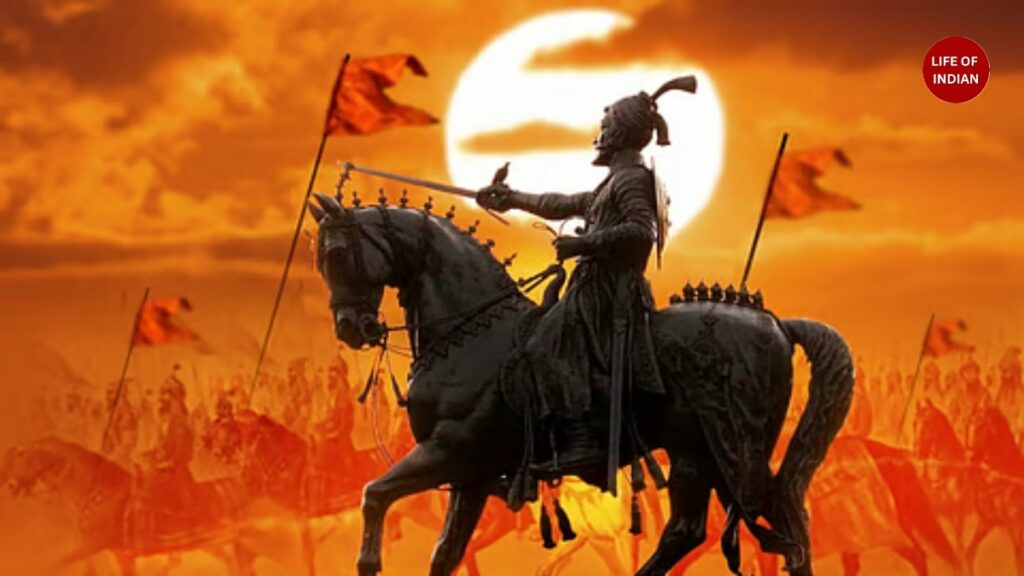
Every year on April 3, India remembers one of its greatest warriors and visionary rulers, Chhatrapati Shivaji Maharaj, on his Punyatithi (death anniversary). This day is not just about mourning his death but about honoring his extraordinary life, leadership, and contribution to the idea of Swarajya (self-rule).
Shivaji Maharaj was more than a king; he was a revolutionary leader who laid the foundation of the Maratha Empire and challenged the powerful Mughal rule in the 17th century. His courage, administrative skills, military strategies, and commitment to justice continue to inspire millions of Indians even today.
Shivaji Maharaj passed away on April 3, 1680, at Raigad Fort, but his legacy still lives in the hearts of people across India.
Who Was Chhatrapati Shivaji Maharaj?
Chhatrapati Shivaji Maharaj was the founder of the Maratha Kingdom and one of the most influential rulers in Indian history. Born in the 17th century, he emerged as a powerful leader who fought against oppression and established an independent Hindu kingdom in western India.
He is widely respected for:
- Establishing Swarajya
- Fighting Mughal and Deccan Sultanates
- Building a strong navy
- Protecting religion and culture
- Practicing religious tolerance
- Creating an efficient administration
Historians consider him one of the most progressive and visionary rulers of his time.
Birth and Early Life of Shivaji Maharaj
Shivaji Maharaj was born in 1630 at Shivneri Fort near Pune, Maharashtra. His father Shahaji Bhonsle was a Maratha general, and his mother Jijabai played a crucial role in shaping his character and values.
Influence of Mother Jijabai
Jijabai was deeply religious and brave. She narrated stories from Ramayana and Mahabharata to young Shivaji and taught him:
- Dharma and righteousness
- Courage and bravery
- Respect for women
- Love for the motherland
- Importance of self-rule
Her teachings planted the seed of Swarajya in Shivaji’s mind from childhood.
Education and Training
Shivaji received military training under Dadoji Konddev, who taught him:
- Sword fighting
- Horse riding
- Military strategy
- Administration
- Fort management
From a young age, Shivaji showed leadership and strategic thinking.
The Dream of Swarajya
At a time when India was dominated by Mughal Empire in the north and Bijapur and Golconda Sultanates in the south, Shivaji dreamt of an independent kingdom for his people.
By the age of 16, Shivaji started capturing small forts and building his own army.
His mission was clear:
“Establish Swarajya and protect people from oppression.”
He began forming a loyal group of soldiers called Mavlas, who later became the backbone of his army.
According to historical records, Shivaji started capturing weak outposts of the Bijapur Sultanate around 1655, marking the beginning of his empire.
Military Strategies of Shivaji Maharaj
One of the biggest reasons behind Shivaji’s success was his unique military strategy.
Guerrilla Warfare (Ganimi Kava)
Shivaji introduced Guerrilla Warfare, known as Ganimi Kava.
This strategy included:
- Surprise attacks
- Night raids
- Mountain warfare
- Fast-moving cavalry
- Quick escape plans
- Small but powerful army
This helped him defeat much larger Mughal armies.
Major Battles and Victories
Battle with Afzal Khan
One of the most famous events in Shivaji’s life was his battle with Afzal Khan, the general of Bijapur Sultanate.
Afzal Khan tried to kill Shivaji during a meeting, but Shivaji used:
- Wagh Nakh (tiger claws)
- Hidden armor
He killed Afzal Khan and defeated his army.
This victory made Shivaji famous across India.
Attack on Surat
Shivaji attacked Surat, a wealthy Mughal trading city.
The raid helped him:
- Collect wealth
- Strengthen his army
- Challenge Mughal authority
This attack shocked the Mughal Empire.
According to historical records, Shivaji conducted daring raids including the sacking of Surat, which challenged Mughal power.
Escape from Agra
One of the most dramatic events in Indian history was Shivaji’s escape from Agra.
Mughal Emperor Aurangzeb had imprisoned Shivaji.
But Shivaji escaped cleverly by hiding in sweet baskets and returned safely to Maharashtra.
This incident showed his intelligence and bravery.
Coronation of Shivaji Maharaj
In 1674, Shivaji Maharaj was officially crowned as Chhatrapati at Raigad Fort.
This coronation marked:
- Birth of Maratha Empire
- Establishment of Swarajya
- Recognition as independent king
He created a strong administrative system with Ashta Pradhan Mandal (Council of Eight Ministers).
This was the formal beginning of the Maratha Empire.
Administration and Governance
Shivaji Maharaj was not just a warrior but also a great administrator.
Ashta Pradhan Mandal
His council included:
- Peshwa – Prime Minister
- Amatya – Finance Minister
- Sachiv – Secretary
- Senapati – Army Chief
- Panditrao – Religious head
- Nyayadhish – Justice Minister
This system ensured smooth governance.
Religious Tolerance and Social Reforms
Shivaji Maharaj believed in religious harmony.
His policies included:
- Protection of mosques and temples
- Respect for all religions
- No forceful conversions
- Safety of women and civilians
- Equal treatment of people
Many Muslims served in his army and administration.
Historians highlight that Shivaji practiced religious tolerance and protected places of worship.
Shivaji Maharaj and Naval Power
Shivaji understood the importance of sea power.
He built a strong navy to protect coastal areas.
His navy:
- Protected trade routes
- Stopped foreign invasions
- Strengthened coastal forts
He is known as the Father of Indian Navy.
Last Years of Shivaji Maharaj
In his final years, Shivaji faced:
- Internal conflicts
- Family tensions
- Political challenges
- Mughal pressure
Despite these challenges, he continued to protect his kingdom.
He ruled for about 6 years after coronation and strengthened the empire.
Death of Shivaji Maharaj
Chhatrapati Shivaji Maharaj passed away on April 3, 1680, at Raigad Fort after suffering from illness.
Some historical records suggest:
- Fever
- Dysentery
- Health complications
His death shocked the Maratha Empire.
After his death, his son Sambhaji Maharaj became the next ruler.
Shivaji’s death marked the end of an era but not the end of his legacy.
Why Shivaji Maharaj Punyatithi Is Important
Shivaji Maharaj Punyatithi is observed to:
- Remember his sacrifices
- Honor his leadership
- Celebrate Swarajya
- Inspire youth
- Promote patriotism
- Respect Indian history
People across India pay tribute through:
- Events and rallies
- Cultural programs
- Speeches
- Tributes at statues
- Social media campaigns
Legacy of Shivaji Maharaj
Shivaji Maharaj’s legacy is eternal.
He gave India:
- Swarajya concept
- Strong military system
- Efficient administration
- Religious harmony
- National pride
- Fearless leadership
Historians believe he revived the spirit of self-rule and inspired future generations to fight for freedom.
Inspirational Quotes of Shivaji Maharaj
“Freedom is a blessing which everyone has the right to receive.”
“Do not think of the enemy as weak, then you will never be defeated.”
“When enthusiasm increases, obstacles become smaller.”
Chhatrapati Shivaji Maharaj was not just a king but a symbol of courage, justice, and self-rule. His life teaches us the importance of leadership, patriotism, and determination.
On his Punyatithi, India remembers a warrior who stood against powerful empires and created a kingdom based on justice and equality.
Even after more than 300 years, Shivaji Maharaj continues to inspire millions with his vision of Swarajya and his fearless spirit.
Salute to the Great Maratha Warrior – Chhatrapati Shivaji Maharaj.
FAQ
1. When is Chhatrapati Shivaji Maharaj Punyatithi observed?
Chhatrapati Shivaji Maharaj Punyatithi is observed every year on April 3 to mark the death anniversary of the great Maratha warrior king.
2. When did Shivaji Maharaj die?
Shivaji Maharaj passed away on April 3, 1680, at Raigad Fort in Maharashtra after suffering from illness.
3. Why is Shivaji Maharaj Punyatithi important?
This day is important because it honors Shivaji Maharaj’s contribution to Swarajya, military strategy, administration, and Indian history, inspiring generations.
4. Who was Shivaji Maharaj?
Shivaji Maharaj was the founder of the Maratha Empire and one of India’s greatest warrior kings, known for his bravery, governance, and guerrilla warfare strategy.
5. Who became king after Shivaji Maharaj?
After Shivaji Maharaj’s death, his son Sambhaji Maharaj became the next ruler of the Maratha Empire.
6. Where did Shivaji Maharaj die?
Shivaji Maharaj died at Raigad Fort, which was the capital of the Maratha Empire.