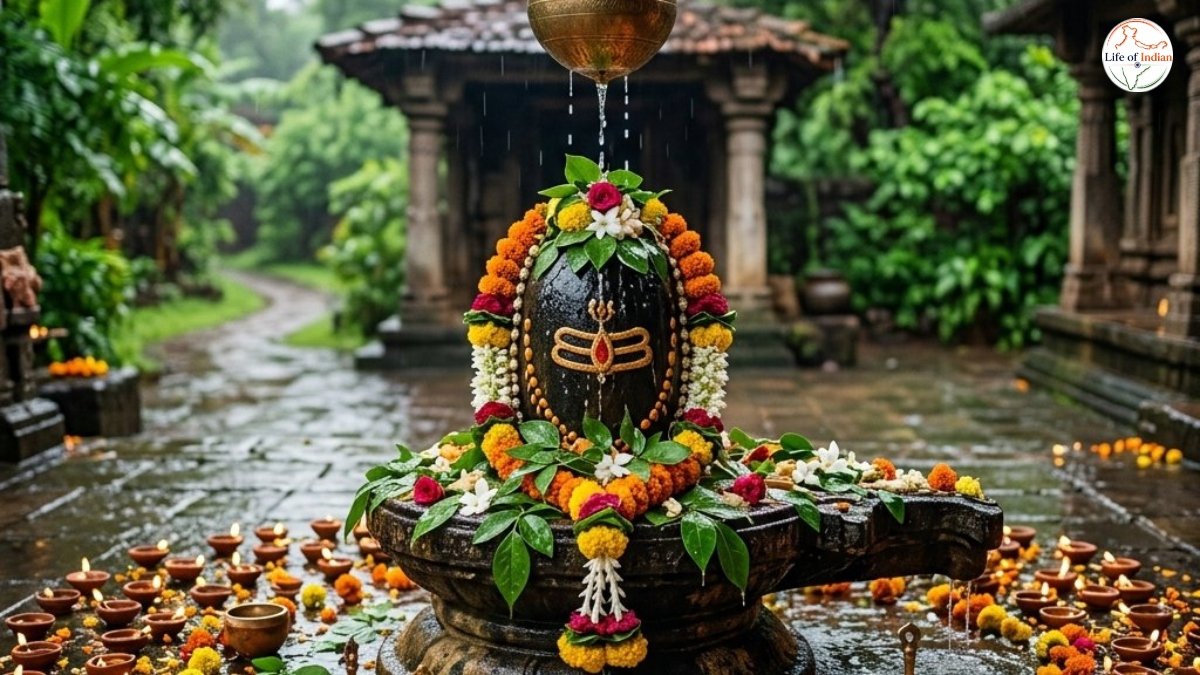
As the first monsoon showers touch the earth, nature awakens with a fresh sense of life. The dry fields turn green, rivers begin to flow with renewed energy, and the air fills with the soothing fragrance of rain. For millions of Hindus, however, this season represents something far greater than a change in weather—it marks the arrival of Sawan, also known as Shravan, the holiest month dedicated to the worship of Lord Shiva.
Across India, temples resonate with the chants of “Har Har Mahadev” and “Om Namah Shivaya.” Devotees observe fasts, offer sacred water and milk to the Shivling, perform Rudrabhishek, undertake the Kanwar Yatra, and spend the month in prayer and meditation. From bustling cities to remote villages, Sawan transforms daily life into a celebration of faith, devotion, and spiritual discipline.
But have you ever wondered why Sawan holds such an extraordinary place in Hinduism?
Why is this particular month considered especially dear to Lord Shiva? Why do millions of people observe fasts on Mondays? Why is Ganga water poured over the Shivling? Is there any historical, astronomical, or scientific significance behind these traditions?
The answers lie in ancient Hindu scriptures, fascinating mythological stories, and centuries-old traditions that continue to inspire devotees even today. Sawan is not simply a religious observance; it is a sacred period that symbolizes purification, self-discipline, gratitude, and the eternal bond between devotees and Lord Shiva. In this article, we will explore the complete story of Sawan—from its origin and meaning to the mythology, astronomical significance, and the reason why offering water and milk to Lord Shiva became one of Hinduism’s most cherished traditions.
What Is Sawan (Shravan)?
Sawan, traditionally known as Shravan, is one of the twelve months of the Hindu lunar calendar. It usually falls between July and August in the Gregorian calendar, although the exact dates vary every year depending on the lunar cycle and regional calendar traditions. The month derives its importance from both astronomical observations and religious beliefs. During this period, the Moon is associated with the Shravana Nakshatra, one of the twenty-seven lunar constellations described in Vedic astronomy. Because of this celestial connection, the month came to be known as Shravan.
In Hindu tradition, Shravan is considered the most auspicious month for the worship of Lord Shiva. It is believed that prayers, meditation, charity, and acts of devotion performed during this month bring immense spiritual merit and help devotees attain peace, prosperity, and divine blessings. Throughout the month, millions of people observe Shravan Somwar Vrat (Monday fasts), perform Jal Abhishek by offering water to the Shivling, chant Shiva mantras, visit temples, and participate in religious gatherings. Sawan is therefore much more than a month on the calendar—it is regarded as a sacred period for spiritual renewal and self-reflection.
Why Does the Month of Sawan Come?
The Astronomical and Hindu Calendar Explanation
To understand the significance of Sawan, it is important to know how the Hindu calendar works. Unlike the Gregorian calendar, which is based solely on the movement of the Earth around the Sun, the Hindu calendar is primarily lunisolar. It combines the cycles of both the Moon and the Sun to determine months, festivals, and auspicious occasions.
Each Hindu month is closely connected with the position of the Moon among the 27 Nakshatras (lunar constellations). The month of Shravan derives its name from Shravana Nakshatra, because during the full moon of this month, the Moon is either in or near this constellation. Astronomically, Shravan usually coincides with the peak of the Indian monsoon season. Rivers are replenished, forests flourish, and the environment undergoes remarkable transformation. Ancient Indian sages observed this intimate relationship between the celestial cycles and seasonal changes, integrating them into the religious calendar.
The rainy season also naturally encouraged a slower pace of life. Agricultural communities found this period ideal for prayer, study, meditation, and spiritual practices. As a result, Shravan gradually became associated with religious observances, temple worship, fasting, and devotion to Lord Shiva. Thus, while the timing of Sawan is determined by astronomy, its spiritual significance has evolved through centuries of Hindu tradition.
Origin of the Name “Shravan”
The word Shravan has deep roots in Sanskrit. Most scholars agree that the month is named after Shravana Nakshatra, one of the twenty-seven Nakshatras mentioned in Vedic astronomy. The Sanskrit word “Shravana” is also linked to the root “Shru,” meaning “to hear” or “to listen.” In Hindu philosophy, listening is considered the first step toward acquiring spiritual wisdom. Ancient sages believed that true knowledge begins by listening to sacred teachings, scriptures, and divine wisdom.
Because of this association, Shravan is often regarded as a month dedicated not only to worship but also to learning, reflection, and inner transformation. Many devotees spend the month reading sacred texts such as the Shiva Purana, Rudram, Mahamrityunjaya Mantra, and other devotional scriptures to deepen their understanding of Lord Shiva. The name itself therefore reflects both an astronomical identity and a spiritual philosophy.
Why Is Sawan Dedicated to Lord Shiva?
Among all Hindu deities, Lord Shiva shares the deepest connection with the month of Shravan. Several ancient scriptures, including the Shiva Purana, Skanda Purana, and various regional traditions, describe Shravan as the most beloved month of Mahadev.
There are several reasons for this association. First, Lord Shiva is considered the supreme ascetic who lives in harmony with nature. The rainy season reflects renewal, balance, and the restoration of life after the scorching summer. These qualities resonate deeply with Shiva’s role as both the destroyer of negativity and the protector of creation.
Secondly, according to Hindu mythology, the events of the Samudra Manthan took place during this sacred period. It was during this cosmic event that Lord Shiva performed one of the greatest acts of sacrifice in Hindu tradition by consuming the deadly Halahala poison to save the universe. Because of this divine act, devotees began worshipping Shiva with sacred water to cool the intense heat caused by the poison. Over time, this act of gratitude evolved into one of Hinduism’s most important annual traditions.
The Story of Samudra Manthan and the Halahala Poison
One of the most famous stories associated with Sawan comes from the Samudra Manthan, or the Churning of the Ocean of Milk. According to Hindu mythology, the Devas (gods) and the Asuras (demons) joined forces to churn the cosmic ocean in search of Amrita, the nectar of immortality. Mount Mandara was used as the churning rod, while the great serpent Vasuki served as the rope.
As the churning progressed, numerous divine treasures emerged from the ocean, including Kamadhenu, Airavata, Lakshmi, the Kaustubha jewel, and many celestial beings. However, before the nectar appeared, a terrifying and highly destructive poison called Halahala surfaced.
The poison was so deadly that it threatened to destroy all living beings and the entire universe. Neither the gods nor the demons could control its immense power. In their desperation, they sought refuge in Lord Shiva. Without hesitation, Shiva accepted the burden of protecting creation. He drank the deadly poison but, instead of swallowing it completely, held it in his throat to prevent it from spreading throughout his body. Seeing the immense sacrifice of Lord Shiva, Goddess Parvati gently held His throat, preventing the poison from descending further. The poison remained in His throat, turning it blue.
From that day onward, Lord Shiva became known as Neelkanth, meaning “the Blue-Throated One.” This story symbolizes Shiva’s willingness to absorb the suffering of the world while protecting all forms of life.
Why Did Lord Shiva Choose Sawan?
A common question among devotees is whether Lord Shiva personally chose the month of Sawan. Ancient scriptures do not state that Shiva formally selected the month in the way modern language often suggests. Rather, Hindu tradition gradually came to regard Shravan as His favourite month because of the divine events associated with it. According to popular belief, after consuming the Halahala poison, Lord Shiva experienced intense internal heat. To relieve this suffering, the Devas and sages continuously offered cool, sacred water from the River Ganga upon Him.
This ritual of pouring water symbolized gratitude, compassion, and devotion. Since these events are traditionally linked with the month of Shravan, devotees believe that worship performed during this period is especially pleasing to Lord Shiva. Thus, rather than Shiva “choosing” Sawan, it is the sacred memories of His supreme sacrifice that made Shravan the holiest month for His worship.
Why Do Devotees Offer Water and Milk on the Shivling?
One of the most recognisable rituals during Sawan is Jal Abhishek and Dugdh Abhishek, where devotees pour water and milk over the Shivling.
The tradition is primarily rooted in the story of Samudra Manthan. After Lord Shiva consumed the Halahala poison, the Devas are believed to have offered sacred Ganga water to cool His body. Over time, devotees continued this symbolic act as an expression of love, gratitude, and reverence.
Water represents purity, peace, and the flow of life. Offering water reminds devotees to surrender their ego and cleanse their hearts before the Divine. Milk, on the other hand, symbolises purity, nourishment, and serenity. In many Hindu traditions, it is offered as a mark of respect and devotion, representing the devotee’s wish for inner peace and spiritual growth.
The Shivling itself is not merely a stone idol but a profound symbol of the infinite, formless nature of Lord Shiva. Performing Abhishek is therefore seen as an act of connecting oneself with the divine consciousness that Shiva represents. For millions of devotees, these rituals are not simply ceremonial practices—they are acts of humility, gratitude, and spiritual surrender, reminding them that just as water continuously flows over the Shivling, divine grace flows endlessly upon those who worship with sincere faith.
FAQ
1. What is Sawan (Shravan)?
Sawan, also known as Shravan, is the fifth month of the Hindu lunar calendar and is considered the holiest month dedicated to Lord Shiva. It usually falls between July and August and is marked by fasting, prayers, and special Shiva worship.
2. Why is Sawan dedicated to Lord Shiva?
According to Hindu tradition, Lord Shiva consumed the deadly Halahala poison during the Samudra Manthan to save the universe. Devotees believe that offering prayers and performing Jal Abhishek during Sawan honors His sacrifice and brings divine blessings.
3. Why do devotees offer water and milk on the Shivling?
Offering water symbolizes purity and gratitude, while milk represents peace and nourishment. The ritual is linked to the belief that sacred water was offered to Lord Shiva to cool the effects of the Halahala poison after Samudra Manthan.
4. What is the significance of Samudra Manthan in Sawan?
The Samudra Manthan, or Churning of the Ocean, is one of the most important mythological events associated with Lord Shiva. During this event, Shiva consumed the Halahala poison to protect the universe, making Him revered as Neelkanth and strengthening the spiritual importance of Sawan.
5. Why do people observe fasts during Sawan?
Devotees observe Sawan fasts to express devotion to Lord Shiva, seek spiritual purification, practice self-discipline, and pray for health, prosperity, inner peace, and the fulfillment of sincere wishes.