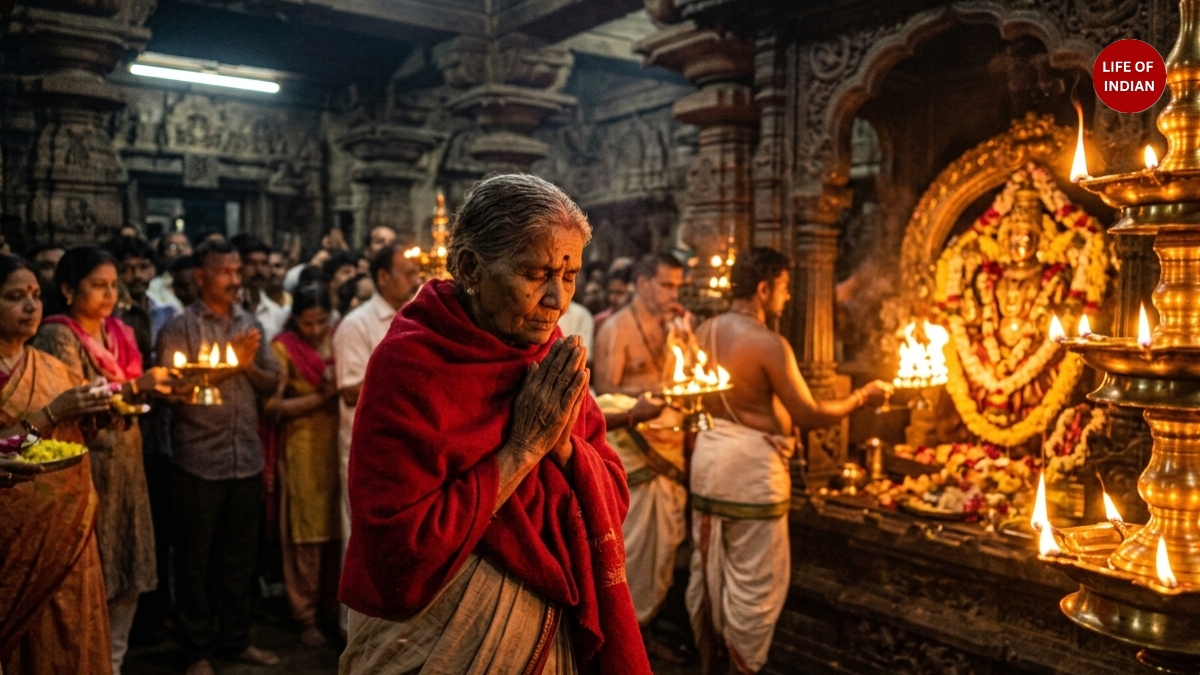
In the coastal city of Mangaluru, there is an ancient temple that has suddenly become the center of intense curiosity across social media. Videos showing devotees wrapped in devotion, red ceremonial cloths being offered to the deity, and long queues of worshippers have turned this centuries-old spiritual site into a viral topic of discussion. But people are not visiting this temple only because of its age or architecture.
They are coming because of a deeply mysterious ritual known as Rakta Kambala Puja—a sacred offering believed by devotees to help relieve skin-related illnesses and physical suffering. Some call it faith. Some call it tradition. Others see it as a psychological and spiritual healing practice that has survived for over a millennium. At the heart of this growing fascination stands the ancient Sri Suryanarayana Temple—a temple where spirituality, folklore, health beliefs, and centuries-old rituals continue to shape the lives of thousands.
The Ancient Temple That Refuses to Fade with Time
Hidden in the Maroli area of Mangaluru, the Sri Suryanarayana Temple is believed to be nearly 1,200 years old. Even in an age dominated by technology and modern medicine, the temple continues to attract devotees from across Karnataka and neighboring states. The atmosphere here feels different from most modern temples.
The sound of temple bells echoes through the air. Oil lamps flicker against ancient stone walls. Devotees stand silently with folded hands as priests perform rituals dedicated to Surya Dev—the Hindu Sun God associated with health, energy, vitality, and healing. For locals, this temple is not just a religious structure. It is a living symbol of protection and hope. And among all the rituals performed here, none draws more attention than the mysterious Rakta Kambala Puja.
What Exactly Is Rakta Kambala Puja?
The name itself sounds intriguing. “Rakta” means red or blood-related, while “Kambala” refers to a cloth or covering, often interpreted as a red ceremonial fabric offered during worship. Together, the ritual symbolizes an offering made to Surya Dev in the hope of removing suffering, especially skin-related diseases and physical discomfort.
According to temple traditions, devotees participate in this puja seeking relief from chronic skin conditions, unexplained body ailments, and health disturbances. Red cloth, red flowers, and items associated with the Sun God are offered during the ceremony. The belief behind the ritual is deeply connected to ancient Hindu traditions that associate the Sun with healing energy and life force.
In Hindu scriptures, Surya is often described as the giver of health, strength, and immunity. Even today, many spiritual practices such as Surya Namaskar and early morning sun worship are linked with physical and mental wellness. The Rakta Kambala ritual appears to carry the same philosophy — that divine energy can restore balance to the body and mind.
The Legend Behind the Temple’s Reconstruction
One of the most fascinating aspects of the temple is the story linked to its reconstruction nearly 450 years ago. According to local history and oral traditions, the region surrounding the temple was once suffering from repeated hardships and instability. Seven nearby villages — Maroli, Padavu, Alape, Bajal, Kannur, Jeppu, and Kankanadi — were said to be facing various forms of suffering and unrest.
It is believed that a Jain queen decided to rebuild and restore the temple to bring peace and positive energy back to the region. This part of the story surprises many people.
A Jain queen rebuilding a Hindu Sun temple reflects the unique cultural harmony that once existed in coastal Karnataka, where different communities often supported sacred spaces beyond religious boundaries. Locals still believe that the reconstruction helped restore spiritual balance to the area. And over time, the temple became associated not only with devotion but also with healing.
The Strange Story of the “Ball of Light”
The temple is also surrounded by mystical stories that continue to intrigue devotees. One of the most famous legends claims that sages and spiritual seekers once witnessed a glowing “ball of light” at this very location. The unusual phenomenon was interpreted as a divine sign, after which worship reportedly began at the site.
Whether one sees this as mythology, spiritual symbolism, or unexplained experience, the story has become an inseparable part of the temple’s identity. Even today, many devotees describe the temple as a place with unusually calming energy. Some speak of emotional relief. Others claim mental peace after participating in rituals. And for believers, these experiences strengthen the temple’s sacred reputation even further.
How the Ritual Is Performed
The Rakta Kambala Puja follows a structured traditional process. Devotees first take a sankalpa — a sacred vow or intention — through the temple priests. The ritual is then performed using red-colored ceremonial cloth, flowers, and offerings associated with Surya Dev.
The puja is conducted before the deity of Lord Suryanarayana with prayers focused on health, relief from suffering, and overall well-being. For many families, this is not merely a ritual. It is an emotional act of hope. Some arrive after years of medical treatments that brought little relief. Others come because family traditions instructed them to seek blessings here during difficult times.
Though there is no scientific evidence proving that the ritual cures diseases, faith itself often becomes a powerful emotional force. And that belief keeps the tradition alive.
Why the Temple Is Suddenly Going Viral
For decades, the temple remained largely known among locals and regional devotees. But social media changed everything. Videos showing massive crowds, unique rituals, and emotional testimonies from devotees have sparked widespread curiosity online. As clips from the temple spread across platforms, people from different parts of India began asking the same question:
“Can faith really heal?”
The internet’s fascination with ancient rituals and hidden spiritual places has brought renewed attention to the temple. Many visitors now arrive not only for worship but also to witness the mysterious atmosphere themselves. This rise in popularity reflects a larger trend in modern India — where ancient traditions are finding new visibility through digital culture.
Where Faith Meets Psychology
Interestingly, the growing interest in Rakta Kambala Puja also opens a deeper conversation about the relationship between faith and healing. Medical science does not officially confirm the healing claims associated with the ritual. Skin diseases and chronic illnesses require proper diagnosis and treatment by healthcare professionals.
Yet psychologists and researchers have long acknowledged that faith, emotional stability, and mental peace can positively influence a person’s overall well-being. Rituals often provide hope, emotional support, and a sense of control during difficult times. In many cases, this psychological comfort becomes deeply meaningful for people struggling with long-term health problems.
Perhaps this is why devotees continue returning to the temple generation after generation. Not simply because they expect miracles — but because they seek peace.
A Temple That Represents More Than Religion
Today, the Sri Suryanarayana Temple stands as more than an ancient place of worship. It represents continuity in a rapidly changing world. It reflects how traditions survive through stories, rituals, and collective belief.
And most importantly, it reveals something timeless about human nature: when people suffer, they search not only for medicine but also for meaning, hope, and reassurance. In the quiet prayers offered during Rakta Kambala Puja, that search continues — just as it has for centuries.
FAQ
1. What is Rakta Kambala Puja?
Rakta Kambala Puja is a special ritual performed at the Sri Suryanarayana Temple in Mangaluru, Karnataka. Devotees believe it is associated with healing and relief from skin-related problems.
2. Where is the Sri Suryanarayana Temple located?
The temple is located in the Maroli area of Mangaluru.
3. How old is the Sri Suryanarayana Temple?
The temple is believed to be around 1,200 years old and remains an important spiritual site in coastal Karnataka.
4. Why is the temple going viral on social media?
Videos and stories about the mysterious Rakta Kambala Puja and devotees’ experiences have made the temple widely discussed online.
5. Is there scientific proof behind the healing claims?
There is no scientific evidence confirming that the ritual cures diseases. However, many devotees visit the temple because of faith and spiritual belief.
6. Who rebuilt the temple 450 years ago?
According to local history, the temple was reconstructed by a Jain queen nearly 450 years ago to bring peace and positivity to nearby villages.