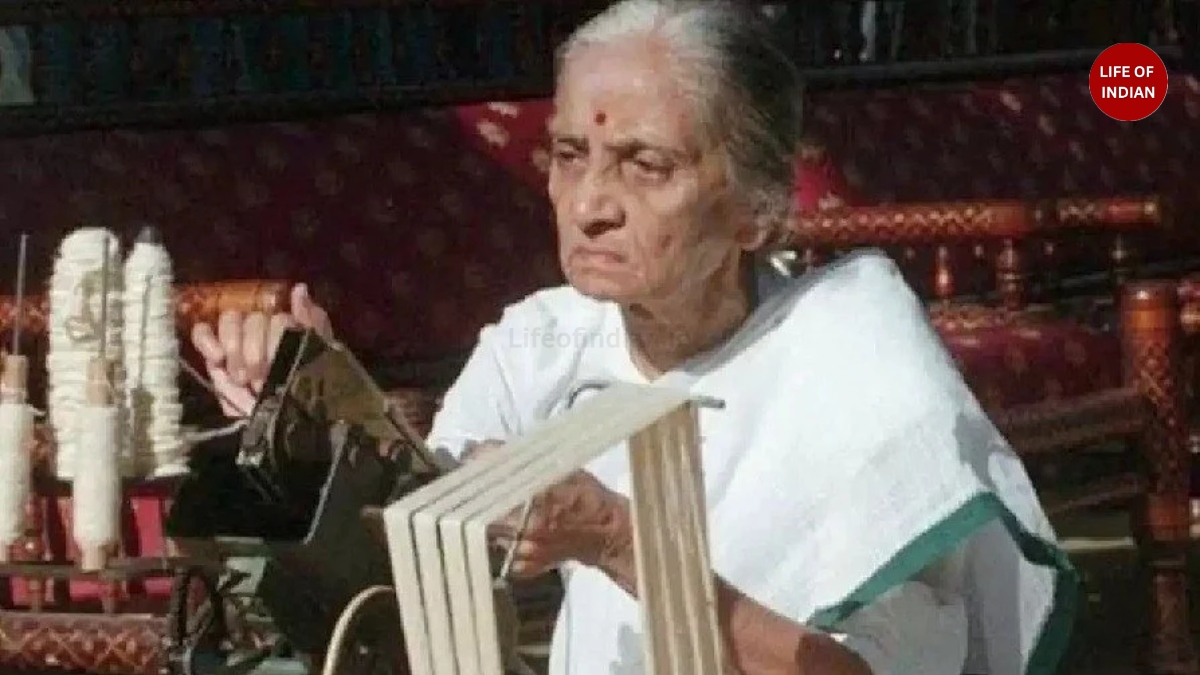
Usha Mehta Biography: In the vast and inspiring saga of India’s freedom struggle, many heroes became legends—but some voices worked silently, yet powerfully, behind the scenes. One such remarkable figure was Usha Mehta, a young Gandhian who transformed radio waves into a weapon of resistance. At a time when British censorship silenced newspapers and leaders were imprisoned, her underground broadcasts became the heartbeat of a nation yearning for freedom. “Usha Mehta is also often regarded as India’s first ‘radio woman’ for her pioneering role in underground broadcasting during the Quit India Movement.”
Her story is not just about courage—it is about innovation, resilience, and the power of communication in revolution.
The Forgotten 1940 Biography of Dr. B.R. Ambedkar That Was Called “Priceless”
Early Life and Influences
Usha Mehta was born on 25 March 1920 in a small village near Surat in Gujarat. Raised in a family that valued education and ethics, she was deeply influenced by nationalist ideals from a young age. Her father was a government official, yet young Usha found herself drawn toward the freedom movement.
A defining moment came when she encountered Mahatma Gandhi during her childhood. His ideology of truth and non-violence left a lasting imprint on her mind. By the age of eight, she was already participating in protests, shouting slogans like “Simon Go Back” during demonstrations against British rule.
This early exposure to activism shaped her destiny.
The Historical Context: Quit India Movement
In August 1942, India witnessed one of the most intense phases of its freedom struggle—the Quit India Movement. With Gandhi’s powerful call of “Do or Die,” millions of Indians rose against British rule.
However, the British administration responded swiftly. Top leaders—including Gandhi, Nehru, and Patel—were arrested, leaving the movement without visible leadership.
This created a critical challenge: how to keep the movement alive without communication channels?
Usha Mehta found the answer.
The Birth of Congress Radio
At just 22 years old, Usha Mehta took a bold and revolutionary step—she helped establish an underground radio station known as the Congress Radio.
On 14 August 1942, her voice echoed across the airwaves:
“This is Congress Radio, calling on 42.34 metres from somewhere in India.”
This was not just a broadcast—it was an act of defiance.
The radio station operated secretly, frequently shifting locations to avoid British detection. It transmitted uncensored news, messages from underground leaders, and updates about protests happening across the country.
In a time when the British controlled all official media, this underground radio became the voice of truth and resistance.
Role and Impact of Congress Radio
The significance of Congress Radio cannot be overstated. It served multiple crucial functions:
- Breaking censorship: It bypassed British-controlled media to deliver real news.
- Uniting the nation: It connected people across regions during a leaderless phase.
- Boosting morale: It kept the spirit of resistance alive when fear and repression were at their peak.
- Spreading revolutionary ideas: It carried messages from leaders like Ram Manohar Lohia and others.
Usha Mehta understood something revolutionary for her time:
Information is power—and controlling it can change the course of history.
Arrest and Imprisonment
Despite her careful operations, the British eventually tracked down the radio network after about three months of broadcasts.
Usha Mehta was arrested and subjected to intense interrogation. However, she refused to betray her colleagues or reveal operational details. Her silence under pressure demonstrated extraordinary courage.
She was imprisoned, enduring harsh conditions, yet remained steadfast in her commitment to India’s freedom.
Life After Independence
After India gained independence in 1947, Usha Mehta chose a path of intellectual and academic contribution rather than political power.
She became a respected scholar and later served as a professor of political science. Her academic work focused on Gandhian philosophy, which remained central to her life.
Unlike many revolutionaries who sought recognition, Usha Mehta lived a relatively simple and principled life, staying true to her ideals.
Recognition and Honors
Although her contributions were not widely recognized immediately after independence, the nation eventually honored her legacy.
- She was awarded the Padma Vibhushan in 1998, India’s second-highest civilian award.
Her story also gained renewed attention through books, documentaries, and films, highlighting her crucial role in the freedom struggle.
Legacy: The Power of a Voice
Usha Mehta’s legacy lies not just in what she did, but in what she represented.
She proved that:
- Resistance does not always require weapons—ideas and communication can be equally powerful.
- Youth can play a decisive role in shaping history.
- Women were not just participants but leaders and innovators in India’s freedom struggle.
In today’s digital age, where information spreads instantly, her story feels more relevant than ever. She was, in many ways, one of India’s earliest “information warriors.”
The story of Usha Mehta is a testament to the idea that even a single voice can challenge an empire. At a time when silence was imposed, she chose to speak—and in doing so, gave a voice to an entire nation.
Her underground radio was more than a technological achievement; it was a symbol of courage, ingenuity, and unwavering patriotism.
As we remember the heroes of India’s independence, Usha Mehta stands tall—not just as a freedom fighter but as the voice that refused to be silenced.