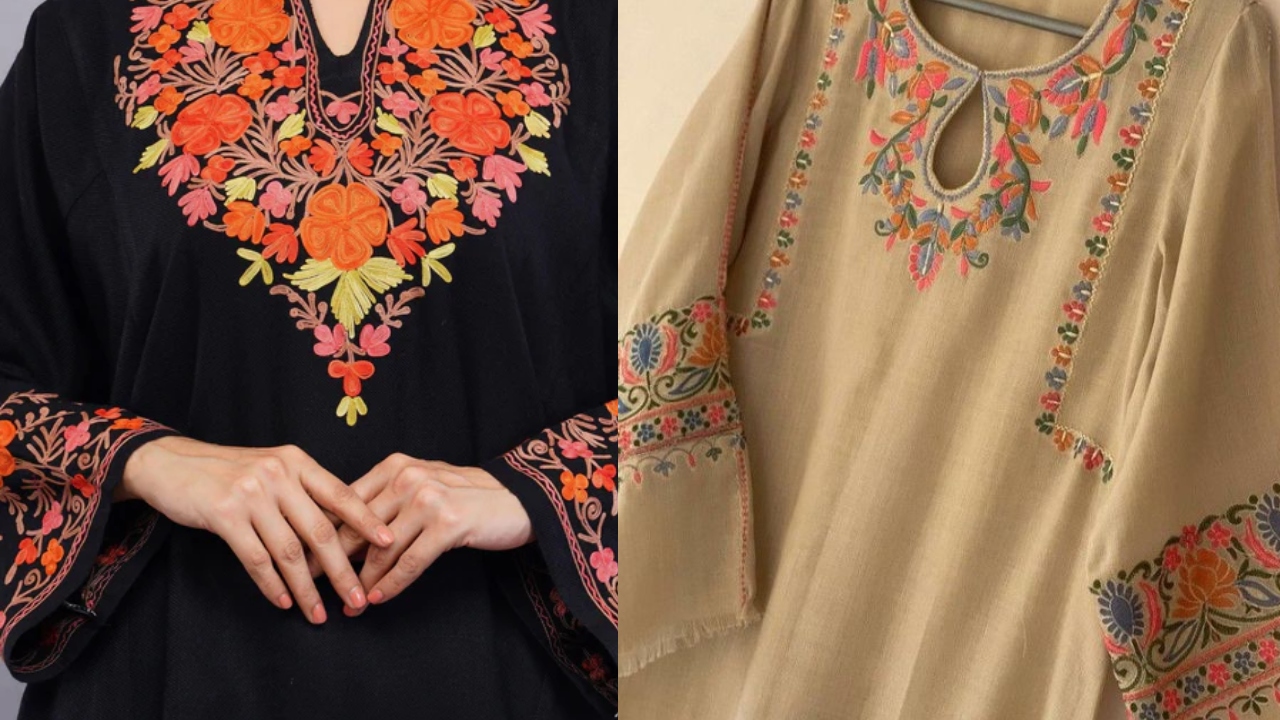
Pheran of Kashmir: When we think of the enchanting valleys of Kashmir, the first iconic image that comes to mind—besides the snow-covered mountains—is the traditional Pheran. More than just a garment, the Pheran symbolizes the culture, climate, and centuries-old lifestyle of Kashmir.
Today, this traditional attire has stepped out of the Kashmir Valley and become a winter fashion statement in major cities like Delhi, Mumbai, and Bengaluru. Women and men across India now wear it for style, warmth, and cultural appreciation. But the Pheran is much more than a fashion trend — it carries deep historical and cultural roots.
In this article, explore how the Pheran originated, how it evolved over the centuries, how it is made, its pricing, and why it remains a cultural treasure even today.
Origin of the Pheran: From a Shawl to a Woolen Tunic
Centuries ago, the harsh winter of Kashmir forced people to drape long woolen shawls to stay warm. While these shawls provided insulation, they restricted daily activities. To solve this, people stitched the shawl into a long, loose woolen tunic, which came to be known as the Pheran.
The word Pheran is believed to have been derived from the Persian word ‘Perahan’, meaning robe or tunic. This clearly shows the cultural influence of Central Asia and Persia on Kashmir. This suggests that the history of the Pheran is older than the 15th century.
Over time, the Pheran became a part of Kashmir’s identity. Cotton Pherans were used in summer, while woolen Pherans were essential for winters.
The modern embroidered designs of the Pheran were significantly influenced by the era of Mughal Emperor Akbar, during the 16th century.
How the Pheran Evolved Through Time
Originally, both men and women wore simple, plain Pherans. But over the centuries, distinct style changes appeared:
For Women
-
Rich embroidery
-
Tilla work
-
Aari and Sozni work
-
Bright colors and ornamental patterns
For Men
-
Simpler designs
-
Subtle embroidery
-
Darker or earthy shades
In the old days, the Pheran was floor-length. Today, in urban areas, designers are experimenting with:
-
Shorter lengths
-
Side slits
-
Fusion cuts
-
Styling it with jeans and boots
Among younger generations, designer Pherans and Indo-western fusion styles have become extremely popular.
Despite this modernization, the core structure remains the same:
A loose, long tunic that allows enough space to hold a Kangri (traditional fire pot).
How a Pheran Is Made: The Craftsmanship
The stitching process of a Pheran is both simple and artistic.
-
A basic cotton or woolen Pheran can be stitched in 1.5 to 2 hours by an experienced tailor.
-
Embroidered, designer, Tilla, or Aari work Pherans take significantly longer due to the intricate handwork.
-
Every artisan adds a unique touch, especially in the traditional markets of Srinagar, Lal Chowk, and downtown areas.
Price of a Pheran: From Simple to Designer
The price depends on:
-
Fabric
-
Type of embroidery
-
Handwork
-
Design complexity
Estimated price ranges in Kashmir:
| Type of Pheran | Approx Price (INR) |
|---|---|
| Simple cotton or plain wool | ₹200 – ₹700 |
| Regular woolen winter Pheran | ₹1,000 – ₹1,700 |
| Embroidered / Tilla / Designer Pheran | ₹2,200 – ₹3,000+ |
As winter approaches, the demand rises so much that many Kashmiri tailors stitch only Pherans throughout the season.
Why the Pheran Is Still Irreplaceable in Kashmir
Even today, the Pheran holds deep significance in Kashmiri life.
Its loose design allows people to comfortably carry the Kangri — a small earthen pot filled with burning charcoal that keeps the body warm for hours.
During the harsh winter phase known as Chillai Kalan (21 December to 31 January), the Pheran and Kangri become essential for survival.
To honor this cultural symbol, Kashmir celebrates ‘Pheran Day’ every year on 21 December.
Cultural Importance
-
Worn by both Kashmiri Hindus and Muslims
-
Pandit brides still wear heavily embroidered Pherans
-
Grooms also wear traditional Pherans in wedding ceremonies
-
Embroideries like Sozni, Tilla, and Aari keep Kashmir’s artisanal heritage alive
Pheran: A Fashion Symbol in the Modern World
In modern times, the Pheran represents:
-
Fashion
-
Comfort
-
Cultural pride
It has become a mainstream winterwear choice in metro cities. From cafés to colleges, people wear embroidered or minimalist Pherans as trendy winter outfits. Influencers, designers, and stylists have also played a major role in bringing this traditional attire into contemporary fashion.
The Pheran has successfully evolved from a centuries-old necessity to a global fashion icon — while still preserving its cultural soul.