
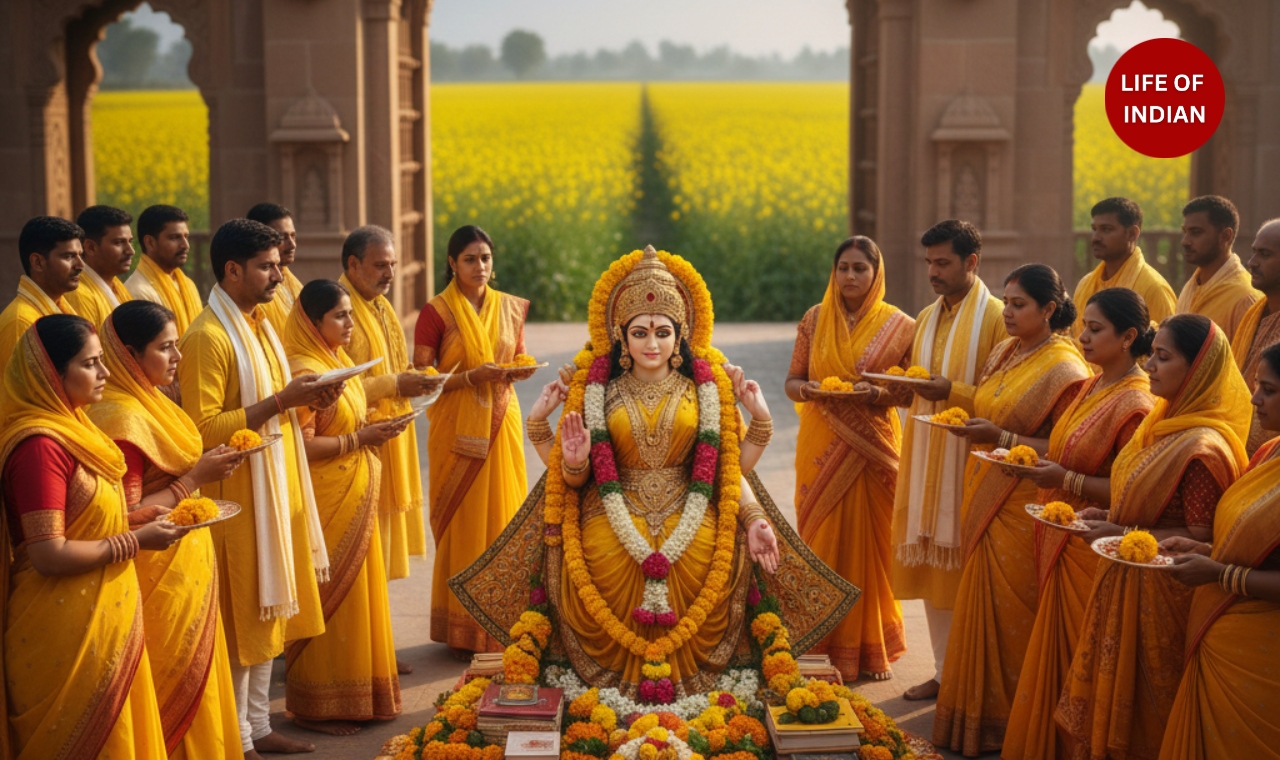
Basant Panchami: In Indian culture, colors are much more than just a feast for the eyes; they are woven with deep emotional, spiritual, and philosophical threads. Among them, yellow holds a special place, particularly during the festival of Basant Panchami. On this day, a golden hue touches everything—from the clothes people wear to the food they share. This isn’t just a festive theme; it’s a beautiful reflection of the bond between nature, faith, and the human spirit.
What is Basant Panchami?
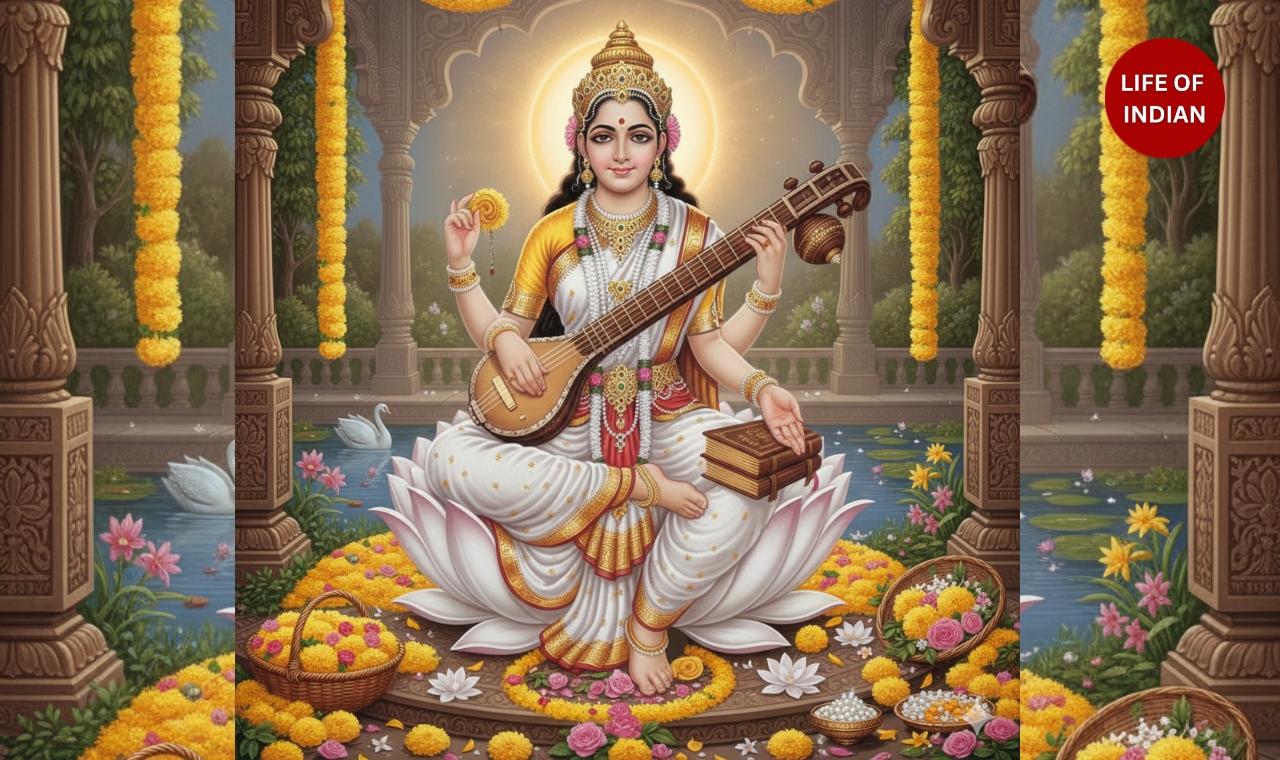
Celebrated on the fifth day (Panchami) of the bright lunar fortnight in the month of Magha, this festival heralds the arrival of spring (Vasant Ritu). It is a day dedicated to Goddess Saraswati, the patron of wisdom, music, and the arts.
In India, spring is often called the “King of Seasons.” It’s a time of perfect balance—not too cold, not too hot—symbolizing renewal and creative spark. As the world wakes up from its winter slumber, trees begin to bud and fields turn vibrant, with yellow being the color that best captures this awakening.
Yellow: The Heart of the Festival
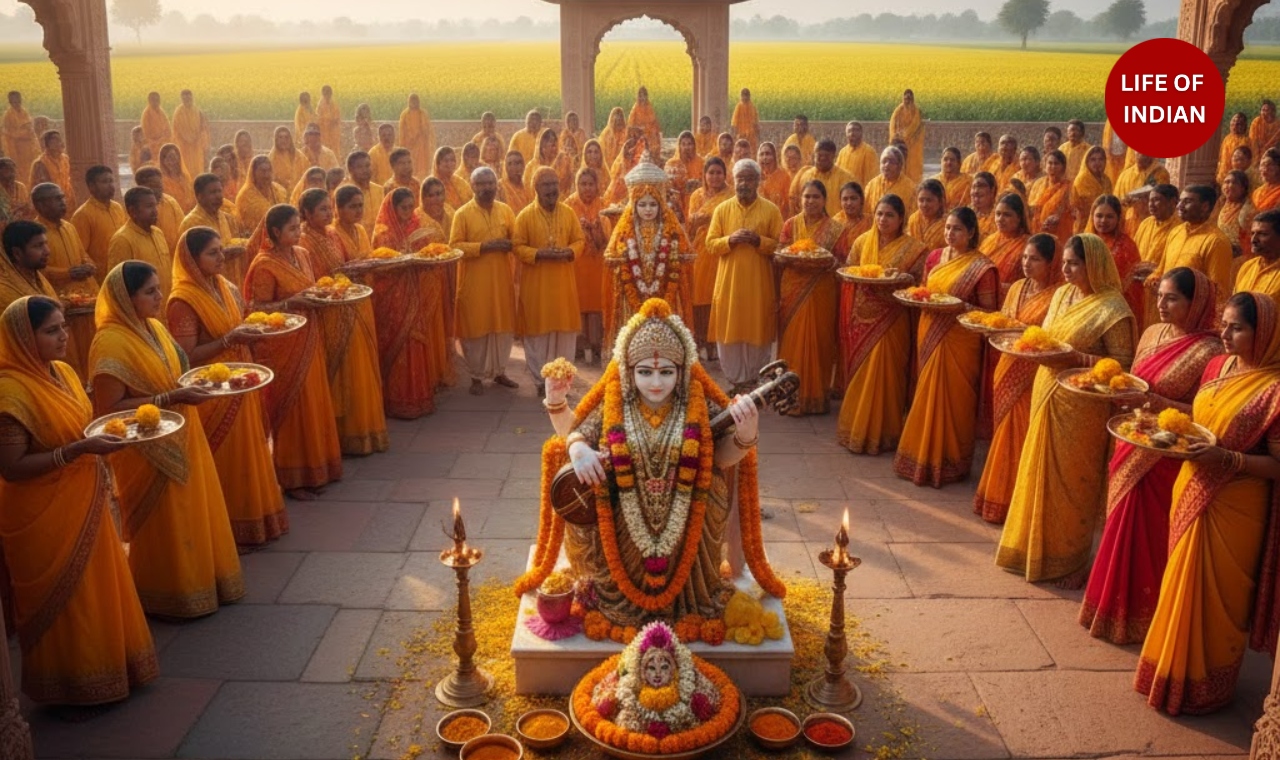
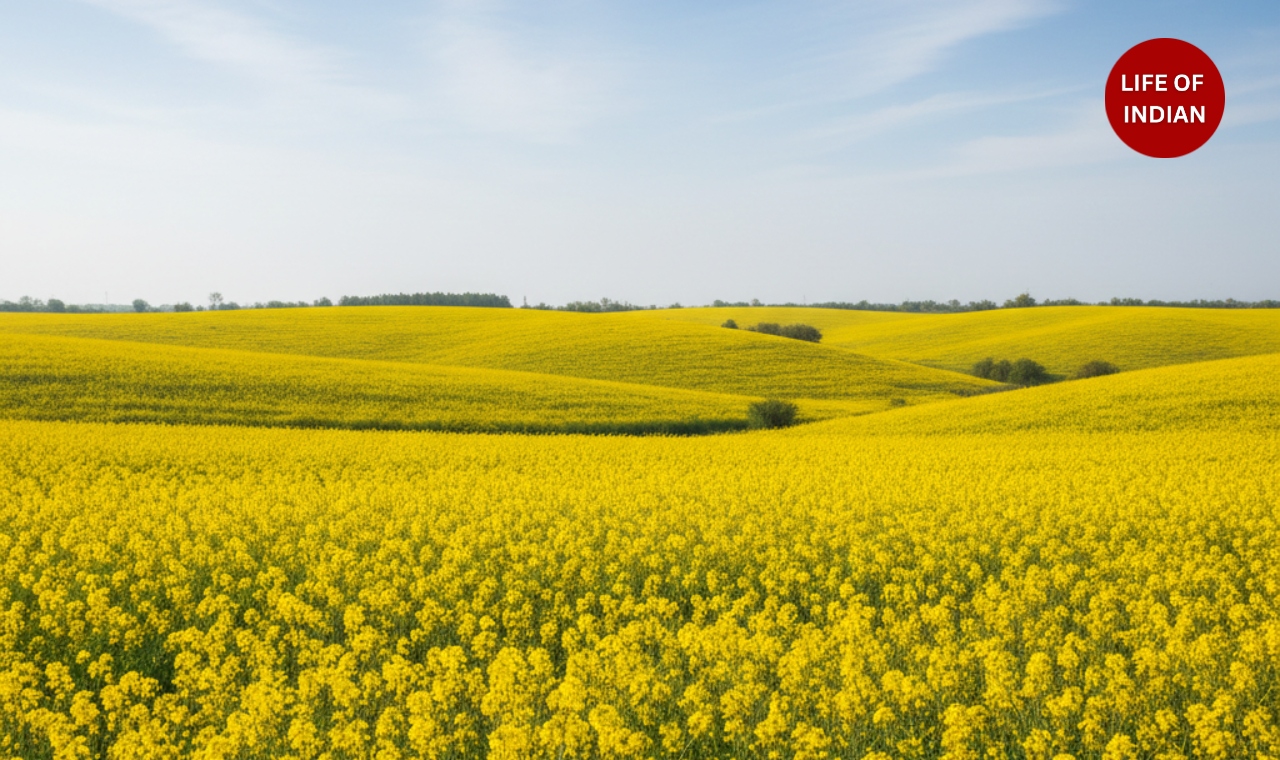
As winter’s chill fades, vast stretches of mustard fields across Northern India burst into yellow blooms. These golden landscapes are a sight to behold, representing fertility, abundance, and the promise of a good harvest. By wearing yellow on Basant Panchami, people honor this natural rebirth, expressing gratitude for the earth’s generosity and the hope of a fresh start.
The Spiritual Connection to Goddess Saraswati
The link between yellow and Basant Panchami is deeply spiritual. Goddess Saraswati is often depicted with a serene aura of white and pale yellow, representing purity and intellectual clarity.
In Vedic philosophy, yellow is linked to Sattva Guna—the quality of goodness, wisdom, and consciousness. It is a color that inspires the mind and chases away the shadows of ignorance. This is why students and artists dress in yellow and offer their books and instruments to the Goddess, seeking her blessings for a sharp mind and a soulful life.
Why Wear Yellow?
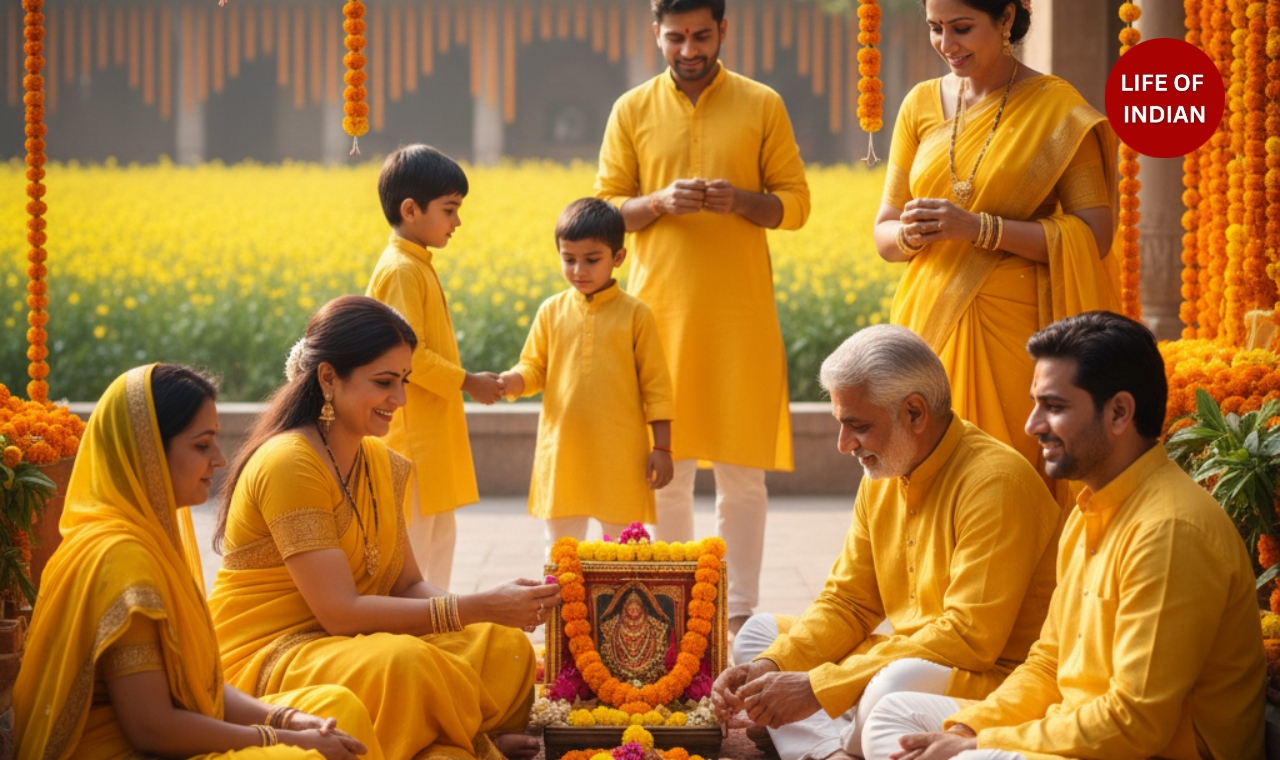
Yellow has always been considered a sacred and auspicious color in India. Whether it’s the yellow robes of Lord Vishnu, the turmeric used in weddings, or the saffron-tinged clothes of sages, the color signifies spiritual elevation. Wearing yellow on this day is a symbolic way to cleanse the mind and invite positive energy into one’s life.
A Blend of Science and Wellness

Both modern psychology and ancient Ayurveda recognize the power of yellow:
-
Mental Spark: Psychologically, yellow is known to stimulate the brain, improving memory and boosting concentration—perfect for a festival focused on learning.
-
Physical Balance: In Ayurveda, spring can lead to an increase in Kapha (the heavy element in the body). Yellow ingredients like turmeric, saffron, and lentils are light and warming, helping the body stay balanced and healthy during the change of season.
The Message of Spring
Beyond the rituals, the combination of Basant Panchami and the color yellow carries a timeless message: after every period of stillness or hardship, life finds a way to bloom again. It is a celebration of optimism and the light of knowledge.
By embracing yellow on this day, we aren’t just following a tradition; we are celebrating the enduring cycle of growth and the bright possibilities of the future.