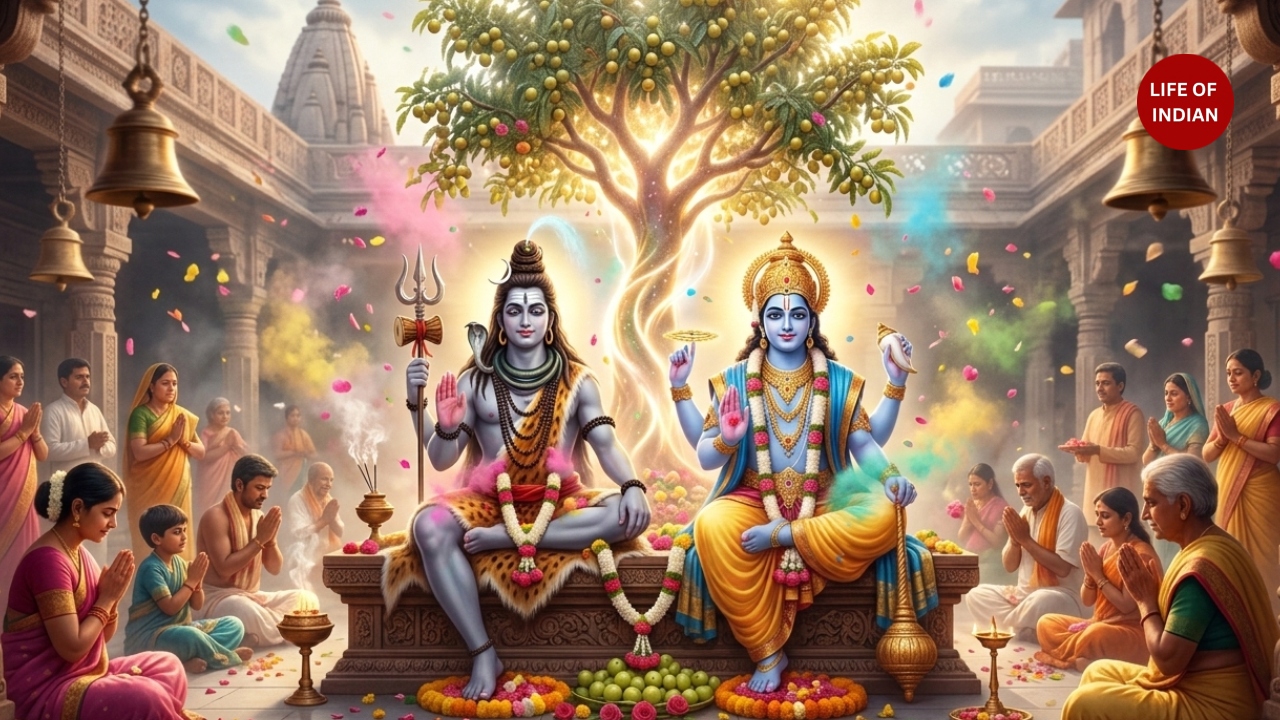
Among the many sacred observances in the Hindu lunar calendar, Rangbhari Ekadashi, also known as Aamlaki Ekadashi, holds a unique spiritual and cultural significance. Celebrated during the bright fortnight (Shukla Paksha) of the month of Phalguna, this Ekadashi is dedicated primarily to Lord Vishnu. However, what makes it especially meaningful is its deep symbolic connection with both Vishnu and Shiva, as well as the sacred Amla (Indian gooseberry) tree.
Rangbhari Ekadashi is not just a ritual fast; it is a celebration of devotion, purification, renewal, and divine harmony. Let us explore its origins, significance, mythology, rituals, and the deeper reasons why this Ekadashi is considered so special.
The Meaning Behind the Name
The term “Aamlaki Ekadashi“ comes from the Sanskrit word “Amlaki,” meaning “Amla” (Indian gooseberry). The fruit and the tree are considered sacred and are worshipped on this day.
The name Rangbhari carries a devotional and cultural undertone. “Rangbhari” literally means “filled with color.” In many parts of India—especially in Varanasi—this day symbolically marks the beginning of divine festivities leading up to Holi. It is believed that Lord Shiva symbolically begins participating in the joyous celebration of colors from this day onward.
Thus, Rangbhari Ekadashi stands at the intersection of devotion, nature worship, and seasonal celebration.
Why Ekadashi Worship Is Incomplete Without Tulsi Leaves
Scriptural Background and Mythological Significance
The importance of Aamlaki Ekadashi is described in the Brahmanda Purana and other Puranic texts. According to legend, King Chitrasena once ruled a prosperous kingdom where Ekadashi was observed with deep devotion. On Aamlaki Ekadashi, the king and his subjects worshipped Lord Vishnu under an Amla tree.
During one such observance, a hunter entered the kingdom. Although he had lived a life of violence, he unintentionally spent the night in the temple listening to devotional hymns and observing the fast. As a result of this accidental participation, he was reborn as a noble king in his next life. The story highlights the transformative power of devotion and the spiritual merit associated with this sacred day.
The Amla tree is believed to be a symbolic manifestation of Lord Vishnu himself. Worshipping the tree represents reverence toward the sustaining energy of the universe.
Why Is Rangbhari Ekadashi So Special?1. A Rare Combination of Vishnu and Shiva Worship
Ekadashi is traditionally dedicated to Lord Vishnu, the preserver of the universe. Devotees observe fasts, chant the mantra “Om Namo Bhagavate Vasudevaya,” and read sacred texts.
However, Rangbhari Ekadashi carries a distinct Shaiva connection as well. In Varanasi, this day is associated with ceremonial celebrations at the Kashi Vishwanath Temple, dedicated to Lord Shiva. Devotees symbolically celebrate the divine union of Shiva and Parvati and begin festive rituals leading toward Holi.
This blending of Vaishnav and Shaiva traditions makes Rangbhari Ekadashi spiritually inclusive and unique.
2. The Sacredness of the Amla Tree
The Amla tree holds immense spiritual and medicinal value. In Hindu belief, it is considered a dwelling place of divine energy. Worshipping the tree signifies gratitude toward nature and recognition of life-sustaining forces.
From an Ayurvedic perspective, Amla is one of the most powerful rejuvenating fruits. Rich in Vitamin C and antioxidants, it supports immunity, digestion, and overall vitality. Symbolically, offering Amla during worship reflects the desire for both physical well-being and spiritual purity.
What Is Jaya Ekadashi and Why Is It Important in Hinduism?
3. Spiritual Cleansing and Karmic Relief
Like all Ekadashis, Rangbhari Ekadashi is observed through fasting. Fasting is not merely dietary restraint; it represents discipline, self-control, and detachment from material indulgence.
Devotees believe that observing this fast with sincerity can cleanse past karmic burdens and promote inner clarity. The act of controlling desires and focusing on prayer is seen as a way to align oneself with divine consciousness.
4. Seasonal and Cultural Transition
Rangbhari Ekadashi arrives during the vibrant month of Phalguna, just before Holi. It symbolizes a transition from introspective spiritual practice to joyful celebration. The atmosphere gradually shifts from quiet devotion to festive energy.
In cities like Varanasi, colorful processions and temple rituals create a spiritually charged environment. This combination of solemn worship and cultural celebration adds to the day’s special character.
Rituals and Observances
Devotees typically begin the day early with a purifying bath. The Amla tree is worshipped by offering water, flowers, sandalwood paste, and incense. Lord Vishnu’s idol or image is placed near the tree or in the home temple.
Fasting may be observed in different forms:
- Nirjala (without water) for the most dedicated observers
- Phalahar (fruits and milk only)
- Satvik diet without grains and pulses
The night is often spent in devotional singing, reading scriptures, and meditation.
The fast is broken the next day (Dwadashi) after offering prayers and distributing prasad.
Philosophical Interpretation
On a deeper level, Rangbhari Ekadashi represents harmony between preservation (Vishnu) and transformation (Shiva). It encourages balance—between discipline and celebration, nature and divinity, body and soul.
The Amla tree symbolizes rootedness and resilience, reminding devotees that spiritual growth, like a tree, requires nourishment, patience, and faith.
Relevance in Modern Times
In today’s fast-paced world, Rangbhari Ekadashi offers a meaningful pause. It encourages mindfulness, gratitude toward nature, and conscious living. The practice of fasting can also promote physical detoxification, while prayer and reflection nurture emotional balance.
For many families, the day is an opportunity to reconnect with tradition, perform charitable acts, and strengthen spiritual bonds.
Rangbhari Ekadashi, or Aamlaki Ekadashi, is special not merely because it appears on the calendar, but because it unites devotion, nature worship, mythology, discipline, and celebration in one sacred observance.
It honors Lord Vishnu through fasting and prayer, acknowledges Lord Shiva through regional traditions, and celebrates the sacred Amla tree as a symbol of life and purity. In doing so, it offers devotees a path toward inner renewal and divine grace.
Whether observed with elaborate rituals or quiet devotion, Rangbhari Ekadashi continues to inspire faith and reflection across generations.
FAQ
Q1. What is Rangbhari Ekadashi?
Rangbhari Ekadashi, also known as Aamlaki Ekadashi, is a sacred Hindu fasting day dedicated to Lord Vishnu. It falls during the Shukla Paksha of Phalguna month and marks the spiritual beginning of Holi festivities.
Q2. Why is Aamlaki Ekadashi called Rangbhari Ekadashi?
It is called Aamlaki Ekadashi because the Amla (Indian gooseberry) tree is worshipped on this day. The tree is believed to be a sacred symbol of Lord Vishnu.
Q3. Why are Lord Vishnu and Lord Shiva worshipped together on Rangbhari Ekadashi?
While the Ekadashi is primarily dedicated to Lord Vishnu, in Varanasi this day also marks Lord Shiva’s ceremonial return to Kashi after marriage, symbolizing harmony between Vishnu and Shiva traditions.
Q4. What are the spiritual benefits of observing Rangbhari Ekadashi fast?
Devotees believe that observing the fast removes sins, brings prosperity, purifies the soul, and grants Vishnu’s blessings for spiritual progress.
Q5. What is the connection between Rangbhari Ekadashi and Holi?
In Varanasi, Rangbhari Ekadashi marks the first application of gulal to Lord Shiva, officially beginning Holi celebrations in the city.
About the Author