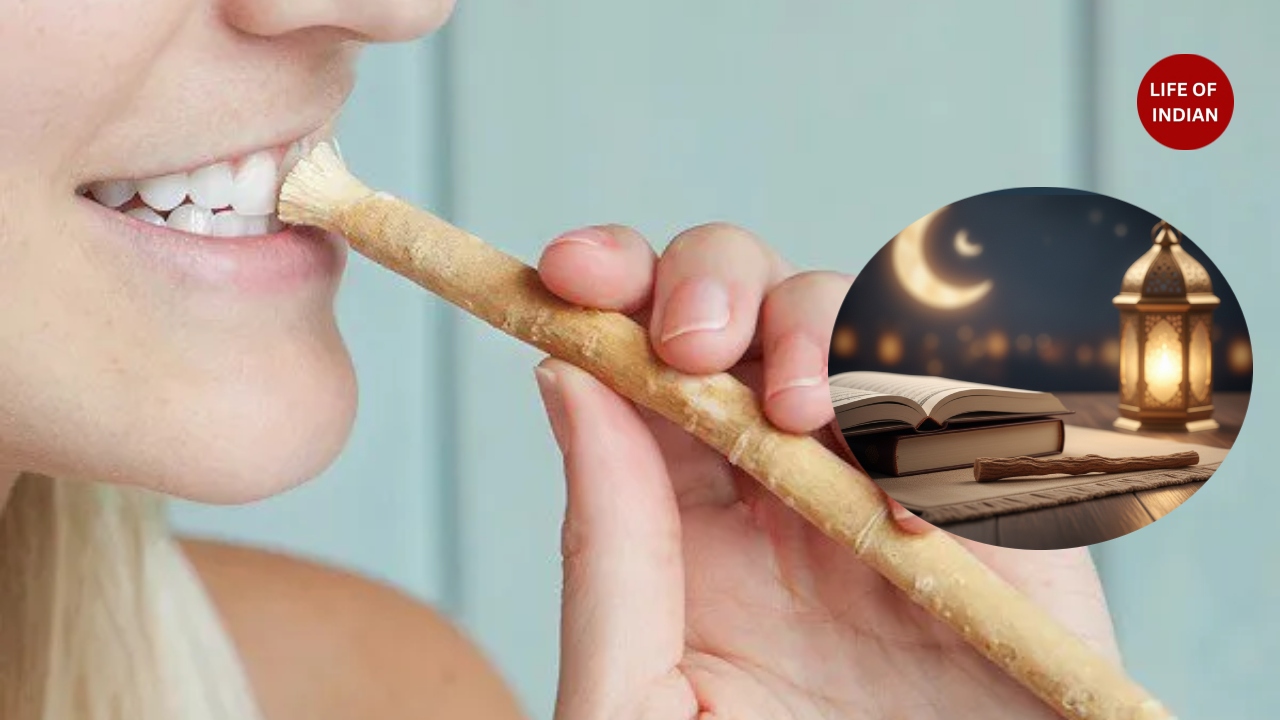
Why Muslims Use Miswak in Ramadan: In Islamic tradition, cleanliness is not merely a matter of hygiene — it is an act of worship. Among the most emphasized yet often overlooked practices of the Prophet Muhammad (peace be upon him) is the use of Miswak (Siwak), a natural tooth-cleaning stick.
While many Muslims know that Miswak is a Sunnah, fewer understand its deeper spiritual meaning, authentic narrations, scientific relevance, and especially its connection to the month of Ramadan.
This article explores all of these dimensions in a clear and evidence-based manner.
What Is Ramadan? Meaning, Fasting Rules, History & Spiritual Significance
What Exactly Is Miswak?
Miswak is a small twig taken primarily from the Salvadora persica tree, commonly known as the Arak tree. It has been used for centuries in the Middle East, Africa, and parts of Asia as a natural method for cleaning teeth.
Unlike modern toothbrushes, Miswak does not require toothpaste. Its fibers act as bristles, and the natural compounds within the wood provide antibacterial and cleansing properties.
However, its importance in Islam goes far beyond its natural benefits.
Miswak in Authentic Hadith Literature
The practice of Miswak is strongly supported by authentic narrations.
1. Almost Made Obligatory
The Prophet (ﷺ) said:
“Were it not that I might overburden my followers, I would have ordered them to use the siwak before every prayer.”
(Sahih al-Bukhari, Sahih Muslim)
This statement shows the extraordinary emphasis placed on this practice. Few voluntary acts were spoken about with such seriousness.
2. A Deed That Pleases Allah
Another authentic narration states:
“The siwak purifies the mouth and is pleasing to the Lord.”
(Sunan an-Nasa’i – graded authentic)
This hadith beautifully combines physical cleanliness with spiritual reward. Miswak is not only hygienic; it is an act that earns divine pleasure.
What Breaks a Fast in Ramadan? Complete Guide to Rules Every Muslim Should Know
Why Is Miswak Especially Relevant in Ramadan?
Ramadan is the month of fasting, worship, and spiritual purification. During fasting hours, Muslims abstain from food and drink from dawn until sunset. Naturally, this can lead to dryness of the mouth and changes in breath.
Here is where Miswak becomes particularly meaningful.
1. It Does Not Break the Fast
Scholars across the four major schools of Islamic jurisprudence agree that using Miswak during fasting does not invalidate the fast, provided nothing is swallowed.
Authentic reports mention that the Prophet (ﷺ) used Miswak while fasting. Therefore, its use in Ramadan is not only allowed but encouraged.
2. Maintaining Oral Cleanliness During Fasting
When fasting, saliva production decreases, which can cause:
- Dry mouth
- Bacterial growth
- Unpleasant breath
Miswak naturally combats bacteria and refreshes the mouth without requiring water or toothpaste. This makes it particularly suitable during fasting hours.
3. Preparation for Worship in Ramadan
Ramadan increases acts of worship such as:
- Salah (prayer)
- Taraweeh
- Recitation of the Qur’an
- Dhikr (remembrance of Allah)
Since Miswak was recommended before prayer and Qur’an recitation, its use during Ramadan aligns perfectly with the increased devotional activities of this month.
It prepares a believer physically and spiritually before standing in prayer.
Ramadan 2026 Begins in India: Check Full Sehri & Iftar Timings
Addressing a Common Misunderstanding About Fasting Breath
There is a well-known hadith:
“The smell from the mouth of a fasting person is better to Allah than the fragrance of musk.”
(Sahih al-Bukhari)
Some misunderstand this to mean that one should avoid cleaning the mouth during fasting.
However, scholars clarify:
- The hadith refers to the natural state of fasting.
- It does not discourage cleanliness.
- The Prophet (ﷺ) himself used Miswak while fasting.
Islam never promotes neglect of hygiene.
Scientific Perspective: What Makes Miswak Effective?
Modern research has identified several beneficial compounds in Salvadora persica, including:
- Natural fluoride
- Silica (mild abrasive)
- Sulfur compounds (antibacterial)
- Tannins (reduce gum inflammation)
- Essential oils (freshen breath)
Studies published in dental research journals indicate that Miswak can:
- Reduce plaque accumulation
- Lower gum bleeding
- Decrease harmful oral bacteria
- Support gum health
Some researchers suggest that when used correctly, Miswak can be as effective as a toothbrush.
Correct Way to Use Miswak
To use Miswak properly:
- Cut or peel about one centimeter from the tip.
- Chew gently until fibers form brush-like bristles.
- Brush teeth vertically and gently.
- Clean the tongue lightly.
- Rinse the tip and store in a clean place.
- Trim worn bristles regularly.
Hygiene and proper storage are important to prevent contamination.
Ramadan 2026: Significance, Fasting Rules & Spiritual Importance
Weak Narrations About Miswak
Some commonly shared statements need clarification.
For example, the narration claiming that prayer performed after Miswak is “70 times superior” is reported in some collections but classified as weak (da‘if) by many scholars.
When writing or teaching about Islamic practices, it is important to distinguish between authentic and weak narrations.
The authentic evidence about Miswak is already strong enough.
Miswak and Environmental Sustainability
In modern times, environmental awareness is growing. Miswak offers additional benefits:
- Completely biodegradable
- No plastic waste
- No chemical additives
- Minimal processing
This aligns with Islamic teachings about moderation and avoiding waste.
Should Muslims Replace Toothbrushes With Miswak?
Islam does not require replacing modern dental tools.
Most scholars agree:
- Using a toothbrush fulfills the goal of oral hygiene.
- Using Miswak brings additional Sunnah reward when done with intention.
Many practicing Muslims combine both methods.
A Forgotten Yet Powerful Sunnah
Miswak represents more than dental care. It reflects:
- Consistency in small good deeds
- Attention to personal cleanliness
- Respect for prayer and worship
- Following the daily lifestyle of the Prophet (ﷺ)
Especially in Ramadan, when believers strive to revive Sunnahs and increase reward, incorporating Miswak into daily routine becomes a simple yet meaningful act of devotion.
Miswak is a powerful example of how Islam integrates physical well-being with spiritual growth. It purifies the mouth, supports oral health, and earns reward when practiced sincerely.
In Ramadan — a month of purification and self-discipline — Miswak serves as both a practical tool and a reminder of the Prophetic way.
Reviving such Sunnahs transforms everyday habits into acts of worship.
Three Ashras of Ramadan: Mercy, Forgiveness & Protection – What Islam Really Says
FAQ Schema (Add in RankMath / Yoast FAQ Section)
Q1: What is Miswak in Islam?
Miswak is a natural teeth-cleaning stick from the Salvadora persica tree that was regularly used and encouraged by Prophet Muhammad (peace be upon him).
Q2: Is using Miswak during Ramadan allowed?
Yes, using Miswak during fasting does not break the fast as long as nothing is swallowed. The Prophet (ﷺ) used it while fasting.
Q3: Does Miswak break the fast?
No, according to the majority of Islamic scholars, Miswak does not invalidate fasting.
Q4: What are the benefits of Miswak?
Miswak helps reduce plaque, freshen breath, fight bacteria, and improve gum health. It also carries spiritual reward when used with intention.
Q5: Is the hadith about prayer being 70 times better after Miswak authentic?
Many scholars classify this narration as weak (da‘if). However, authentic hadith strongly emphasize the importance of Miswak.
About the Author