
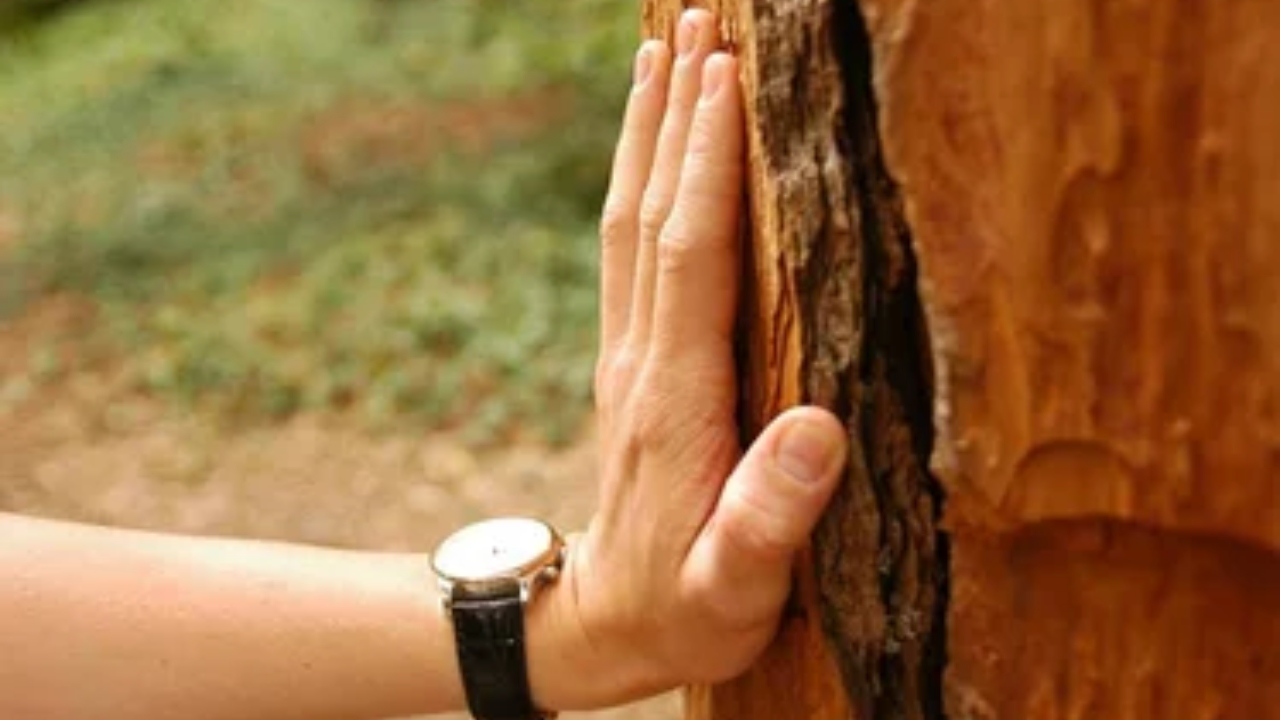
Why Do We Say Touch Wood: When someone proudly says, “My phone has never been lost till today,” and immediately follows it with “touch wood” while gently tapping a wooden surface, it may seem like a simple habit. But have you ever wondered why we do this?
Why do people across the world say “Touch Wood” or “Knock on Wood” to avoid bad luck?
Surprisingly, this phrase is not just a superstition — it is rooted in ancient traditions, folklore, human psychology, and cultural beliefs that go back thousands of years.
This article explores the origins, meaning, global variations, and psychological insights behind the popular phrase Touch Wood.
Ancient Origins: Where Did “Touch Wood” Come From?
1. Pagan & Celtic Traditions
Many historians believe that the phrase originated in ancient Pagan cultures, particularly among the Celts. Celt tribes believed that:
-
Trees were home to spiritual beings
-
Gods and nature spirits lived inside wood
-
Touching wood connected people to divine protection
-
It kept away evil spirits and protected good fortune
For them, touching a tree was a prayer — a way to seek blessings, show gratitude, or ask for safety.
2. Christian Interpretation
Another belief traces the saying back to Christianity.
It is said that touching holy wooden relics connected with the crucifixion of Jesus Christ brought good luck and blessings.
Over time, touching wooden crosses, church doors, or holy wooden statues became a symbol of faith and protection.
This practice spread across Europe, eventually becoming the popular phrase “Touch Wood.”
Why Wood? Why Not Anything Else?
Wood has always been an essential part of human life — homes, tools, furniture, and shelters were all made from it.
In ancient symbolism:
-
Trees represented life, protection, and strength
-
Wood was considered warm, natural, and spiritually alive
-
Touching it was believed to awaken positive energies
So tapping or touching wood became a universal gesture meaning:
👉 “Let nothing bad happen.”
👉 “Keep my good luck safe.”
👉 “Protect me from the unknown.”
Psychology: What Does Touching Wood Do to Our Brain?
A fascinating 2013 University of Chicago study found that touching wood actually makes people feel safer.
Why?
-
When we say something that seems to “tempt fate,” we feel a little anxious.
-
By touching wood, knocking, or making a gesture, our brain feels like we’re pushing away bad luck.
-
It gives a sense of control, reduces anxiety, and calms the mind.
In psychology, this is known as a protective ritual — a harmless action that brings emotional comfort.
So, touching wood is not just a superstition — it’s a mental safety mechanism.
How the World Says It
Different cultures have their own versions of this belief:
-
UK & India: “Touch Wood”
-
USA & Canada: “Knock on Wood”
-
Turkey: People tap wood twice and touch their earlobe to ward off bad luck
-
Brazil: They say “bater na madeira” (hit the wood)
Cultures differ, but the emotion behind it is the same:
👉 Keep my luck safe.
Meaning in Modern Times
Even in today’s scientific era, “Touch Wood” remains widely used.
Surveys show that more than half of people in Britain still say it regularly.
Today, its meaning is more symbolic:
-
A sign of humility
-
A way of saying “hopefully it stays this way”
-
An expression of caution and gratitude
-
A polite response to someone’s good news
It has evolved from a superstition into a social habit and emotional reassurance.
Why This Habit Never Fades
“Touch Wood” remains popular because:
-
It gives quick psychological comfort
-
It’s socially accepted and widely understood
-
It helps people acknowledge uncertainty
-
It reflects hope, positivity, and humility
The power of “Touch Wood” is not in magic —
it lies in the comfort, belief, and emotional safety it provides.
The next time you say “Touch Wood” after sharing good news, remember:
You’re not just following a superstition —
You’re continuing a tradition that is thousands of years old, rooted in faith, nature, and human psychology.
And more importantly, you’re giving yourself a small moment of confidence and peace.