


The Lost Female Rishis of India: Whenever we hear the word “Rishi,” an image immediately forms in our minds — a man with a long beard, sitting deep inside a forest, meditating beside a river or teaching disciples under a tree. For generations, this has been the picture presented to us through books, television serials, temple stories, and religious discussions. Names like Vishwamitra, Vashistha, Agastya, Bharadwaj, and Atri are deeply embedded in Indian memory. People know their stories, teachings, and importance in Hindu philosophy. But very few stop to ask an important question: Were there no women sages in ancient India?
The truth is both surprising and heartbreaking. Ancient India was not a civilization where knowledge belonged only to men. During the Vedic period, women studied scriptures, participated in philosophical debates, composed hymns, and pursued spiritual enlightenment just like men. Some women were even composers of hymns found in the Rigveda itself. They were respected scholars and philosophers whose wisdom was acknowledged in ancient texts. Yet over time, their names slowly disappeared from public memory.
Today, when someone says “Rishi,” people naturally imagine a male sage because history gradually became male-centered. As patriarchal systems grew stronger, the stories of women scholars were pushed into the background. Men became the visible faces of knowledge and spirituality, while women who contributed equally were reduced to footnotes in history. This is why millions know male sages by heart, but very few recognize the names of Gargi Vachaknavi, Maitreyi, Lopamudra, Apala, and Ghosha.
These women were not ordinary figures. They questioned existence, searched for spiritual truth, wrote sacred hymns, and stood confidently among the greatest thinkers of their era. Remembering them today is not only about giving women their rightful place in history; it is also about understanding the true depth of Indian civilization, which once recognized intellectual equality between men and women.
Women in the Vedic Age Were Intellectual Equals

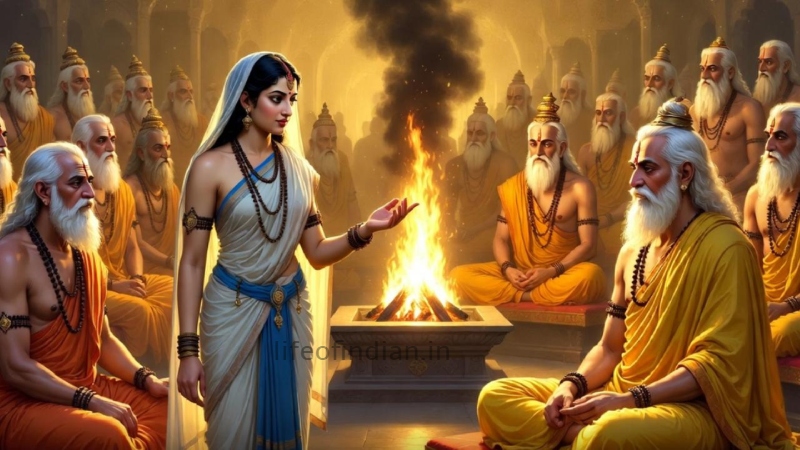
Modern society often assumes that women in ancient times had little freedom or education, but the Vedic age presents a very different reality. Historical and religious texts indicate that women were allowed to study the Vedas and participate in spiritual learning. Some women dedicated their lives to philosophy and the pursuit of truth rather than limiting themselves only to domestic responsibilities. Such women were known as “Brahmavadinis,” meaning women devoted to the search for ultimate spiritual knowledge.
Women participated in debates and discussions about life, consciousness, the universe, and spirituality. They were not treated merely as silent followers of religion. In many cases, they became teachers, philosophers, and creators of sacred literature themselves. This directly challenges the modern perception that intellectual and spiritual authority belonged only to men in ancient India.
The existence of female sages proves that Indian civilization once accepted the idea that wisdom had no gender. Unfortunately, this equality slowly weakened over the centuries, and women’s contributions faded from mainstream history.
Gargi Vachaknavi: The Fearless Philosopher Who Challenged Great Scholars
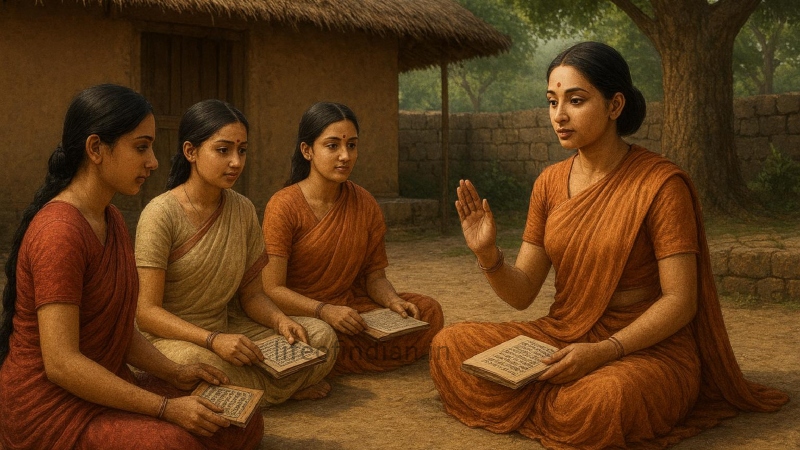
Among all female sages of ancient India, Gargi Vachaknavi remains one of the strongest symbols of intelligence and courage. Her story appears in the Brihadaranyaka Upanishad, where King Janaka organized a grand philosophical gathering attended by the greatest scholars and sages of the time. The famous sage Yajnavalkya was present there, and many intellectuals came forward to question him.
In this assembly filled mostly with men, Gargi stood up fearlessly and challenged Yajnavalkya with profound philosophical questions. She did not ask simple questions about rituals or religious practices. Instead, she asked about the nature of existence itself. She questioned what the universe was woven upon and what ultimate reality existed behind creation.
What makes Gargi extraordinary is not only her intelligence but also her confidence. Thousands of years ago, she stood in a royal court and debated some of the greatest male scholars as an equal. Even today, such intellectual confidence from women is often seen as unusual in many parts of society. Gargi’s presence proves that ancient Indian women were not intellectually weak or socially invisible.
Yet modern society rarely speaks about her. Yajnavalkya’s name became famous across generations, but Gargi slowly disappeared from popular memory. This reflects how history often celebrates men more visibly, even when women stand beside them as equals.
Maitreyi: The Woman Who Chose Knowledge Over Wealth
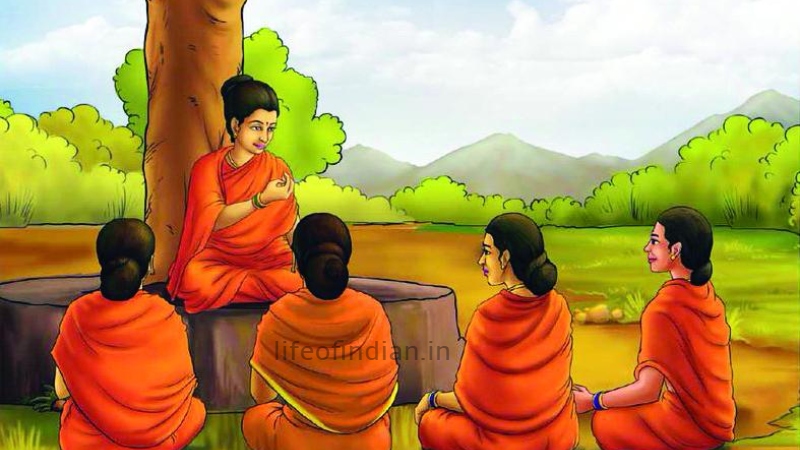
Maitreyi’s story is one of the most emotionally powerful examples of spiritual wisdom in ancient India. She was the wife of Yajnavalkya, but her importance comes not from her relationship with him, but from her own philosophical thinking.
According to ancient texts, when Yajnavalkya decided to renounce worldly life and become a renunciant, he prepared to divide his wealth between his wives. At that moment, Maitreyi asked him whether wealth could provide immortality or eternal fulfillment. When Yajnavalkya replied that material wealth could not grant spiritual immortality, Maitreyi made a remarkable choice. She told him that she did not want wealth; instead, she wanted the knowledge that leads to immortality and spiritual truth.
This moment reveals the extraordinary depth of her character. In a world where people often chase money, security, and comfort, Maitreyi chose wisdom over material possessions. Her question was not about property or status; it was about the meaning of existence itself.
Her story completely challenges the stereotype that ancient women were only concerned with domestic life. Maitreyi represents intellectual curiosity, spiritual hunger, and philosophical courage. However, despite her greatness, most people today have never even heard her name. Society remembered male philosophers more prominently, while women like Maitreyi slowly vanished from mainstream storytelling.
Lopamudra: The Poet Who Proved Spirituality and Femininity Could Coexist
Lopamudra is often remembered only as the wife of the sage Agastya, but this limited description hides her real identity. She was not merely associated with wisdom through marriage — she herself was a composer of hymns found in the Rigveda.
Her verses reveal emotional intelligence, spiritual understanding, and poetic depth. Through her writings, we see that ancient Indian women were not only participants in spirituality but also creators of sacred literature. Lopamudra’s hymns explore human emotions, relationships, and spiritual ideals with remarkable sensitivity.
What makes her especially important is that she breaks the false modern idea that spirituality requires women to abandon emotion or femininity. Lopamudra’s life shows that a woman could be wise, emotional, philosophical, and spiritually evolved at the same time.
However, history gradually shifted attention toward Agastya while Lopamudra remained in the shadows. This pattern became common throughout history: men became central heroes, while women connected to them were remembered only in relation to male figures rather than for their own achievements.
Apala: The Sage Who Turned Suffering Into Strength
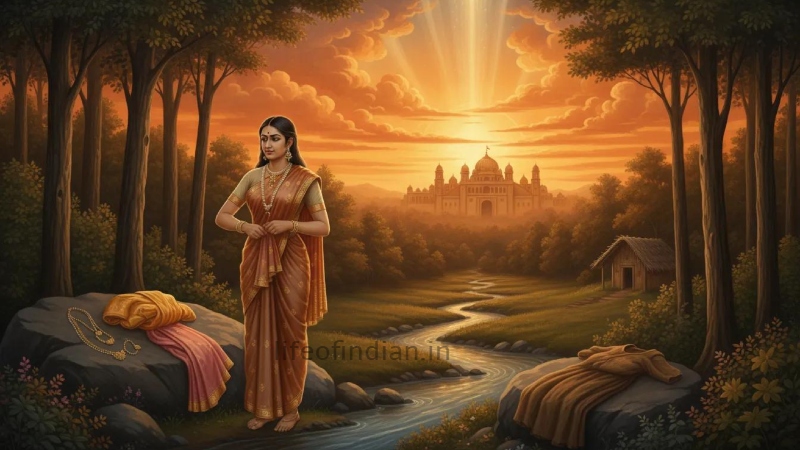
Apala’s story carries deep emotional significance because it reflects pain, rejection, and resilience. Ancient references suggest that she suffered from a skin disease and faced social isolation because of it. Physical appearance has often influenced how society treats women, and women facing illness or visible differences have historically suffered harsh judgment.
Despite her struggles, Apala did not allow pain to silence her spirit. Instead, she transformed her suffering into spiritual wisdom. She composed hymns included in the Rigveda, proving that true greatness is not defined by physical appearance or social acceptance.
Her story remains deeply relevant even today because modern society still judges women harshly based on beauty standards and outward appearance. Apala reminds us that strength can emerge from suffering and that wisdom often grows through pain.
Ghosha: The Woman Who Refused to Be Forgotten
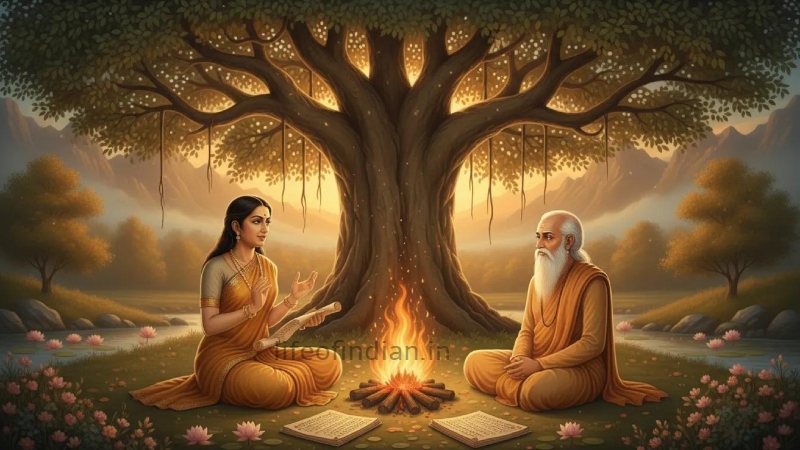
Ghosha was another remarkable woman whose contributions are rarely discussed today. Like Apala, she is believed to have struggled with illness and social isolation. In many ancient societies, women facing health issues were often excluded from public life, but Ghosha refused to let suffering erase her identity.
She composed hymns dedicated to the Ashvins and earned her place within the Rigveda itself. Her work demonstrates that women in ancient India were not passive followers of spirituality. They actively shaped sacred traditions and contributed intellectually to religious literature.
The tragedy is that generations grew up learning the names of male sages while women like Ghosha slowly disappeared from educational and cultural memory.
Why Did Society Forget Female Sages?
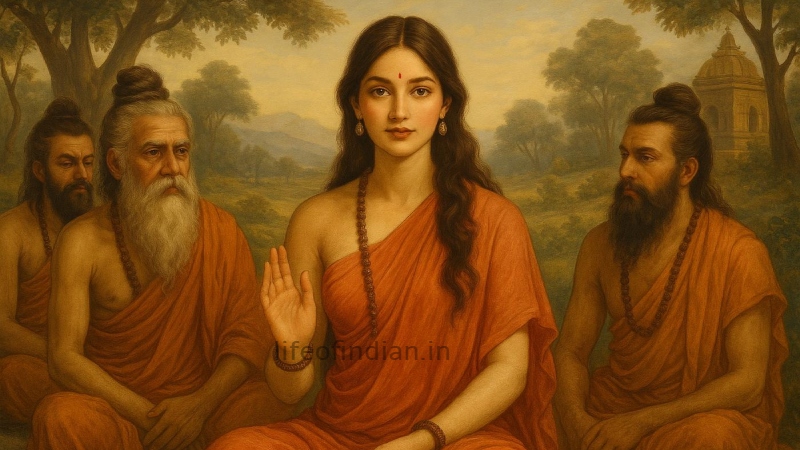
The disappearance of female sages from public memory did not happen suddenly. It happened gradually over centuries as society became increasingly patriarchal.
In the early Vedic age, women had greater access to education and spiritual discussions. But over time, social structures changed. Women’s freedom became more restricted, and religious authority increasingly came under male control. Historical narratives began focusing mainly on male achievements, while women’s intellectual contributions received less attention.
As storytelling traditions evolved, male sages became the dominant symbols of wisdom. Temples, literature, paintings, and television serials repeatedly highlighted male figures. Children grew up hearing stories centered almost entirely around men. Slowly, society internalized the belief that wisdom and spiritual authority naturally belonged to males.
This is why even today, when people hear the word “Rishi,” they automatically imagine a man rather than a woman. It is not because women were absent from ancient spirituality, but because their stories were gradually erased from mainstream memory.
Why Remembering These Women Matters Today
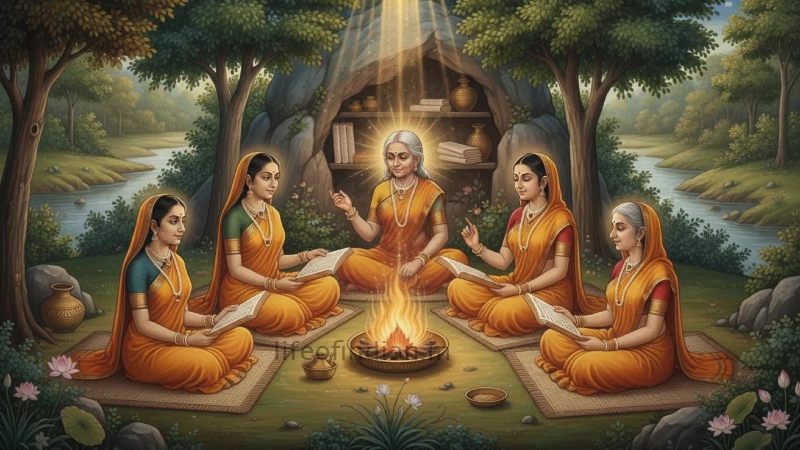
Remembering female sages is not only about correcting history. It is about changing the way society understands knowledge, spirituality, and women themselves.
These women prove that Indian civilization once respected female intellect at the highest level. They remind us that wisdom has never belonged exclusively to men. Gargi represents fearless questioning. Maitreyi symbolizes the pursuit of truth beyond materialism. Lopamudra represents the harmony between spirituality and emotional depth. Apala and Ghosha embody resilience in the face of suffering.
Most importantly, these women remind modern society that strong, intellectual, spiritually awakened women are not a modern invention. They existed thousands of years ago in India itself.
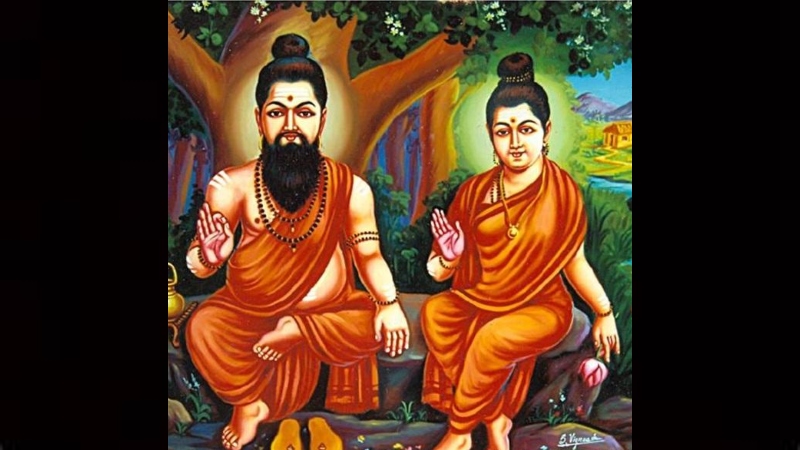
Perhaps the saddest truth about history is not that these women died long ago, but that society slowly stopped speaking their names. Over generations, India remembered male sages as the face of wisdom while the women who stood beside them faded into silence.
But ancient India was never built only by men. Women also shaped its philosophy, spirituality, poetry, and intellectual traditions. They questioned reality, composed sacred hymns, participated in debates, and searched for ultimate truth with the same passion as men.
The next time someone says the word “Rishi,” perhaps our minds should remember not only Vishwamitra and Vashistha but also Gargi, Maitreyi, Lopamudra, Apala, and Ghosha.
Because forgetting these women does not simply erase female history—it erases half of India’s spiritual heritage itself.
FAQ
1. Who were the female rishis of ancient India?
Ancient India had several respected female sages, including Gargi Vachaknavi, Maitreyi, Lopamudra, Apala, and Ghosha, who contributed to Vedic philosophy and literature.
2. Did women write hymns in the Rigveda?
Yes, several hymns in the Rigveda are believed to have been composed by women sages such as Lopamudra, Apala, and Ghosha.
3. Why are female rishis less remembered today?
Over centuries, patriarchal social systems and male-centered historical narratives gradually pushed women scholars into the background, causing many female sages to be forgotten.
4. Who was Gargi Vachaknavi?
Gargi Vachaknavi was a famous Vedic philosopher known for debating sage Yajnavalkya on deep philosophical questions related to existence and the universe.
5. What made Maitreyi unique in Indian philosophy?
Maitreyi is remembered for valuing spiritual knowledge over material wealth and seeking wisdom about immortality and ultimate truth.
6. Were women allowed to study the Vedas in ancient India?
During the early Vedic age, women had access to education and spiritual learning, and some became respected scholars and philosophers.