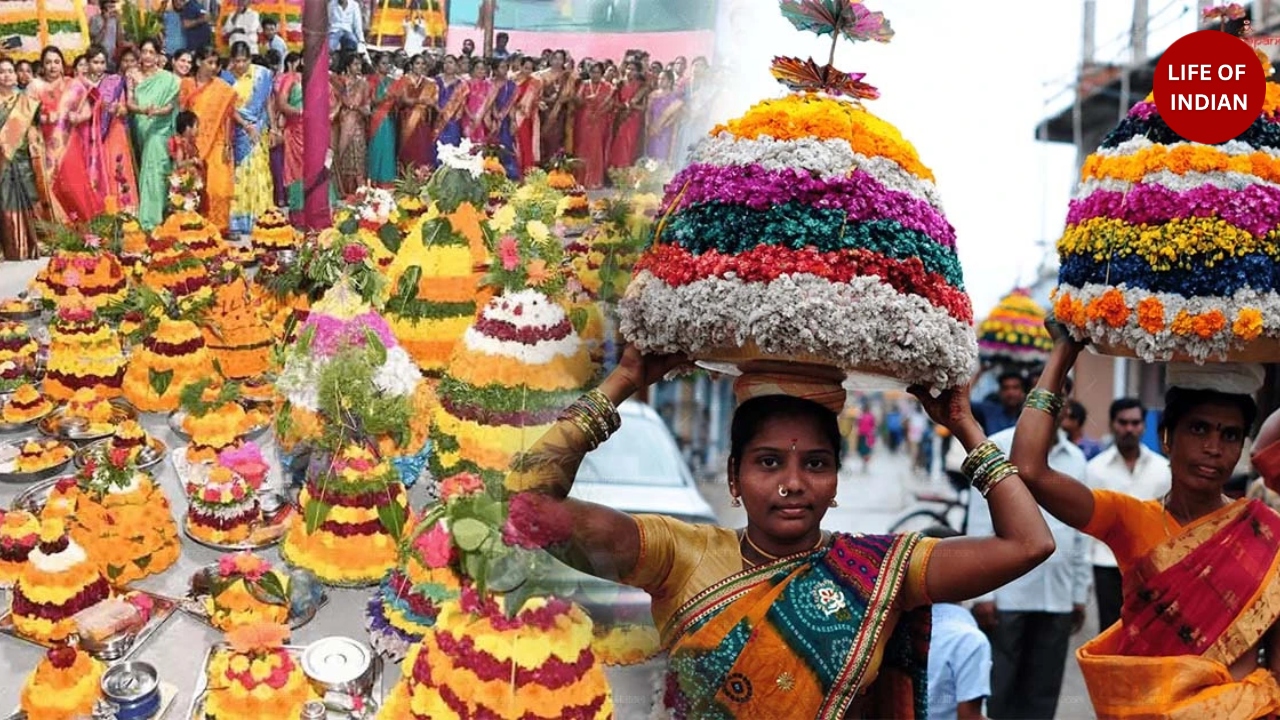
Telangana’s Bathukamma Festival 2025: The Bathukamma Festival has earned a place in the Guinness World Records for the largest floral arrangement and the largest number of coordinated female dance participants. The structure was created by approximately 300 artisans using metal, bamboo, and flowers and took 72 hours to complete. Bathukamma is not just a festival, it symbolizes femininity, nature worship, the celebration of the harvest season, and the cultural identity of Telangana.
About Bathukamma Festival:
Bathukamma means “living Mother Goddess,” signifying divine energy and protection, and is dedicated to Goddess Parvati.
The festival is celebrated annually, usually in September-October according to the Gregorian calendar.
It is celebrated annually for nine days during Navratri, culminating in the Pedda Bathukamma festival. This is followed by Boddemma, which is essentially a seven-day festival.
During this festival, Bathukamma is decorated in a traditional manner, with flowers having various medicinal properties, such as Gunuka, Banti, and Tangedu.
In this festival, women make a clay idol of Goddess Durga along with Bathukamma and immerse it in the pond, which helps strengthen the ponds and retain more water.
It is mainly celebrated in Telangana and some parts of Andhra Pradesh. It has been declared a Telangana state festival.
Women wear traditional saris and jewellery, make flower mounds (flower decorations), offer prayers, and sing and dance in circles.
Sweets made from sugar or raw sugar and cornbread (Malida) are distributed as Prasad during this festival.
It is a celebration of Goddess Gauri and the harvest season. It symbolizes feminine power and nature worship.
The flowers used in this festival have excellent properties to purify water in ponds and tanks and are also eco-friendly.
Tradition and Folklore:
Folklore has it that the festival is associated with the goddess Gauri and her miraculous existence, as well as a traditional legend.
Historically, the Kakatiya dynasty emphasized Bathukamma as a celebration of women’s power and agricultural prosperity.
Local folklore has it linked to the story of King Dharmangada and Queen Satyavati of the Chola dynasty.
About the Author