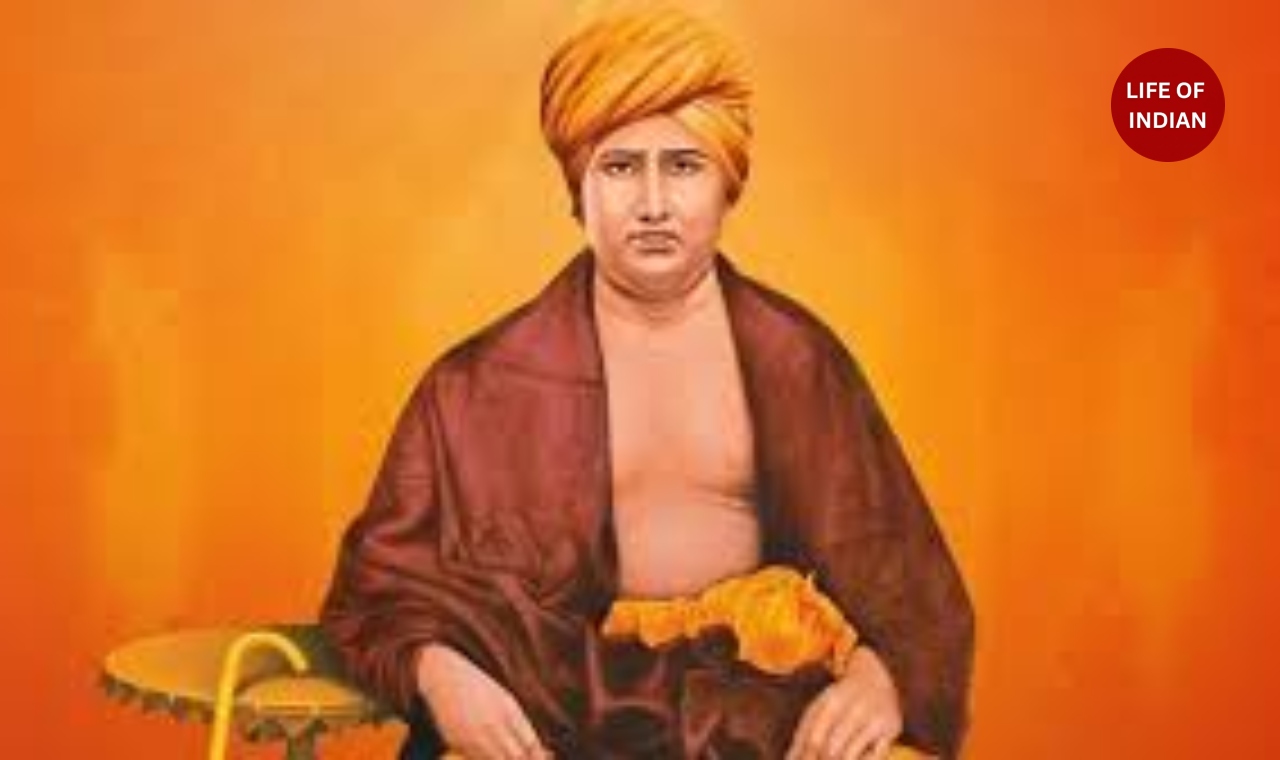
India’s spiritual and social history has been shaped by great reformers who challenged blind traditions and awakened society with truth and knowledge. Among such powerful personalities, Swami Dayanand Saraswati holds a special place. He was not just a saint or monk, but a fearless thinker, social reformer, educationist, and the founder of Arya Samaj, who worked tirelessly to remove superstition and restore the purity of Vedic wisdom.
At a time when Indian society was trapped in blind faith, idol worship rituals without understanding, caste discrimination, child marriage, and social inequality, Swami Dayanand raised his voice for truth, logic, equality, and education. His message, “Back to the Vedas,” became a movement that changed millions of lives.
Every year, Swami Dayanand Saraswati Jayanti is celebrated on the Krishna Paksha Dashami of Falgun month to honor his birth and remember his extraordinary contributions to Indian culture and Hindu reform.
In 2026, his 202nd birth anniversary will be observed on 12 February (Thursday).
Early Life: From Mool Shankar to Swami Dayanand
Swami Dayanand Saraswati was born on 12 February 1824 in Tankara, Gujarat, in a prosperous Brahmin family. His childhood name was Mool Shankar Tiwari, as he was born under the ‘Mool’ constellation.
From a young age, he showed exceptional intelligence, sharp memory, and deep interest in religious scriptures. His father wanted him to follow traditional rituals and become a priest, but destiny had something far greater planned for him.
A famous incident during Shivratri changed his life forever. While observing night-long worship, he saw a mouse climbing over the idol of Lord Shiva and eating the offerings. This simple yet powerful moment created doubt in his mind. He began questioning idol worship and wondered, “How can God, the protector of the universe, not protect Himself?”
This question led him on a lifelong journey in search of truth and the real meaning of God.
The Spiritual Journey and Search for Truth
Leaving home at an early age, Mool Shankar renounced worldly life and became a wandering monk. For years, he travelled across India, met scholars, studied scriptures, and practiced intense meditation.
Eventually, he became the disciple of Swami Virajanand, a great Vedic scholar. Under his guidance, he mastered the Vedas, Sanskrit grammar, philosophy, and logic.
Before leaving, he promised his guru that he would dedicate his entire life to spreading the true knowledge of the Vedas and removing ignorance from society. That promise shaped the rest of his life.
It was during this period that he took the name Swami Dayanand Saraswati.
Back to the Vedas: His Revolutionary Philosophy
Swami Dayanand strongly believed that the Vedas are the purest and most authentic source of knowledge. According to him, many social evils had entered Hindu society because people moved away from original Vedic teachings.
His powerful slogan, “Back to the Vedas,” was not about rejecting progress but about returning to truth, rationality, and moral values.
He opposed:
- Idol worship without understanding
- Superstition and blind faith
- Animal sacrifices
- Untouchability
- Child marriage
- Sati system
- Social inequality
Instead, he promoted:
- One formless God (Om)
- Equality of all humans
- Education for all
- Women’s rights
- Scientific thinking
- Logical spirituality
His teachings combined spiritual wisdom with social reform, making him one of the earliest modern reformers of India.
Founding of Arya Samaj and Social Reform Movement
In 1875, Swami Dayanand founded the Arya Samaj in Mumbai. This organization soon became a powerful reform movement across India.
Arya Samaj worked toward:
- Promoting Vedic values
- Removing social evils
- Spreading education
- Empowering women
- Re-converting those who had left Hinduism through the Shuddhi Movement
- Building a strong and united society
The movement inspired millions and played a major role in shaping modern Indian nationalism.
In fact, Swami Dayanand was one of the first leaders to use the word “Swaraj” (self-rule) in 1876, much before it became popular during the freedom struggle. He boldly declared:
“India is for Indians.”
Contribution to Education and DAV Institutions
Swami Dayanand believed that education was the foundation of social change. He supported a system that combined modern science with Vedic values.
Inspired by his vision, the Dayanand Anglo Vedic (DAV) schools and colleges were established. Today, the DAV network is one of the largest educational institutions in India, shaping millions of students.
He wanted education not only for men but also for women and underprivileged communities, which was revolutionary at that time.
Author of ‘Satyarth Prakash’
One of his greatest intellectual contributions was the book “Satyarth Prakash” (The Light of Truth).
Written in Hindi so common people could understand it easily, the book explains:
- True meaning of Vedas
- Criticism of blind rituals
- Social reforms
- Importance of truth and logic
- Spiritual philosophy
Even today, it remains one of the most influential reformist texts in Hindu thought.
Compassion, Courage and Forgiveness
Swami Dayanand’s revolutionary ideas created many enemies. Several attempts were made on his life. Eventually, he was poisoned by his own cook.
But instead of punishing him, Swami Dayanand forgave the cook and even gave him money to escape safely, showing his compassion and saintly nature.
Such forgiveness reflects his belief that hatred cannot remove hatred, only truth and kindness can.
He passed away in 1883, but his ideas continue to live on.
Why Swami Dayanand Saraswati Still Matters Today
Even in modern times, his teachings feel extremely relevant.
- He taught Indians to:
- Think rationally
- Respect women
- Reject discrimination
- Seek knowledge
- Question blindly followed customs
- Balance spirituality with science
His life reminds us that true religion is not about rituals but about truth, equality, and character.
He did not simply preach religion — he reformed society.
A Timeless Reformer Who Awakened India
Swami Dayanand Saraswati was not just a spiritual guru but a nation-builder, reformer, and visionary thinker. He challenged outdated beliefs, empowered people with knowledge, and restored pride in India’s Vedic heritage.
Through Arya Samaj, education, women empowerment, and social reforms, he laid the foundation for a more aware and progressive society.
On his Jayanti, remembering him is not just about celebration — it is about following his message of truth, courage, and wisdom.
His life teaches us that real devotion lies in knowledge, action, and service to humanity.