


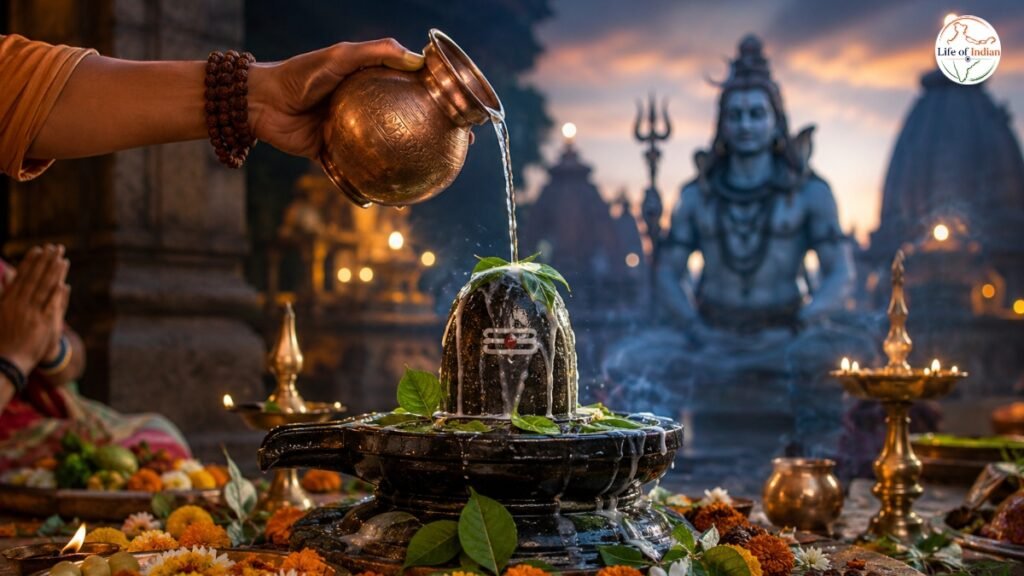
Every year, as the refreshing monsoon showers nourish the earth, millions of devotees across India welcome the sacred month of Sawan (Shravan Maas) with immense devotion. More than just a month in the Hindu calendar, Sawan is considered the most auspicious period for worshipping Lord Shiva. Temples resonate with the sound of “Har Har Mahadev,” devotees observe fasts, offer holy water to the Shivling, and spend time in prayer and meditation.
According to Hindu scriptures, worship performed during Sawan is believed to yield manifold spiritual benefits. It is said that Lord Shiva becomes especially compassionate during this month and readily blesses sincere devotees with peace, prosperity, good health, and liberation from suffering.
But what makes Sawan so sacred? Why are specific rituals like Jalabhishek, Rudraksha wearing, Belpatra offering, and Monday fasting considered so powerful? Let us explore the complete significance of Sawan rituals and understand how they help strengthen one’s spiritual connection with Lord Shiva.
Why Sawan Is the Holiest Month for Lord Shiva Worship
The sacredness of Sawan is rooted in both Hindu mythology and the traditional Hindu lunar calendar.
According to the legend of Samudra Manthan (The Churning of the Ocean), gods and demons churned the cosmic ocean in search of Amrit (the nectar of immortality). Before the nectar emerged, a deadly poison called Halahala surfaced. The poison threatened to destroy the universe.
To save all creation, Lord Shiva drank the poison and held it in His throat, which turned blue, earning Him the name Neelkanth.
To reduce the burning effect of the poison, the gods continuously offered water, milk, herbs, and sacred leaves to Lord Shiva. This divine act is believed to have originated the tradition of Jalabhishek, especially during Sawan.
Another reason is astronomical. During Sawan, the Moon is associated with the Shravana Nakshatra, and since Lord Shiva adorns the Moon on His head, this period is considered especially favorable for His worship.
Spiritual Importance of Sawan
Sawan represents purification, devotion, self-discipline, and inner transformation.
This sacred month encourages devotees to:
- Control desires
- Practice compassion
- Reduce anger and ego
- Increase meditation
- Perform charity
- Chant Shiva mantras
- Strengthen faith
Rather than merely following rituals, Sawan inspires individuals to cultivate spiritual discipline and mindfulness.
Sacred Rituals That Deepen Your Connection with Lord Shiva
1. Jalabhishek (Offering Water to the Shivling)
Jalabhishek is the most important ritual of Sawan.
Devotees pour holy water—often brought from sacred rivers such as the Ganga—over the Shivling while chanting:
“Om Namah Shivaya.”
Water symbolizes purity, surrender, and devotion. Spiritually, Jalabhishek represents washing away negative thoughts, ego, and accumulated karma.
Many devotees also perform Rudrabhishek, where Vedic hymns from the Rudram are recited during the offering.
Benefits Believed by Devotees
- Mental peace
- Removal of obstacles
- Purification of the mind
- Blessings for family harmony
- Spiritual progress
2. Offering Belpatra (Bilva Leaves)
Belpatra is considered Lord Shiva’s favorite offering.
Each Bel leaf generally consists of three leaflets representing:
- Lord Brahma
- Lord Vishnu
- Lord Shiva
They are also believed to symbolize:
- Three Gunas
- Three Eyes of Shiva
- Past, Present, and Future
Rules for Offering Belpatra
- Use fresh leaves.
- Leaves should ideally remain unbroken.
- Offer with the smooth side facing upward.
- Chant “Om Namah Shivaya” while offering.
According to scriptures, offering Belpatra with sincere devotion is believed to remove sins and bring divine blessings.
3. Panchamrit Abhishek
Another highly revered ritual is bathing the Shivling with Panchamrit, a sacred mixture of:
- Milk
- Curd
- Honey
- Ghee
- Sugar
Each ingredient carries symbolic meaning:
- Milk – Purity
- Curd – Prosperity
- Honey – Sweetness in life
- Ghee – Positive energy
- Sugar – Happiness
After Panchamrit Abhishek, devotees usually perform Jalabhishek again with clean water.
4. Wearing Rudraksha
Rudraksha beads are regarded as sacred tears of Lord Shiva.
Ancient scriptures describe Rudraksha as a powerful spiritual tool that supports meditation and enhances positive energy.
Different Mukhi (faces) of Rudraksha are associated with different spiritual qualities.
Why Devotees Wear Rudraksha During Sawan
- Improves concentration during meditation
- Encourages spiritual discipline
- Helps maintain emotional balance
- Symbolizes devotion to Shiva
Traditionally, devotees wear Rudraksha after proper purification and chanting Shiva mantras.
5. Applying Sacred Ash (Vibhuti)
Lord Shiva is often depicted covered in sacred ash, known as Vibhuti or Bhasma.
Vibhuti reminds devotees that:
- The physical body is temporary.
- The soul is eternal.
- Ego and material attachments eventually fade away.
Applying Vibhuti symbolizes humility, detachment, and spiritual awareness.
6. Chanting Shiva Mantras
Reciting Shiva mantras is considered one of the simplest yet most powerful practices during Sawan.
Popular mantras include:
Om Namah Shivaya
Maha Mrityunjaya Mantra
Daily chanting is believed to calm the mind, strengthen faith, and create a peaceful atmosphere.
7. Visiting Shiva Temples
Many devotees visit Shiva temples every Monday during Sawan.
Popular practices include:
- Performing Abhishek
- Offering flowers
- Lighting lamps
- Listening to Shiva Purana
- Participating in Rudrabhishek ceremonies
Temple visits also provide an opportunity for collective prayer and spiritual reflection.
Importance of Sawan Mondays (Shravan Somwar)
Mondays are considered especially sacred to Lord Shiva.
When they occur during Sawan, their spiritual significance becomes even greater.
Devotees observe fasts from sunrise until evening or consume only fruits and milk.
Special prayers are offered seeking:
- Good health
- Family harmony
- Career success
- Spiritual growth
- Inner peace
Unmarried women often observe Sawan Monday fasts praying for a suitable life partner.
Solah Somwar Vrat
The Solah Somwar Vrat involves fasting for sixteen consecutive Mondays.
Although it can begin anytime, many devotees choose Sawan because of its heightened spiritual importance.
The vrat includes:
- Fasting
- Shiva Puja
- Reading the Solah Somwar Vrat Katha
- Charity
- Chanting Shiva mantras
It is believed to bring prosperity, happiness, and fulfillment of sincere wishes.
Mangala Gauri Vrat
Mangala Gauri Vrat is observed on Tuesdays during Sawan.
It is primarily observed by married women for:
- Long life of their husbands
- Family prosperity
- Marital happiness
- Household well-being
Women worship Goddess Parvati, who represents devotion, strength, and marital bliss.
Kanwar Yatra: A Symbol of Devotion
One of the most remarkable traditions during Sawan is the Kanwar Yatra.
Millions of Kanwariyas collect holy Ganga water from pilgrimage sites such as Haridwar, Gangotri, Gaumukh, Sultanganj, and other sacred locations.
Carrying decorated Kanwars on their shoulders, they walk long distances barefoot to offer the sacred water on Shiva temples.
The pilgrimage symbolizes:
- Faith
- Discipline
- Sacrifice
- Dedication
- Gratitude toward Lord Shiva
Foods Commonly Consumed During Sawan
Many devotees follow a sattvic diet during Sawan.
Common fasting foods include:
- Fruits
- Milk
- Yogurt
- Sabudana
- Singhara flour
- Kuttu flour
- Makhana
- Dry fruits
Foods generally avoided include:
- Onion
- Garlic
- Alcohol
- Non-vegetarian food
- Processed foods
The emphasis is on purity, simplicity, and self-control.
Charity and Compassion During Sawan
Acts of charity are considered highly meritorious during this sacred month.
Devotees often:
- Donate food
- Offer clothes to the needy
- Feed cows
- Support temples
- Help pilgrims
- Serve drinking water to Kanwariyas
Such acts reinforce the values of kindness and selfless service.
Common Mistakes to Avoid During Sawan Rituals
While devotion is more important than perfection, many traditions advise devotees to:
- Avoid offering damaged Bel leaves.
- Keep the Shivling clean after Abhishek.
- Maintain purity of mind and body.
- Avoid anger and harsh speech.
- Perform rituals with sincerity rather than haste.
- Respect local temple customs.
Scientific and Psychological Perspective
Many Sawan practices also have practical benefits.
Meditation and mantra chanting can reduce stress and improve focus.
Fasting may encourage mindful eating and self-discipline when practiced safely.
Walking during pilgrimages builds endurance, while spending time in prayer and community worship can foster emotional well-being and social connection.
Although these practices hold deep religious significance, individual health needs should always be considered before undertaking prolonged fasts.
How Sawan Rituals Deepen Your Connection with Lord Shiva
The true purpose of Sawan rituals extends beyond external ceremonies.
Every offering, mantra, fast, and act of service encourages devotees to cultivate qualities associated with Lord Shiva:
- Simplicity
- Compassion
- Detachment
- Forgiveness
- Patience
- Inner peace
- Self-control
These rituals become meaningful when accompanied by sincere faith, ethical living, and spiritual reflection.
Sawan is not merely a season of rituals—it is a sacred journey of inner transformation. Whether one performs Jalabhishek, offers Belpatra, wears Rudraksha, observes Monday fasts, or simply chants “Om Namah Shivaya” with devotion, each practice serves as a reminder to purify the heart and strengthen one’s bond with Lord Shiva.
Ultimately, the greatest offering to Mahadev is not only water, milk, or flowers but a sincere heart filled with humility, compassion, and unwavering faith. By observing the sacred traditions of Sawan with devotion and understanding, devotees seek not only divine blessings but also spiritual growth, inner peace, and a deeper connection with the eternal consciousness represented by Lord Shiva.
FAQ
1. Why is Sawan considered the best month to worship Lord Shiva?
According to Hindu tradition, Sawan is closely associated with Lord Shiva due to the Samudra Manthan legend and the Shravana Nakshatra. Worship during this month is believed to be especially auspicious.
2. Why is Belpatra offered to Lord Shiva?
Belpatra is regarded as one of Lord Shiva’s favorite offerings. Its three leaflets symbolize the Trimurti, Shiva’s three eyes, and other sacred triads in Hindu philosophy.
3. What is Jalabhishek?
Jalabhishek is the ritual of pouring water over the Shivling while chanting Shiva mantras. It symbolizes purification, surrender, and devotion.
4. Can women observe Sawan fasts?
Yes. Both men and women observe Sawan fasts. Unmarried women often pray for a suitable spouse, while married women seek family well-being and marital happiness.
5. What should be offered to Lord Shiva during Sawan?
Common offerings include water, milk, Panchamrit, Belpatra, Dhatura, Bhasma, flowers, fruits, and sacred mantras offered with sincere devotion.
6. Is wearing Rudraksha compulsory during Sawan?
No. Wearing Rudraksha is a traditional spiritual practice, but sincere devotion, ethical conduct, and prayer are considered more important than any external symbol.