Sama Chakeva Festival 2025: Sama Chakeva is one of the most vibrant and emotional folk festivals of the Mithilanchal region, symbolizing the eternal love and bond between brothers and sisters. It begins on the Saptami Tithi of Kartik Shukla Paksha and continues till Kartik Purnima, lasting for nine auspicious days.
This traditional festival holds deep cultural significance in Mithila and nearby regions, celebrated with devotion, songs, and rituals that reflect the values of love, purity, and togetherness.
The Cultural Essence of Sama Chakeva
Sama-Chakeva is not just a festival—it’s an emotion deeply rooted in the households of Mithilanchal. It begins right after the grand Chhath Puja. As soon as Chhath concludes, the air in Mithila fills with the melodious folk songs of Sama-Chakeva.
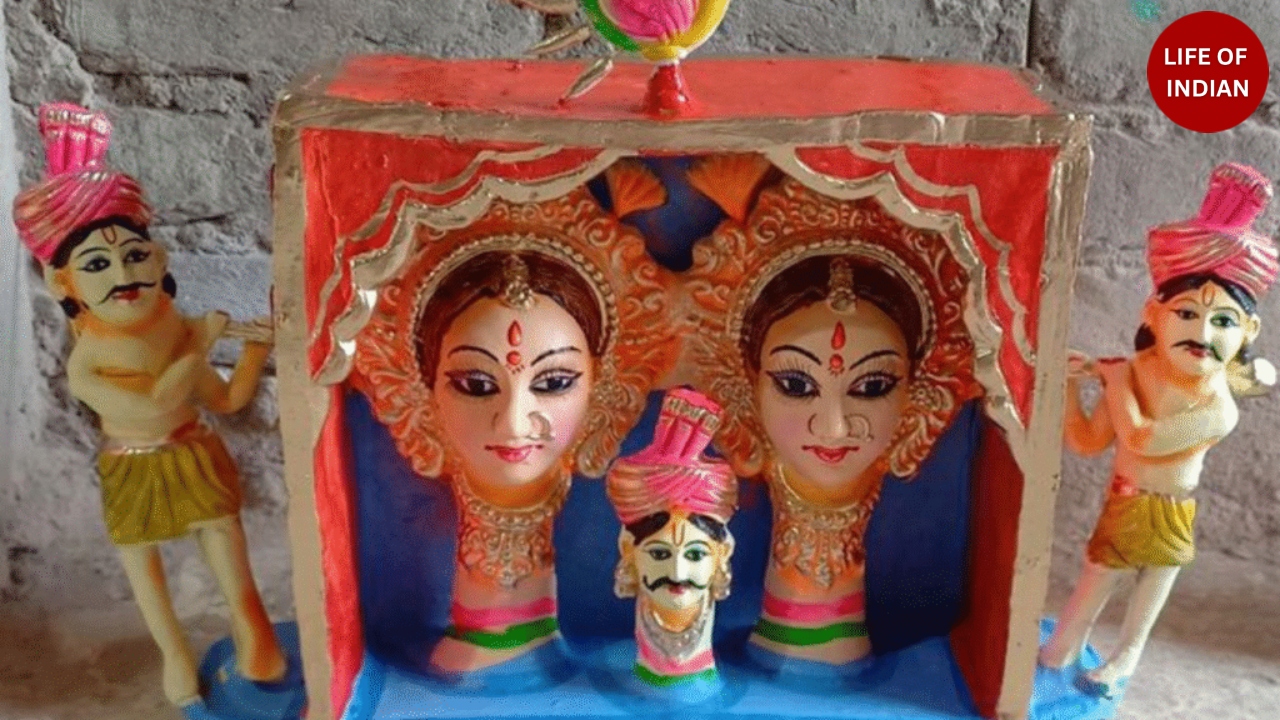
During this festival, women decorate their courtyards with clay idols of Sama, Chakeva, Chugla, and other symbolic figures. These idols are worshipped with devotion, and the festival concludes on Kartik Purnima when brothers gently break the clay idols with their knees before immersing them in rivers, ponds, or ploughed fields. This act symbolizes the completion of the sacred ritual.
Where It’s Celebrated
The Sama-Chakeva festival is mainly celebrated in Bihar and Nepal, especially in regions such as Darbhanga, Madhubani, Supaul, and Saharsa. From the foothills of the Himalayas to the banks of the Ganga, and from Champaran to Dinajpur, the festival unites communities through its shared cultural and emotional connection.
During the evenings, groups of women and girls gather with colorful bamboo baskets (daalees), singing traditional folk songs and performing rituals for their brothers’ long life, happiness, and prosperity.
The Legend Behind Sama-Chakeva
The festival has its roots in an ancient legend connected to Lord Krishna’s children — Sama (also called Shyama) and Shambh. According to folklore, due to a misunderstanding caused by a gossipmonger, Sama suffered unjust consequences. Later, when the truth was revealed, the sibling bond was restored.
To represent this story, a clay idol of “Chugla” (the gossipmonger) is also made and burnt on the final day of the festival — symbolizing the destruction of falsehood, deceit, and negativity from society.
Spiritual and Social Significance
Sama-Chakeva represents more than a traditional custom — it reflects the social values of trust, purity, and sibling unity. It emphasizes the importance of women’s role in preserving culture and the divine bond that transcends material attachments.
Through song, art, and rituals, this Mithila tradition reinforces the essence of community harmony and emotional expression that continues to define the spirit of the region.
Disclaimer
The information provided above is based on traditional beliefs and cultural knowledge. lifeofindian.in does not claim the authenticity of these beliefs. Please consult cultural experts before following any religious practice.
About the Author