
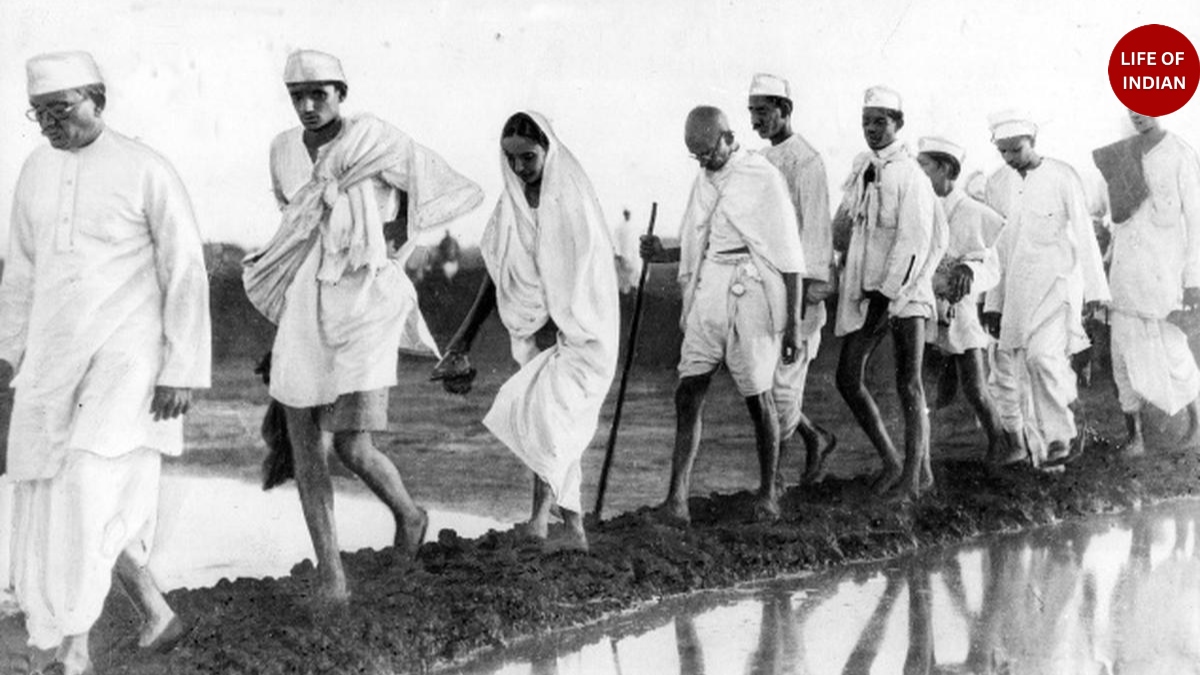
The Salt Satyagraha, also known as the Dandi March, was one of the most significant events in India’s struggle for independence. Led by Mahatma Gandhi in 1930, this movement challenged the unjust salt laws imposed by the British government. Although it began as a protest against the salt tax, it soon became a powerful symbol of nonviolent resistance, civil disobedience, and national unity.
The Salt Satyagraha played a crucial role in mobilizing millions of Indians against British rule and drew global attention to the Indian independence movement.
Mahatma Gandhi and Lal Bahadur Shastri: Two Icons Born on 2nd October
What Was the Salt Satyagraha?
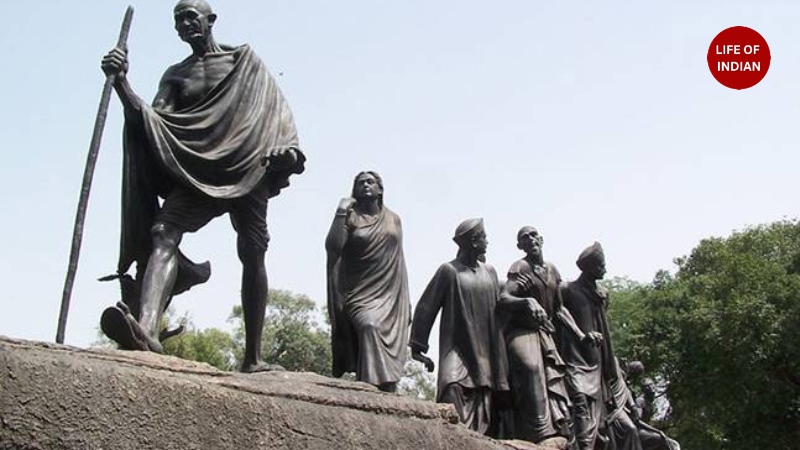
The Salt Satyagraha was a nonviolent protest movement organized by Mahatma Gandhi against the British monopoly on salt production and the heavy tax imposed on it. The march began on 12 March 1930 from Sabarmati Ashram in Ahmedabad and ended on 6 April 1930 at the coastal village of Dandi in Gujarat.
During this historic journey, Gandhi and his followers walked approximately 390 kilometers (about 240 miles) to reach the Arabian Sea. At Dandi, Gandhi symbolically broke the British salt law by collecting a small amount of natural salt from the seashore. This simple act marked the beginning of a nationwide campaign of civil disobedience.
The British Salt Law

Under British rule, the colonial government had established a monopoly over the production and sale of salt in India. Indians were not allowed to produce or sell salt independently and were forced to purchase it from the government at high prices.
Salt was an essential commodity used by every household, including the poorest sections of society. Because of this, the salt tax placed a heavy burden on ordinary people. Gandhi considered the law deeply unjust and chose it as a powerful issue around which to unite the masses.
Causes of the Salt Satyagraha
Several factors led to the launch of the Salt Satyagraha:
1. Opposition to the Salt Tax
The British government imposed a tax on salt, making it expensive for common people. Gandhi believed that taxing such a basic necessity was unfair and oppressive.
2. Economic Exploitation by the British
British policies had long exploited India’s natural resources and economy, leaving many Indians in poverty.
3. Demand for Complete Independence
In 1929, the Indian National Congress passed the resolution for “Purna Swaraj” (Complete Independence) during its Lahore session. This strengthened the resolve to challenge British authority directly.
4. Rejection of Gandhi’s Eleven Demands
Before launching the movement, Gandhi sent a letter to Viceroy Lord Irwin, presenting eleven demands that addressed various economic and political issues. When the British government ignored these demands, Gandhi decided to begin the Salt Satyagraha.
Public Service Broadcasting Day 2025: The Story Behind Mahatma Gandhi’s Only Radio Message
The Beginning of the Dandi March
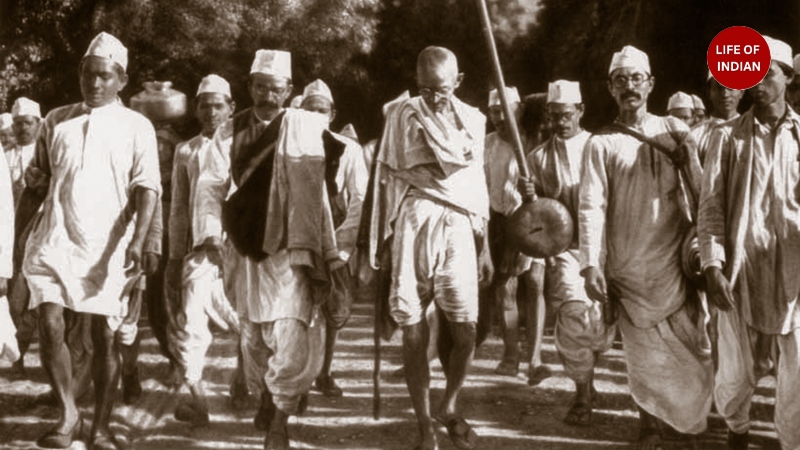
On 12 March 1930, Mahatma Gandhi started the historic march from Sabarmati Ashram along with 78 carefully selected volunteers. The march lasted 24 days and passed through numerous villages in Gujarat.
During the journey, Gandhi addressed large gatherings of people and encouraged them to join the movement against British rule through peaceful means. As the march progressed, thousands of people began to follow the group, turning it into a mass movement.
The Dandi March attracted widespread public attention and inspired people across India to participate in acts of civil disobedience.
Breaking the Salt Law at Dandi
On 5 April 1930, Gandhi and his followers reached the coastal village of Dandi. The next morning, on 6 April 1930, Gandhi walked to the seashore, picked up a lump of salty mud, and produced salt from it.
With this symbolic act, he openly violated the British salt law. This moment became a historic turning point and signaled the start of widespread resistance against colonial authority.
Spread of the Movement Across India
After the Dandi March, the Salt Satyagraha quickly spread throughout the country. People from different regions and backgrounds joined the movement.
Many forms of civil disobedience emerged:
- Indians began producing salt illegally along coastal areas.
- Foreign goods, especially British textiles, were boycotted.
- Peaceful protests were held outside liquor shops and government offices.
- Many people refused to pay certain colonial taxes.
Thousands of protesters were arrested, including major leaders such as Jawaharlal Nehru and later Mahatma Gandhi himself.
The Dharasana Salt Works Protest
One of the most notable events during the Salt Satyagraha was the protest at the Dharasana Salt Works in Gujarat.
After Gandhi’s arrest, the movement continued under the leadership of Sarojini Naidu and other activists. When peaceful protesters attempted to occupy the salt works, British police responded with brutal force.
Journalists who witnessed the event reported the violent crackdown in international newspapers. These reports shocked the global community and increased sympathy for India’s struggle for independence.
Impact and Results of the Salt Satyagraha
The Salt Satyagraha had far-reaching consequences for the Indian independence movement.
1. Strengthening the Civil Disobedience Movement
The march marked the beginning of a nationwide campaign of civil disobedience against British laws.
2. International Attention
The movement gained global coverage and brought international attention to the injustices of British colonial rule in India.
3. Mass Participation
For the first time, people from all sections of society—including women, farmers, students, and workers—actively participated in the freedom struggle.
4. Gandhi–Irwin Pact
In 1931, negotiations between Gandhi and Viceroy Lord Irwin resulted in the Gandhi–Irwin Pact, which temporarily ended the Civil Disobedience Movement and allowed Gandhi to attend the Second Round Table Conference in London.
Historical Significance
The Salt Satyagraha remains one of the most powerful examples of nonviolent resistance in world history. It demonstrated that peaceful protest could challenge even the most powerful colonial empire.
Gandhi Jayanti 2025: Luxury Cars That Mahatma Gandhi Once Traveled In
The movement also strengthened the spirit of unity among Indians and brought the independence movement closer to its ultimate goal.
The Salt Satyagraha was not merely a protest against a tax on salt; it was a bold declaration of India’s determination to achieve freedom. Mahatma Gandhi’s leadership and commitment to nonviolence inspired millions of people to stand up against injustice.
Even today, the Dandi March serves as a reminder that truth, unity, and peaceful resistance can become powerful tools for social and political change.
FAQ
1. What was the Salt Satyagraha?
Salt Satyagraha was a nonviolent protest led by Mahatma Gandhi in 1930 against the British salt tax and monopoly on salt production in India.
2. When did the Dandi March begin?
The Dandi March began on 12 March 1930 from Sabarmati Ashram in Ahmedabad and ended on 6 April 1930 at Dandi in Gujarat.
3. Why did Gandhi choose salt as the symbol of protest?
Salt was an essential item used by everyone, including the poorest people. By protesting against the salt tax, Gandhi aimed to unite all Indians against British rule.
4. How long was the Dandi March?
The march covered around 390 kilometers (240 miles) and lasted 24 days.
5. What was the impact of the Salt Satyagraha?
The movement sparked nationwide civil disobedience, attracted global attention, and strengthened India’s struggle for independence.