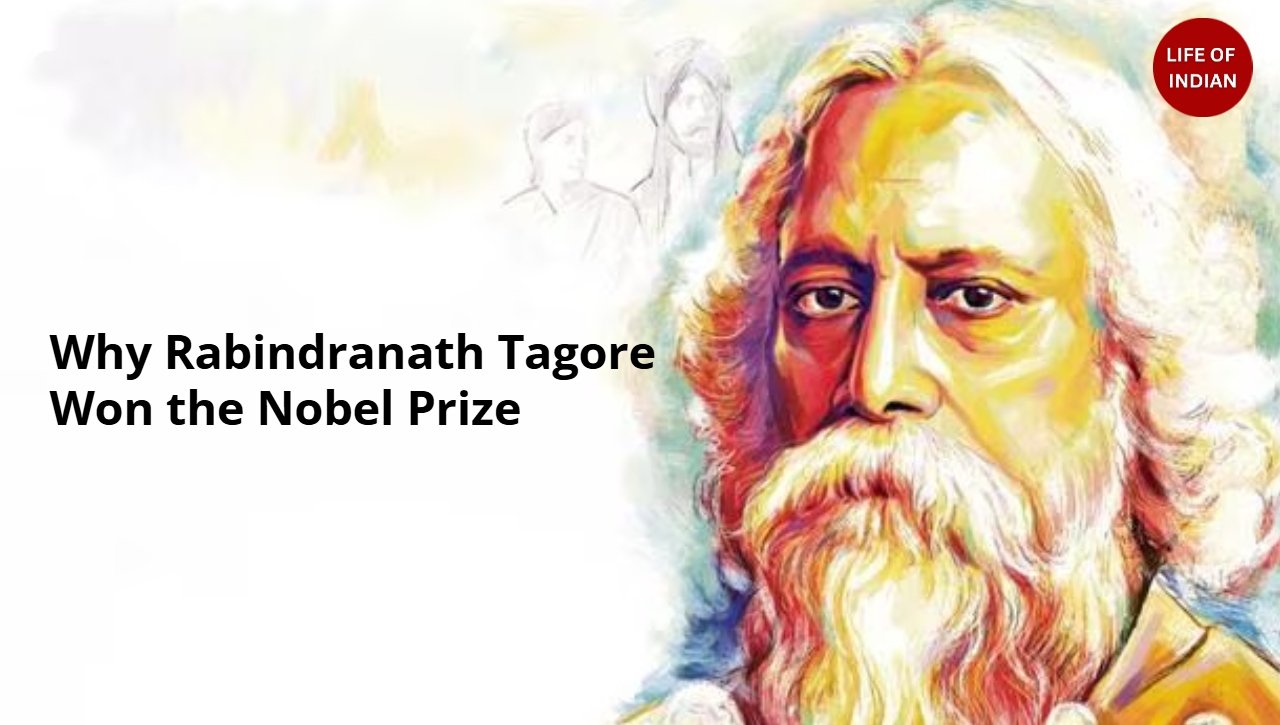
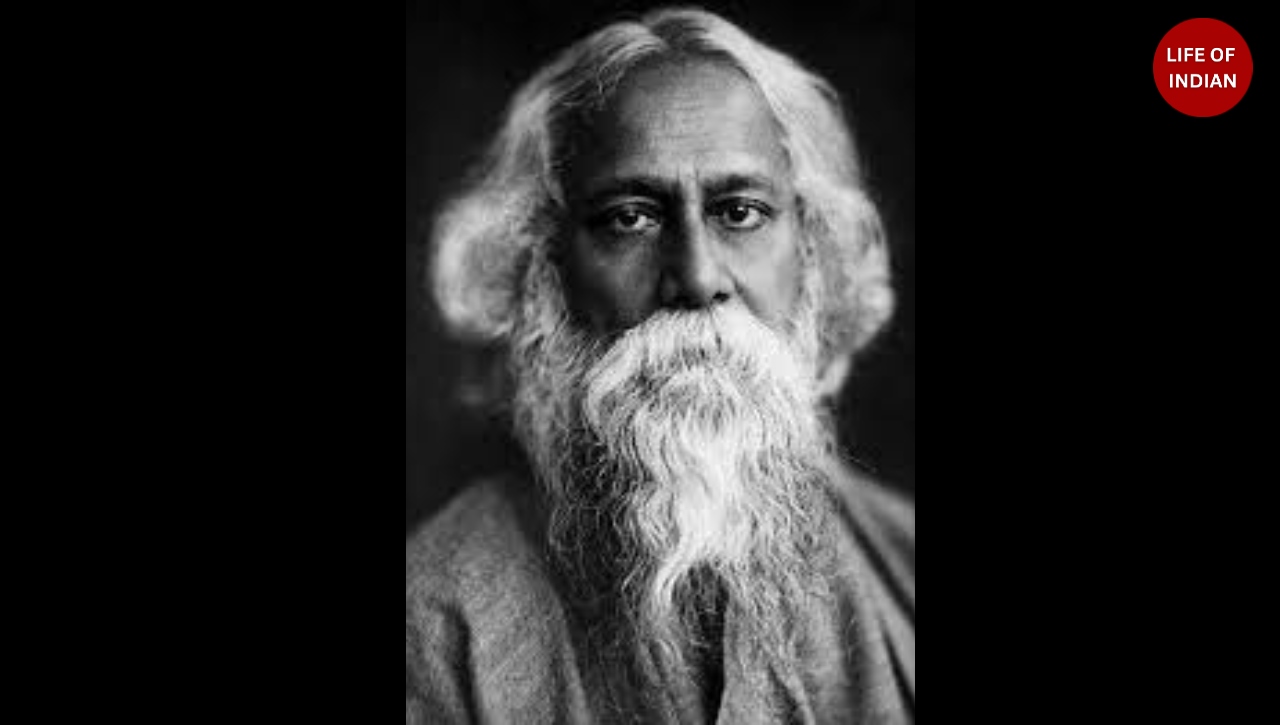
Rabindranath Tagore: Rabindranath Tagore (7 May 1861–7 August 1941) is one of the towering figures of modern Indian literature. Poet, novelist, composer, philosopher, educator, and social reformer—Tagore’s creative range was extraordinary. In 1913 he became the first non-European to win the Nobel Prize in Literature for Gitanjali (translated into English as Song Offerings)—a milestone that brought Indian poetry to an international audience.
This article explains who Tagore was, why Gitanjali mattered, the themes and style of the collection, and the enduring legacy that still makes his work essential reading.
Who was Rabindranath Tagore?
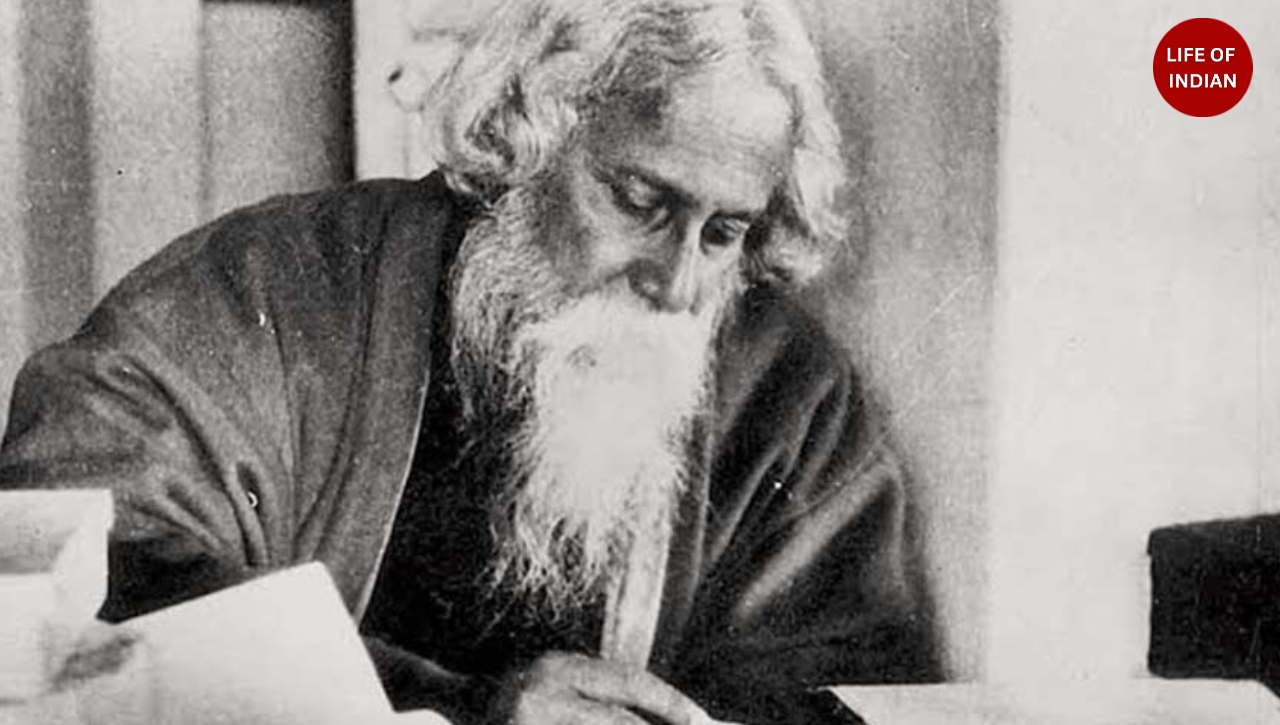
Born into a prominent Bengali family in Calcutta (Kolkata), Tagore was a child of the Bengal Renaissance. He received a varied education—learning languages, literature, music, and art—and travelled extensively through India and abroad. Tagore founded Visva-Bharati University at Santiniketan (1921), a unique center for learning that emphasized harmony between the arts, nature, and scholarship.
A cultural bridge between East and West, Tagore wrote in Bengali but translated many of his poems into English himself, enabling his work to reach a global readership.
What is Gitanjali (Song Offerings)?
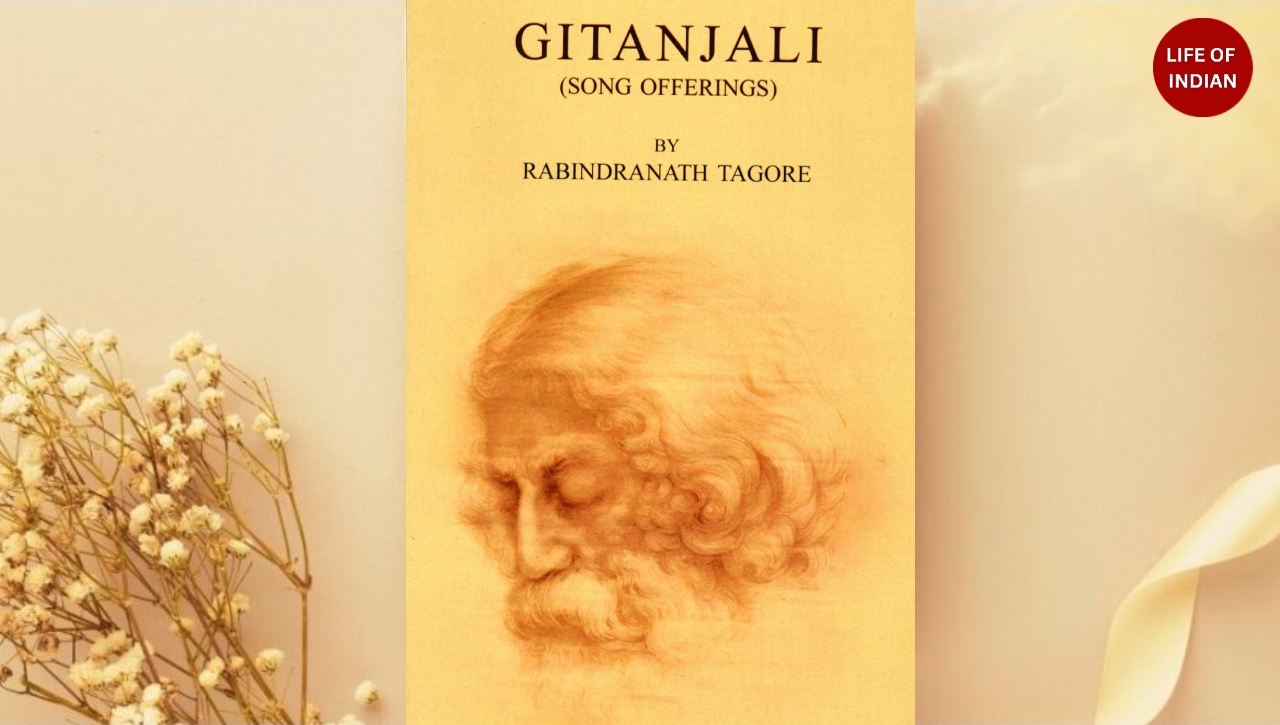
Gitanjali is a collection of spiritual and lyrical poems. The Bengali original contained many poems; Tagore selected and translated a subset into English and published them under the title Song Offerings (1912). The English Gitanjali is intimate, devotional, and mystical—poems addressed to the Divine, suffused with love, surrender, and the sense of a personal dialogue with the ultimate Reality.
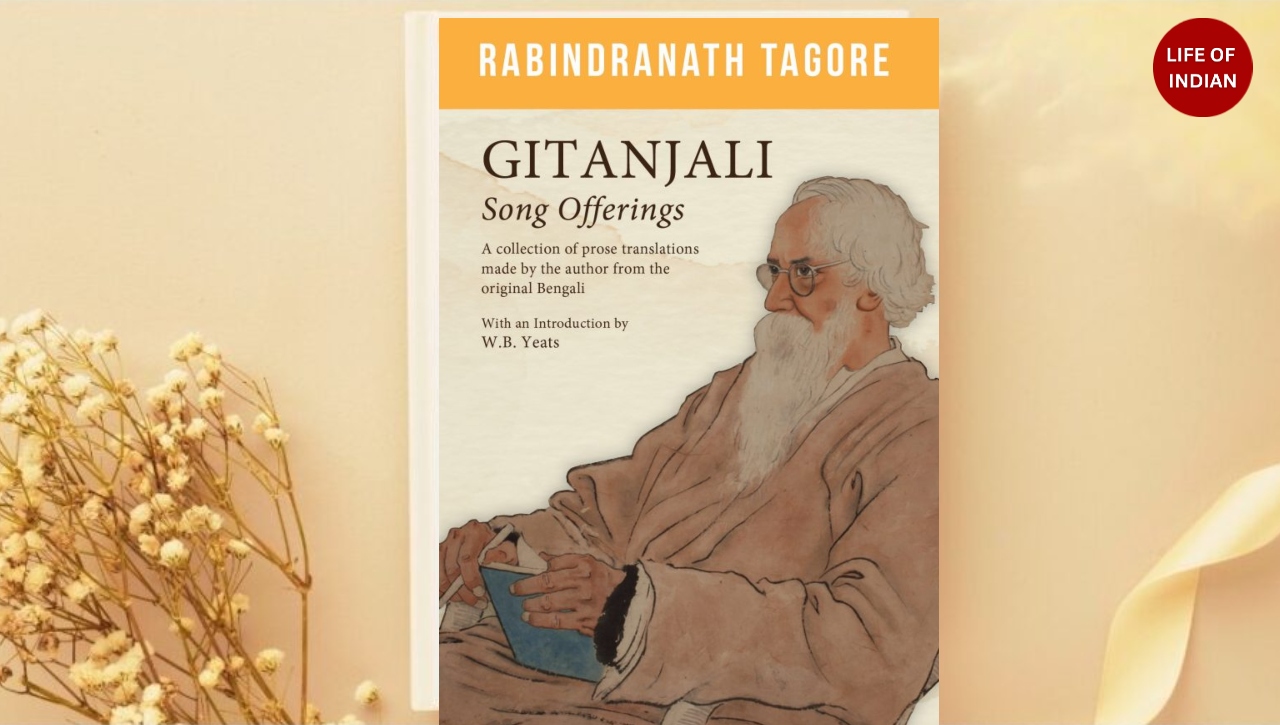
It was this English volume that impressed European readers and critics, notably W. B. Yeats, who wrote favorable introductions and helped the book gain attention. In 1913 the Nobel Committee awarded Tagore the Nobel Prize in Literature «because of his profoundly sensitive, fresh and beautiful verse, by which, with consummate skill, he has made his poetic thought, expressed in his own English words, a part of the literature of the West.» (paraphrased summary of the Committee’s praise)
Themes & Characteristics of Gitanjali
Gitanjali blends several recurring themes:
-
Devotion and Divine Longing: Many poems read as an intimate prayer—the poet yearning for union with the Divine.
-
Simplicity and Directness: Unlike ornate classical verse, Tagore’s language is plain yet deeply evocative.
-
Humanism and Universalism: Tagore’s spiritual voice is inclusive—addressing a universal human concern rather than ritual orthodoxy.
-
Nature as Witness: Natural imagery—rivers, trees, dawn, birds—frequently embodies spiritual truths.
-
Renunciation and Renewal: Poems often move from admission of weakness to trust and transformation.
Formally, the poems are lyrical, often short, with a musical cadence and a meditative hush that makes them suitable for reading aloud.
Why the Nobel? What Made Gitanjali World-Changing?
A few reasons explain the collection’s global impact:
-
A New Voice: Tagore’s English translations retained the lyrical power of the originals while offering an unfamiliar—yet accessible—spiritual poetry to Western readers.
-
Cross-Cultural Appeal: The poems articulate universal spiritual longings without sectarian language, making them resonant across cultures.
-
Advocacy from Western Intellectuals: Figures such as W. B. Yeats (and other contemporary thinkers) championed Tagore’s work, helping it cross linguistic and geographic barriers.
-
Timeliness: In the early 20th century, Western readers were seeking fresh perspectives; Tagore offered modern yet timeless meditations rooted in Indian thought.
The Nobel Prize recognized not only the literary quality but also the bridge-building role Tagore played between cultures.
Notable Poems & Lines (What to Read First)
While the full Bengali collection contains over a hundred poems and Tagore’s English edition featured 100+ poems, a few of the most celebrated pieces (often anthologized) evoke the mood of the whole:
-
Poems that read as direct prayers of surrender and longing.
-
Short lyrical pieces in which everyday objects become symbols of larger spiritual truths.
-
Poems that celebrate the teacher–disciple relationship between the seeker and the Divine.
(When publishing direct excerpts, use public-domain translations or brief paraphrases to respect copyright and translation integrity.)
Tagore’s Legacy: Beyond Poetry
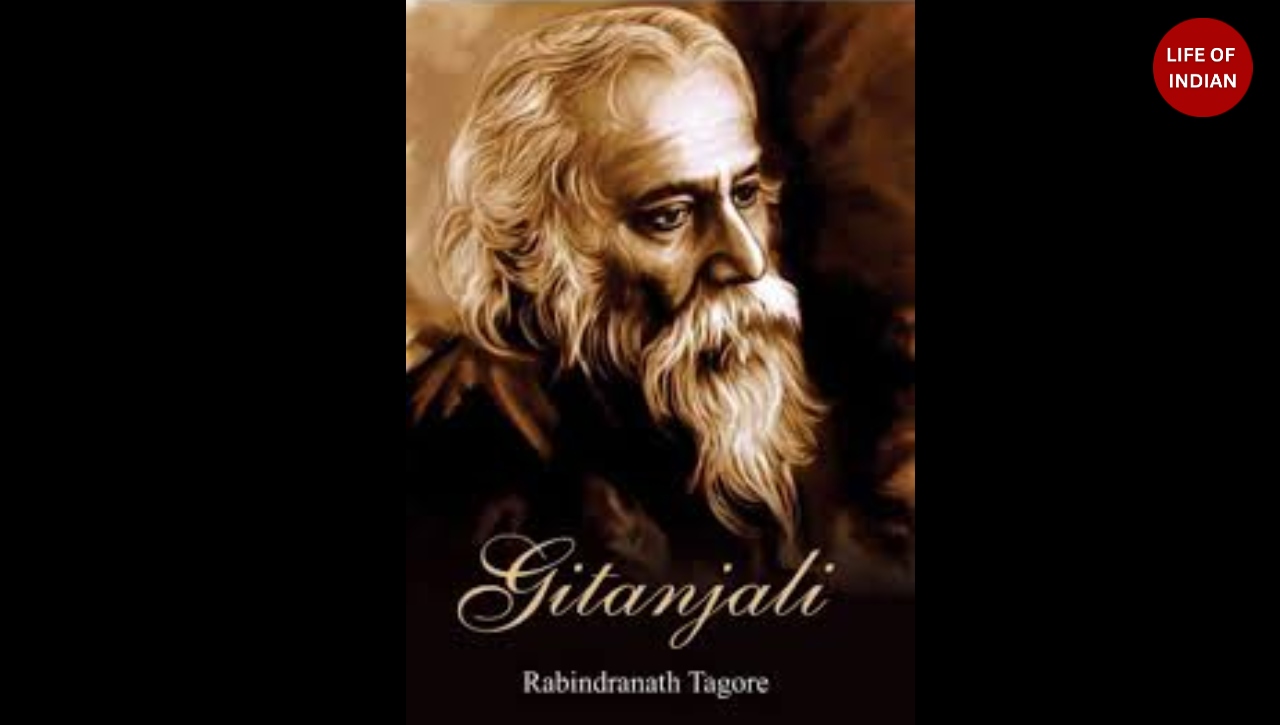
Tagore’s contributions go far beyond Gitanjali:
-
Education: Visva-Bharati sought to integrate art, craft, and scholarship with nature—an experimental model still admired today.
-
Music: Tagore composed over 2,000 songs (Rabindra Sangeet), many of which are central to Bengali culture.
-
Social Thought: He was an outspoken critic of narrow nationalism and stressed humanism, universalism, and compassion.
-
Global Respect: Tagore’s ideas influenced thinkers worldwide and opened avenues for Indian literature on the global stage.
Quick Facts & GK Points
-
Born: 7 May 1861 (Calcutta, British India)
-
Died: 7 August 1941 (Calcutta)
-
Nobel Prize in Literature: 1913—First non-European laureate in this category.
-
Gitanjali (English): Published 1912 (translated selections), helped secure Nobel.
-
Visva-Bharati University: Founded 1921 at Santiniketan.
-
Major Themes: Devotion, nature, humanism, unity of existence.
-
Other achievements: playwright, novelist, painter, and composer.
Why Read Gitanjali Today?
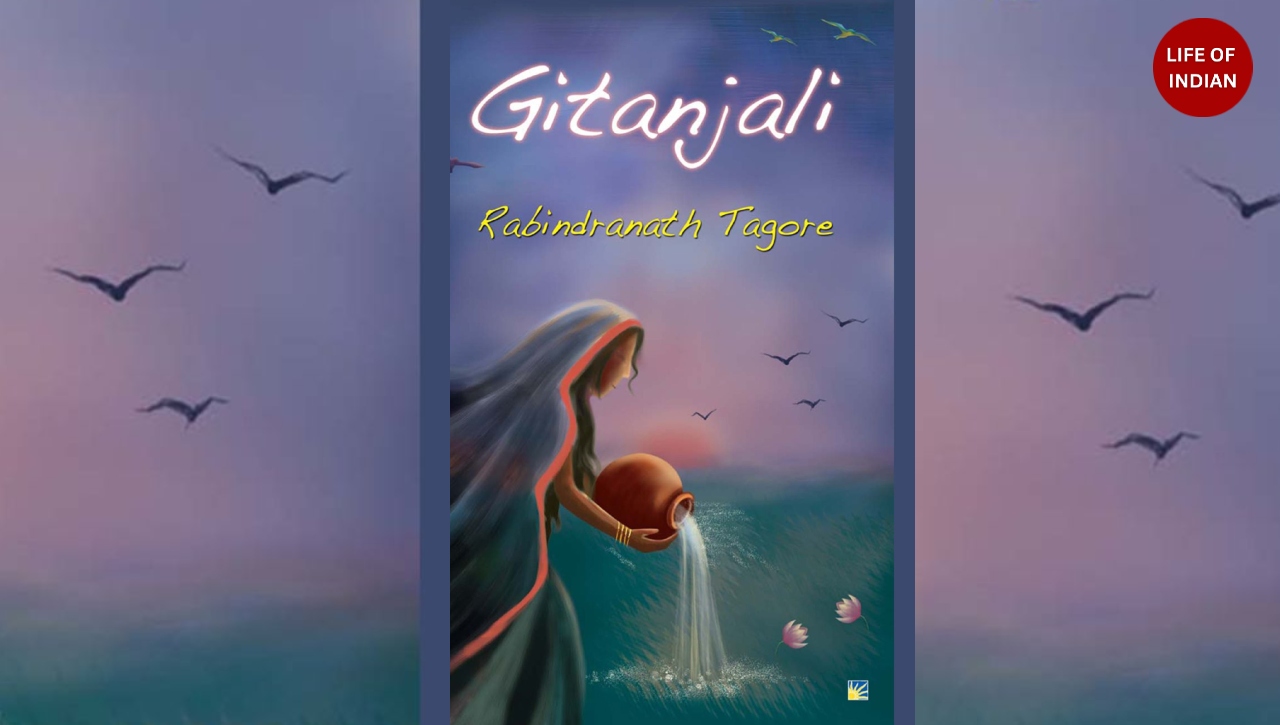
In a world often driven by speed and distraction, Gitanjali offers a quiet space for reflection. Its poems are short, contemplative, and humane—perfect for readers seeking spiritual consolation, poetic clarity, or an introduction to modern Indian literature. Schools, universities, and poetry lovers across the world still turn to Tagore for depth, lyricism, and compassionate insight.
Suggested Reading & Editions
For readers new to Tagore, try:
-
An authoritative translation of Gitanjali (look for editions with reliable scholarly notes).
-
Collections of Rabindra Sangeet to experience Tagore’s musical expression.
-
Biographies that place Tagore’s literary work in the context of his life and political thought.
Rabindranath Tagore’s Gitanjali is more than a book of poems—it is an experience of lyrical devotion and human insight. The Nobel Prize acknowledged not just the beauty of the poems but also their capacity to speak across cultures and eras. For anyone exploring Indian literature for the first time or returning to it after years, Gitanjali remains a gentle, wise, and essential companion.