


In the wetlands and riverbanks of Assam, where nature flourishes around the mighty Brahmaputra River, a rare bird once stood on the edge of extinction—feared, hated, and abandoned by the very people who shared its habitat. Tall, unusual-looking, and often misunderstood, the Greater Adjutant stork, locally known as the Hargila or “bone swallower,” had long been treated as a symbol of bad luck. Villagers mocked it, destroyed its nesting sites, and in some cases even hunted it. Few imagined that this strange-looking bird would one day become the center of one of India’s most inspiring conservation stories.
Behind this remarkable transformation stands Purnima Devi Barman, a wildlife biologist from Assam whose determination, empathy, and grassroots activism changed not only the fate of an endangered species but also the lives of thousands of women in rural communities. Her journey is not merely a conservation story; it is a story about resilience, compassion, cultural transformation, and the extraordinary power of community action.
The turning point came in January 2007, on a hot afternoon in Dadara village near the banks of the Brahmaputra. Purnima, who at the time was pursuing research in wildlife conservation and studying the nesting behavior of Greater Adjutant storks, witnessed a horrifying scene that would forever alter the direction of her life.
A massive kadamba tree, one of the tallest and most beautiful trees in the village, had been cut down by local villagers. As its branches crashed to the ground, nests were destroyed instantly. Scattered across the fallen leaves and broken twigs were the lifeless bodies of Hargila birds. Some had died immediately in the destruction, while frightened chicks lay injured and helpless beneath the debris.
Purnima still remembers picking up one surviving baby bird and holding it close to her chest. She could feel its heartbeat, trembling in fear and pain. At the time, she herself was a mother raising young twin daughters, and the emotional connection she felt with the vulnerable chick affected her profoundly. In that heartbreaking moment, she realized that simply observing these birds as a researcher would never be enough.
The birds did not need another academic observer. They needed someone willing to fight for them.
Understanding the Hargila: The Bird People Misunderstood

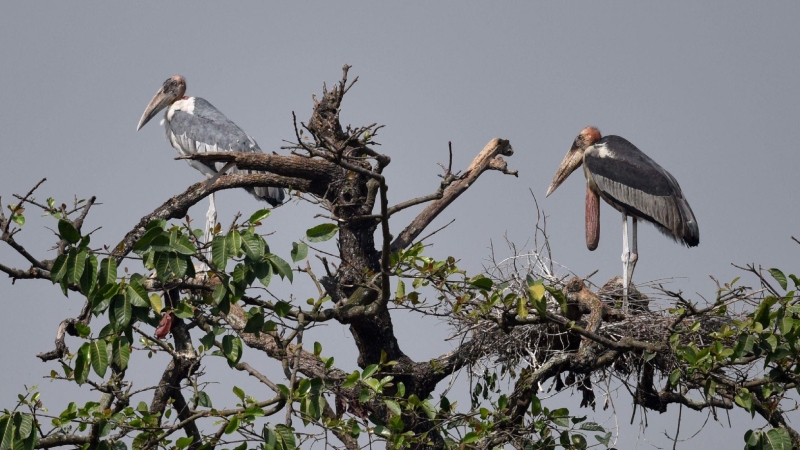
The Greater Adjutant is among the rarest storks in the world and one of the most distinctive birds found in South Asia. Standing nearly five feet tall, with long legs, a massive pointed beak, and a bald neck, the bird’s unusual appearance often caused fear among local communities. Its scavenging habits — feeding on dead animals and organic waste — further strengthened negative perceptions. Locally called “Hargila,” meaning “bone swallower,” the bird became associated with unpleasantness, death, and bad fortune.
Yet what people failed to understand was the ecological importance of this bird.
Hargilas play a critical role in maintaining environmental balance. As scavengers, they clean carcasses and decaying biological waste from wetlands and surrounding ecosystems, preventing disease outbreaks and helping recycle nutrients back into the soil. In many ways, they function as nature’s sanitation workers, quietly protecting environmental health.
Historically, Greater Adjutant storks were distributed widely across Asia. However, habitat destruction, hunting, wetland degradation, egg collection, and human hostility pushed their population into severe decline. Today, the species survives mainly in Assam and Bihar in India, along with smaller populations in Cambodia. According to the International Union for Conservation of Nature, the bird remains a species of conservation concern due to shrinking habitats and ecological threats.
When Purnima began her work, Assam reportedly had only around 450 Hargilas left. Their future looked dangerously uncertain.
Changing Fear into Empathy
Purnima soon realized that scientific reports and conservation lectures alone would never save the species. The biggest challenge was not simply habitat loss — it was public perception. In many villages, Hargilas were viewed as dirty, ugly birds that damaged property. Since they often nested in large trees located on private land, villagers became frustrated by droppings, noise, and broken branches. Superstitions worsened the situation, with many considering the bird an omen of bad luck.
Rather than criticizing communities, Purnima chose a different approach: empathy. She started visiting villages, speaking directly with local women, especially mothers. Instead of discussing conservation through complicated scientific explanations, she asked a deeply personal question:
“How would you feel if someone treated your child the way these birds and their babies are treated?”
The question struck an emotional chord. Women who had previously ignored or feared the birds suddenly began seeing them differently. Mothers understood vulnerability. They understood the pain of losing a child. Slowly, fear started turning into compassion.
Among those influenced was Pratima Kalita Rajbongshi, who later recalled how villagers once threw stones at the birds for entertainment. After hearing Purnima speak, she could no longer see the Hargila as a nuisance. Instead, she saw frightened living beings struggling to survive. That emotional shift marked the beginning of a movement.
The Rise of the Hargila Army
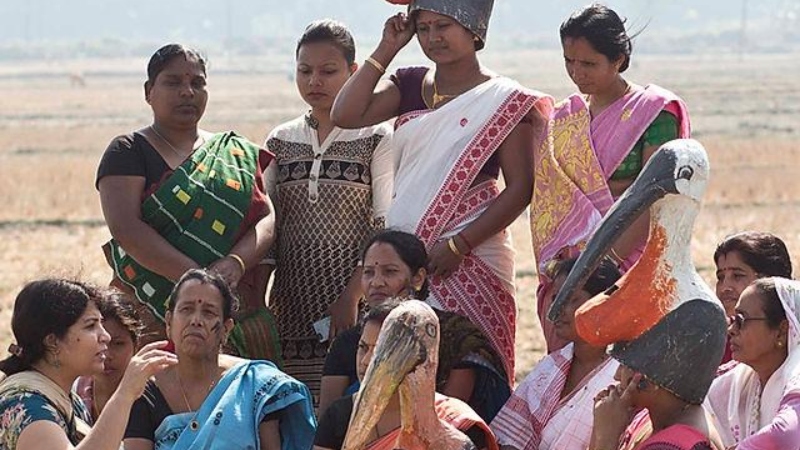
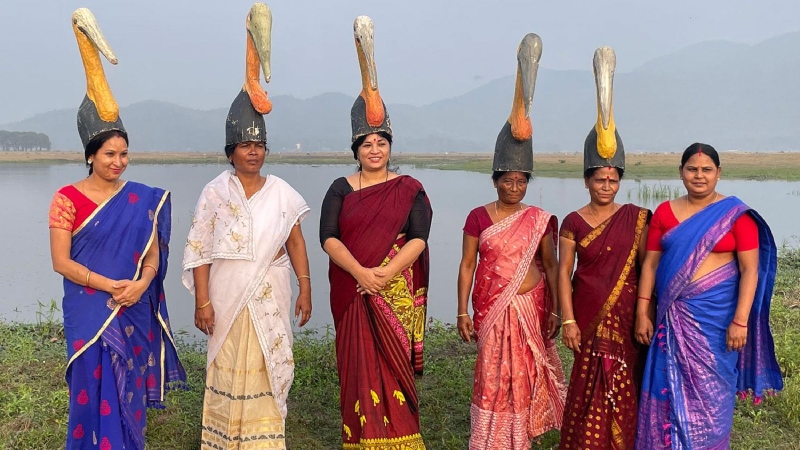
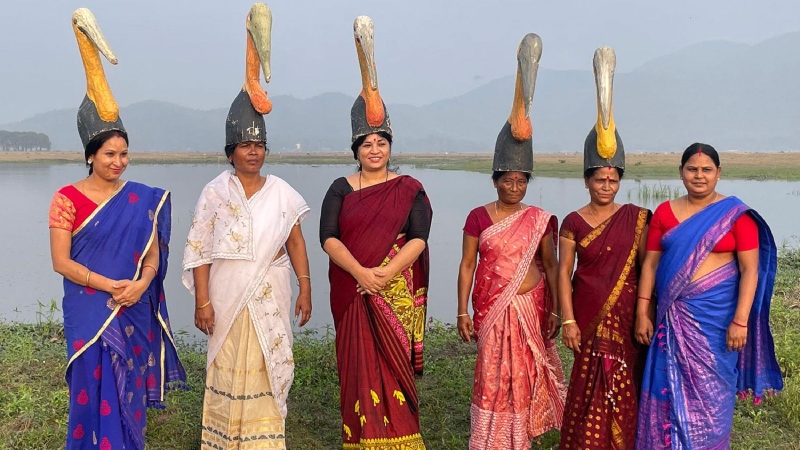
In 2007, Purnima launched what would later become known as the Hargila Army, an all-women conservation movement dedicated to protecting the endangered bird. What started as conversations among a handful of women gradually evolved into a powerful grassroots network. Purnima understood something essential — people protect what they emotionally connect with. So instead of imposing conservation from outside, she made the Hargila part of Assamese social life and cultural identity.
Traditional Assamese baby showers, celebrations associated with pregnancy and motherhood, became opportunities for awareness. Women dressed in giant handmade Hargila costumes danced joyfully during ceremonies, turning a once-hated bird into a symbol connected with blessings, fertility, care, and celebration.
Folk songs praising the bird were introduced. Stories about environmental care spread through communities. Slowly, the Hargila stopped being seen as an ugly scavenger and became a shared responsibility. The results were extraordinary. Over time, the Hargila Army expanded dramatically. Today, it reportedly includes around 20,000 women across 47 villages who have pledged to protect the species and its habitat.
Conservation That Empowered Women
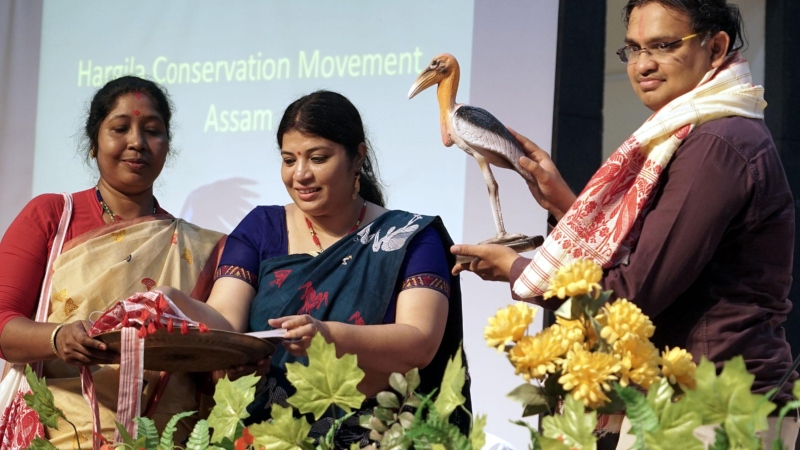
Purnima also recognized that long-term conservation cannot survive without economic support. Communities struggling financially often prioritize survival over environmental protection. To address this challenge, she introduced livelihood opportunities linked to conservation. Women skilled in weaving and embroidery began creating Hargila-themed sarees, shawls, quilts, cushion covers, textiles, and handicrafts. This simple idea transformed lives.
Women who had previously stayed confined to domestic spaces found confidence, identity, and financial independence through creative work inspired by conservation. The Hargila became not only a symbol of ecological awareness but also a source of livelihood. One inspiring example is Lavita Baishya, a mother from Dadara village who joined community programs and later discovered a passion for sewing. Through earnings generated from Hargila-themed textile work, she eventually opened her own tailoring center and now trains other women.
Over the years, retail outlets and local initiatives helped women sell handmade products, strengthening both household incomes and environmental awareness. In many villages, protecting birds unexpectedly became a pathway toward women’s empowerment.
A Conservation Success Story
The impact of Purnima Devi Barman’s work can be measured not only emotionally but statistically. Back in 2007, Assam’s Hargila population was estimated at around 450 birds. Through years of community engagement, habitat protection, awareness campaigns, rescue operations, and women-led conservation efforts, the numbers gradually improved.
Today, estimates suggest the population has increased to nearly 1,800 birds in Assam, with sightings expanding across multiple regions. Such recovery is significant for a species once nearing extinction in the region.
Purnima’s work has since received international recognition, and her conservation model is frequently celebrated as an example of successful community-driven environmental action. Rather than separating people from nature, she demonstrated that conservation succeeds when communities themselves become protectors.
Challenges Still Remain
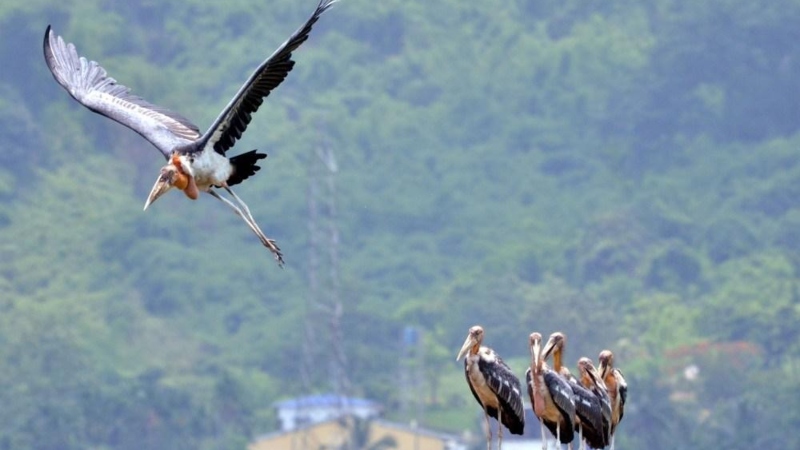
Despite the remarkable progress, the Hargila’s future is not entirely secure. Wetland destruction, urban expansion, illegal logging, and the disappearance of nesting trees continue to threaten the species. Large trees such as kadamba and silk cotton trees remain essential for nesting, yet many are cut for timber or development projects.
Because Hargilas nest in colonies, the destruction of even a few trees can wipe out entire breeding groups. Purnima continues advocating for habitat preservation, public awareness, and stronger community participation. She believes saving the bird also means protecting wetlands, biodiversity, and local ecosystems. For her, conservation is not a temporary campaign — it is a lifelong responsibility.
One Woman, Thousands of Lives, and a Bird That Refused to Disappear
The story of Purnima Devi Barman is far greater than a story about birds. It is the story of how compassion can defeat fear, how education can transform prejudice, and how ordinary people — especially women — can become powerful guardians of nature. At a time when extinction often feels inevitable, the revival of the Hargila offers hope. It proves that change begins when someone decides to care deeply enough to act.
In 2007, one woman stood beneath a destroyed tree, holding a frightened baby bird in her hands. She chose not to walk away. Because of that decision, thousands of women found purpose, communities found pride, and one of India’s rarest birds found another chance to survive.
FAQ
1. Who is Purnima Devi Barman?
Purnima Devi Barman is an Indian wildlife biologist and conservationist from Assam who became internationally known for her efforts to protect the endangered Greater Adjutant, locally called the Hargila.
2. What is the Hargila bird?
The Hargila, also known as the Greater Adjutant stork, is one of the rarest storks in the world. It is a large scavenger bird found mainly in Assam, Bihar, and parts of Cambodia.
3. Why is the Hargila bird important?
Hargilas help maintain ecological balance by cleaning dead animals and organic waste from wetlands and surrounding areas. They prevent disease spread and recycle nutrients back into nature.
4. Why were Hargila birds disliked by villagers?
Many villagers considered the bird ugly and unlucky because of its appearance, smell, and scavenging behavior. Their nesting habits on private land also caused conflict with local communities.
5. What is the Hargila Army?
The Hargila Army is a women-led conservation movement started by Purnima Devi Barman in Assam. Thousands of women from rural villages joined together to protect the endangered Hargila bird and its habitat.
6. How did Purnima Devi Barman help save the Hargila?
She created awareness in villages, encouraged women to protect nesting sites, connected conservation with Assamese culture, and created livelihood opportunities through Hargila-themed handicrafts and textiles.
7. How many Hargila birds are left today?
The population in Assam has significantly improved over the years. Reports suggest the number increased from around 450 birds in 2007 to nearly 1,800 birds due to conservation efforts.
8. Where is the Hargila bird found in India?
The Greater Adjutant stork is mainly found in the Indian states of Assam and Bihar, especially in wetland regions near the Brahmaputra River.
9. Why is Purnima Devi Barman’s work important?
Her work is considered a global example of successful community-driven conservation because it combined environmental protection, women empowerment, and cultural awareness.