


Prehistoric India: Prehistoric India refers to the long phase of human history before the invention of writing. Since no written records exist for this period, historians and archaeologists reconstruct life using stone tools, cave paintings, fossils, and habitation sites.
In India, prehistoric evidence is rich and widespread, making the subcontinent one of the most important regions for understanding early human evolution and culture.
What is the Stone Age?
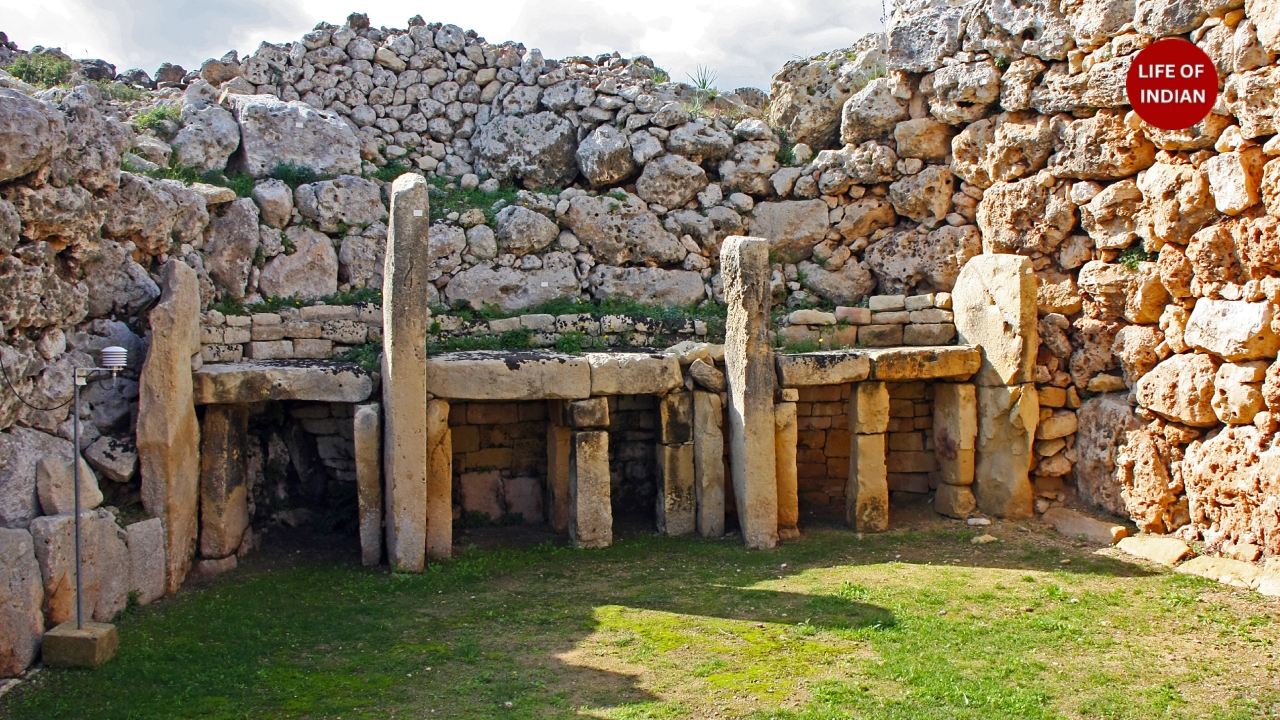

The Stone Age is the earliest phase of human history, named after the extensive use of stone tools.
In India, the Stone Age is divided into three major phases:
-
Palaeolithic Age (Old Stone Age)
-
Mesolithic Age (Middle Stone Age)
-
Neolithic Age (New Stone Age)
Each phase shows clear progress in tools, lifestyle, food habits, and social organization.
1. Palaeolithic Age (c. 2 million years ago – 10,000 BCE)

Key Features
-
Earliest phase of human life
-
Humans lived as hunters and food gatherers
-
Complete dependence on nature
-
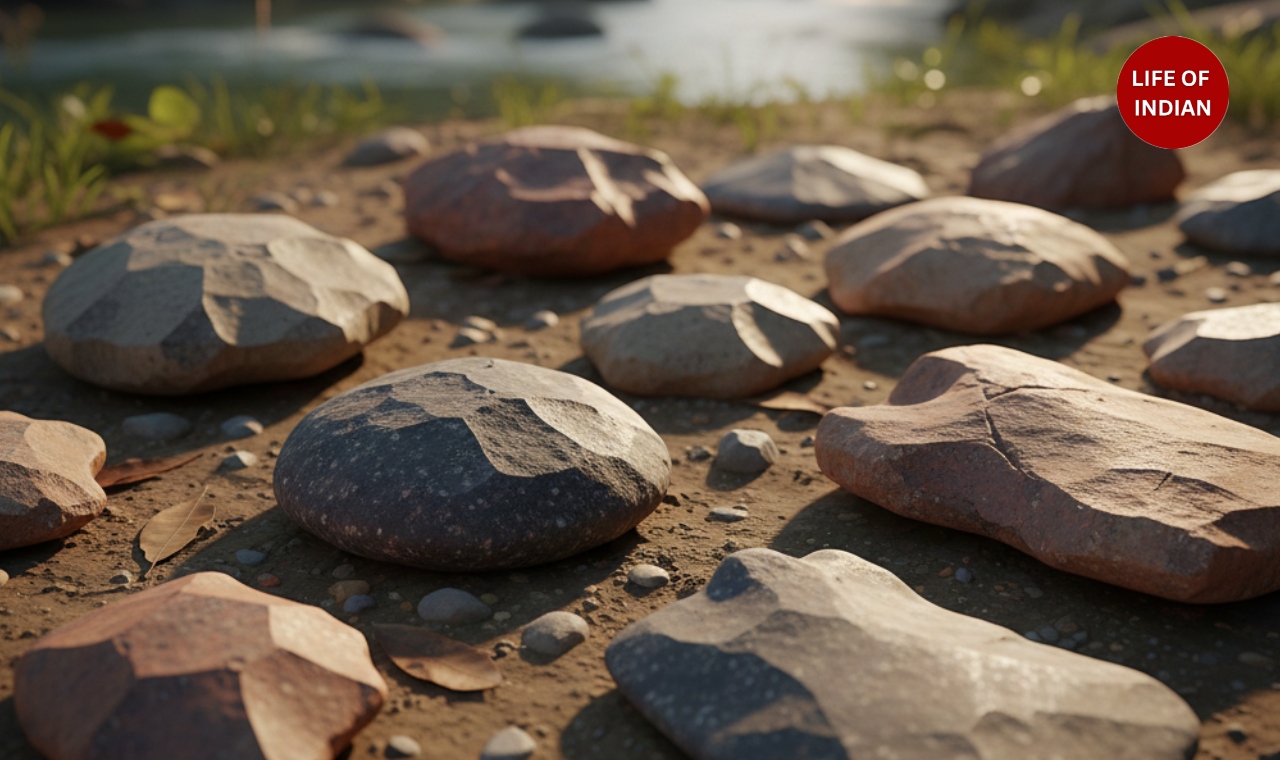
Use of roughly chipped stone tools
Types of Palaeolithic Tools
-
Hand axes
-
Choppers
-
Cleavers
-
Scrapers
These tools were mainly made of quartzite, a hard stone found near riverbeds.
Phases of the Palaeolithic Age
-
Lower Palaeolithic – Large and heavy tools (hand axes, cleavers)
-
Middle Palaeolithic – Smaller and sharper tools
-
Upper Palaeolithic – Fine blades and improved hunting weapons
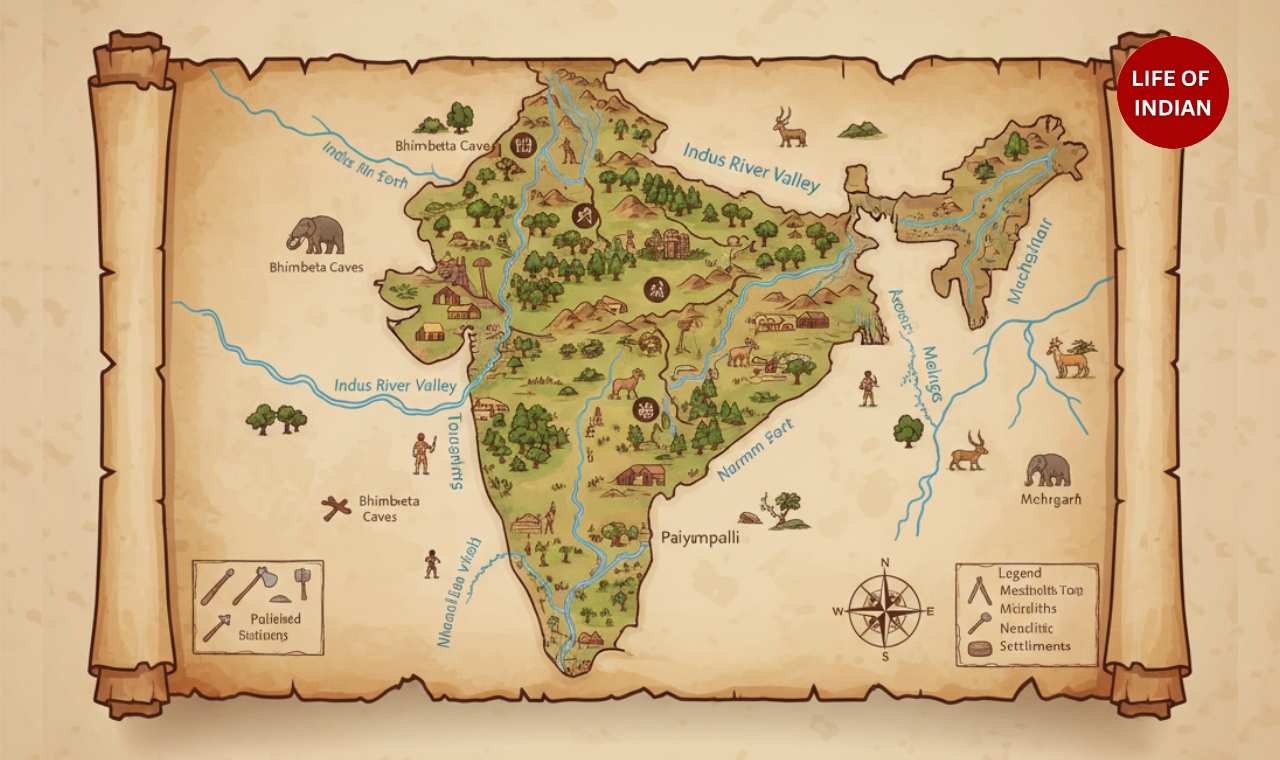
Important Palaeolithic Sites in India
-
Soan Valley
-
Narmada Valley
-
Hunsgi
Lifestyle
-
Nomadic life (moving from place to place)
-
Lived near rivers and forests
-
Used fire in later stages for cooking and protection
-
No knowledge of farming or domestication
2. Mesolithic Age (c. 10,000 BCE – 6,000 BCE)
Transition Phase
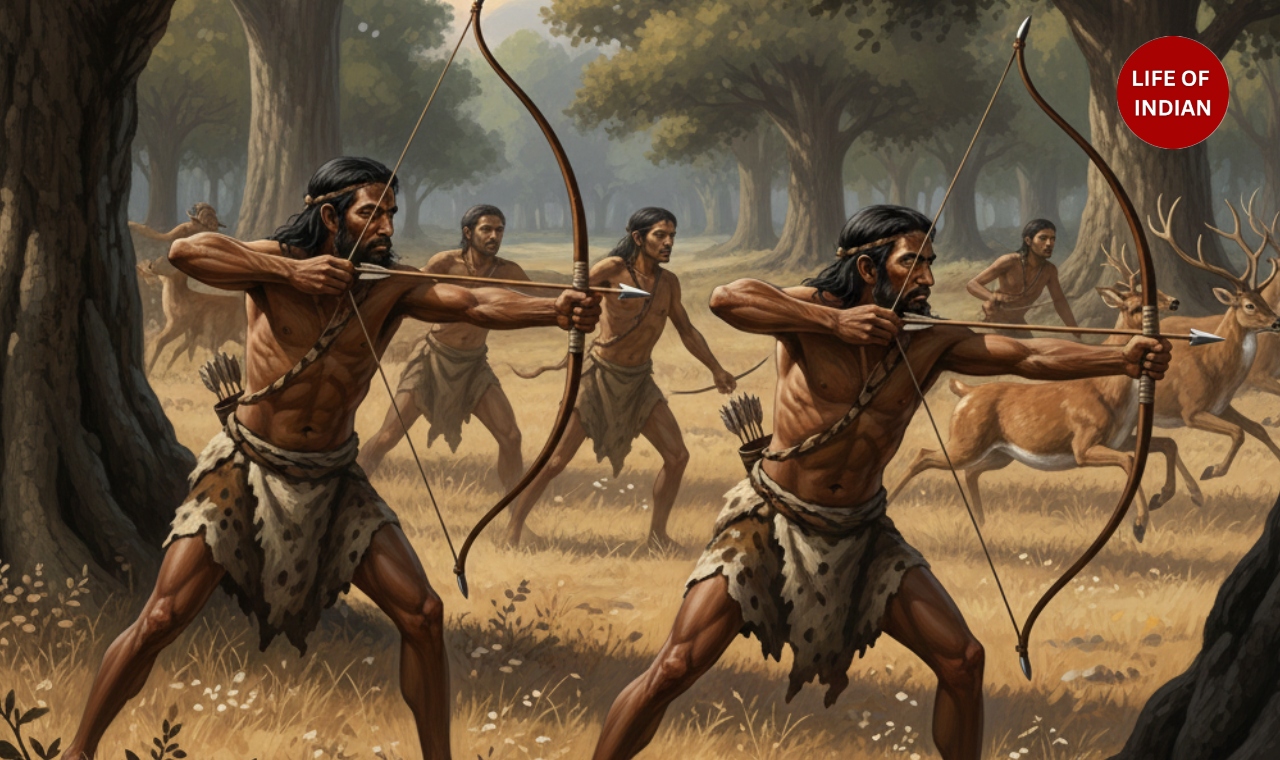
The Mesolithic Age represents a bridge between hunting life and settled life. Climate changes after the Ice Age forced humans to adapt.
Microlithic Tools
-
Small, sharp stone tools called microliths
-
Used as arrowheads, spear tips, and knives
-
Made hunting more efficient
Major Developments
-
Beginning of animal domestication
-
Fishing and hunting became specialized
-
Seasonal settlements emerged
-
Early social bonds developed
Important Mesolithic Sites
-
Bagor
-
Langhnaj
-
Adamgarh
3. Neolithic Age (c. 6,000 BCE – 1,000 BCE)
Beginning of Settled Life
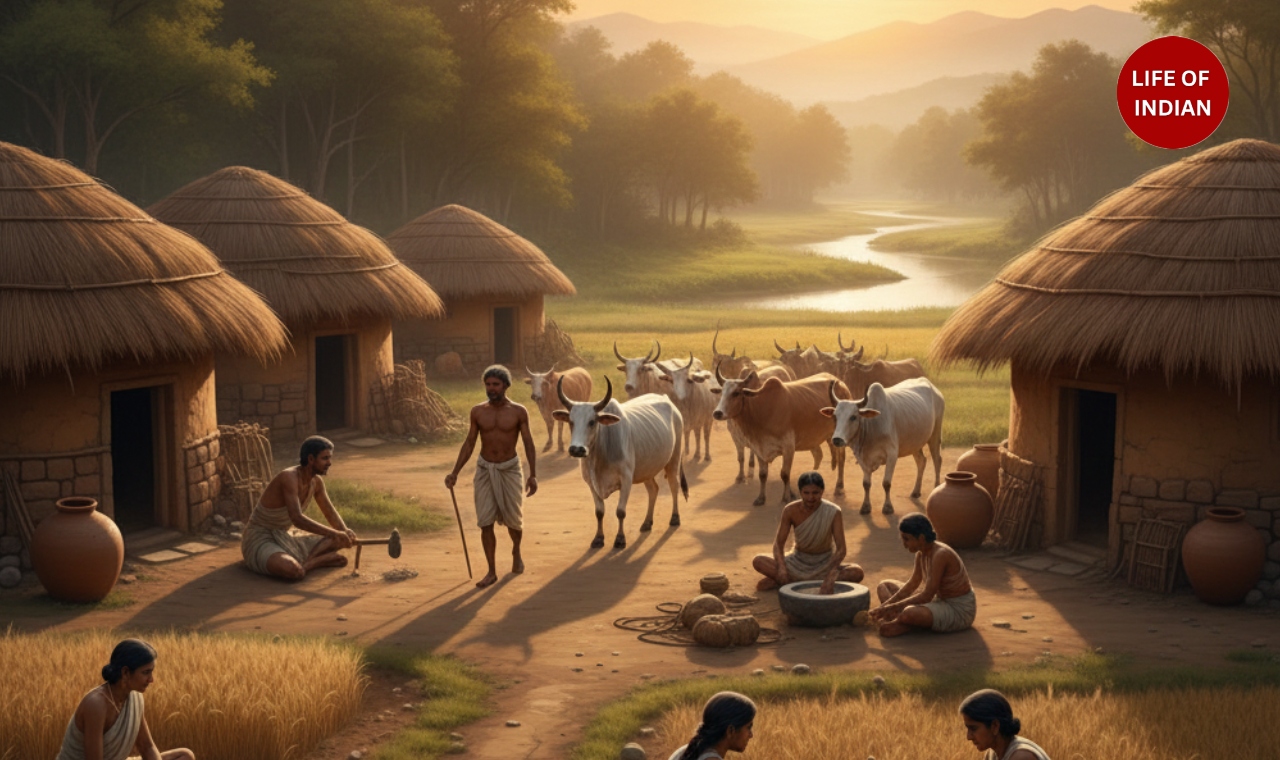
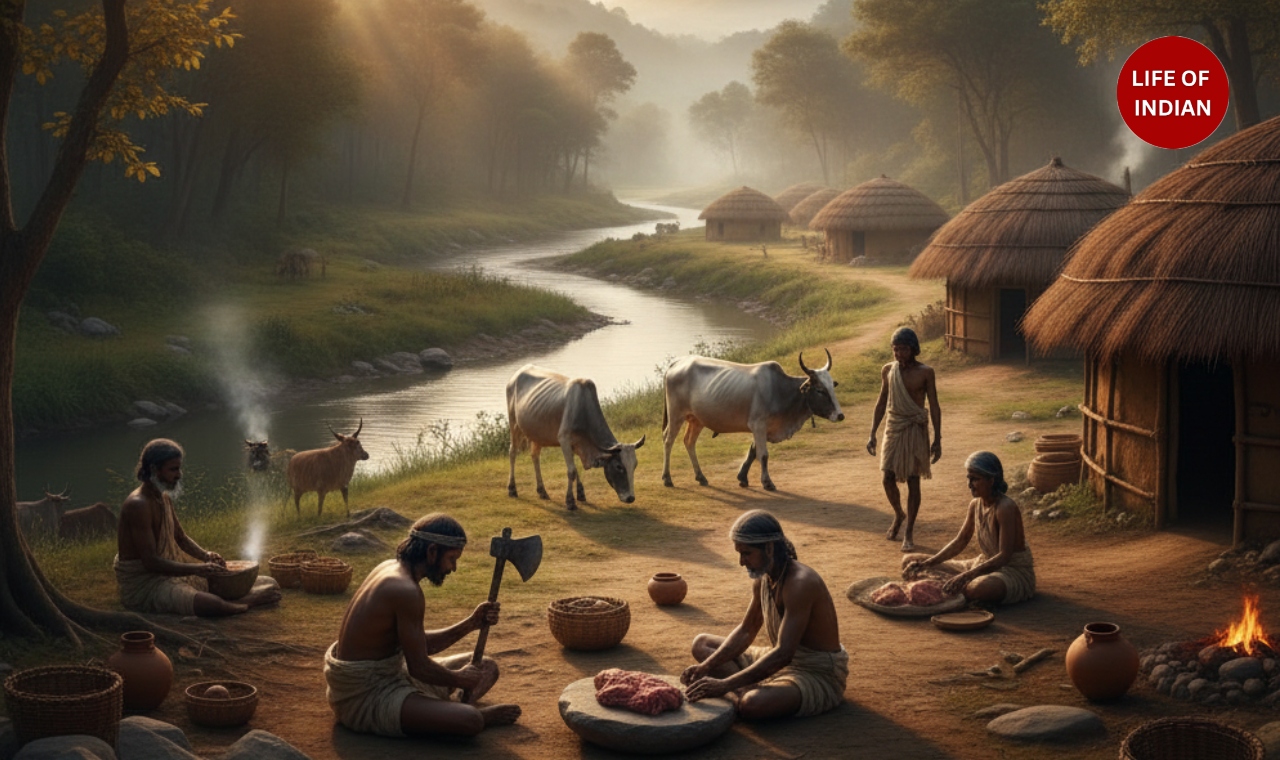
The Neolithic Age marks a historic turning point when humans shifted from food gathering to food production.
Major Characteristics
-
Development of agriculture
-
Domestication of animals like cattle, sheep, and goats
-
Permanent houses made of mud and wood
-
Polished stone tools
Neolithic Tools
-
Celt (polished axe)
-
Grinding stones
-
Sickles
-
Stone blades
Important Neolithic Sites
-
Mehrgarh
-
Burzahom
-
Koldihwa
Social and Economic Life
-
Community living
-
Storage of grains
-
Pottery production
-
Early trade practices
Cave Life in Prehistoric India
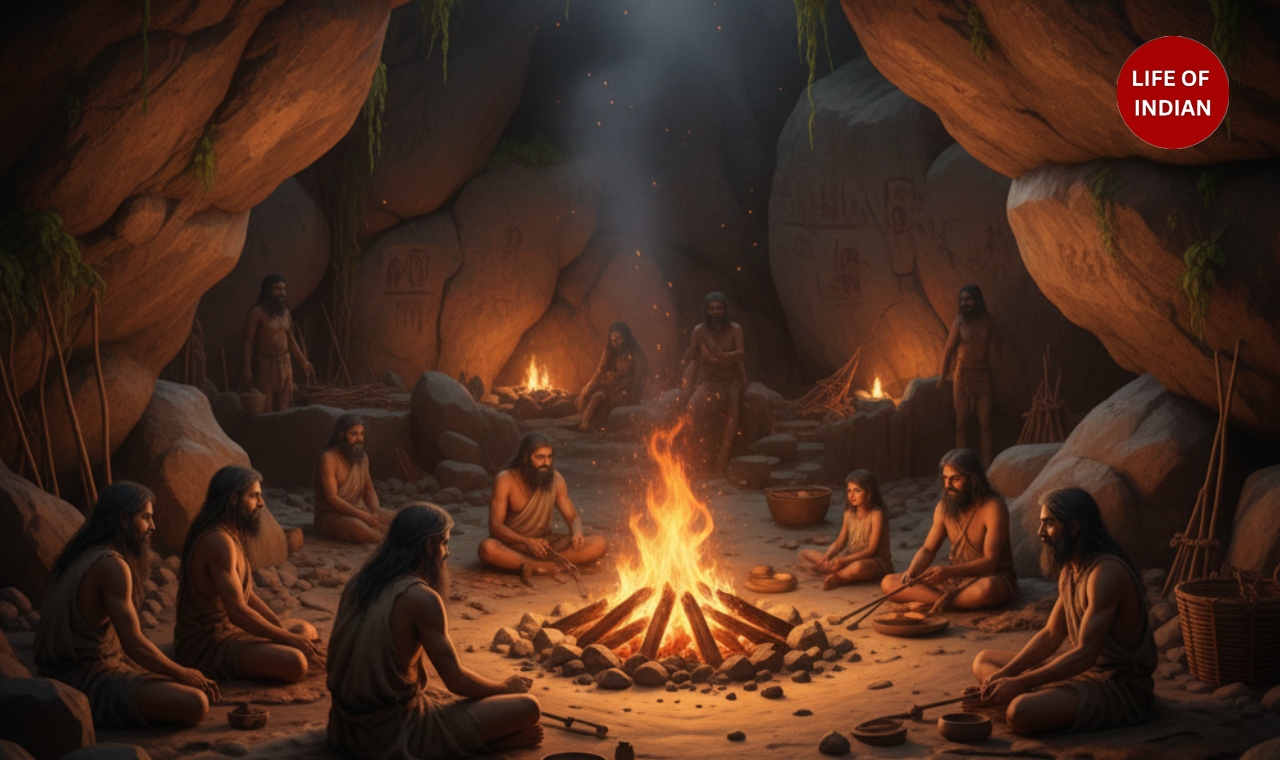
Why Caves Were Important
-
Natural protection from wild animals
-
Safe shelter during extreme weather
-
Social and cultural centers
Cave Paintings: Early Art and Expression
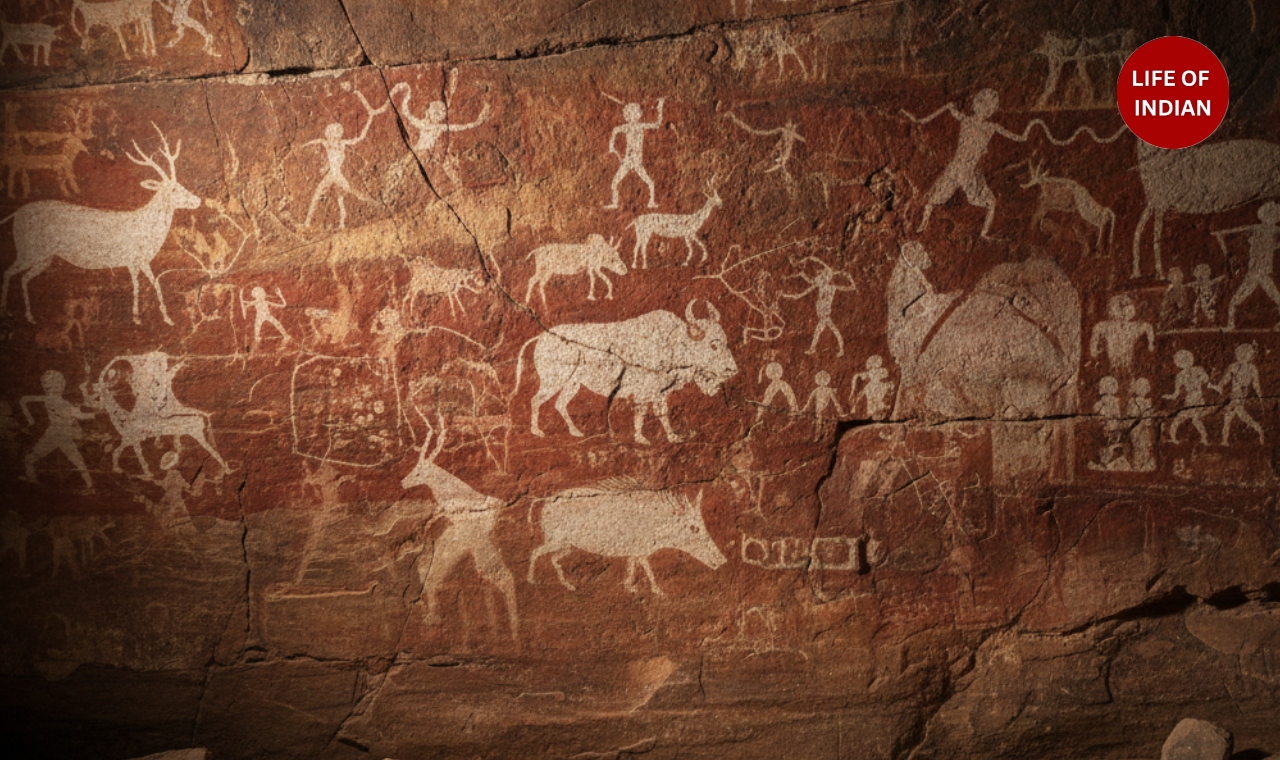
One of the greatest discoveries of prehistoric India is the cave paintings found at Bhimbetka Rock Shelters.
Themes of Cave Paintings
-
Hunting scenes
-
Dancing and rituals
-
Animals like bison, deer, elephants
-
Daily life activities
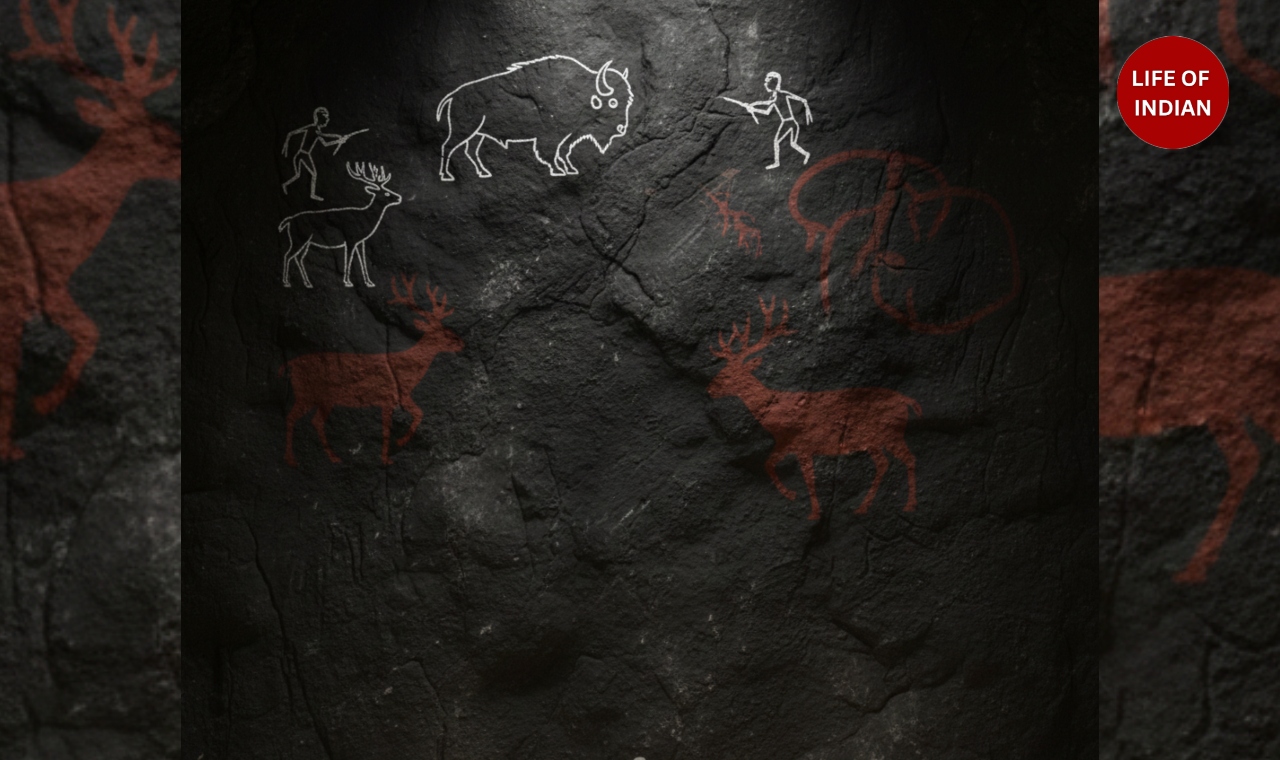
These paintings reflect:
-
Early human imagination
-
Social bonding
-
Religious or ritual beliefs
Stone Tools: Technology of the Prehistoric World
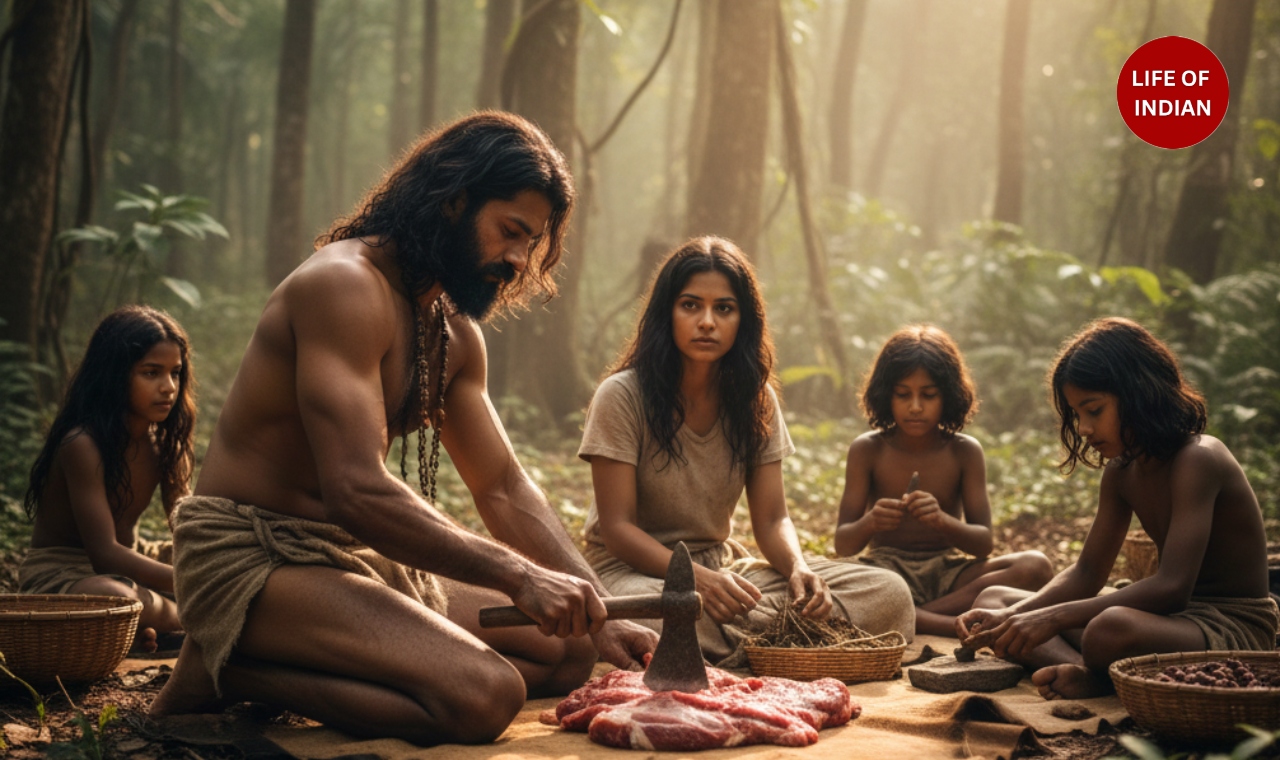
Evolution of Tools
| Period | Tool Type | Purpose |
|---|---|---|
| Palaeolithic | Hand axes, choppers | Hunting, cutting |
| Mesolithic | Microliths | Advanced hunting |
| Neolithic | Polished tools | Farming, construction |
Importance of Stone Tools
-
Increased survival chances
-
Better food procurement
-
Foundation of technological development
Significance of Prehistoric India
-
Shows human adaptation to environment
-
Explains the origins of agriculture and society
-
Highlights India’s role in early human history
-
Provides base for later civilizations like the Harappan Civilization
Prehistoric India was not a dark or primitive age but a period of innovation, survival, and gradual progress. From crude stone tools to settled village life, prehistoric humans laid the foundation of Indian civilization.
Understanding this period helps us realize how human intelligence, cooperation, and creativity evolved over thousands of years.