


Indian politics has entered an era where electoral victories and defeats are no longer the final chapter of democratic contests. Increasingly, elections are followed by another political spectacle, mass defections, internal rebellions, and shifting allegiances that often reshape governments more dramatically than the verdict delivered by voters themselves. This growing phenomenon raises uncomfortable questions about political ethics, ideological commitment, and the health of India’s parliamentary democracy.
The 2024 Lok Sabha election underscored the changing dynamics of Indian politics. Although the Bharatiya Janata Party (BJP) emerged as the single largest party, it fell short of the parliamentary majority required to govern independently. The National Democratic Alliance (NDA) once again became indispensable in ensuring political stability at the Centre, reaffirming that coalition politics remains an enduring feature of India’s democratic landscape.
Beyond the national picture, the political battle has increasingly shifted to the states. For years, the BJP has sought to expand its footprint in regions where powerful regional parties continue to dominate. States such as West Bengal and Tamil Nadu represent not merely electoral contests but ideological battlegrounds where regional identity, local leadership, and national ambitions intersect.
The Ousting of the Opposition
The political developments in West Bengal have highlighted an increasingly familiar trend in Indian politics. The possibility of losing power after years of electoral dominance can become the greatest challenge for any ruling party. More striking, however, is what often follows an election, the departure of leaders once regarded as unwavering loyalists.
Several elected representatives associated with the TMC began distancing themselves from the party after the electoral outcome, fuelling speculation over shifting political loyalties and future alignments. Whether driven by ideology, political pragmatism or personal ambition, such departures have once again revived the debate over the durability of party allegiance in Indian politics.
The justification offered by many rebel leaders is seldom ideological. Instead, they argue that the political circumstances that emerged after the election compelled them to reconsider their future. Such explanations, however, raise an uncomfortable question: if ideological differences were genuine, why do they become visible only after political fortunes begin to decline?
The ‘Aaya Ram, Gaya Ram’ Syndrome
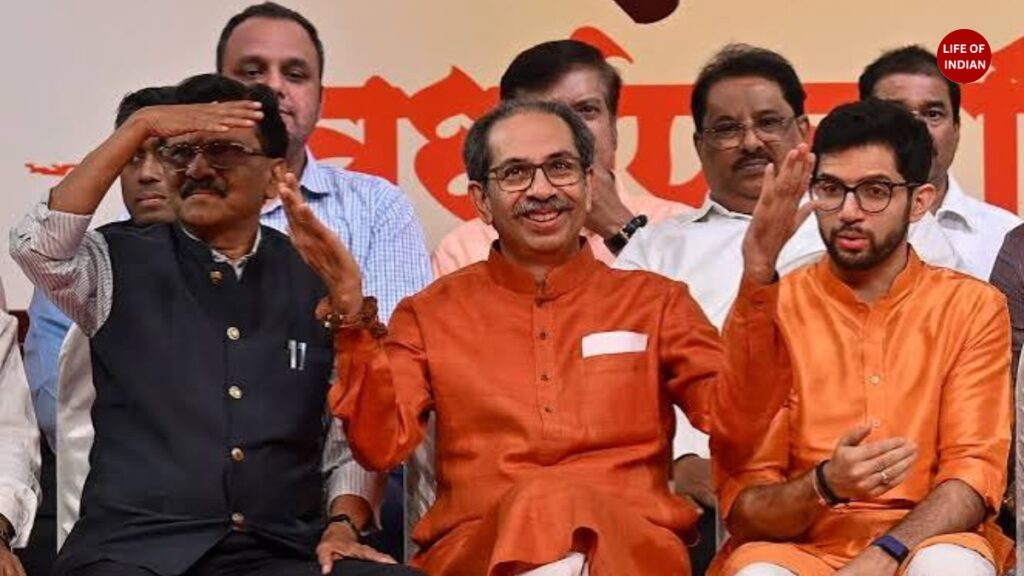
The story does not end in West Bengal. Maharashtra offers another compelling illustration. The Shiv Sena witnessed a dramatic split that fundamentally altered the state’s political landscape. Several Members of Parliament and legislators shifted their allegiance to the rival faction led by Eknath Shinde, significantly weakening the Uddhav Thackeray-led Shiv Sena (UBT).
The origins of this political rupture can be traced back to 2022, when ideological and organisational differences culminated in a rebellion against Uddhav Thackeray’s leadership. Dissatisfaction over the alliance with the Congress and the Nationalist Congress Party (NCP) under the Maha Vikas Aghadi became the principal justification for the split. Subsequently, many leaders defended their decision by arguing that aligning with the ruling establishment was necessary to secure development funds for their constituencies and ensure their own political survival.
This pattern reflects a broader reality. A politician is elected on the mandate of one party, enjoys the privileges and influence that accompany power, and the moment political equations begin to change, shifts allegiance in pursuit of continued relevance. The phenomenon is reminiscent of the famous “Aaya Ram, Gaya Ram” episode of 1967, when Haryana legislator Gaya Lal changed political parties three times in a single day. Decades later, the phrase remains an apt description of India’s culture of political defections.
The Questions That Remain
These developments reveal an unsettling truth. Increasingly, political loyalty appears to be shaped less by ideology than by access to power and political opportunity. Leaders who once projected unwavering commitment to their parties often abandon those very organisations when electoral fortunes change. In many instances, the same individuals later justify their departure by portraying their former parties as dysfunctional or politically toxic.
The questions, therefore, remain unavoidable. Why do internal differences surface immediately after elections? Why does political dissatisfaction intensify only when the prospect of remaining in power diminishes? And why does electoral defeat so often culminate in political betrayal rather than democratic resilience?
The Final Call
Frequent political defections may appear to be routine events in India’s electoral politics, but their consequences are profound. Every legislator who crosses the aisle alters the balance of power in Parliament and state assemblies. The ruling coalition grows stronger, while the opposition gradually weakens. Yet a healthy democracy cannot function without a credible and effective opposition. Governments require accountability as much as they require authority.
Democracy cannot be sustained merely through elections, welfare schemes or political slogans. It thrives on ideological commitment, institutional integrity and respect for the mandate entrusted by the people. When elected representatives place personal advancement above public trust, democracy suffers an invisible yet enduring wound.
Political parties will continue to rise and fall. Governments will change. Alliances will be forged and broken. But if politics becomes solely a contest for power, devoid of conviction and loyalty, India risks weakening one of the very foundations of its democracy. Such damage may not be immediately visible, but over time it leaves the nation politically hollow, eroding public faith in democratic institutions, one defection at a time.