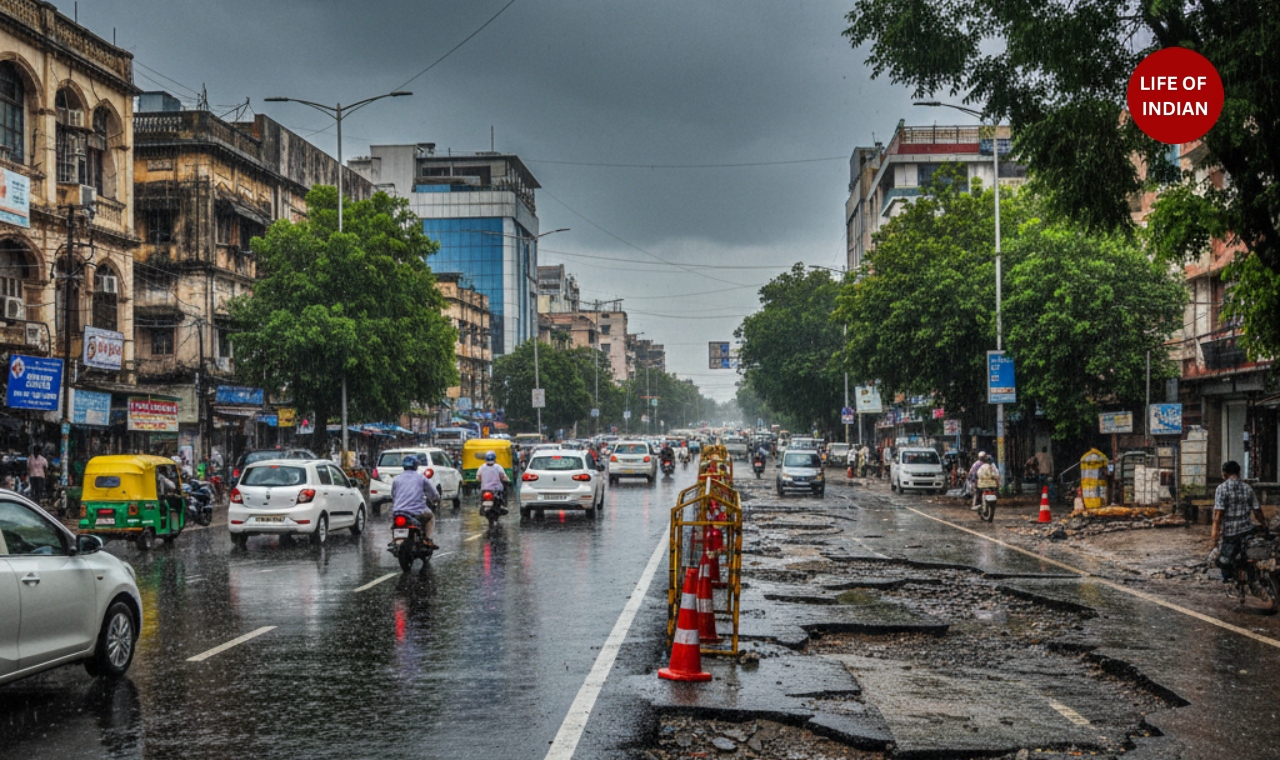
In a nation where potholes and crumbling roads have become all too familiar during every monsoon season, one road in Pune, Maharashtra, stands out as a remarkable exception. Pune’s iconic Jangli Maharaj Road (JM Road) has remained virtually pothole-free and damage-resistant for nearly 50 years, drawing admiration from engineers, urban planners, and everyday commuters alike.
But what exactly makes this road so enduring—while most other roads across India quickly deteriorate? And who was behind its construction? In this article, we explore the history, engineering, and lessons that make JM Road a case study in enduring infrastructure.
A Road Built to Last: The Story Behind JM Road
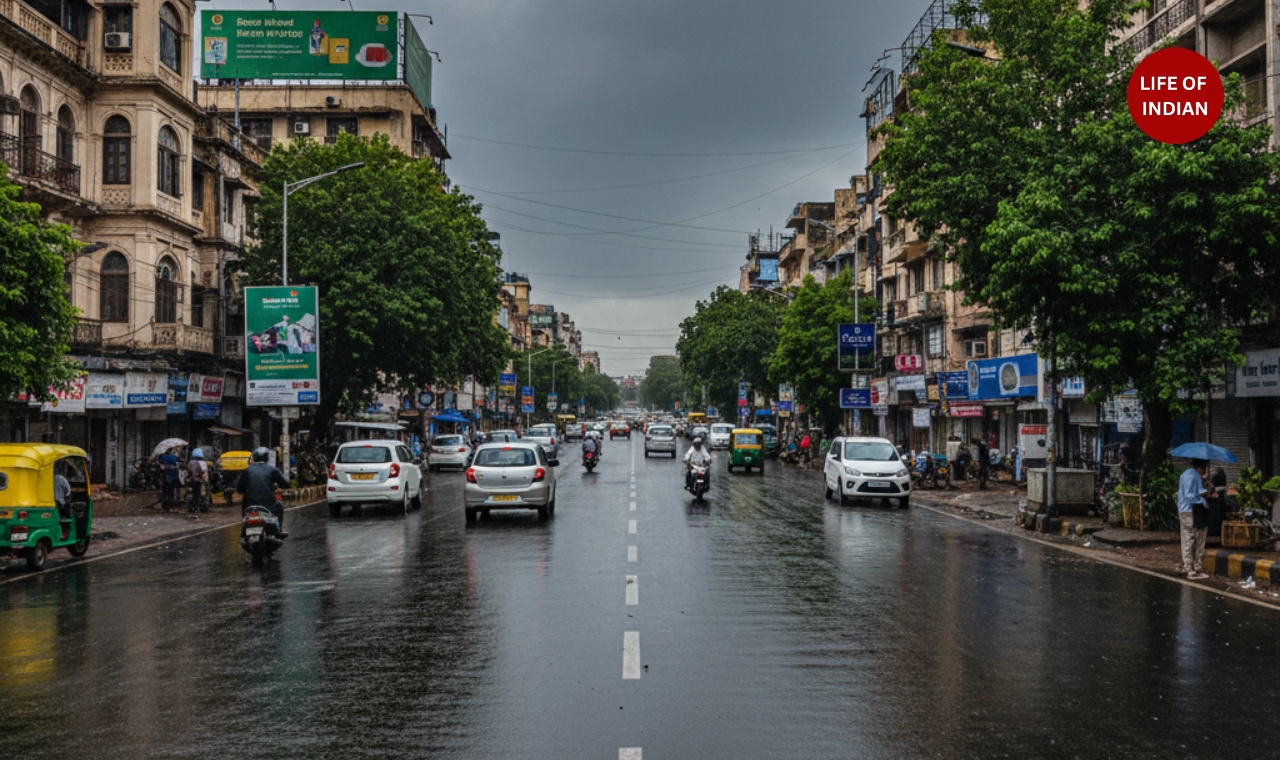
The tale of JM Road begins in the early 1970s, a time when Pune’s infrastructure was struggling under the weight of monsoon damage. Intense rains in 1973 wrecked most of the city’s roads, creating large potholes and automated failures almost every monsoon season. The public demanded solutions, and city authorities knew that something more durable was needed.
At that time, a young civic leader named Shrikant Shirole, then Chairman of the Pune Municipal Corporation (PMC) Standing Committee, noticed that some roads in Mumbai remained strong despite similar rains. Determined to bring that quality to Pune, Shirole approached engineers familiar with a more advanced road-building method called “hot mix” technology.
Who Built It? The Role of Recondo and Hot Mix Technology
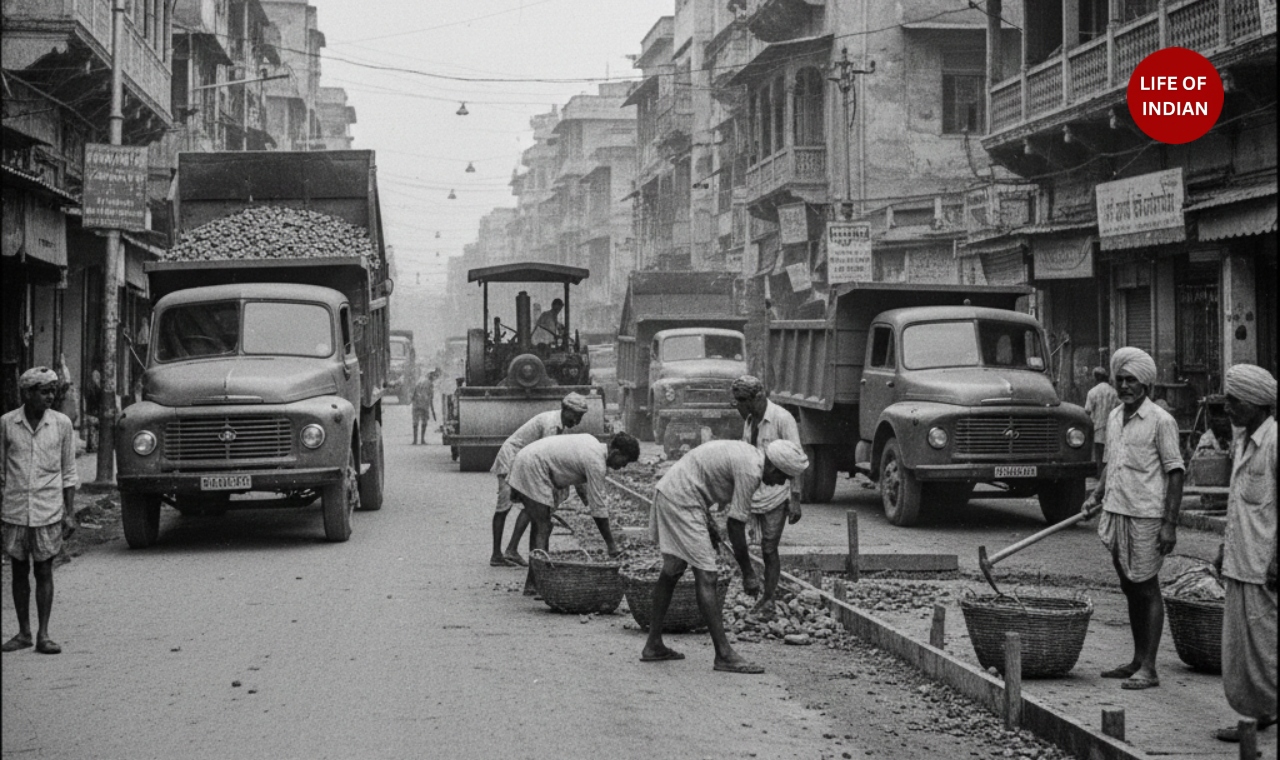
The construction contract for JM Road was awarded directly to a Mumbai-based company called Recondo, owned by two visionary Parsi brothers—a decision that was unusual then, especially because no public tender was issued. Recondo promised that the road would remain pothole-free for at least ten years, and if any part failed, they would fix it at their own cost.
Work began in 1974, and the road officially opened on January 1, 1976. The total cost at the time was ₹15 lakh—a modest amount compared to today’s infrastructure budgets. But the use of top-quality materials, excellent workmanship, and innovation set this road apart.
What Made This Road So Durable?
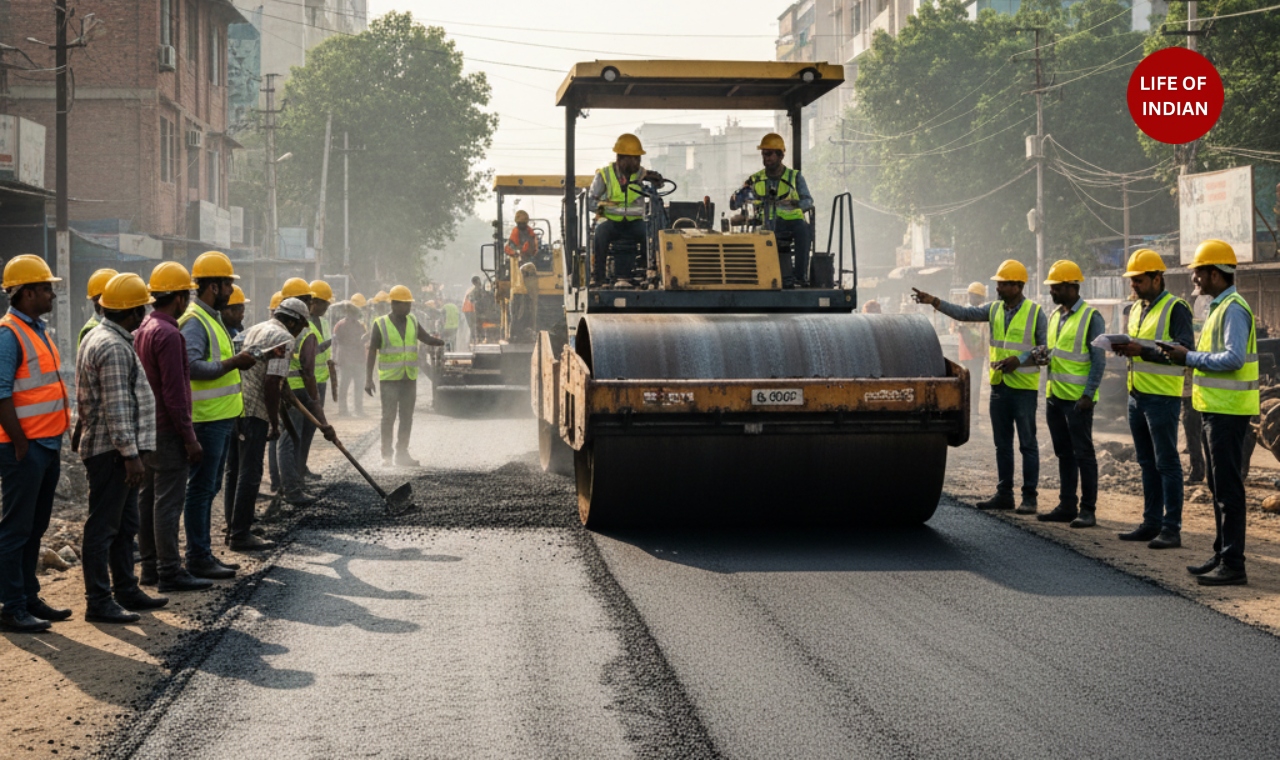
JM Road’s longevity did not happen by accident—it resulted from intentional design and engineering practices that were ahead of their time:
- Hot Mix Asphalt Technology
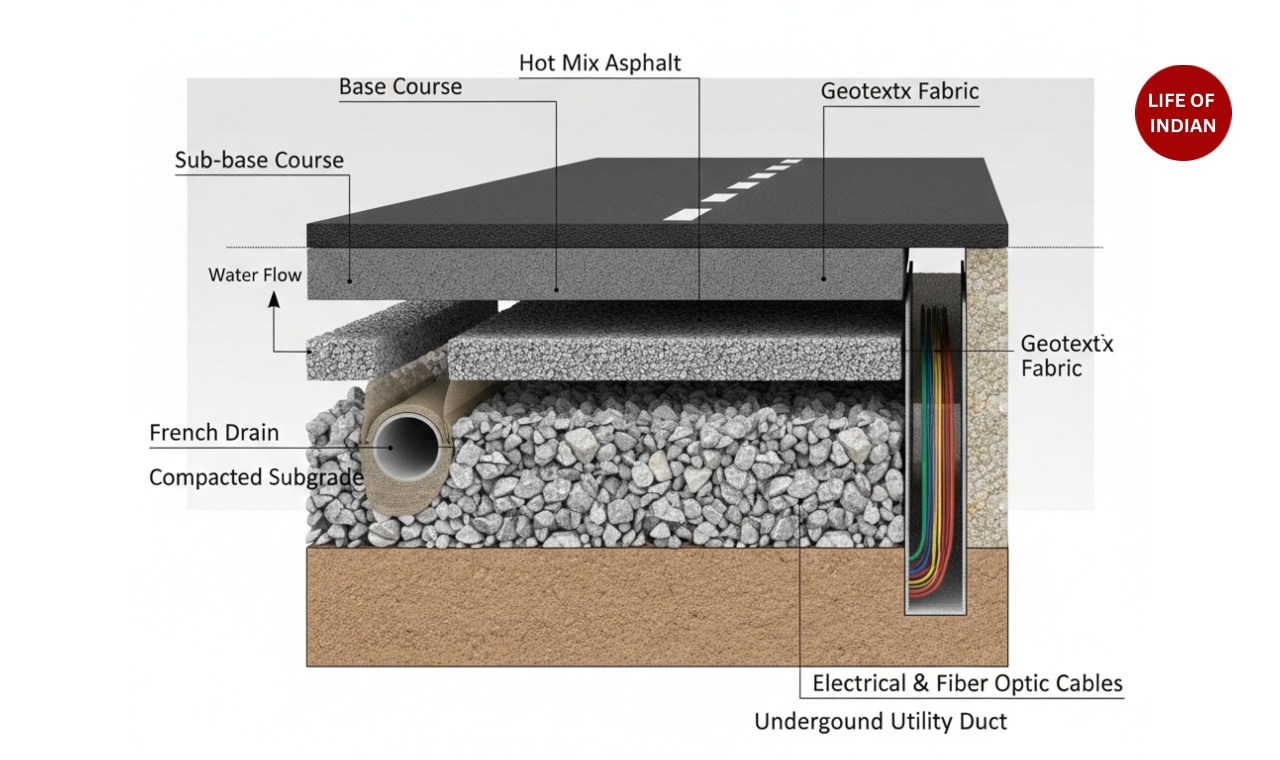
This method involves thoroughly heating and mixing aggregates (crushed stone and sand) with bitumen before laying and compacting them while still hot. This creates a dense, smooth, and strong surface capable of withstanding heavy traffic and weather stress.
- Smart Drainage and Planning
The road was constructed with well-designed stormwater drains and edge ducts placed strategically so that water wouldn’t accumulate and weaken the surface. These edge ducts also meant that later utility work (like laying cables or pipes) didn’t require digging up the road, a major reason most urban roads get damaged.
- Quality Materials and Workmanship
From the beginning, only high-grade aggregates and bitumen were used, and work was carried out with a focus on quality, not speed. Even decades later, Punekars recall how few repairs were ever needed.
- Written Guarantee
Unlike many road projects where repairs are expected every few years, Recondo provided a written guarantee—should there be any structural failure, fixes would be at no extra cost to the PMC. That commitment ensured accountability.
Why JM Road Still Shines While Others Fail
Even today, as most Indian streets develop cracks and potholes every rainy season, JM Road remains largely intact, needing only occasional surface maintenance or aesthetic upgrades such as cycle tracks and walking plazas.
Urban experts say that the reason this road has lasted so well is not just technology—it’s leadership, foresight, and quality implementation. In many modern road projects, quick tender awards and lowest-bid contractor selection lead to compromised materials and weaker workmanship. Temporary patchwork is used instead of long-lasting construction, resulting in frequent damage and heavy maintenance spending.
JM Road’s example highlights that durable infrastructure is possible when vision, accountability, and engineering excellence come together—even long before India’s modern Smart City initiatives.
Why Aren’t Roads Like JM Road Built Today? Is Corruption the Real Reason?
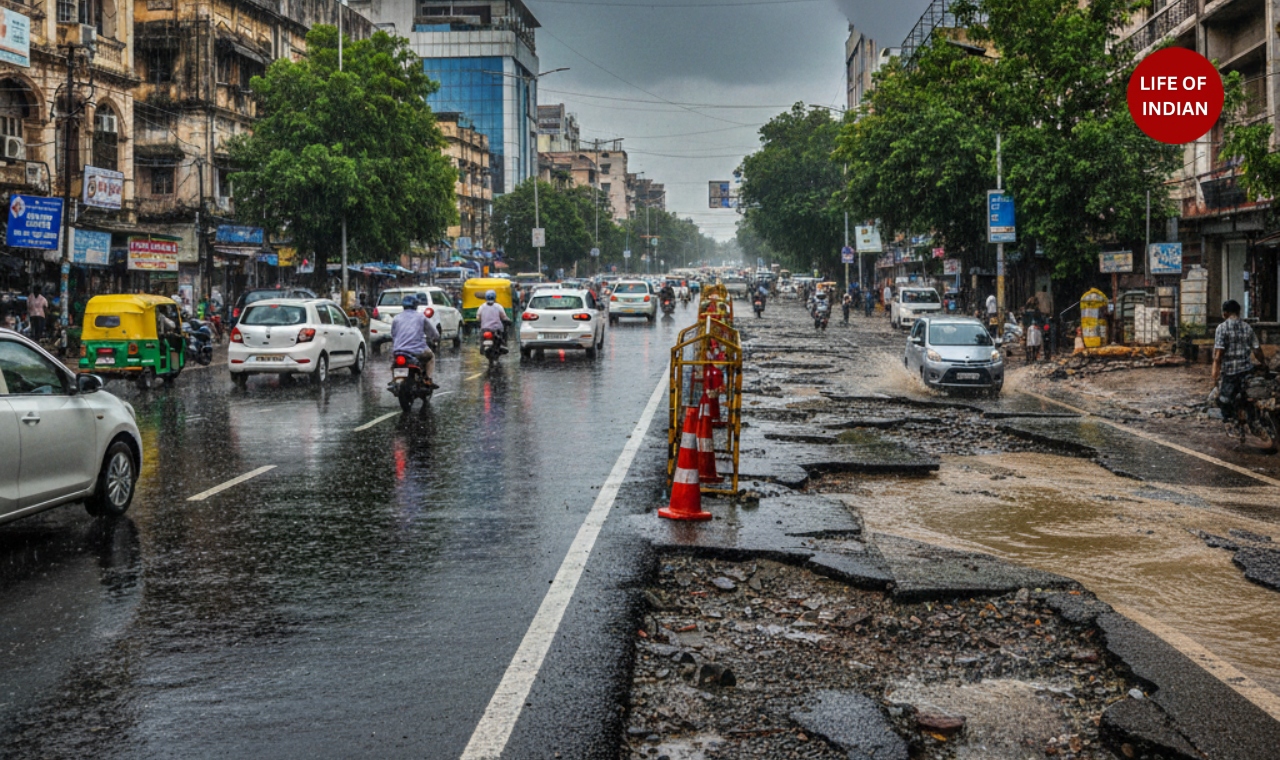
If Pune’s JM Road could survive for nearly five decades without a single pothole, a natural question arises—why can’t the rest of India build roads like this today?
The answer is uncomfortable but important.
1. Lowest Bidder System (L1 Tender Problem)
Today, most government road contracts are awarded to the lowest bidder, not the best contractor. To win tenders, companies often quote unrealistically low prices and later cut costs by:
- using cheaper materials
- reducing asphalt thickness
- skipping proper compaction
- rushing construction
As a result, roads that should last 15–20 years start breaking within one or two monsoons.
2. Poor Quality Materials
Unlike JM Road, where high-grade aggregates and premium bitumen were used, many modern roads use substandard raw materials to save money. This weakens the base layer, causing cracks and potholes quickly.
3. Corruption and Commission Culture
Many civic experts openly admit that corruption plays a major role in poor road quality.
In several cases:
- inflated bills are approved
- money is siphoned off
- repairs are repeated every year
Ironically, frequent repairs become a “business model.” If roads last longer, contractors lose repeat contracts. This creates a system where temporary fixes are preferred over permanent solutions.
JM Road succeeded because the contractor gave a written guarantee and accountability—something rarely seen today.
4. Lack of Accountability
Today, when roads break:
- contractors blame weather
- officials blame the budget.
- and citizens suffer
Very few contractors are penalized for poor work. Without accountability, quality automatically declines.
5. Frequent Digging for Utilities
Modern roads are often dug repeatedly for:
- water pipelines
- internet cables
- gas lines
This damages even newly built roads. JM Road was ahead of its time because it had edge ducts and planned drainage, so the surface rarely needed digging.
6. Government Planning Failures
Urban planning today is often reactive, not proactive. Roads are built quickly before elections or deadlines, instead of long-term engineering planning. This short-term mindset leads to:
- patchwork repairs
- waste of public money
- unsafe driving conditions
Experts say India doesn’t lack technology—it lacks political will and honest execution.
The Hard Truth
JM Road proves one thing clearly:
India can build world-class, long-lasting roads.
So the issue is not capability—it is corruption, poor planning, and lack of accountability.
If governments focus on:
- quality over shortcuts
- strict contractor guarantees
- modern engineering standards
- and zero tolerance for corruption
then every city can have roads like Pune’s JM Road.
Until then, potholes will continue to return every monsoon—and citizens will keep paying the price.
Lessons for India’s Roads Today
-
Quality Over Cost: Durable roads don’t save money by cutting costs on materials or skilled labor—they save money over years through reduced repairs.
-
Engineering First: Good drainage, proper layering, and modern asphalt techniques matter as much as the materials themselves.
-
Accountability Matters: Ensuring contractors stand by their work creates incentives for quality rather than repeated maintenance.
-
Planning for the Future: From utility ducts to stormwater drainage, allowing for future city needs without damaging roads is a game-changer.
A Roadfit for the Future
Jangli Maharaj Road stands as a symbol of what Indian infrastructure could be—long-lasting, intelligently planned, and built with care. As cities across India struggle with monsoon damage and ever-worsening potholes, Pune’s 50-year pothole-free marvel remains a case study worth replicating.
One road tells a story of innovation, leadership, and pride—but more importantly, it shows that better roads in India are not just dreams—they’re possible with the right approach.