


Holi, the Festival of Colors, is celebrated across India with joy, music, and vibrant hues. However, in the spiritual city of Varanasi (Kashi), Holi takes on a deeply mystical and unconventional form known as Masan Holi—a ritual observed at the cremation ghats of the sacred Ganges.
Unlike the typical celebration of colors, Masan Holi is played with ashes from funeral pyres. It is considered one of the most unique and spiritually intense Holi traditions in India.
Holi Around the World: Countries Where the Festival of Colors Is Celebrated
As Holi 2026 approaches, here is a detailed look at when Masan Holi is celebrated, where it takes place, who participates, and why it holds such profound spiritual significance.
When Is Masan Holi Celebrated in 2026?
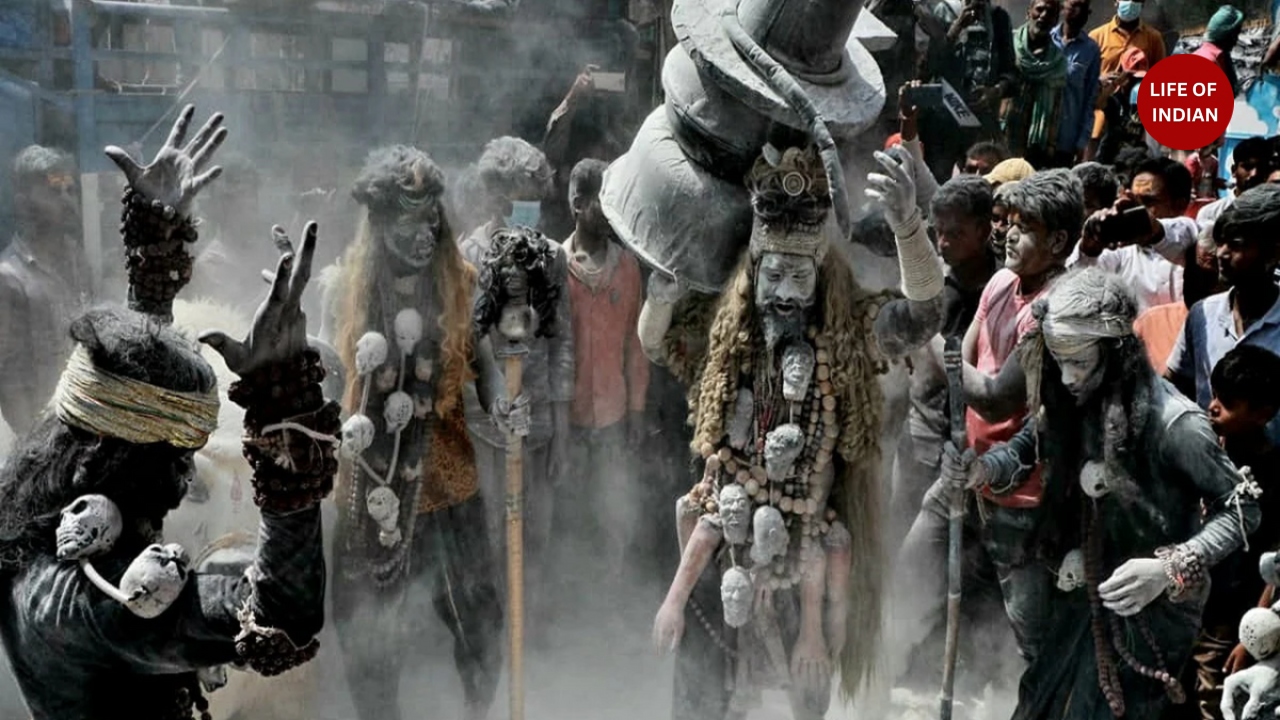

In 2026, Masan Holi in Varanasi is expected to be observed around February 28, following the traditional calendar sequence.
The celebrations begin from Rangbhari Ekadashi, a significant day in the Hindu lunar calendar that falls a few days before Holi. However, Masan Holi itself is played the morning after Rangbhari Ekadashi.
Ritual Timeline:
- Rangbhari Ekadashi – Marks the ceremonial return of Lord Shiva to Kashi after Goddess Parvati’s “Gauna” (post-wedding ritual).
- The next morning, after a special aarti at the Baba Mahashamshan Nath Temple located near Harishchandra Ghat, Masan Holi begins around 10:00 AM.
From that moment, the cremation ground transforms into a powerful spiritual arena filled with chants, ash, devotion, and intense symbolism.
Where Does Masan Holi Take Place?
Masan Holi is traditionally celebrated at:
- Harishchandra Ghat – One of the oldest cremation ghats in Varanasi.
- It has also occasionally been associated with activities near Manikarnika Ghat, though this has sparked debate among religious authorities in recent years.
Harishchandra Ghat remains the primary and historically accepted site for this ritual.
Who Participates in Masan Holi?
Traditionally, Masan Holi is associated with Lord Shiva and his Ganas (attendants).
Main Participants Include:
- Aghori sadhus
- Naga sadhus
- Ascetics and renunciates
- Shaivite devotees
- Local followers of Lord Shiva
These participants gather at the cremation ground and apply fresh ash from funeral pyres to one another as a sacred offering.
Can Common People and Tourists Participate?
Over the years, Masan Holi has drawn large numbers of visitors, photographers, and tourists. However, it is important to understand:
- Masan Holi is not a tourist festival.
- It is a deeply spiritual and sensitive ritual conducted at an active cremation site.
- Religious scholars and local authorities advise that responsible individuals—including students, families, and children—should observe respectfully rather than actively play with funeral ash.
Participation with fresh pyre ash is traditionally reserved for ascetics and Shaivite practitioners.
Visitors are expected to maintain decorum and understand the sacred context of the ritual.
Spiritual and Mythological Significance
The roots of Masan Holi lie in Shaivite mythology.
According to tradition:
- On Rangbhari Ekadashi, Lord Shiva brought Goddess Parvati to Kashi after their celestial wedding ceremonies.
- He celebrated Holi in the city with gods and devotees.
- However, his beloved Ganas—mystical beings associated with cremation grounds—could not participate in the colorful festivities.
The next day, Lord Shiva is believed to have gone to the cremation ground to celebrate Holi with them—not with colors, but with ash.
Why Ash Is Used Instead of Colors
The use of ash (bhasma) carries profound symbolism in Shaivism:
- Impermanence of Life – Every human body ultimately turns to ash.
- Detachment (Vairagya) – Ash represents freedom from material attachment.
- Acceptance of Death – Celebrating Holi in a cremation ground symbolizes conquering fear of death.
- Spiritual Equality – In death, all distinctions disappear.
By celebrating in the cremation ground, devotees symbolically accept mortality as a natural part of the cosmic cycle.
How Masan Holi Is Celebrated
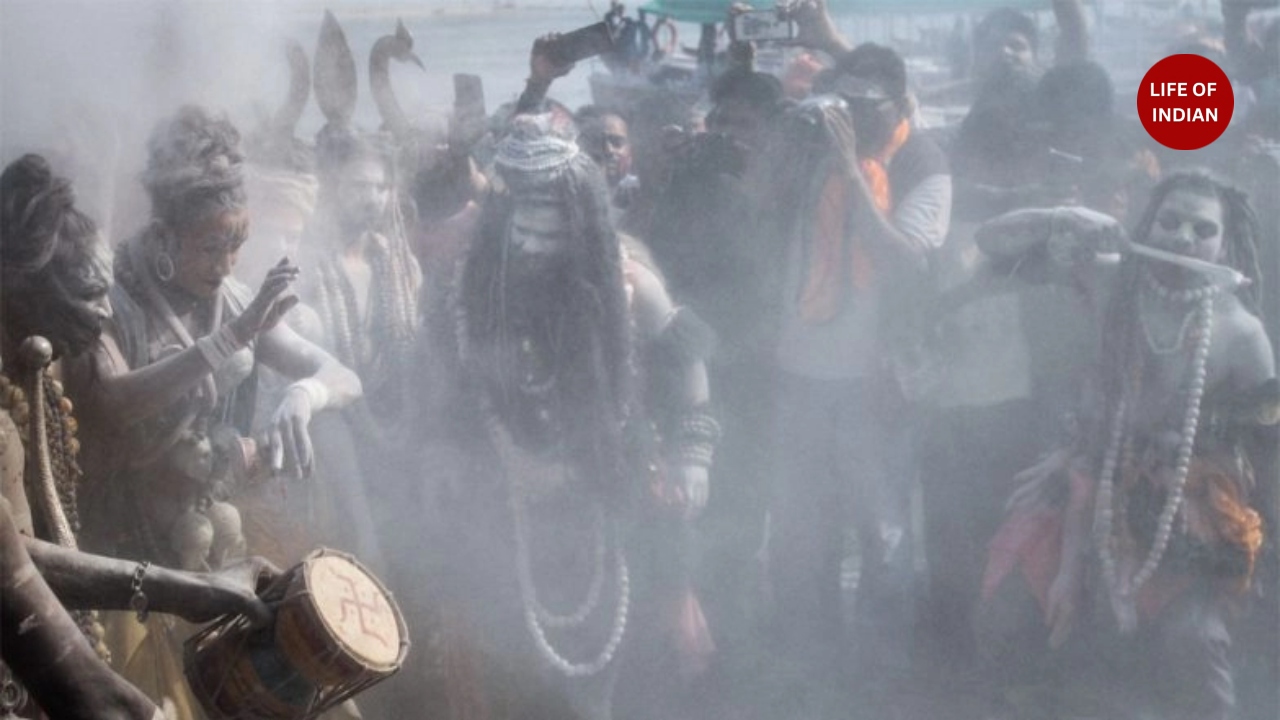
The day begins with:
- A special puja and aarti at the Baba Mahashamshan Nath Temple.
- Chanting of “Har Har Mahadev.”
- The rhythmic beating of the damru (a small drum associated with Lord Shiva).
After the rituals:
- Sadhus collect fresh ash from funeral pyres.
- They apply it to each other as sacred prasad.
- Devotional songs echo across the ghat.
- Ascetics dance in spiritual ecstasy.
The atmosphere is intense, mystical, and unlike any other Holi celebration in India.
Recent Controversies
In recent years, debates have emerged regarding the organization and location of Masan Holi, particularly at Manikarnika Ghat. Some traditional scholars and religious bodies have expressed concern about maintaining sanctity and preventing commercialization.
These discussions highlight the importance of preserving the ritual’s spiritual essence.
A Holi Beyond Colors
While most of India celebrates Holi with gulal and water, Varanasi’s Masan Holi reflects a different philosophy — one rooted in renunciation, transcendence, and spiritual awakening.
It is not about entertainment.
It is about confronting life’s ultimate truth.
In the sacred geography of Kashi, where death is believed to lead to liberation (moksha), Masan Holi becomes a powerful reminder that life and death are inseparable parts of existence.
Holi Around the World: Countries Where the Festival of Colors Is Celebrated
Masan Holi in Varanasi is one of India’s most extraordinary religious traditions. Celebrated at Harishchandra Ghat after Rangbhari Ekadashi, it draws ascetics, devotees, and curious onlookers from across the country.
However, it remains a sacred ritual—deeply symbolic, spiritually charged, and deserving of utmost respect.
As Holi 2026 approaches, Masan Holi stands as a reminder that beyond colors and celebration, the festival also carries a message of detachment, equality, and spiritual awakening.