
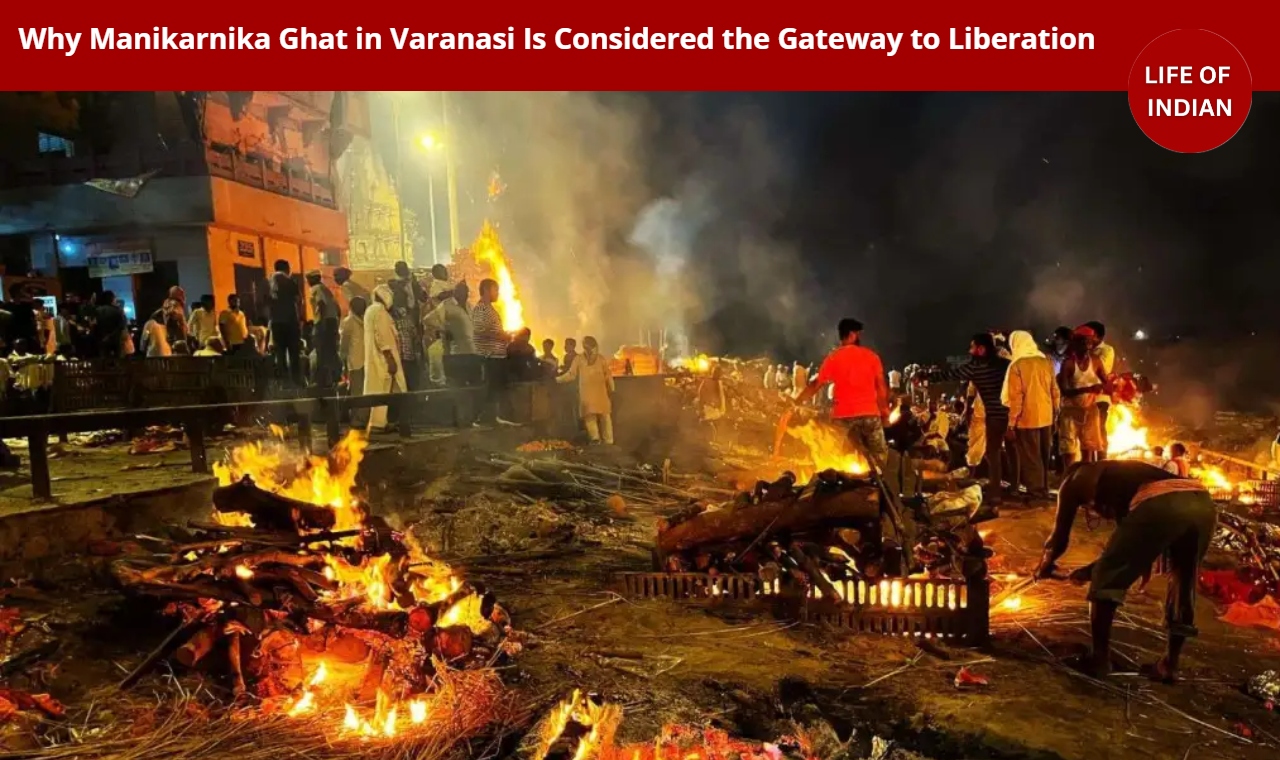
Manikarnika Ghat: Located on the sacred land of Kashi, Manikarnika Ghat is not merely a cremation ground. It is a living symbol of the philosophy of life and death, the concept of moksha (liberation), and the eternal traditions of Sanatan Dharma. It is often said that “this is the place where death does not end life, but begins a new journey.” That is why Manikarnika Ghat is not associated with fear or despair, but with renunciation, truth, and spiritual awakening.
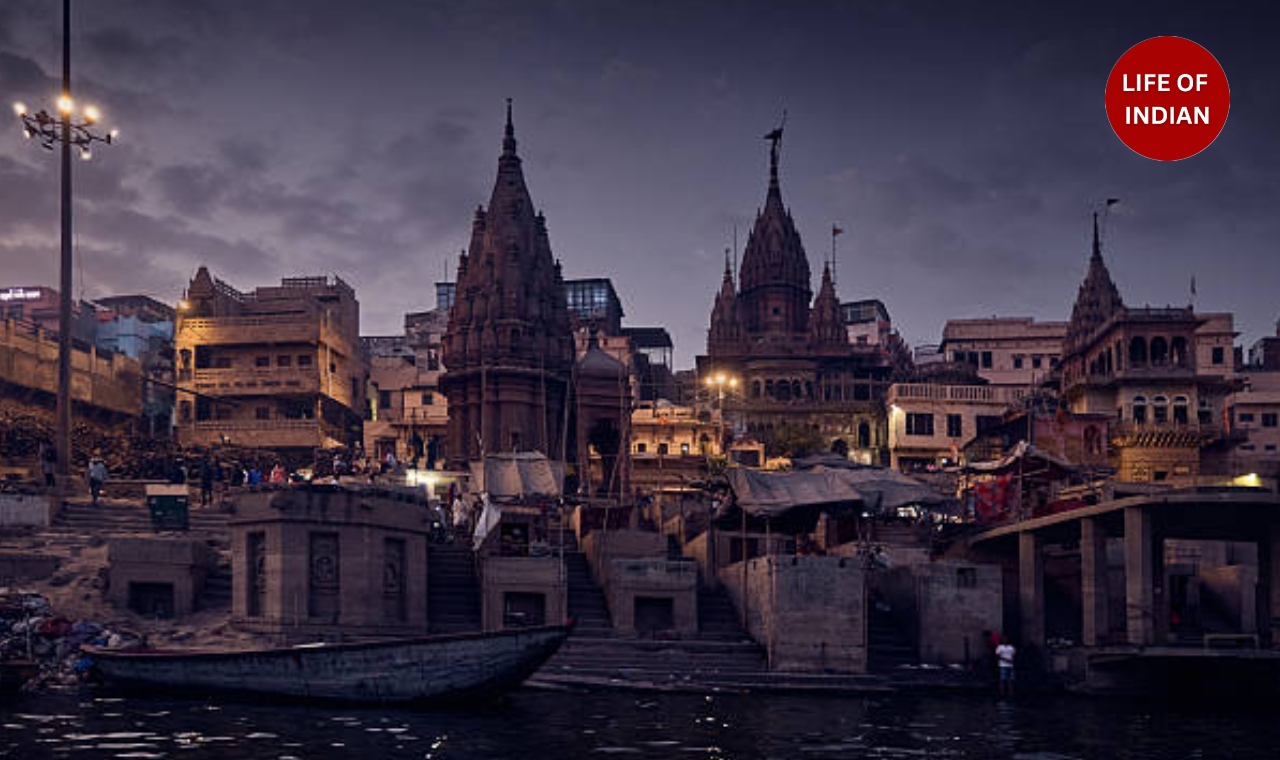
Here, death is accepted as a reality of existence, not as a tragedy. The flames that rise from the funeral pyres do not signify loss alone; they represent release—of the soul from the bondage of the material world.
Kashi and the Eternal Concept of Moksha
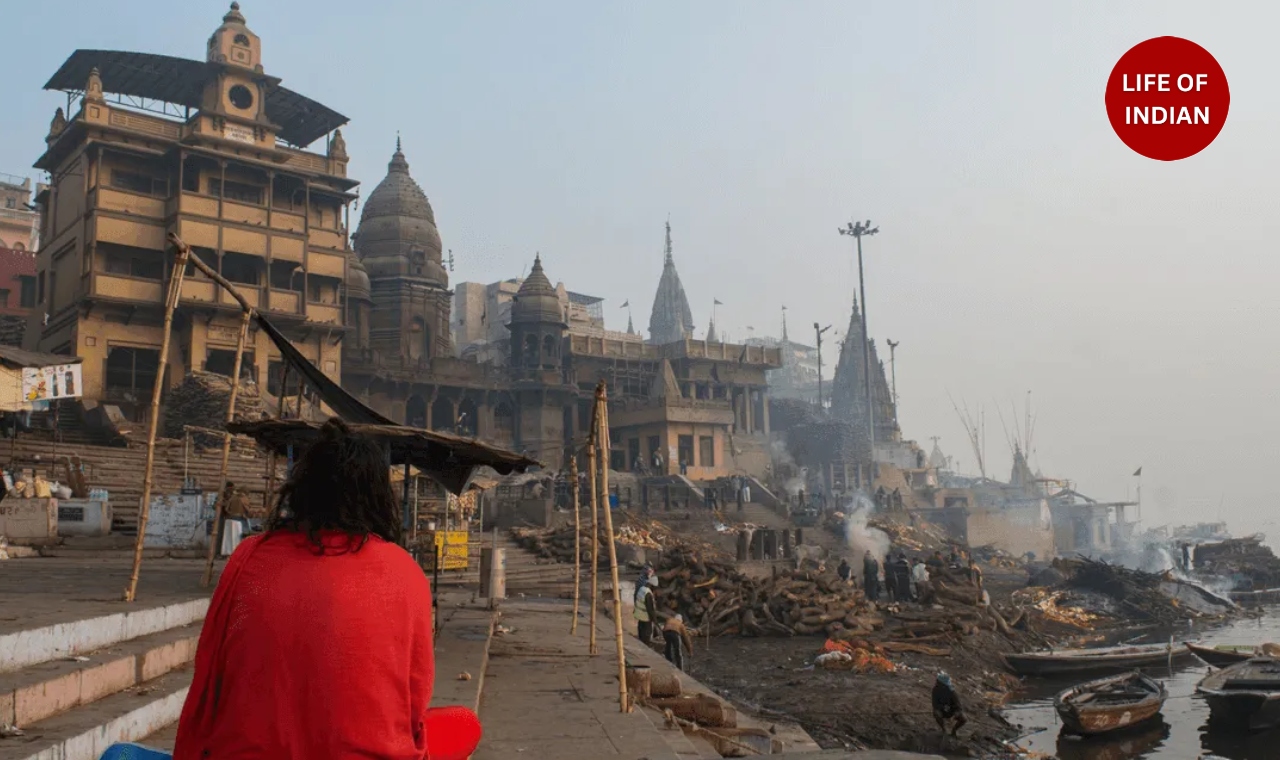
In Sanatan tradition, Kashi is revered as Moksha Nagari—the city of liberation. Ancient scriptures and Puranas describe Kashi as the one place where dying is considered auspicious, because it frees the soul from the endless cycle of birth and rebirth.
This profound belief was beautifully expressed by the poet-saint Tulsidas in his famous verse:
“Maranam mangalam yatra, vibhutishcha vibhushanam,
Kaupīnam yatra kausheyam, sā Kashi kena mīyate.”
It means: Where even death is auspicious, where ashes are ornaments and renunciation is wealth—how can such a Kashi be measured?
Manikarnika Ghat stands as the strongest embodiment of this philosophy. It is here that the idea of liberation is not merely spoken of, but practiced every moment.
The Religious and Spiritual Significance of Manikarnika Ghat
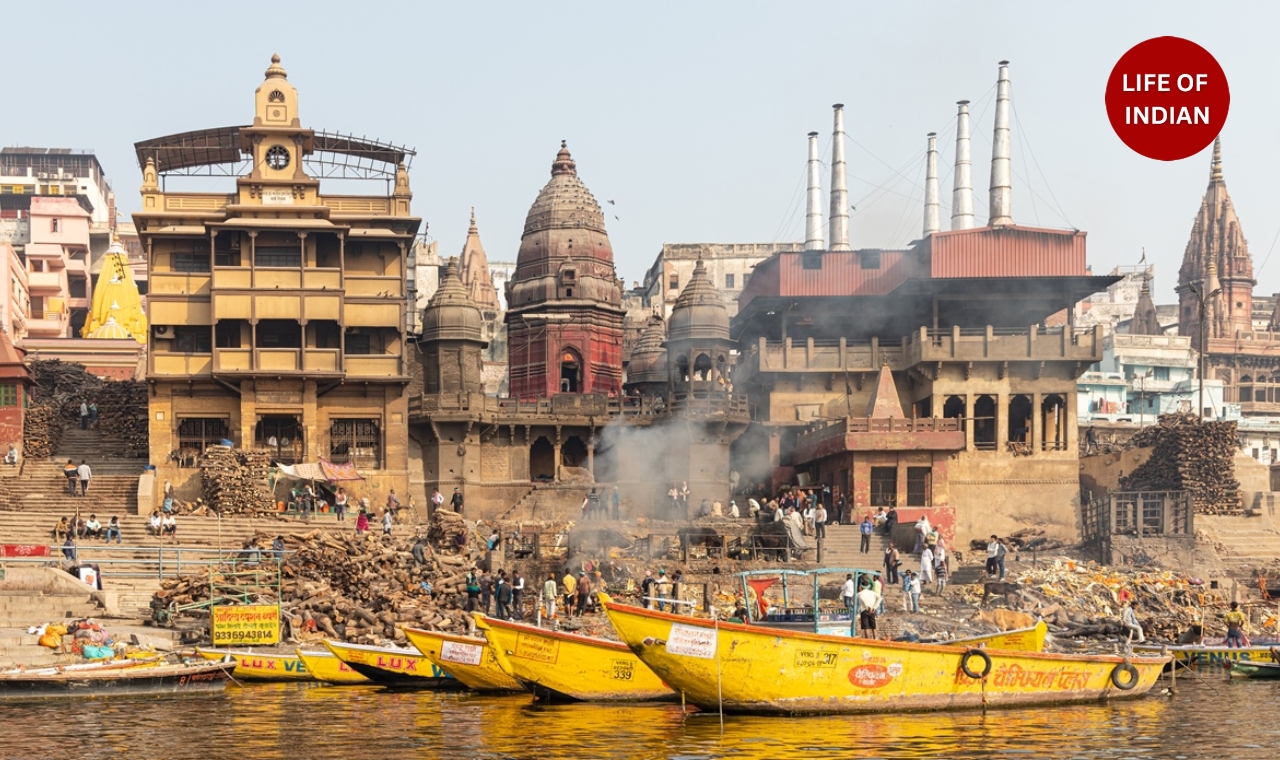
According to Hindu belief, Manikarnika Ghat is a moksha-bestowing site. It is believed that when a person is cremated here, Lord Shiva himself whispers the Tarak Mantra into the ear of the departing soul, guiding it toward ultimate liberation. Because of this belief, countless devotees from across India and the world wish to spend their final moments in Kashi.
The funeral fires at Manikarnika Ghat burn day and night, uninterrupted. Death here is not treated as something terrifying; instead, it is regarded as the gateway to freedom from worldly suffering.
The Mystery of the Number “94” Written on the Pyre
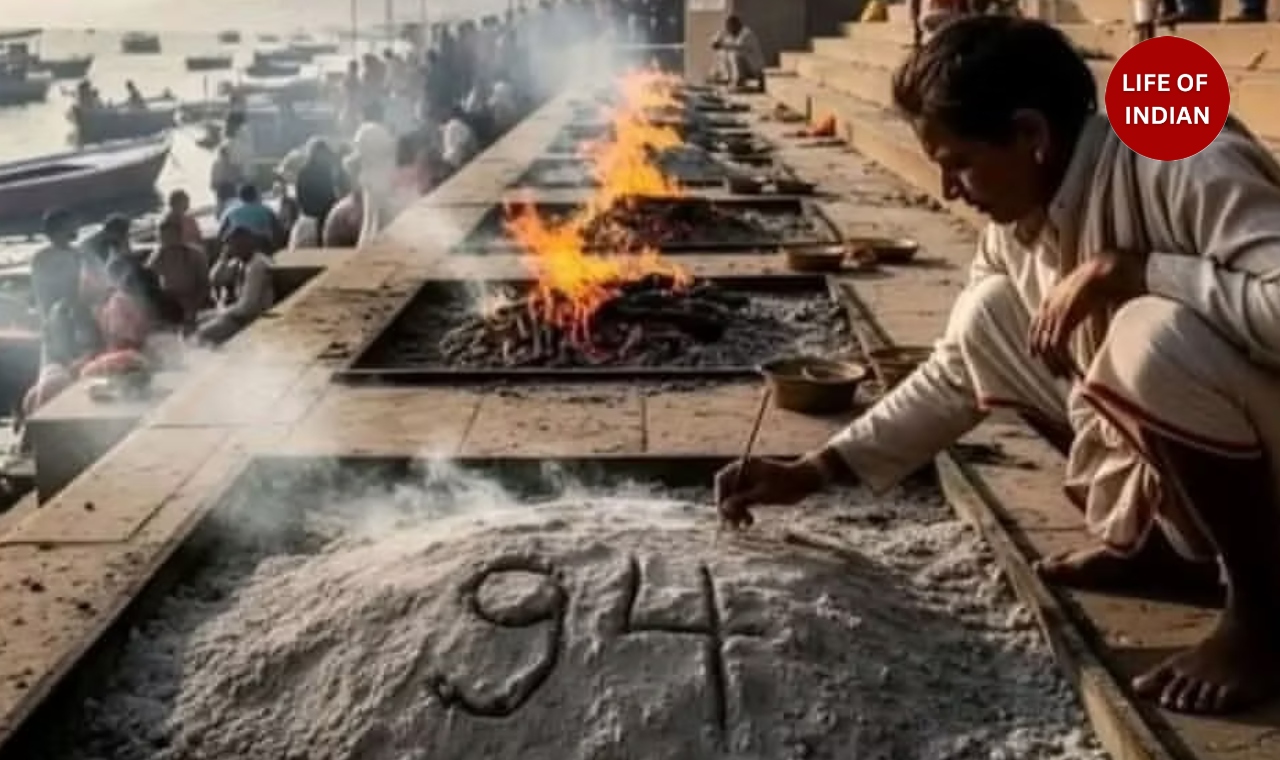
One of the most intriguing and lesser-known aspects of Manikarnika Ghat is the number “94” written on funeral pyres. This number carries deep spiritual symbolism.
According to traditional belief, a human being possesses 100 qualities or impressions (sanskaras). After death, 94 of these—such as attachment, desire, pleasure, pain, ego, and karmic burdens—are destroyed at the cremation ground itself. The remaining six qualities travel onward with the soul: one associated with the mind and five linked to the senses.
It is believed that these 94 qualities are governed by karma, while the remaining six are under divine authority. Writing “94” on the pyre symbolizes the soul’s release from worldly bonds. It is not a mark of death, but a sign of karmic liberation.
The Mythological Origin of the Name Manikarnika
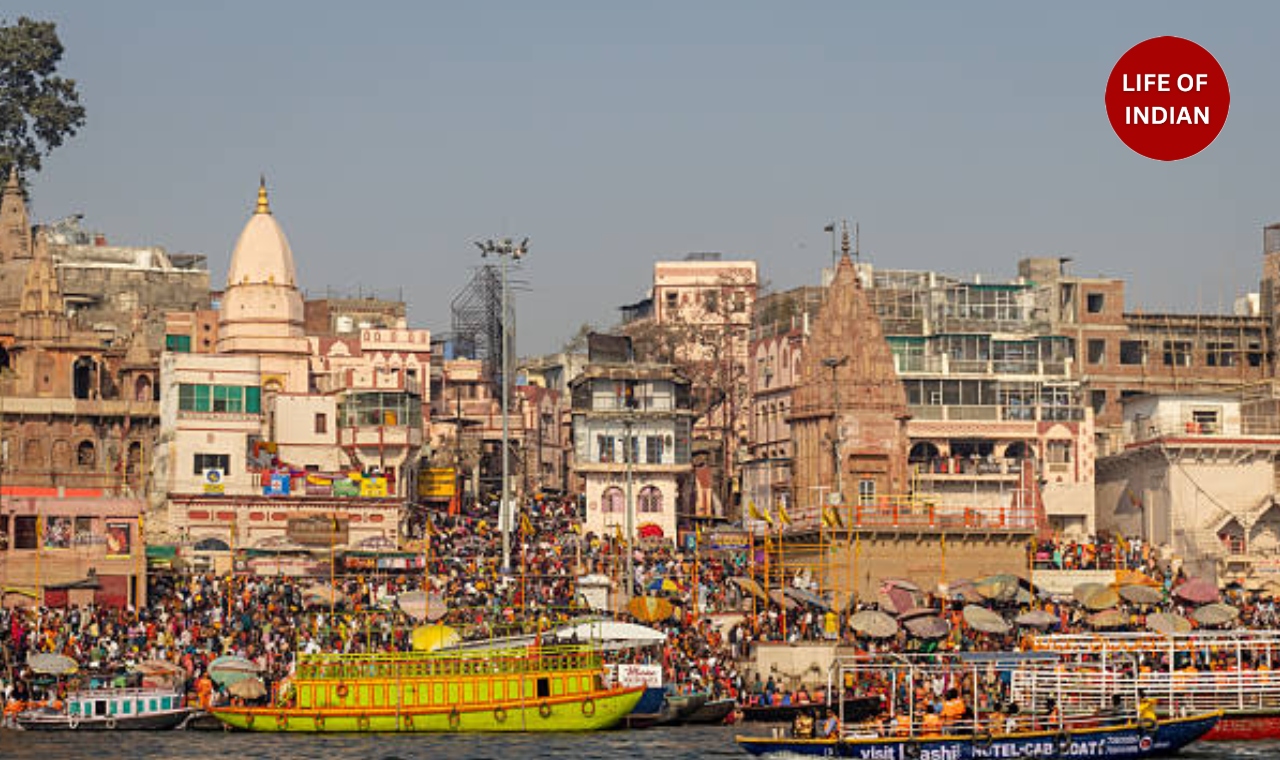
The name Manikarnika is rooted in ancient mythology. According to legend, Lord Vishnu performed intense penance at this very spot to please Lord Shiva. During his austerities, Vishnu used his Sudarshan Chakra to create a sacred pond, where his sweat collected.
When Lord Shiva finally appeared, a jewel (mani) from Vishnu’s ear (karnika) fell into the pond. From this event, the place came to be known as Manikarnika, and the sacred pond became the Manikarnika Kund, which still exists near the ghat today.
Goddess Parvati’s Curse and the Eternal Fire
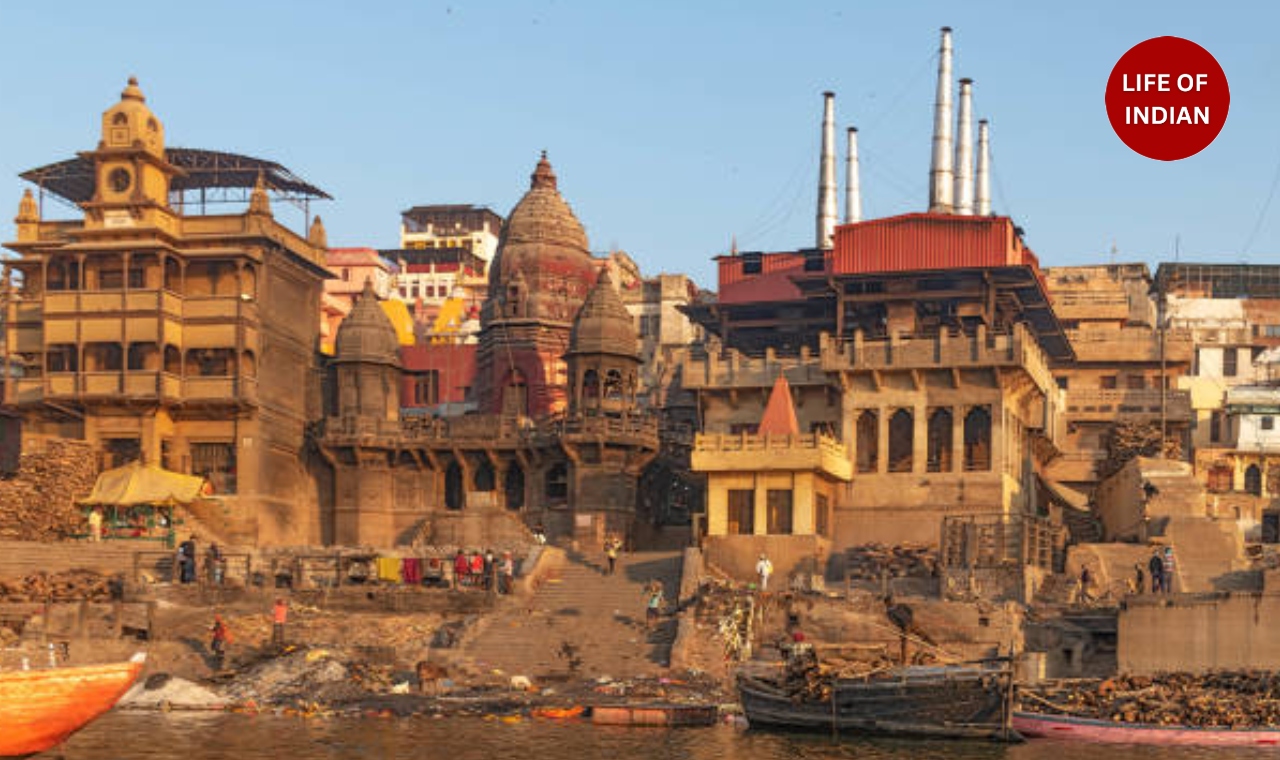
Another powerful legend connects Manikarnika Ghat to Goddess Parvati. According to this belief, Goddess Parvati once lost her ear ornament while bathing at the ghat. Despite extensive searching, the ornament was never found.
In her grief and anger, she declared that this place would burn forever. It is believed that from that moment onward, the fire at Manikarnika Ghat has never been extinguished. Funeral pyres continue to burn without pause, earning the ghat the name Mahashmashan—the great cremation ground.
The Question Whispered to the Departing Soul
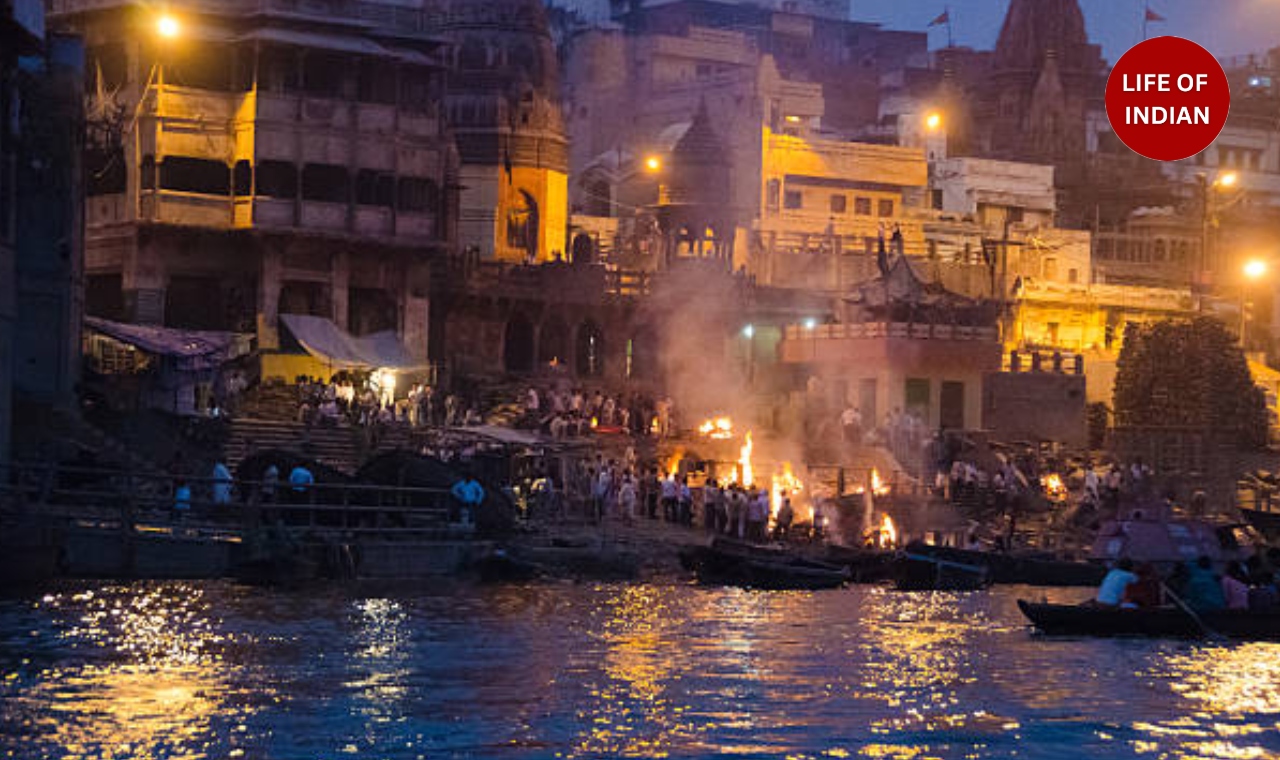
A deeply symbolic tradition associated with Manikarnika Ghat is that before the body is placed on the pyre, a question is softly whispered into the ear of the deceased: “Have you seen Lord Shiva’s jewel?”
This question is not literal. It serves as a reminder that the physical body no longer matters, worldly attachments must be left behind, and the soul must now focus on its ultimate goal—moksha. This ritual reflects the profound spiritual consciousness that defines Kashi.
Manikarnika Ghat: Not Death, but Philosophy
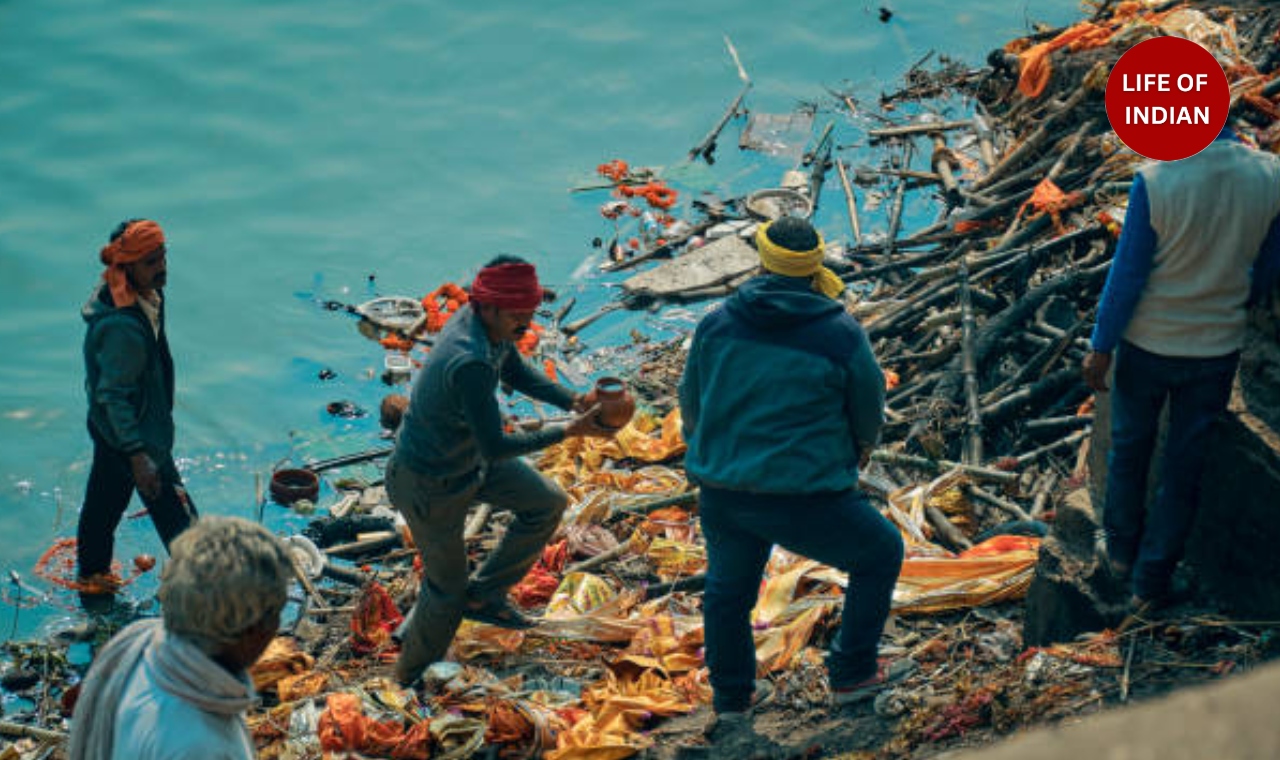
Manikarnika Ghat teaches that death is not an end. Here, kings and beggars, the rich and the poor, are reduced to the same truth. Ego turns to ash, and only consciousness and karma remain. This ghat does not inspire fear; it imparts lessons of detachment, truth, and self-realization.
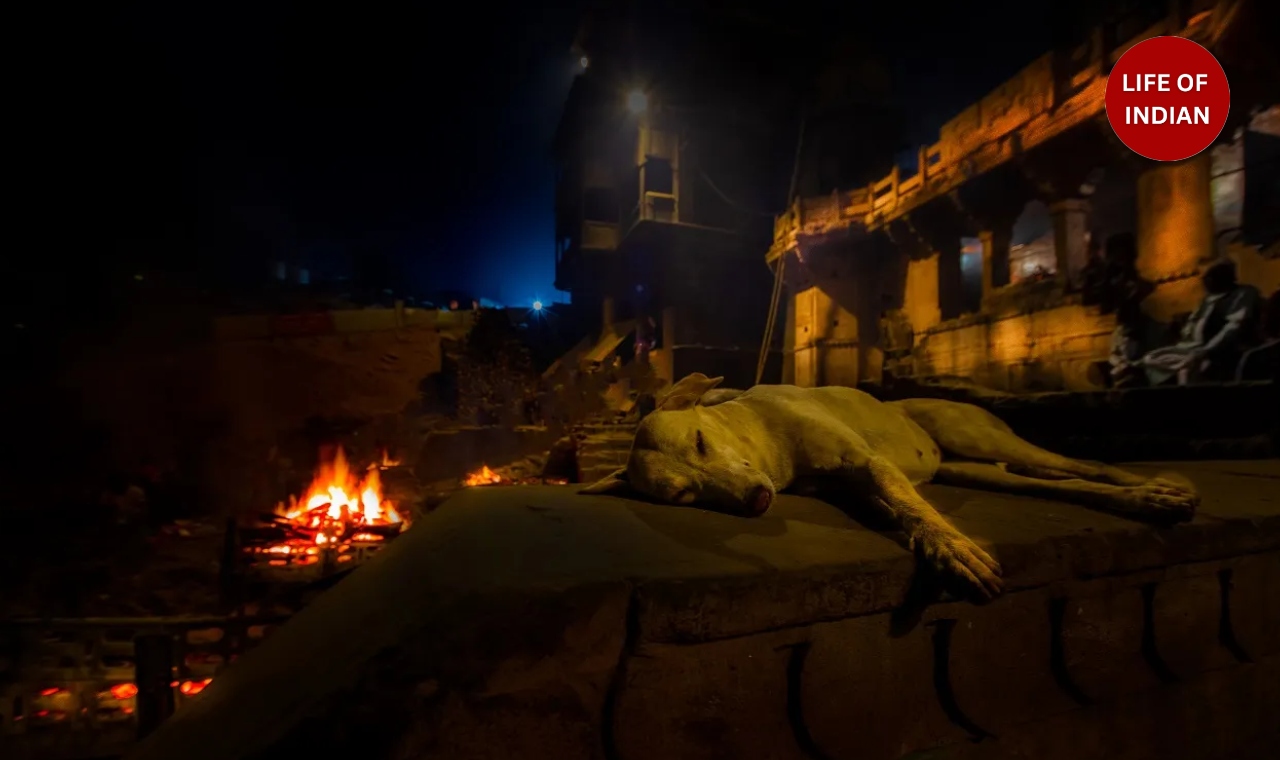
Manikarnika Ghat is not merely a place of last rites; it is a confrontation with the ultimate truth of life. The burning pyres do not terrify—they remind us of impermanence and liberation.
Everyone who comes into this world must leave it one day…
but those who depart from Kashi are believed to never return again.