
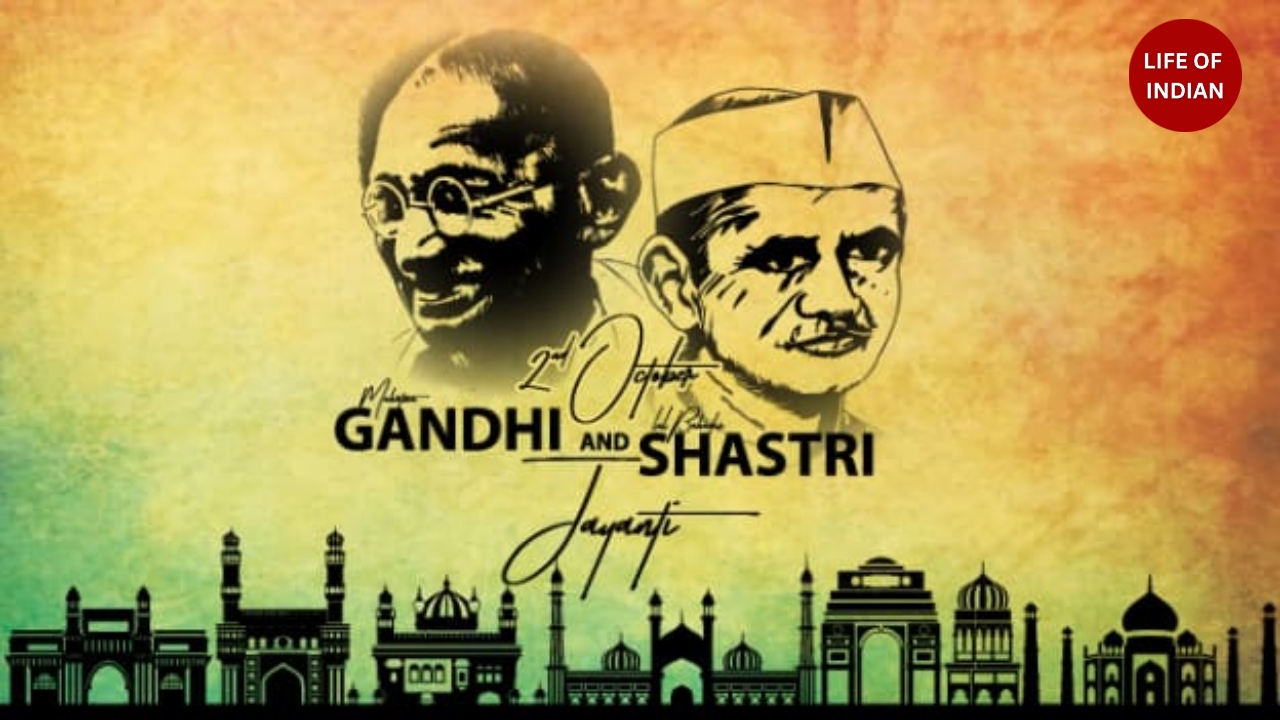
Mahatma Gandhi and Lal Bahadur Shastri: Mahatma Gandhi and Lal Bahadur Shastri: October 2 is a historic day for India as the nation celebrates the birth anniversaries of two of its greatest leaders — Mahatma Gandhi, the Father of the Nation, and Lal Bahadur Shastri, India’s second Prime Minister. Both of them, though different in their approaches, left an everlasting impact on India’s freedom struggle and governance. While Gandhi ji symbolized truth, non-violence, and simplicity, Shastri ji was the epitome of honesty, humility, and determination. On their birth anniversary, let us revisit some inspiring facts about their lives.
Mahatma Gandhi: Father of the Nation
Early Life and Ideals
-
Born on 2 October 1869 in Porbandar, Gujarat, Mohandas Karamchand Gandhi is globally revered as a leader of peace and non-violence.
-
Gandhi ji’s philosophy of “Satyagraha” (truth force) and “Ahimsa” (non-violence) became the foundation of India’s freedom struggle.
-
His lifestyle revolved around cleanliness, simplicity, self-reliance, and patriotism.
Contribution to Freedom Struggle
-
Gandhi ji led several historic movements including the Non-Cooperation Movement (1920), Salt March (1930), and Quit India Movement (1942).
-
His non-violent resistance not only united millions of Indians against British rule but also inspired civil rights movements worldwide.
-
Today, Gandhi Jayanti is celebrated as a National Holiday in India and is also observed globally as the International Day of Non-Violence.
Lal Bahadur Shastri: A Leader of Simplicity and Strength
Early Life
-
Lal Bahadur Shastri was born on 2 October 1904 in Mughalsarai, Uttar Pradesh (now Pandit Deen Dayal Upadhyay Junction).
-
Despite coming from a modest Brahmin family, he displayed extraordinary determination in his studies.
-
Inspired by Mahatma Gandhi’s Non-Cooperation Movement (1921), Shastri joined the Indian freedom struggle.
Role in Freedom Movement
-
Shastri actively participated in the Salt Satyagraha of 1930 and spent over nine years in British prisons.
-
During imprisonment, he studied works of Western philosophers, revolutionaries, and reformers, which shaped his political vision.
-
His contribution remained humble yet impactful, as he never craved for power but dedicated himself to public service.
Political Journey
-
After Independence, Shastri became Parliamentary Secretary in Uttar Pradesh, later serving as Transport and Finance Minister.
-
In 1952, he was appointed Railway Minister in Nehru’s cabinet, where he introduced reforms but resigned after a tragic train accident, setting an example of political accountability.
-
Later, as Home Minister and Commerce Minister, he emphasized administrative reforms and national unity.
Prime Minister of India
-
On 9 June 1964, after Jawaharlal Nehru’s death, Shastri became India’s second Prime Minister.
-
His tenure, though brief (19 months), was marked by crucial challenges — the 1965 Indo-Pak war and the food crisis.
-
His iconic slogan “Jai Jawan, Jai Kisan” boosted the morale of soldiers and motivated farmers towards self-reliance, laying the foundation for the Green Revolution.
-
Tragically, he passed away in Tashkent on 11 January 1966, under mysterious circumstances after signing the Tashkent Agreement.
Legacy of Gandhi and Shastri
-
Gandhi ji continues to be remembered as a global icon of peace and non-violence. His messages of harmony and truth remain relevant even today.
-
Shastri ji is remembered as a symbol of honesty, humility, and integrity. His leadership during wartime and his vision for farmers shaped India’s development path.
The birth anniversaries of Mahatma Gandhi and Lal Bahadur Shastri remind us of the timeless values of truth, non-violence, simplicity, and patriotism. As India celebrates Gandhi Shastri Jayanti 2025, it is not just a day of remembrance but also an opportunity to reflect on their ideals and strive to implement them in our daily lives.