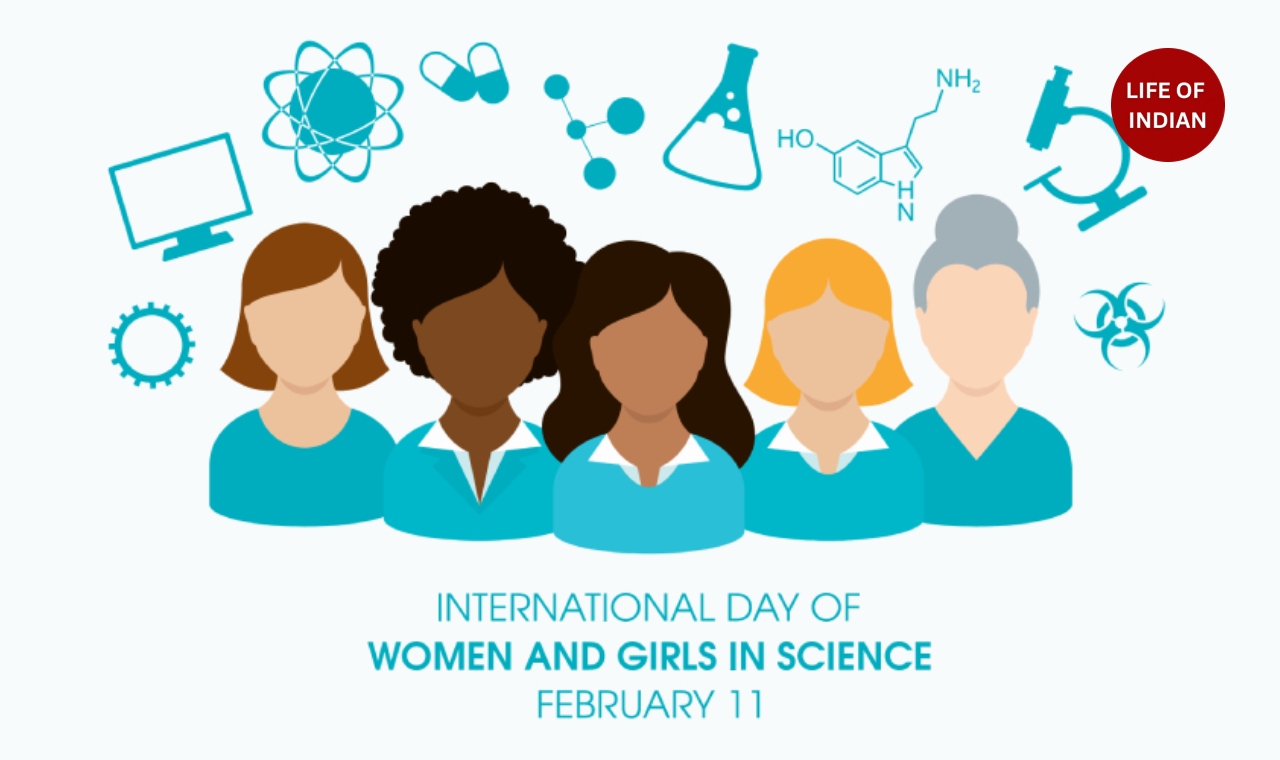
Every year on 11 February, the world observes the International Day of Women and Girls in Science — a global event dedicated to celebrating the achievements of women and girls in science and encouraging their full and equal participation in scientific fields. This day is not just a symbolic celebration; it is a powerful reminder of how essential gender equality in science is for innovation, sustainable development, and progress in the modern world.
The United Nations General Assembly officially proclaimed this observance in 2015, with strong support from UNESCO and UN Women, as part of a broader commitment to achieving gender equality and empowering all women and girls.
Why Do We Celebrate This Day?
Science, Technology, Engineering and Mathematics (STEM) fields have historically been male-dominated — not because women lack ability or interest, but because social, cultural and economic barriers have limited their access and opportunities. Even today, women make up less than one-third of researchers worldwide, highlighting a persistent gender gap that prevents the world from benefitting fully from all available talent.
The International Day of Women and Girls in Science aims to:
- Recognize and honour the vital contributions women and girls make to science.
- Highlight persistent inequalities in STEM education, careers and leadership.
- Encourage equal access to education and professional opportunities for women and girls in science.
- Inspire young girls to pursue STEM education and careers with confidence and passion.
The Story Behind the Date — 11 February
The choice of 11 February reflects the ongoing global effort to promote gender equality in science. It aligns with the anniversary of Marie Curie’s first Nobel Prize in Physics in 1903, marking a meaningful tribute to a woman whose scientific achievements broke new ground and inspired generations.
UN reports show that while young women are increasingly enrolling in higher education, representation declines sharply in scientific research and advanced technology sectors. In disciplines like artificial intelligence, data sciences and engineering, women’s participation remains low, which limits diversity in innovation and scientific problem-solving.
How the United Nations Supports This Initiative
The United Nations, UNESCO and other global partners use this day to highlight the structural barriers that women and girls face in STEM fields and to mobilize actions that expand opportunities. Every year, the celebration features themes designed to focus attention on new challenges and solutions. The 2026 theme emphasizes inclusive futures by combining AI, social science, STEM and finance to ensure that innovations reach women and girls everywhere.
Through scholarships, mentorships, workshops, public dialogues, educational campaigns and research initiatives, these institutions work toward creating environments where women scientists can thrive, lead and innovate.
Why Gender Equality in Science Matters
Gender equality in science is not just a matter of fairness—it’s a global necessity. When women and girls are fully included in scientific research and innovation:
- We widen the pool of ideas and perspectives, which leads to better, more relevant scientific solutions.
- We accelerate progress on critical global challenges, including climate change, health crises and sustainable development.
- We break stereotypes and empower future generations to pursue knowledge without limitations.
As UN Secretary-General António Guterres has emphasized, excluding women from science weakens collective capacity to address urgent global issues and hinders humanity’s ability to benefit from diverse talents.
Real Impact Around the World
Around the globe, organizations, universities, research institutions and governments mark this day with inspirational events such as science fairs, panel discussions, mentorship programmes and public exhibitions. These celebrations often share stories of remarkable women scientists whose work has transformed science and society.
In India and many other countries, the observance serves as a platform to showcase the work of women researchers, encourage girls to pursue STEM careers, and highlight initiatives that promote inclusive education and innovation.
The International Day of Women and Girls in Science is more than an annual event — it’s a call to action for educators, policymakers, communities and individuals. It reminds us that science thrives when diversity is welcomed, voices are heard, and opportunities are equitable.
By recognizing both the challenges and achievements of women and girls in science, this day encourages a future where scientific discovery and human potential are uplifted without gender barriers. Celebrating this day is not just about recognition — it is about building a world where women and girls can fully shape the future of innovation, creativity and scientific progress.