


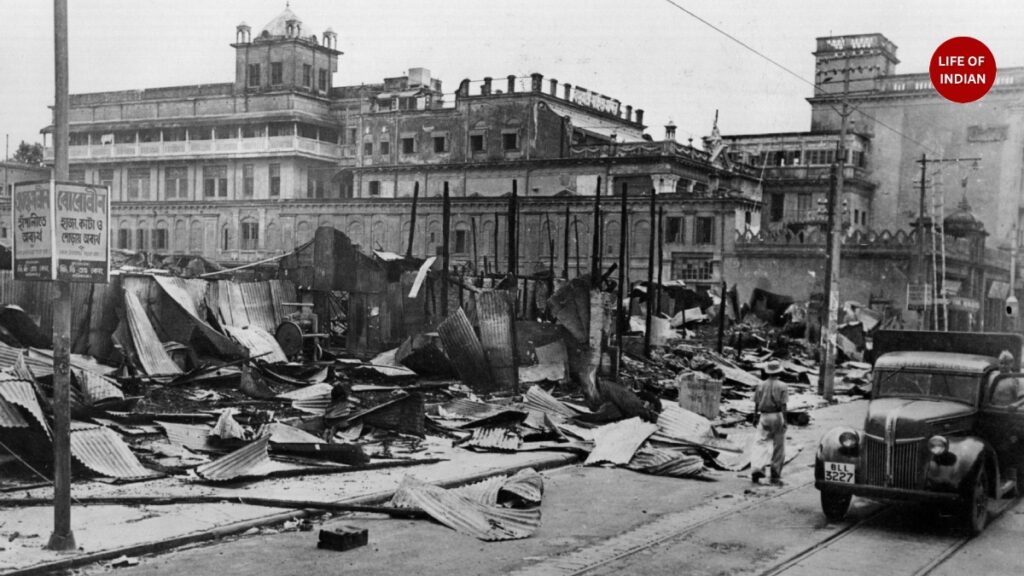
A Land Once United: Before 1947, Bengal was not divided—it was one of the largest, richest, and most culturally vibrant regions of British India. Stretching across present-day West Bengal (India) and Bangladesh, it was a land of shared language, literature, and identity.
But history had other plans. What was once a unified Bengal became West Bengal and East Bengal, separated not just by borders but by politics, religion, and tragedy.
Bihar Diwas: The Untold History Behind Bihar Foundation Day
The First Shock: Partition of Bengal in 1905
The story begins long before India’s independence. In 1905, British Viceroy Lord Curzon divided Bengal into two parts—East Bengal and West Bengal.
Officially, this was done for administrative convenience because Bengal was too large to govern. But in reality, it was a classic “divide and rule” policy aimed at weakening the growing Indian nationalist movement.
- West Bengal had a Hindu majority
- East Bengal had a Muslim majority
This division sparked massive protests across India. Movements like Swadeshi Movement gained momentum, and leaders like Rabindranath Tagore encouraged unity.
Eventually, due to strong opposition, the British were forced to reverse the partition in 1911.
But the seeds of division had already been planted.
Rising Communal Tensions (1911–1947)
After 1911, Bengal was reunited—but the unity was fragile.
Over the next few decades:
- Political representation became divided along religious lines
- Economic inequalities deepened
- Communal identities strengthened
The creation of the Muslim League (1906) and growing demands for separate political representation intensified Hindu-Muslim divisions.
By the 1940s, Bengal had become a politically volatile region, with rising communal tensions and violence.
The Idea of “United Bengal” (A Missed Opportunity)
Interestingly, just before independence, there was a serious proposal to keep Bengal united as an independent country—neither India nor Pakistan.
Some leaders believed this would preserve Bengal’s cultural unity. However:
- Hindu leaders feared being a minority in a Muslim-majority state
- Muslim leaders leaned toward Pakistan
- Political mistrust made agreement impossible
This plan ultimately failed, sealing Bengal’s fate.
Kerala to Keralam: History, Legal Process, Political Impact & Cost of Renaming Explained
The Final Division: Partition of Bengal in 1947
In 1947, as British rule ended, India was divided into two nations—India and Pakistan. Bengal, like Punjab, became a major center of this division.
The decision was based largely on religious demographics:
- Hindu-majority areas → West Bengal (India)
- Muslim-majority areas → East Bengal (Pakistan)
This division was finalized through the Radcliffe Line, drawn in haste just before independence.
On 14–15 August 1947, Bengal was officially split:
- West Bengal became part of India
- East Bengal became part of Pakistan (later Bangladesh in 1971)
The Human Cost: Migration, Violence, and Trauma
The partition was not just a political decision—it was a human tragedy.
Millions of people were forced to leave their homes:
- Hindus migrated from East Bengal to West Bengal
- Muslims moved in the opposite direction
Unlike Punjab, where violence was immediate and intense, Bengal saw gradual but long-lasting migration and tension.
Families were divided, identities were shattered, and a shared culture was permanently altered.
Why the Name “West Bengal”?
After partition, the western part retained the name “West Bengal” to distinguish it from East Bengal (which later became Bangladesh).
Even though it lies in eastern India, the name reflects its historical connection to the larger Bengal region.
After Independence: Building a New Identity
Post-1947, West Bengal faced several challenges:
- Massive refugee influx from East Pakistan
- Economic strain and housing crises
- Political instability
Over time, regions like Cooch Behar and Chandannagar were integrated into West Bengal, shaping its modern boundaries.
Despite challenges, West Bengal preserved its rich cultural identity—literature, cinema, art, and politics continued to thrive.
A Division That Still Echoes
The creation of West Bengal was not just a geographical change—it was the result of decades of political decisions, colonial strategies, and communal tensions.
What was once a united land became divided, leaving behind stories of loss, resilience, and identity.
Even today, the legacy of that partition lives on—in borders, in memories, and in the shared culture of people on both sides.
West Bengal is not just a state—it is a reminder of a history that changed millions of lives forever.
FAQ
1. Why was Bengal divided in 1947?
Bengal was divided mainly on religious lines during the partition of India. Hindu-majority areas became part of India (West Bengal), while Muslim-majority areas became East Pakistan (now Bangladesh).
2. What was the Partition of Bengal in 1905?
In 1905, the British under Lord Curzon divided Bengal to weaken the nationalist movement. Due to strong protests, the decision was reversed in 1911.
3. What is the Radcliffe Line?
The Radcliffe Line was the boundary drawn in 1947 by Cyril Radcliffe to divide India and Pakistan, including Bengal.
4. What happened to East Bengal after 1947?
East Bengal became part of Pakistan as East Pakistan and later became an independent country called Bangladesh after the Bangladesh Liberation War.
5. Why is it called West Bengal even though it is in eastern India?
The name “West Bengal” was kept to distinguish it from East Bengal after partition. Although it lies in eastern India, the name reflects its historical connection to the larger Bengal region.