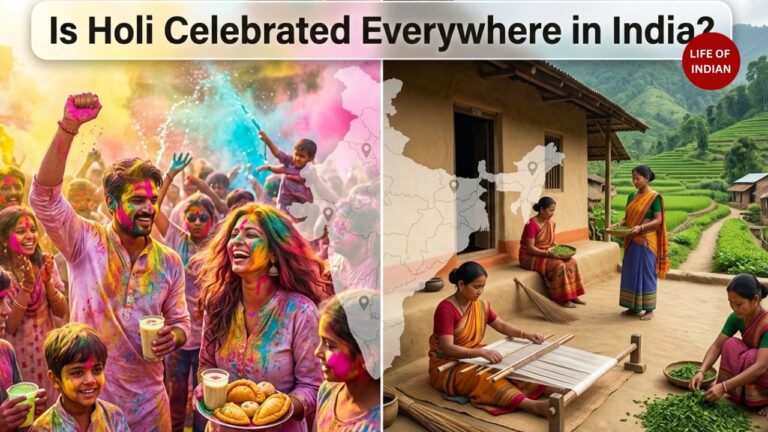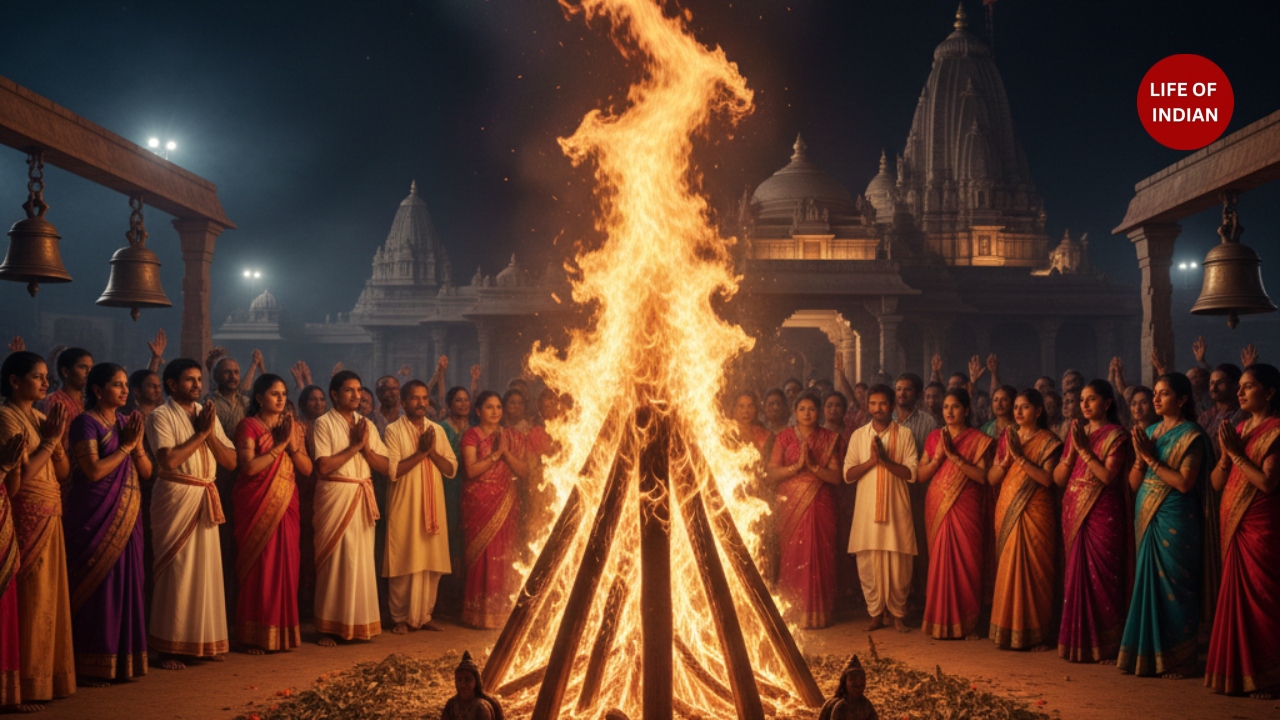
Holika Dahan: Holi, the vibrant festival of colors, is one of the most joyful and widely celebrated festivals in India and across the world. It symbolizes happiness, renewal, unity, and the triumph of good over evil. While Holi itself is associated with colors and celebration, the festival officially begins with Holika Dahan, a sacred ritual observed on the evening before Holi.
Holika Dahan represents the burning away of negativity, ego, and evil forces. However, according to traditional beliefs and regional customs, the sacred fire of Holika is not considered auspicious for everyone to witness. Over centuries, several cultural and folklore-based beliefs have evolved regarding who should avoid viewing the fire.
Let us explore the religious background, traditional interpretations, and cultural reasoning behind these practices.
Is Holi Celebrated Everywhere in India? The Surprising Regional Differences You Should Know
The Spiritual Meaning of Holika Dahan
Holika Dahan is rooted in the ancient legend of Prahlada and Hiranyakashipu. According to Hindu scriptures, the demon king Hiranyakashipu opposed his son Prahlada’s devotion to Lord Vishnu. In an attempt to kill him, Hiranyakashipu sought help from his sister Holika, who had a boon that made her immune to fire.
Holika sat in a blazing fire holding Prahlada in her lap, intending to burn him alive. However, due to Prahlada’s unwavering devotion to Lord Vishnu, he remained unharmed, while Holika was burned to ashes. This event symbolizes the destruction of evil and the protection of righteousness.
Thus, Holika Dahan represents the victory of faith over arrogance, devotion over power, and good over evil.
Why Is the Energy of Holika Fire Considered Intense?
In many traditional interpretations, Holika Dahan is not just symbolic — it is believed to release powerful spiritual energy. Some scriptures and local traditions describe this fire as a purifier, capable of removing negativity and past karmic impurities.
However, folklore suggests that the energy emanating from this sacred fire is intense and transformative. Because of this belief, certain groups of people are traditionally advised to avoid direct viewing of the flames.
It is important to note that these are cultural beliefs and not universally mandated religious rules.
Why Rangbhari Ekadashi Is Spiritually Powerful: The Hidden Connection Between Vishnu, Shiva & Holi
Why Are Newly Married Women Traditionally Advised Not to Watch Holika Dahan?
In many regions of North India, it is considered inauspicious for a newly married woman to watch Holika Dahan at her in-laws’ home during her first year of marriage.
Cultural Reasoning Behind the Belief
Holika, in mythology, represents the sister of Hiranyakashipu who was burned in the fire. Some traditional beliefs connect her fate symbolically with marital misfortune. Therefore, watching the burning Holika during the first year of marriage is believed by some to bring misunderstandings, conflict, or instability into the new marital life.
As a result, many families encourage the bride to celebrate her first Holi at her parental home. This custom is seen not only as protective but also as emotionally comforting, allowing the newlywed bride to spend time with her family during an important festival.
This tradition is more cultural than scriptural and varies greatly by region.
Why Do Some Traditions Suggest Pregnant Women Avoid Holika Dahan?
Another belief found in certain communities is that pregnant women should avoid directly witnessing the Holika fire.
The reasoning is rooted in the idea that the powerful energy of the ritual, combined with large gatherings, smoke, and intense heat, may not be suitable for an expecting mother. In older times, when safety measures were minimal, staying away from crowded and smoky environments may have been advised for practical health reasons.
Today, many interpret this tradition as a precautionary cultural practice rather than a strict religious command.
Why Is It Considered Inauspicious for Mother-in-law and Daughter-in-law to Watch Together?
In some folk traditions, it is believed that a mother-in-law and daughter-in-law should not watch Holika Dahan together.
The symbolic reasoning behind this belief relates to family harmony. Since Holika represents destruction and conflict in mythology, some cultural interpretations suggest that watching the burning Holika together may symbolically invite tension into their relationship.
However, there is no scriptural evidence supporting this restriction. It is primarily a local belief passed down through generations.
The Folk Tale of Holika’s Wedding and Iloji
Beyond the classical Prahlada story, certain regional folk tales add additional narratives to Holika’s story.
According to one such folk legend, the day Holika was burned was also the day she was to be married to a man named Iloji. It is said that Iloji’s mother went to see Holika before the wedding and instead witnessed her funeral pyre. Overcome with shock and grief, she collapsed.
From this story, a belief emerged that witnessing Holika’s burning could bring misfortune to newly married women or families preparing for marriage. Though this tale is not part of mainstream Hindu scriptures, it remains part of local oral traditions.
The Deeper Symbolism of First Holi at the Parental Home
The custom of a bride celebrating her first Holi at her maternal home is not only tied to superstition but also carries emotional and social meaning.
Marriage marks a significant transition in a woman’s life. Allowing her to celebrate her first Holi with her parents provides emotional comfort and strengthens family bonds. It ensures that she begins her married life with happiness, blessings, and positive energy.
In many ways, this tradition is about care, affection, and cultural continuity rather than fear.
Understanding Tradition in Modern Context
It is important to approach these beliefs with cultural sensitivity and balanced understanding. Not all Hindu communities follow these practices, and many families do not consider them mandatory.
Holika Dahan ultimately symbolizes purification, protection, and spiritual victory. The fire represents the burning away of ego, hatred, and negativity—not harm to devotees.
Whether one chooses to follow these traditions depends on personal faith, family customs, and regional practices.
Why Varanasi Plays Holi With Ashes: The Powerful Story Behind Masan Holi 2026
Holika Dahan is a powerful and symbolic ritual marking the beginning of Holi. While the sacred fire represents the triumph of good over evil, various cultural traditions advise certain individuals—such as newly married women, pregnant women, or specific family members — to avoid directly viewing the flames.
These practices are rooted in folklore, symbolism, and protective cultural customs rather than strict religious commandments. At its heart, Holika Dahan is about renewal, faith, and positivity.
As Holi approaches, the true essence of the festival lies in spreading love, forgiveness, and joy — honoring both tradition and modern understanding.
FAQ
Q1. What is the significance of Holika Dahan?
Holika Dahan symbolizes the victory of good over evil, based on the legend of Prahlada and Holika. It marks the beginning of Holi celebrations.
Q2. Why are newly married women advised not to watch Holika Dahan?
In some traditions, it is believed that watching Holika Dahan during the first year of marriage may bring marital misunderstandings. This is a cultural belief rather than a strict religious rule.
Q3. Should pregnant women avoid Holika Dahan?
Certain communities believe pregnant women should avoid the intense fire and smoke for safety and spiritual reasons, though this is based on tradition rather than scripture.
Q4. Is it inauspicious for mother-in-law and daughter-in-law to watch Holika together?
Some regional customs suggest this may affect family harmony, but there is no direct scriptural basis for this belief.
Q5. Is avoiding Holika Dahan mandatory in Hinduism?
No, these practices are based on folklore and regional traditions. Many families do not follow these restrictions.
About the Author