


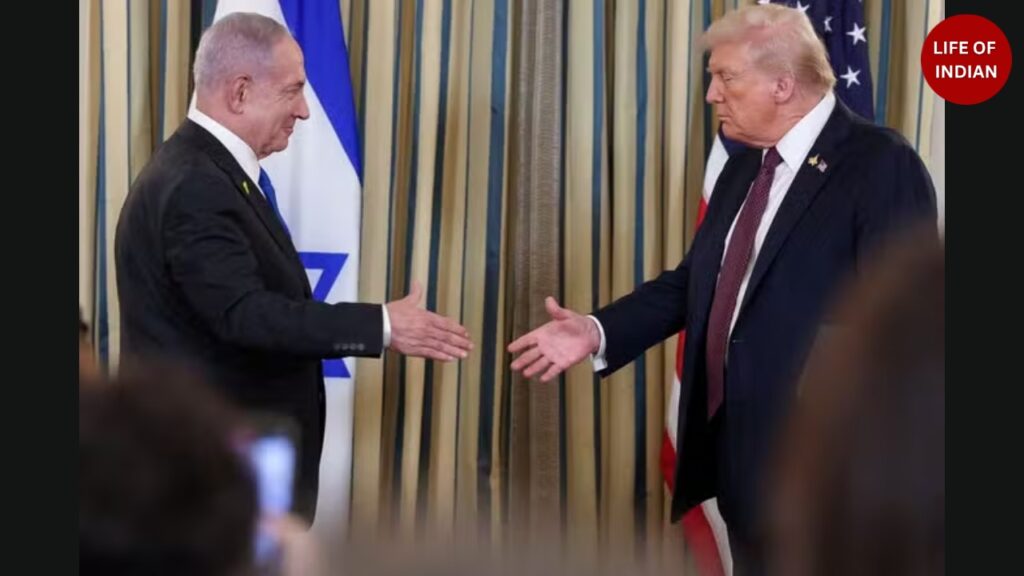
Gaza–Israel Peace Deal 2025: The idea of a peace deal between Israel and Gaza (represented mostly by Hamas) has occupied international diplomacy for decades. While numerous ceasefires and truces have been brokered, a lasting political settlement has remained elusive. In 2025, new U.S.-backed proposals and regional dynamics have brought renewed attention — but steep hurdles remain.
Historical Context: Peace Efforts & Ceasefires
Understanding the possibility of a peace deal today requires a look back at prior efforts:
-
Oslo Accords (1993, 1995): These were landmark interim agreements between Israel and the Palestine Liberation Organization (PLO). They created the Palestinian Authority, granted limited self-rule in parts of Gaza and the West Bank, and set a framework for permanent-status negotiations on borders, refugees, Jerusalem, and security.
-
Gaza–Jericho Agreement (1994): A follow-up to Oslo I, this agreement transferred some territories and governance responsibilities in Gaza to the Palestinian Authority.
-
Cycles of Conflict & Ceasefires: Since Hamas took control of Gaza in 2007, Israel and Hamas have engaged in repeated military confrontations and temporary truces. These ceasefires are often brokered by third parties (Egypt, Qatar, U.S.) but typically do not tackle root issues such as control, sovereignty, and demilitarization.
-
2023 Gaza War Ceasefire (Late 2023): After months of intense fighting following the October 7, 2023 Hamas-led attacks into southern Israel, a temporary six-day ceasefire started on November 24, 2023. It allowed exchange of hostages, release of some prisoners, and limited aid access in Gaza.
Despite these efforts, none have produced a comprehensive peace deal. Underlying contentions — Israeli security, Palestinian statehood, control of territory, and rights of refugees — remain unresolved.
The 2025 Peace Proposal: What’s On the Table
In 2025, a new U.S.-backed plan has surfaced, reflecting evolving geopolitical pressures and the severe humanitarian crisis in Gaza. Key elements include:
-
Immediate ceasefire & hostage release: The proposal calls for both sides to pause hostilities and facilitate the exchange of captive Israelis and Palestinians.
-
Phased Israeli withdrawal / redeployment: Israeli forces would reposition to agreed-upon lines to ease tensions and enable transition.
-
Disarmament & no governance role for Hamas: The plan stipulates Hamas must give up arms and not participate in Gaza’s governance going forward.
-
International transitional administration: An international body (possibly under U.S. or multilateral oversight) might temporarily govern Gaza to rebuild institutions and restore services.
-
Prisoner and hostages exchange: Significant numbers of Palestinian detainees and Israeli hostages would be exchanged under stipulated timelines.
Israel’s Prime Minister Benjamin Netanyahu has endorsed the plan, under certain conditions, and expressed willingness to support it while reserving right to act “the easy way or the hard way” if Hamas refuses.
Hamas, however, has voiced strong opposition, especially from its military wing. Its leaders argue that the plan gives them too little leverage, and refuse to disarm or relinquish governance before guarantees or clarity on Palestinian political rights.
Some sources report that Hamas may seek modifications to the proposal rather than outright rejection.
Major Challenges & Obstacles
Implementing a peace deal between Israel and Gaza is extraordinarily difficult. The major obstacles include:
| Challenge | Description |
|---|---|
| Security & Demilitarization | Israel demands Hamas be disarmed and removed from power, but Hamas sees itself as defense against Israeli aggression. |
| Legitimacy & Governance | Who governs Gaza? If an international transitional government is imposed, it risks losing legitimacy among Palestinians. |
| Territorial Control & Withdrawal | Israeli forces must redeploy from sensitive areas, but any security vacuum may embolden new militias or factions. |
| Hostage & Prisoner Exchanges | Timing, conditions, number exchanged, and verification mechanisms are contentious. |
| Palestinian Statehood & Rights | Without clear, enforceable guarantees for Palestinian rights, any deal may be perceived as imposed. |
| Internal Palestinian Division | Conflict between Hamas (in Gaza) and the Palestinian Authority (in West Bank) complicates unified leverage. |
| Third-party Enforcement & Oversight | International forces possibly overseeing peace must be empowered and trusted by both sides. |
| International Legitimacy & Funding | Reconstruction, aid, and diplomatic recognition require global backing and trust. |
Israel has a history of violating ceasefires when it perceives strategic benefit. Similarly, past peace processes collapsed due to asymmetric expectations and failure to build trust.
Militia groups forming inside Gaza, often backed indirectly by Israel or local actors, may undermine centralized control.
Why the 2025 Proposal Matters
Several contextual factors make the 2025 proposal particularly consequential:
-
Humanitarian Crisis in Gaza: Years of blockade, war, and infrastructure collapse have pushed Gaza to the brink. A peace deal offers a pathway for aid, rebuilding, and normal life.
-
International Pressure: Global actors—Arab states, Europe, U.S., and UN—are pushing actively for a resolution. France, for instance, has voiced concerns and signaled engagement.
-
Resetting Regional Dynamics: A successful deal could reshape Israel’s relations with Arab states, especially after normalization deals in recent years.
-
Legal & Moral Mandates: The rules of war, demands for accountability, and public opinion increasingly demand that civilian protection and post-war justice be central to peace.
-
Technological & Institutional Tools: New proposals even include innovative tools such as using AI or collective dialogues to bridge trust gaps.
Prospects Going Forward
While the 2025 plan offers a fresh opportunity, its success is uncertain:
-
Positive Indicators: Netanyahu’s tentative acceptance, U.S. backing, and some openness in Hamas negotiation channels.
-
Negative Signals: Rejection from Hamas’ military wing, internal divisions, lack of trust, and history of aborted agreements.
-
The transitional governance model must keep legitimacy with Palestinians or risk being seen as externally imposed.
-
Reconstruction funding, security guarantees, and international oversight will be crucial.
If both sides, and key external actors, commit sincerely to phased implementation, verification, and accountability, the 2025 proposal could break cycles of war and partial truces. But failure to uphold core commitments may mean this too becomes another moment in a long series of broken peace promises.
The Gaza–Israel peace deal remains one of the most formidable diplomatic challenges of our time. The 2025 proposal, backed by the U.S. and supported by Israel, aims to pause violence, free captives, and rebuild a devastated region under an international transitional framework. However, deep mistrust, governance dilemmas, security demands, and Palestinian legitimacy all stand as enormous obstacles.
Yet, in the face of immense suffering and regional instability, a well-structured, enforceable, and inclusive deal offers the only realistic hope for changing the trajectory. Whether 2025 becomes a turning point or another chapter in stalemate depends on political will, credible guarantees, and genuine mutual concessions.
Peace will not be easy — but for Gaza, Israel, and the wider Middle East, it is indispensable.