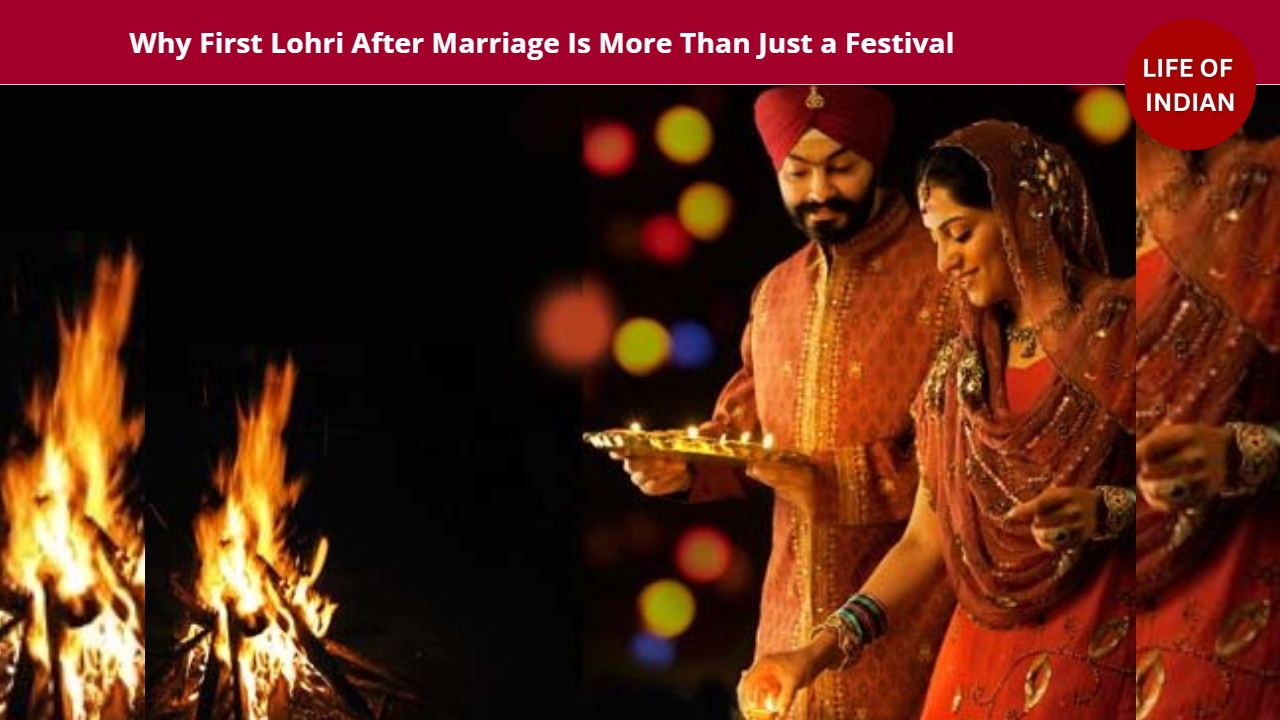
Lohri: In North Indian culture—especially in Punjab—the first Lohri after marriage is not just a festival; it is a powerful symbol of new beginnings, acceptance, prosperity, and blessings. For a newly married couple, this Lohri marks their official entry into family life, social traditions, and shared responsibility.
But why is the first Lohri treated with such importance? And what ancient beliefs and stories lie behind it? The answer is deeply rooted in agrarian life, social customs, and emotional bonding.
The Cultural Meaning of the First Lohri
Traditionally, Lohri celebrates:
-
The harvest season
-
The Sun (Surya Dev) and fire (Agni)
-
Fertility, prosperity, and continuity of family
Marriage, in Indian tradition, is also seen as a new cycle of life—much like sowing seeds after harvest. The first Lohri symbolically links the couple’s union with growth, abundance, and future generations.
That is why this Lohri is considered especially auspicious.
Why the Bride’s First Lohri Is Extra Special
For the bride, the first Lohri holds deep emotional and social significance.
1. Acceptance Into a New Family
This is often the first major festival the bride celebrates after marriage. The grand celebration is a public way for the groom’s family to say:
“She is now truly one of us.”
Gifts, rituals, and blessings make the bride feel welcomed, valued, and honoured.
2. Symbol of Fertility and New Life
Historically, Lohri was linked to prayers for:
-
Good harvest
-
Healthy children
-
Family continuity
The newly married couple represents the future of the lineage, so elders bless them with sweets, grains, and warmth from the bonfire.
The Story Behind Celebrating Lohri for Newlyweds
In old Punjabi villages, life revolved around agriculture. A good harvest meant survival. Marriage was seen as another form of “harvest”—a union that would bring stability, children, and labour to the household.
The first Lohri was celebrated to:
-
Thank nature for the new phase of life
-
Pray for harmony between the couple
-
Seek protection from hardships
Fire was believed to burn negativity and bless the couple with strength and warmth—both emotional and physical.
Rituals of the First Lohri
Bonfire (Agni Puja)
The couple circles the fire together, offering:
-
Sesame seeds
-
Jaggery
-
Peanuts
-
Popcorn
These items symbolize:
-
Sweetness in marriage
-
Strength to face challenges
-
Prosperity and abundance
Gifts and Shagun
The bride receives:
-
Traditional clothes
-
Jewellery
-
Sweets
-
Money (shagun)
These gifts are not about luxury, but about security and blessings.
Lohri Songs & Community Blessings
Women sing folk songs that:
-
Bless the couple
-
Pray for love and understanding
-
Celebrate womanhood and marriage
The couple is often seated at the center, making this a moment of pride and joy.
Why the Groom’s First Lohri Matters Too
While much focus is on the bride, the groom’s first Lohri also matters because:
-
He steps into the role of family leader
-
He accepts responsibility for a partner
-
Elders bless him for wisdom and stability
The celebration marks his transition into adulthood and partnership.
Social Importance of the First Lohri
In traditional society, this celebration:
-
Introduced the couple formally to the community
-
Strengthened family bonds
-
Reinforced cultural values
Skipping the first Lohri was once considered inauspicious, as it symbolized ignoring tradition and collective blessings.
Modern Meaning of the First Lohri
Today, even in urban or nuclear families, the first Lohri remains meaningful because it:
-
Creates emotional bonding
-
Preserves cultural roots
-
Celebrates togetherness in a fast-paced life
Even simple celebrations hold deep symbolic value.
A Festival of Warmth, Not Just Fire
The first Lohri is not about grand scale—it is about warmth:
-
Warmth of family acceptance
-
Warmth of shared life
-
Warmth of blessings
It reminds a newly married couple that marriage is not walked alone—it is supported by family, society, and tradition.
The first Lohri is celebrated to bless love, honour union, welcome new beginnings, and ensure prosperity. It is a bridge between tradition and tomorrow, where fire becomes witness to a lifelong bond.
About the Author