


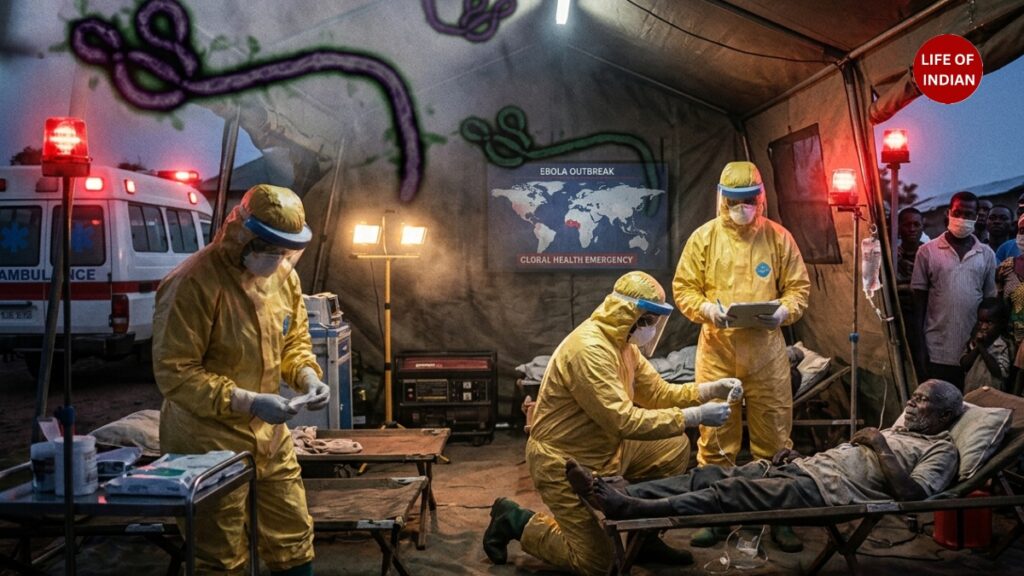
Ebola Virus: A dangerous virus hidden deep inside Africa’s dense forests is once again becoming a global concern. The deadly Ebola virus, known for causing severe bleeding, organ failure, and extremely high death rates, has resurfaced in parts of Central Africa, prompting the World Health Organization to declare an international public health emergency.
This time, the outbreak is linked to the Bundibugyo strain of Ebola — a rare and dangerous variant that currently has no specific vaccine or antiviral treatment. Cases are rapidly emerging in the Democratic Republic of the Congo and neighboring Uganda, raising fears that the virus could spread across borders if not controlled quickly.
For many people, Ebola is one of the most frightening diseases ever discovered. Unlike common infections, Ebola attacks the body aggressively, often causing internal bleeding, severe dehydration, and multiple organ failure within days. In past outbreaks, entire villages were devastated, healthcare workers died while treating patients, and panic spread faster than the virus itself.
But what exactly is Ebola? Why is it spreading again? How dangerous is the new strain? And why are health agencies across the world deeply worried despite modern medical advancements?
Here is everything you need to know about the Ebola virus outbreak, its symptoms, transmission, history, dangers, and the global response surrounding it.
What Is Ebola Virus?
Ebola Virus Disease (EVD) is a rare but extremely serious viral infection caused by viruses belonging to the Ebolavirus family. The disease was first identified in 1976 near the Ebola River in what is now the Democratic Republic of the Congo, which is how it got its name.
Ebola attacks the immune system and damages blood vessels and organs throughout the body. In severe cases, patients may experience internal and external bleeding, organ failure, shock, and death.
The virus is considered one of the world’s deadliest infectious diseases because some Ebola strains have mortality rates reaching up to 90 percent.
Why Is Ebola Spreading Again?
The latest outbreak in the Democratic Republic of the Congo and Uganda is being caused by the Bundibugyo strain of the Ebola virus.
This strain was first discovered in Uganda’s Bundibugyo district during the 2007–2008 outbreak. At that time, over 100 people were infected, and around one-third of the patients died.
Health experts say the current outbreak is especially concerning because:
- There is no approved vaccine specifically designed for the Bundibugyo strain
- No targeted antiviral treatment currently exists
- Border regions between Congo and Uganda remain highly vulnerable
- Dense forest regions make tracking infections difficult
- Some infected individuals may travel before symptoms become severe
According to health authorities, this is the 17th Ebola outbreak recorded in Congo, but the presence of a different strain has increased global concern.
Different Types of Ebola Virus
Many people think Ebola is a single virus, but scientists have identified several strains of Ebola.
The most dangerous strains affecting humans include:
1. Zaire Strain
This is the deadliest and most well-known Ebola strain. It caused major outbreaks in West Africa and has mortality rates between 60 to 90 percent in some situations.
2. Sudan Strain
This strain has also caused serious outbreaks and has relatively high fatality rates.
3. Bundibugyo Strain
The current outbreak involves this strain. It is considered slightly less deadly than the Zaire strain, but still highly dangerous. Death rates have ranged between 32 to 50 percent in previous outbreaks.
Experts say the severity of infection often depends on:
- The patient’s age
- Overall health condition
- Speed of medical treatment
- Quality of healthcare facilities
- Viral load inside the body
Where Does Ebola Come From?
Scientists believe Ebola naturally exists in tropical rainforest ecosystems, especially in parts of Central and West Africa.
Research suggests that fruit bats are likely the primary natural hosts of the virus. These bats may carry the virus without becoming sick themselves.
The infection can spread to humans through contact with infected wild animals such as:
- Bats
- Monkeys
- Chimpanzees
- Gorillas
- Forest antelopes
Once the virus enters the human population, it can spread rapidly through direct human contact.
How Does Ebola Spread?
One of the biggest reasons Ebola becomes so dangerous is its ability to spread through body fluids.
The virus spreads through direct contact with:
- Blood
- Vomit
- Saliva
- Sweat
- Urine
- Diarrhea
- Semen
- Other bodily fluids of infected individuals
People can also become infected by:
- Touching contaminated clothes or medical equipment
- Caring for infected family members
- Participating in unsafe burial rituals
- Touching the bodies of deceased Ebola victims
Importantly, Ebola does NOT spread through:
- Air like COVID-19
- Water
- Mosquitoes or insects
However, because caregivers and family members often come into close physical contact with patients, outbreaks can grow very quickly.
Symptoms of Ebola Virus
The symptoms of Ebola usually appear between 2 to 21 days after infection.
In the beginning, Ebola may look similar to common viral illnesses such as flu or malaria, which makes early diagnosis difficult.
Early Symptoms
- High fever
- Severe headache
- Muscle and joint pain
- Weakness and fatigue
- Sore throat
Advanced Symptoms
As the infection worsens, patients may experience:
- Vomiting
- Severe diarrhea
- Stomach pain
- Skin rashes
- Red eyes
- Breathing difficulties
- Chest pain
Severe Stage
In critical cases, Ebola can cause:
- Bleeding from gums and eyes
- Internal bleeding
- Organ failure
- Shock
- Difficulty breathing
- Loss of consciousness
Many patients die due to dehydration, blood loss, or failure of vital organs.
Why Ebola Is So Dangerous
Ebola becomes extremely deadly because it attacks multiple systems inside the body simultaneously.
The virus:
- Weakens the immune system
- Damages blood vessels
- Causes severe fluid loss
- Triggers internal bleeding
- Disrupts organ functioning
In regions with weak healthcare systems, limited hospitals, or poor access to treatment, the death rate becomes much higher.
Fear and misinformation also make outbreaks worse. In previous outbreaks, some communities avoided hospitals due to distrust, which allowed the virus to spread further.
Is There Any Cure or Vaccine?
Currently, there is no specific antiviral treatment or vaccine available for the Bundibugyo strain responsible for the latest outbreak.
Doctors mainly focus on supportive care, including:
- Providing fluids and electrolytes
- Maintaining oxygen levels
- Controlling fever and pain
- Treating secondary infections
- Blood transfusions when needed
Health experts say early hospitalization and isolation significantly improve survival chances.
Some vaccines exist for the Zaire strain, but they may not provide strong protection against the Bundibugyo variant.
What Is WHO Doing?
The World Health Organization and local health authorities are taking several emergency measures to control the outbreak.
These include:
- Identifying infected individuals
- Tracking contacts of patients
- Isolating confirmed cases
- Ensuring safe burials
- Increasing border screening
- Monitoring travelers for 21 days
- Spreading public awareness
WHO has also advised neighboring countries to remain on high alert.
Instead of banning international travel completely, health agencies are focusing on surveillance, screening, and rapid response systems.
Why Border Areas Are a Major Concern
The border regions between Congo and Uganda are difficult to monitor because of:
- Dense forests
- Security issues
- Remote villages
- Limited healthcare infrastructure
- Frequent cross-border movement
Health experts fear that if Ebola reaches large cities with heavy population movement, controlling the outbreak could become much harder.
Reports of cases in major cities such as Kinshasa and Kampala have already increased concern among international agencies.
Can Ebola Become a Global Pandemic?
At present, health authorities have not classified Ebola as a global pandemic.
Unlike airborne viruses, Ebola spreads mainly through direct physical contact, which makes it easier to contain compared to diseases like COVID-19.
However, experts warn that:
- Delayed detection
- Weak healthcare systems
- International travel
- Urban transmission
- Political instability
could increase the risk of wider outbreaks.
This is why rapid response and public awareness remain critical.
Lessons the World Learned From Previous Ebola Outbreaks
The massive 2014–2016 Ebola outbreak in West Africa became one of the deadliest health crises in modern history.
Countries such as:
- Liberia
- Sierra Leone
- Guinea
suffered devastating losses.
Thousands of people died, healthcare workers became infected, economies collapsed, and fear spread globally.
That outbreak taught the world the importance of:
- Fast medical response
- International cooperation
- Strong healthcare systems
- Community awareness
- Scientific research
Ebola is not just another virus — it is one of the deadliest infectious diseases humanity has ever faced.
The latest outbreak involving the Bundibugyo strain has once again reminded the world how dangerous emerging diseases can become when healthcare systems are unprepared. Although the current situation is mainly concentrated in parts of Central Africa, global health agencies are treating it with extreme seriousness.
The good news is that awareness, early isolation, medical support, and coordinated international action can help prevent large-scale devastation.
But Ebola also serves as a warning: in an interconnected world, diseases emerging from remote forests can quickly become international threats if ignored.
And that is exactly why scientists, doctors, and health agencies across the globe are racing against time to stop Ebola before it spreads further.
FAQ
1. What is the Ebola virus?
Ebola is a severe and often deadly viral disease that causes fever, bleeding, organ failure, and serious health complications. It spreads mainly through direct contact with infected body fluids.
2. Why is Ebola spreading again?
The latest outbreak is linked to the Bundibugyo strain of Ebola in Democratic Republic of the Congo and Uganda. Health experts say weak healthcare systems, border movement, and lack of vaccines for this strain are major concerns.
3. How does Ebola spread?
Ebola spreads through direct contact with infected blood, saliva, vomit, sweat, urine, and other body fluids. It can also spread through contaminated surfaces and unsafe burial practices.
4. Does Ebola spread through air?
No. Ebola does not spread through air like COVID-19. It mainly spreads through physical contact with infected individuals or contaminated materials.
5. What are the first symptoms of Ebola?
Early symptoms include:
High fever
Headache
Weakness
Muscle pain
Sore throat
Fatigue
Later symptoms may include vomiting, diarrhea, bleeding, and organ failure.
6. Is there a cure for Ebola?
There is currently no specific cure or vaccine for the Bundibugyo strain involved in the recent outbreak. Treatment mainly focuses on supportive medical care and early hospitalization.
7. Which Ebola strain is the most dangerous?
The Zaire strain is considered the deadliest Ebola strain, with mortality rates reaching up to 90 percent in some outbreaks.
8. Can Ebola become a global pandemic?
Health agencies have not declared Ebola a global pandemic. Since the virus spreads mainly through direct contact rather than air, it is generally easier to contain than airborne diseases.
9. Which countries are currently affected by Ebola?
The latest major outbreak has mainly affected Democratic Republic of the Congo and Uganda.
10. Why is WHO concerned about the latest outbreak?
The World Health Organization is concerned because the Bundibugyo strain currently has no dedicated vaccine or antiviral treatment, and infections are spreading in vulnerable border regions.