


Duck Farming in Kerala: A Natural Rice Farming Method Every Indian Farmer Should KnowAcross the lush green landscapes of Kerala, especially in wetland regions like the Kuttanad and Thrissur Kole Wetlands, farmers have been using a fascinating and eco-friendly agricultural method for generations. Instead of relying heavily on chemical pesticides or fertilizers, many rice farmers allow thousands of ducks to enter their paddy fields.
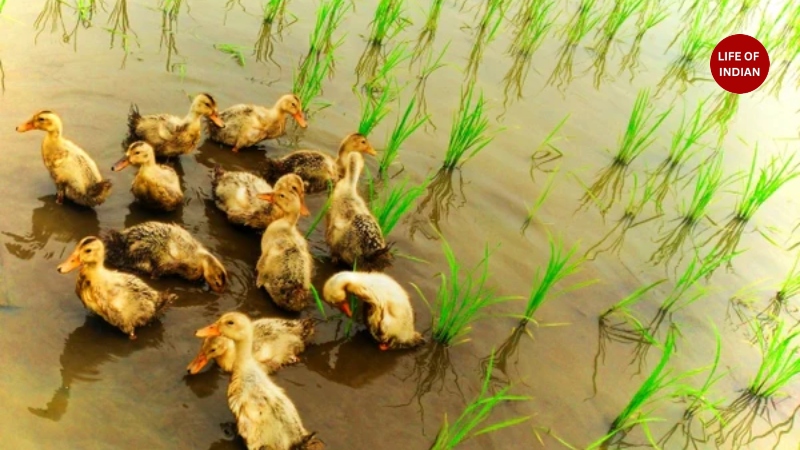
At first glance, the sight of hundreds or even thousands of ducks walking through flooded rice fields may look unusual. But in reality, these ducks act as natural farm workers, helping farmers protect crops, control pests, remove weeds, and fertilize the soil—all at the same time.
This traditional practice, often called “rice–duck farming” or “duck labour in farming,” is gaining global attention as a model for sustainable and chemical-free agriculture.
What Is the Duck Farming System in Rice Fields?

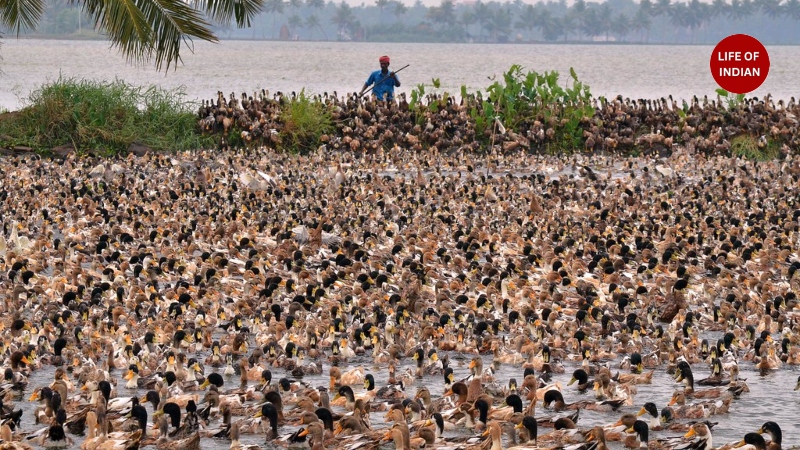
The technique is known as the rice–duck integrated farming system, where ducks and rice plants grow together in the same field.
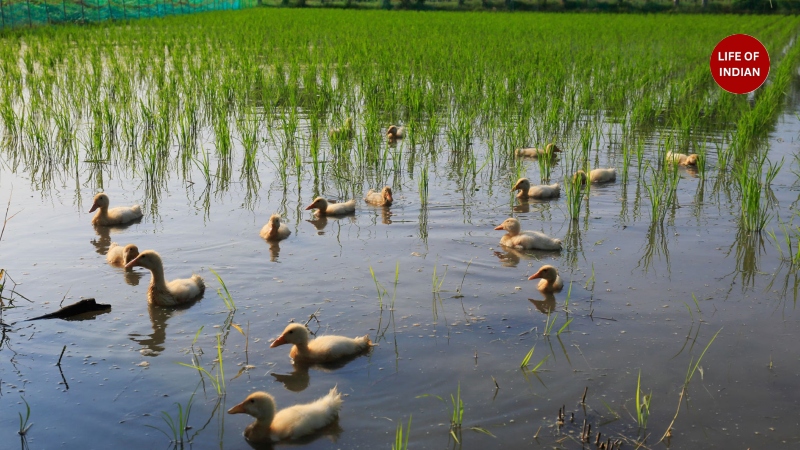
Farmers release flocks of ducks into the paddy fields at specific stages of rice cultivation. As the ducks move around in the shallow water, they naturally perform several agricultural tasks that normally require human labour or chemical inputs.
This system creates a symbiotic relationship between rice plants, ducks, soil microorganisms, and the surrounding ecosystem.
A Farming Method Every Indian Farmer Should Know
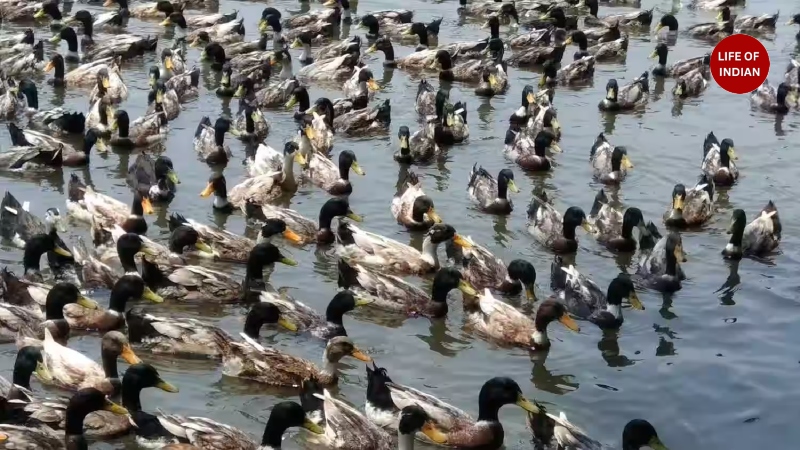
The rice–duck farming system used in regions of Kerala is not just a traditional technique, but a powerful example of how agriculture can work in harmony with nature. By allowing ducks to roam freely in paddy fields, farmers are able to control pests, remove weeds, and naturally fertilize the soil without relying on chemical pesticides or fertilizers.
This simple yet effective method shows that sustainable farming solutions already exist within India’s traditional agricultural practices. In fact, this is a farming technique that every Indian farmer should know, especially at a time when rising fertilizer costs and soil degradation are becoming serious challenges.
If adopted more widely, this nature-based approach could help farmers reduce input costs, improve soil health, and produce healthier crops while protecting the environment.
How Ducks Help Farmers Grow Rice
1. Ducks Eat Harmful Pests and Insects
Rice fields often attract many insects and pests that damage crops, including:
- Rice water weevils
- Planthoppers
- Stem borers
- Leaf folders
- Snails and worms
Ducks love to eat these insects. As they roam through the paddy fields, they continuously hunt and consume these pests.
Because of this natural pest control, farmers do not need to spray chemical pesticides, which makes the farming process safer for the environment and human health.
In some cases, farmers observed that when pests attacked crops, ducks were able to eliminate them within days simply by feeding on them.
2. Ducks Control Weeds Naturally
Weeds are another major problem in rice farming because they compete with rice plants for nutrients, sunlight, and water.
Ducks help solve this problem in two ways:
- They eat small weeds and weed seeds
- Their constant movement disturbs and uproots unwanted plants
As ducks swim and walk through the fields, they reduce weed growth naturally.
This means farmers do not need chemical herbicides, making the farming system more organic and sustainable.
3. Ducks Act Like Natural Ploughing Machines
Another interesting benefit of ducks is their physical activity in the waterlogged fields.
While moving through the muddy fields, ducks:
- Stir the soil with their feet and beaks
- Mix nutrients into the water
- Improve oxygen flow in the soil
This action works like light natural ploughing, which helps loosen the soil and improves root growth of rice plants.
The result is healthier rice plants and better crop growth.
4. Duck Droppings Work as Natural Fertilizer
One of the most important advantages of this system is natural fertilization.
As ducks move through the fields, they constantly release droppings (potty). These droppings contain important nutrients such as:
- Nitrogen
- Phosphorus
- Potassium
These nutrients act as organic fertilizer, enriching the soil and improving its fertility.
Because of this natural manure, farmers can significantly reduce the use of chemical fertilizers.
Step-by-Step: How Kerala Farmers Use Ducks in Paddy Fields
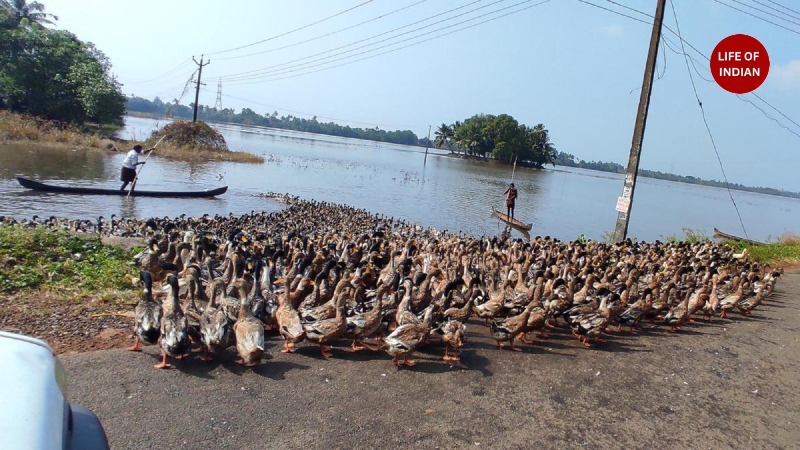
Farmers follow a systematic process when using ducks in rice farming.
Step 1: After Rice Harvest
After harvesting rice, the fields often remain flooded. Farmers allow ducks to enter the fields so they can eat leftover grains, worms, and insects.
Step 2: Before New Crop Growth
The ducks continue feeding in the fields for several weeks, cleaning the land naturally.
Step 3: After Rice Seedlings Are Planted
Once young rice plants begin growing, ducks are reintroduced into the fields for short periods.
During this time they:
- Eat pests
- Remove weeds
- Stir soil gently
This helps protect the young plants and improve their growth.
Why This System Is Environmentally Friendly
Duck-based farming has several environmental benefits:
No Chemical Pesticides
Because ducks eat pests, farmers rarely need harmful chemicals.
Natural Fertilization
Duck manure enriches the soil organically.
Healthier Soil
Duck movement improves soil aeration and microbial activity.
Better Biodiversity
This farming method supports birds, fish, insects, and aquatic plants.
Does Duck Farming Increase Rice Production?
Yes. Many farmers report that this system can increase rice yield and plant health.
Because the soil becomes more fertile and pests are controlled naturally, rice plants often grow:
- Taller
- Stronger
- With better grain production
At the same time, farmers also earn extra income from duck eggs and duck meat.
So they effectively produce two agricultural products from one field: rice and ducks.
A Model of Sustainable Farming
Today, experts around the world see rice–duck farming as a model of sustainable agriculture.
This method shows how traditional farming knowledge can work with nature instead of against it.
In a time when chemical farming is causing soil degradation and environmental damage, the farming practices of Kerala demonstrate that nature itself can be the best farm worker.
Thousands of ducks walking through paddy fields may look like a simple rural scene, but in reality, it represents a brilliant natural farming system that combines ecology, tradition, and agricultural science.
FAQ
1. Why do farmers release ducks in rice fields in Kerala?
Farmers in Kerala release ducks into paddy fields because the birds naturally eat insects, pests, and small weeds that damage rice crops. This reduces the need for chemical pesticides.
2. How do ducks help rice farming?
Ducks help rice farming by eating harmful insects, controlling weeds, stirring the soil, and providing natural fertilizer through their droppings. This improves soil fertility and crop health.
3. What is rice–duck farming?
Rice–duck farming is an integrated agricultural system where ducks and rice plants grow together in the same field. Ducks act as natural pest controllers and fertilizers, making the farming process more sustainable.
4. Do ducks damage rice plants in paddy fields?
No. Farmers release ducks only after rice seedlings are strong enough. Ducks mainly feed on insects and weeds and usually do not harm the rice plants.
5. Is duck farming in paddy fields environmentally friendly?
Yes. This method reduces the use of chemical pesticides and fertilizers, improves soil fertility, and supports biodiversity, making it an eco-friendly farming practice.