
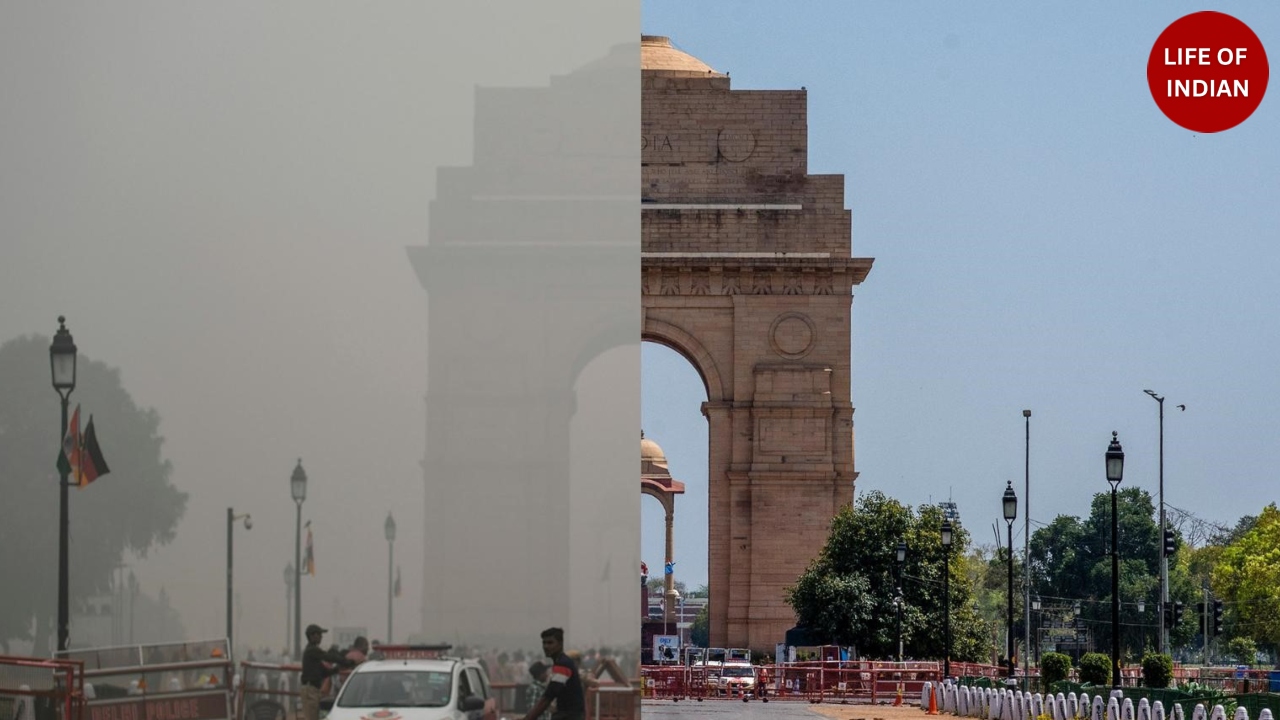
As November sets in, Delhi’s familiar battle with toxic air has returned with full force. On Monday morning, the city’s Air Quality Index (AQI) soared to 388, placing it firmly in the “very poor” category and edging dangerously close to the “severe” level. Thick smog blankets the skyline, turning the sun into a dim orange ball even at noon. Roads are hazy, eyes burn, and throats ache — the season of smog has truly arrived.
Air Quality Plummets Across Key Areas
Prominent parts of the capital — including Lodhi Road, Anand Vihar, Rohini, and RK Puram — are struggling with suffocating air. Parks once filled with morning walkers now stand empty, and parents are keeping children indoors as a precaution. With the air quality worsening, authorities are preparing to enforce GRAP Stage-3 (Graded Response Action Plan), a set of emergency measures designed to tackle severe pollution levels.
What Happens Under GRAP Stage-3?
GRAP Stage-3 is implemented when AQI levels reach between 401 and 450, indicating “Severe” air quality. During this phase, the city comes under several restrictions aimed at curbing emissions and dust.
- Construction and demolition work are halted across Delhi, except for essential government projects like hospitals, metro, and railway infrastructure.
- Polluting industries, including brick kilns, stone crushers, and hot-mix plants, are ordered to shut down.
- Coal and diesel-based industrial units are suspended to prevent further deterioration of air quality.
- Old vehicles face strict bans — diesel vehicles older than 10 years and petrol vehicles older than 15 years are barred from the roads.
- Diesel generator sets (DG sets) are prohibited, except in critical sectors such as hospitals, airports, and elevators.
- Street cleaning and water sprinkling operations are intensified, while anti-smog guns are deployed across key zones to reduce dust.
- If conditions worsen, authorities may shut schools, promote work-from-home policies, and suspend outdoor sports and events.
Why the Air Is Getting Worse
Meteorologists explain that the wind speed has dropped significantly, preventing pollutants from dispersing. The combination of cold temperatures and still air causes particulate matter to remain trapped near the surface. Additionally, the stubble burning in Punjab and Haryana has once again worsened Delhi’s air, with satellite imagery confirming smoke plumes drifting toward the NCR region.
Rising Health Concerns
Doctors report a spike in cases of respiratory distress, eye irritation, and throat infections. Children, the elderly, and patients with asthma or heart diseases are particularly vulnerable. Hospitals are advising residents to wear N95 masks, use air purifiers, and avoid outdoor activities during peak smog hours.
A City Gasping for Breath
Delhi’s annual winter pollution crisis continues to expose millions to hazardous air. Despite repeated government measures, the toxic mix of local emissions, weather patterns, and stubble smoke keeps returning year after year. As visibility drops and the city chokes under a gray blanket, the question remains — how long before Delhi breathes freely again?