


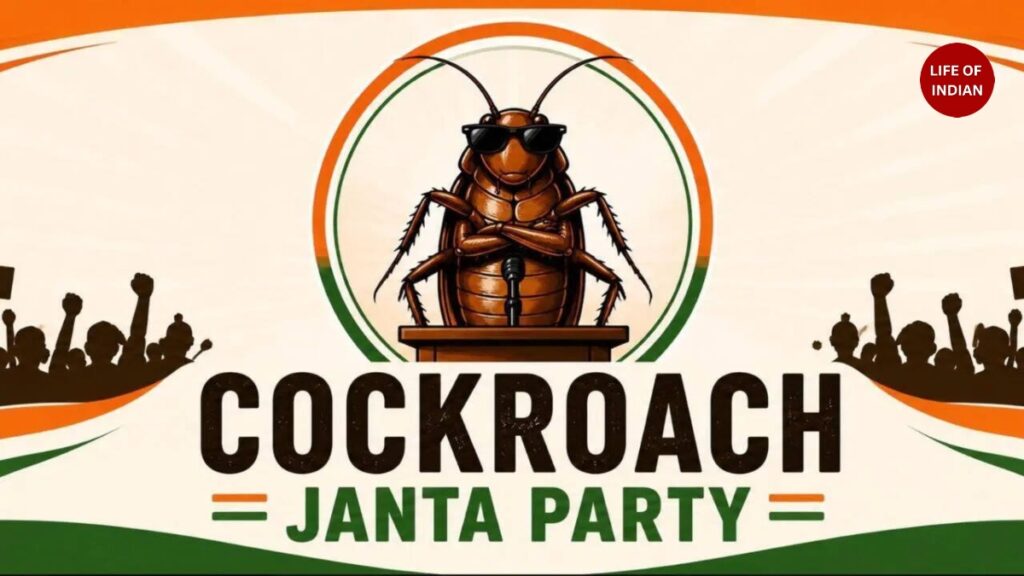
A controversial courtroom remark by India’s Chief Justice has unexpectedly sparked one of the internet’s most unusual political trends. What began as outrage over comments allegedly comparing certain individuals to “cockroaches” and “parasites” has now transformed into a viral satirical movement called the “Cockroach Janta Party” — a parody political front rapidly gaining attention across social media.
Within just 24 hours of its launch on X (formerly Twitter), the unofficial account reportedly crossed 15,000 followers. Soon after, the page claimed that over 40,000 people had joined the movement online. The situation became even more politically charged when senior leaders from All India Trinamool Congress publicly interacted with the page and jokingly expressed their desire to join the so-called party.
The controversy has now opened a wider debate about freedom of expression, media interpretation, youth frustration, satire in Indian politics, and the growing influence of internet-driven political narratives.
What Triggered the Controversy?
The issue began during a recent court hearing involving Surya Kant.
According to remarks widely circulated by sections of the media, the Chief Justice allegedly said:
“There are youngsters like cockroaches, who don’t get any employment or have any place in profession. Some of them become media, some of them become social media, RTI activists and other activists and they start attacking everyone.”
The statement immediately triggered backlash online. Critics argued that the comments appeared insulting toward unemployed youth, activists, and media professionals.
Soon after, social media users began creating memes, parody content, and sarcastic political commentary. Among the most viral responses was the creation of the “Cockroach Janta Party.”
CJI Surya Kant Clarifies His Remarks
As the controversy intensified, Surya Kant issued a clarification two days later, saying his words had been “misquoted” and taken out of context.
According to the clarification, his criticism was not directed at Indian youth in general, but specifically at individuals entering professions through fake qualifications and fraudulent degrees.
He stated:
“What I had specifically criticised were those who have entered professions like the Bar with the aid of fake and bogus degrees. Similar persons have sneaked into the media, social media, and other noble professions as well, and hence, they are like parasites.”
The Chief Justice further emphasized that he deeply respects India’s youth and considers them the foundation of the country’s future.
“It is totally baseless to suggest that I criticised the youth of our nation.”
He also added that Indian youth inspire him and are “the pillars of a developed India.”
Despite the clarification, the online conversation continued to grow rapidly.
What Is the ‘Cockroach Janta Party’?
The “Cockroach Janta Party” (CJP) is not an officially registered political party. Instead, it is a satirical social media account created on X in response to the controversy surrounding the Chief Justice’s remarks.
The account presents itself as:
“A political front of the youth, by the youth, for the youth. Secular – Socialist – Democratic – Lazy.”
The bio itself appears to mock both political language and the original controversy, blending humor with criticism.
What surprised many observers was how quickly the page gained traction online. In a short period, thousands of users began following, reposting, and engaging with its content.
The trend reflects how modern political satire in India is increasingly shaped through memes, irony, and digital activism rather than traditional political platforms.
Mahua Moitra and Kirti Azad Join the Viral Trend
The issue gained further attention after two prominent leaders from All India Trinamool Congress publicly interacted with the satirical account.
Mahua Moitra, known for her sharp criticism of the government and active social media presence, extended support to the parody movement.
Meanwhile, former cricketer-turned-politician Kirti Azad humorously posted:
“I would like to join the cockroach janta party. What are the qualifications required?”
The parody account responded sarcastically:
“Winning the 1983 World Cup is a good enough qualification.”
The exchange quickly went viral, with many users praising the humor while others criticized political leaders for trivializing judicial controversy.
Why the Incident Is Resonating With Youth
The controversy has connected strongly with younger internet users for several reasons.
1. Rising Frustration Among Youth
India continues to face serious concerns related to unemployment and job competition. Many young people interpreted the original remark emotionally, believing it reflected how unemployed youth are often dismissed or mocked.
This emotional reaction helped fuel the rapid spread of satire online.
2. Meme Culture Is Shaping Political Conversations
Indian politics is increasingly influenced by meme culture and viral internet humor.
Instead of long political debates, younger audiences often respond through:
- parody accounts
- sarcastic slogans
- memes
- edited videos
- viral hashtags
The “Cockroach Janta Party” became successful because it transformed outrage into humor — something highly shareable on social media.
3. Distrust of Institutions and Elites
The controversy also reflects a broader trend where sections of the public feel disconnected from powerful institutions and elite conversations.
For some users, the parody page became less about the original remark and more about expressing frustration with:
- unemployment
- elitism
- political language
- public criticism of activists and media
The Role of Social Media in Political Satire
The rise of the “Cockroach Janta Party” once again shows how quickly online narratives can shape national conversations.
In earlier decades, political satire mostly existed through cartoons, comedy shows, or newspaper columns. Today, a single viral social media page can dominate headlines within hours.
Political observers say this reflects a major shift in India’s digital democracy, where:
- memes influence public opinion
- parody pages gain political relevance
- online humor becomes a form of protest
The incident also highlights how social media allows ordinary users to participate directly in political conversations without traditional platforms.
Debate Over Media Reporting
Another major aspect of the controversy is the debate around media reporting.
After the Chief Justice claimed his comments were “misquoted,” discussions began about:
- selective reporting
- sensational headlines
- context removal
- social media amplification
Supporters of the judiciary argue that incomplete reporting distorted the original meaning of the remarks. Critics, however, say public figures must remain cautious while using sensitive language, especially regarding youth and professionals.
This debate has once again raised important questions about responsible journalism in the digital age.
Satire, Politics and Public Sentiment
Political satire has always existed in democracies, but digital platforms have made it faster, sharper, and more influential.
The “Cockroach Janta Party” may be humorous on the surface, but its popularity reveals deeper public emotions surrounding:
- youth unemployment
- political frustration
- freedom of speech
- institutional trust
- online activism
Whether the trend fades quickly or evolves into a larger symbolic movement, it has already demonstrated how a single courtroom remark can unexpectedly trigger a nationwide internet phenomenon.
The controversy surrounding Surya Kant and the rise of the “Cockroach Janta Party” reflects the unique intersection of law, politics, social media, and youth culture in modern India.
What started as a disputed statement soon became a viral symbol of online satire, attracting politicians, activists, and thousands of ordinary users.
For some, the trend represents harmless political humor. For others, it reflects growing dissatisfaction among young citizens who increasingly use memes and parody as tools of expression.
But beyond the jokes and viral posts lies a larger reality: in today’s India, even a single remark can ignite a national conversation within hours — and social media now has the power to transform controversy into a full-fledged digital movement overnight.
FAQ
1. What is the Cockroach Janta Party?
The “Cockroach Janta Party” is an unofficial satirical political account created on X in response to controversy surrounding remarks linked to Surya Kant.
2. Why is Cockroach Janta Party trending?
The page went viral after social media users reacted to comments allegedly comparing certain individuals to “cockroaches” and “parasites” during a court hearing.
3. What did CJI Surya Kant say?
According to media reports, the Chief Justice criticized certain individuals using fake degrees and referred to them as “parasites.” Later, he clarified that his remarks were misquoted and were not directed at Indian youth in general.
4. Did Mahua Moitra join Cockroach Janta Party?
Mahua Moitra publicly interacted with and supported the satirical trend on social media.
5. What did Kirti Azad say about the trend?
Kirti Azad jokingly asked on X what qualifications were required to join the “Cockroach Janta Party,” leading to a viral exchange online.
6. Is Cockroach Janta Party a real political party?
No. It is currently a satirical social media movement and not an officially registered political party in India.