


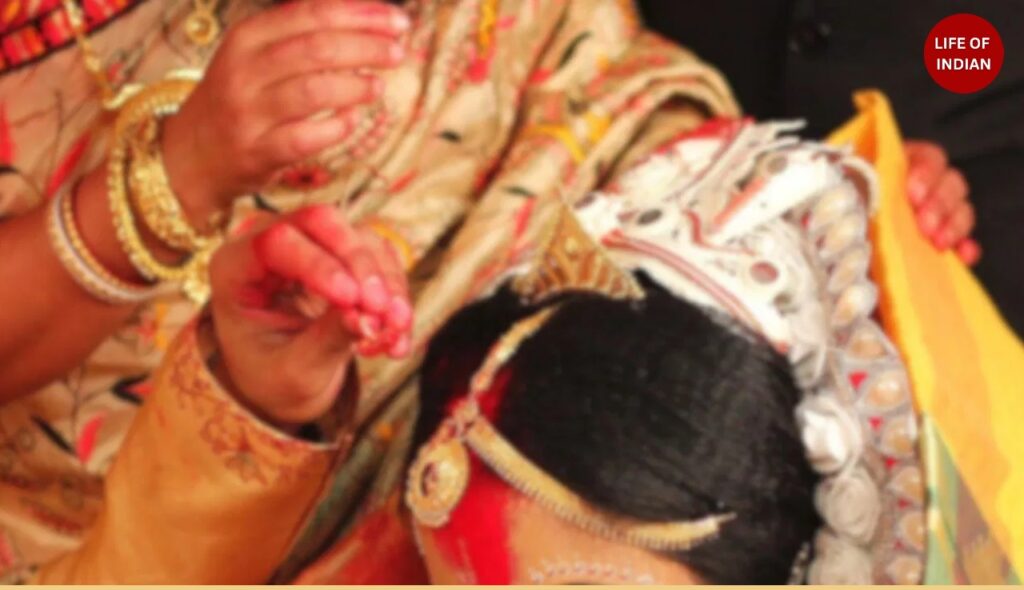
Bhakra Sindoor: Across much of India, sindoor (vermilion) is a potent symbol of married life. In Bihar — especially in many rural and semi-urban communities — a distinctive local practice known as “Bhakra Sindoor” (sometimes heard as Bakhra Sindoor in oral usage) forms an important and visible part of wedding ceremonies and married-women rituals. This article explains what Bhakra Sindoor is, its origins and symbolism, how and when it is applied, regional variations, modern concerns, and what it means socially and spiritually today.
What is Bhakra Sindoor?
Bhakra Sindoor refers to a regional style or ritual of applying sindoor associated with marriage ceremonies in parts of Bihar. While the basic material — vermilion or red-colored powder — is the same as the sindoor used across North India, the term “Bhakra” highlights a particular local custom: the manner, placement, visual pattern or ceremonial moment when sindoor is applied which makes it distinctively Bihari in practice and appearance.
In practice, Bhakra Sindoor may involve:
-
a pronounced, larger application of sindoor along the hair-parting (maang), or
-
a bold dot/mark on the forehead during the wedding ritual, or
-
an accompanying offering/gesture specific to a community’s customs.
(Exact form and name pronunciation can vary across districts and castes; oral tradition is important in preserving the local term.)
Historical and Cultural Roots
Sindoor as a symbol of married womanhood has deep roots in Hindu tradition. Its use is referenced in classical texts and folk practices: applying sindoor in the maang (hair parting) or a small dot on the forehead signals marital status, invokes blessings for husband’s longevity, and marks social identity.
Bhakra Sindoor evolved as a regional expression of these pan-Indian ideas. In Bihar — a land of layered folk cultures, village panchayats and strong oral traditions — wedding rites frequently include extra ceremonial gestures. Over generations, specific patterns of applying sindoor became associated with particular communities and were given local names such as Bhakra.
Religious and Symbolic Meaning
The meanings attached to Bhakra Sindoor are very similar to general sindoor symbolism, but intensified by local ritual context:
-
Marital status and societal recognition: Wearing sindoor publicly announces that a woman is married; Bhakra Sindoor, being visibly pronounced, reinforces that social identity.
-
Blessings for longevity and prosperity: In ritual terms, sindoor is offered for the long life and wellbeing of the husband and the family.
-
Shakti and auspiciousness: The red color is associated with energy (shakti), fertility and auspicious beginnings. Applying Bhakra Sindoor during the wedding consecrates the marriage as a sacred, life-giving union.
-
Community belonging: Local patterns mark membership in a community or caste group, carrying cultural memory and continuity.
Ritual Timing: When Is Bhakra Sindoor Applied?
In Bihar weddings, Bhakra Sindoor is most commonly applied at ceremonial moments that signify marital union:
-
During the main wedding ritual (maangalya dharan / sindoor daan): After or alongside the groom tying the mangalsutra, the sindoor application by the groom — or in some customs, by elders — formalizes the bride’s new status.
-
At the bride’s departure (bidaai): Some families add a symbolic application before the bride leaves her natal home.
-
On post-wedding visits and festivals: During rituals like Suhag visits or certain local festivals, Bhakra Sindoor may be reapplied as a reaffirmation of marital bonds.
The exact sequence differs by community — in some cases local priests, elder women, or the groom perform the application.
How Is Bhakra Sindoor Applied? Materials & Method
Materials: Traditionally, sindoor was made from natural ingredients — turmeric treated with alkaline agents, saffron infusions, or other herbal mixtures that give a deep red hue. Today, commercial vermilion (often synthetic) is most common; in many Bihari ceremonies families use bright, rice-mixed sindoor powders for a strong visual effect.
Method:
-
A liberal streak is stroked along the hair-parting (maang), sometimes thicker than in everyday application.
-
In some local variants, a large crimson dot is placed on the forehead (tilak style) and then the maang is filled.
-
It may be pressed in with a finger tipped with oil or ghee to make the color shine and last longer.
-
For photo-friendly rituals, families choose vivid, long-lasting sindoor to create a striking ceremonial appearance.
Regional Variations within Bihar
Bihar is culturally diverse; customs explain local variation:
-
Maithil and Bhojpuri practices: Certain Maithil communities emphasize elaborate sindoor daan rites; in Bhojpuri areas, the sindoor application is often dramatic and accompanied by songs.
-
Caste-linked patterns: Specific communities have distinctive sindoor markings or combined rites (for example, adding turmeric, vermilion, and sindoor rice).
-
Urban vs rural: Urban couples may follow a simplified or symbolic application, while rural ceremonies often keep the more elaborate Bhakra forms.
Social Significance: Beyond Ritual
Bhakra Sindoor reinforces social bonds and gendered rituals. For many families it is a visible affirmation of honour, respectability and continuity. Elder women often teach younger women the correct way to wear sindoor, making it a carrier of matrilineal knowledge and cultural identity.
At the same time, sindoor practices reflect social expectations placed on married women. Contemporary discussions around autonomy and gender roles have prompted rethinking — some urban women choose to wear sindoor as a personal symbol, while others reject it as a mandatory social marker.
Health & Safety Considerations
Traditional natural sindoor had fewer health concerns, but many commercial sindoor powders today may contain synthetic dyes, heavy metals or lead, which can irritate the skin or be toxic with prolonged exposure. Practical suggestions:
-
Prefer natural/organic sindoor or brands that list safe ingredients.
-
Avoid inhaling powder; press gently rather than rubbing aggressively.
-
Test a small patch for allergic reaction before ceremonial use.
-
For long-term wear, use sindoor oils or safer formulations advised by dermatologists.
Contemporary Trends & Adaptations
In modern Bihar, Bhakra Sindoor remains culturally significant but adapts to changing tastes. Photogenic, deep-red sindoor is often combined with bridal makeup for wedding photography; eco-friendly and herbal products are gaining popularity; and younger generations sometimes reinterpret the symbol as part of personal choice rather than obligation.
Social media and wedding planners have also standardized certain visual elements, so what was once a purely local pattern may now be styled for pan-Indian audiences while still retaining its regional flavour.
Bhakra Sindoor is a vivid example of how a pan-Indian symbol — the sindoor — takes on a distinct local life in Bihar. It blends ritual meaning (marriage, auspiciousness, protection) with cultural markers of identity and community. As traditions evolve, Bhakra Sindoor continues to represent both continuity and change: it is a timeless emblem of marital blessings and social belonging, even as choices about its use become increasingly personal and health-conscious.