
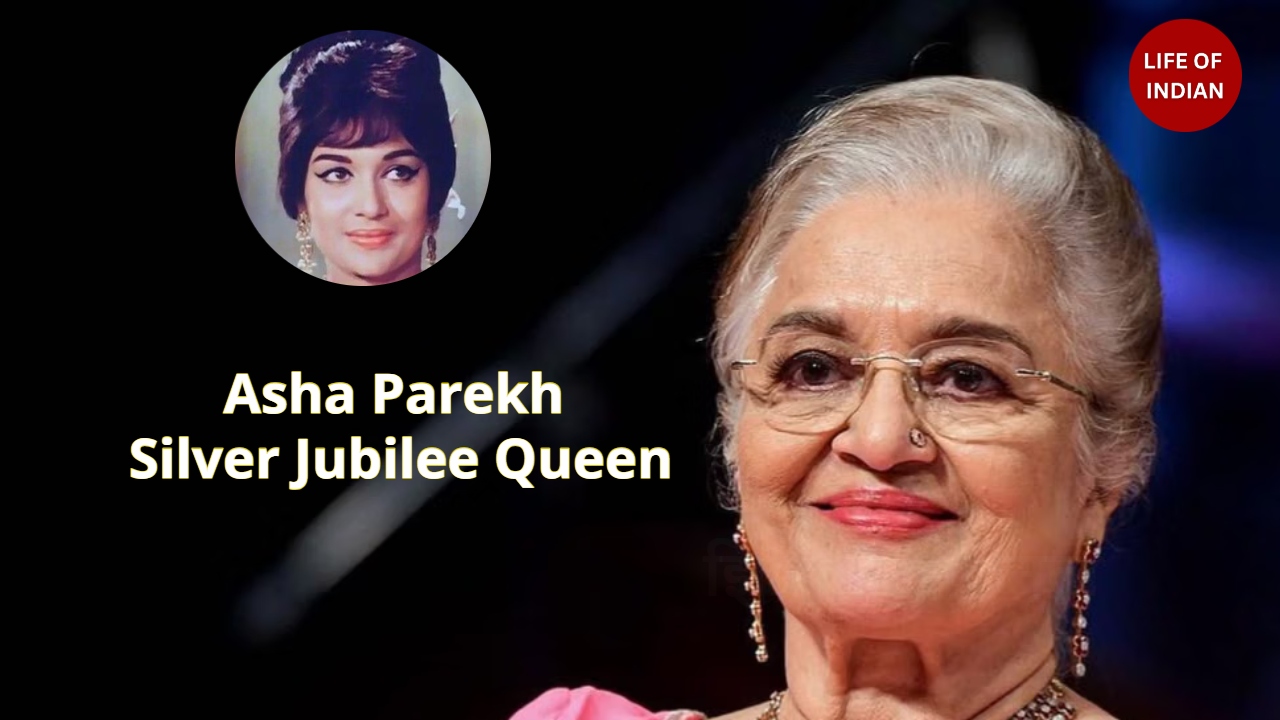
Asha Parekh Birthday Special 2025: Today, October 2, marks the birthday of one of Bollywood’s most cherished icons—Asha Parekh, often called the Silver Jubilee Queen. Born in 1942, her career spans over four decades, and she remains a symbol of grace, talent, and dedication in Indian cinema. Let’s explore her life story, her milestones, and the legacy she has built.
Early Life & Entry into Cinema
-
Date of Birth & Family
Asha Parekh was born on October 2, 1942, in Bombay (now Mumbai), into a Gujarati family. Her father, Bachubhai Parekh, was a Jain, and her mother, Sudha Parekh, was Muslim. She grew up as an only child. -
Childhood Training & Early Performances
From a young age, Asha trained in classical Indian dance. Her talent was noticed early—she began performing on stages, which eventually led to her being cast as a child artist. -
Film Debut
Her acting debut was in the 1952 film Maa, when she was just 10 years old. After a few child roles, she took a brief break for schooling before returning with full force.
Rise to Stardom: The Silver Jubilee Phase
-
Lead Actress
She made her adult lead debut with Dil Deke Dekho in 1959. From the early 1960s through the 1970s, she starred in over 100 films. Some of her memorable hits include Jab Pyar Kisi Se Hota Hai (1961), Teesri Manzil (1966), Do Badan (1966), Love in Tokyo (1966), Kati Patang (1970), Mera Gaon Mera Desh (1971), Caravan (1971), Main Tulsi Tere Aangan Ki (1978), among others. -
Box Office Success & “Silver Jubilee” Reputation
Her nickname “Silver Jubilee Girl” came from her streak of hits that celebrated long runs in theaters (silver jubilees), marking them as both critical and commercial successes. She was one of the highest-paid actresses during her peak years (late 1960s to early 70s).
Style, Versatility & Notable Roles
-
Asha Parekh was well-known for her dancing skills, fashion, expressive acting, and ability to play both romantic and dramatic roles.
-
Her role in Kati Patang (1970) won her a Filmfare Best Actress Award, and it remains one of her most celebrated performances.
-
She also delivered strong performances in mainstream musicals and dramatic films alike. Her collaboration with major filmmakers and actors of the time helped define the “Golden Era” of Bollywood.
Beyond Acting: Production, Television & Leadership
-
In the later part of her career, she shifted to roles behind the camera—producing and directing TV serials under her production house Akruti.
-
She also served as President of CINTAA (Cine & TV Artistes’ Association) from 1994–2000.
-
From 1998–2001, she became the first female Chairperson of the Central Board of Film Certification (CBFC), pushing for reforms in film certification.
Personal Life & Choices
-
Asha Parekh has remained unmarried. Among the reasons she has mentioned are respecting family commitments and maintaining personal dignity.
-
She once shared a long and meaningful relationship with filmmaker Nasir Hussain but didn’t marry him out of respect for their families. This has been mentioned in her autobiography The Hit Girl.
-
After leaving mainstream acting, she faced challenges including depression but turned to spirituality and philanthropy for solace. Her friendships with contemporaries like Waheeda Rehman, Helen, and others played a key role in her emotional wellbeing.
Honors, Awards & Legacy
-
Padma Shri (1992)—one of India’s civilian honors—for her contribution to cinema.
-
Dadasaheb Phalke Award (2020)—India’s highest honor in cinema.
-
Filmfare Lifetime Achievement Award (2002)—in recognition of her decades of achievements.
-
Besides acting, she is admired for her resilience, moral character, and dedication to preserving dignity and self-respect. She is an inspiration to many young actors, especially women, as someone who made unconventional choices with grace.
Asha Parekh’s journey from a child artist in Maa to becoming Bollywood’s Silver Jubilee Queen is a story of talent, perseverance, and grace. She didn’t just entertain; she set standards in professionalism, integrity, and personal strength. On her birthday, we celebrate not just the actress but the person whose legacy transcends screens—whose life remains a lesson in dignity, hard work, and authenticity.
About the Author


