
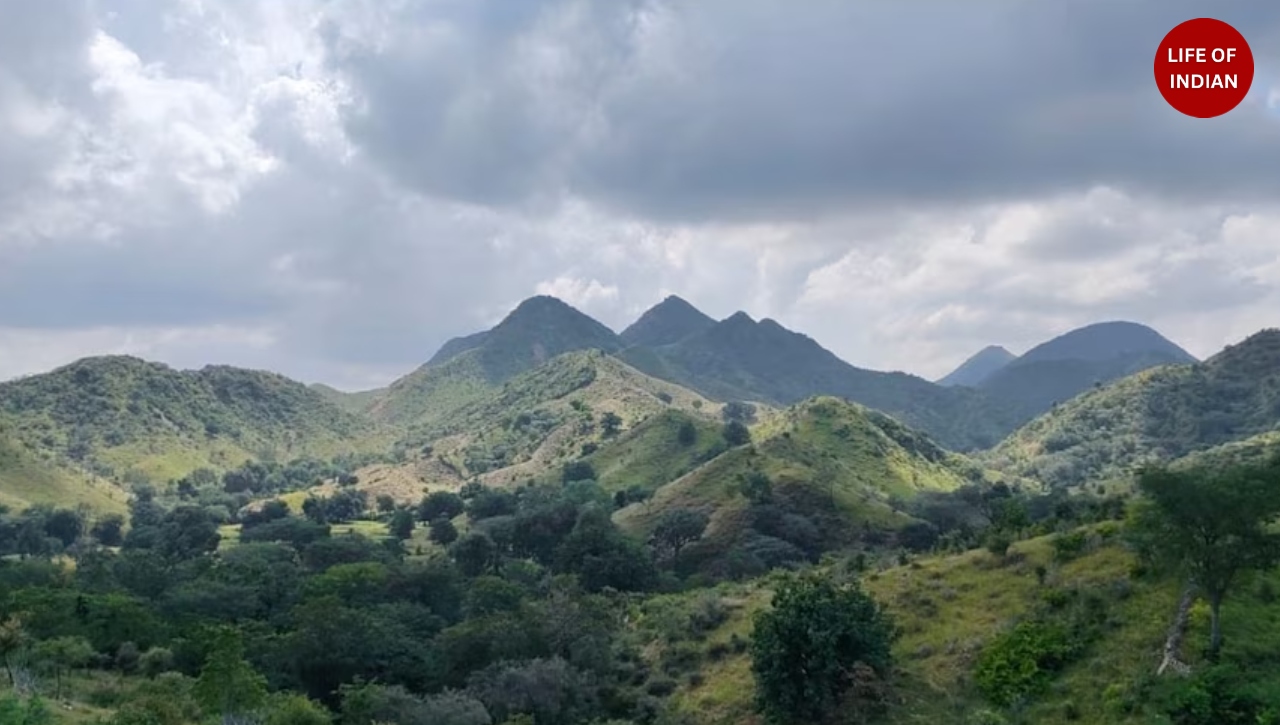
Aravalli Hills: The Aravalli Hills are not just a geographical feature of India but a living archive of the subcontinent’s geological, cultural, and environmental history. Stretching across northwestern India, the Aravalli Range is considered one of the oldest mountain systems in the world, older than the Himalayas by hundreds of millions of years. From shaping ancient civilizations to influencing India’s climate and ecology, the Aravallis have played a silent yet decisive role in the country’s evolution.
Geological Origin: Among the Oldest on Earth
The Aravalli mountain range dates back approximately 3.2 to 2.5 billion years, originating during the Archaean and Proterozoic eras. Geologists believe the range was formed through tectonic plate collisions and volcanic activity, long before modern continents took shape.
Unlike young fold mountains like the Himalayas, the Aravallis are highly eroded, which explains their comparatively low height today. Over billions of years, wind, water, and temperature variations wore them down, leaving behind rounded hills, rocky ridges, and isolated peaks.
The rocks found in the Aravallis—including gneiss, schist, marble, quartzite, and granite—are among the oldest known rock formations in India.

Geographic Spread and Physical Features
The Aravalli Range runs for about 800 kilometers, starting from near Delhi, passing through Haryana, Rajasthan, and ending in Gujarat. It acts as a natural divide between the Thar Desert to the west and the fertile plains of eastern Rajasthan.
Key physical features include:
-
Rocky hills and ridges
-
Isolated peaks like Guru Shikhar, the highest point (1,722 meters)
-
Narrow valleys and seasonal rivers
-
Ancient mineral belts
The range plays a crucial role in groundwater recharge, as its fractured rocks allow rainwater to seep underground.
Role in Ancient Civilizations
Archaeological evidence suggests that human settlements existed in and around the Aravalli region as early as the Indus Valley Civilization. The hills provided:
-
Natural protection
-
Access to stone and metals
-
Forest resources
-
Water from seasonal streams
Copper mining sites found in parts of Rajasthan indicate that the Aravallis were an important metallurgical hub in ancient times. Tools, weapons, and ornaments made from Aravalli minerals have been found at multiple archaeological sites.
Aravallis in Indian History
Throughout Indian history, the Aravalli Hills served as a natural defense barrier. Several powerful kingdoms, including the Rajputs, used the rugged terrain to build forts and strongholds.
Historic forts such as:
-
Kumbhalgarh
-
Ranthambore
-
Chittorgarh
were strategically located near or within the Aravalli region. These forts controlled trade routes and provided military advantage during invasions.
The hills also acted as a buffer against desert expansion, preventing the Thar Desert from moving eastward.
Cultural and Religious Significance
The Aravalli region is deeply woven into India’s cultural fabric. Many hills, forests, and caves are associated with ancient temples, sages, and tribal traditions.
Local communities have long considered the hills sacred, practicing sustainable lifestyles that respected forests, wildlife, and water sources. Folk traditions, legends, and oral histories passed down generations reflect a deep emotional bond with the land.
Ecological Importance
Ecologically, the Aravalli Hills are invaluable. They support dry deciduous forests, grasslands, and scrub vegetation, which sustain diverse wildlife, including leopards, hyenas, jackals, and hundreds of bird species.
Environmental functions include:
-
Regulating climate
-
Preventing desertification
-
Improving air quality
-
Recharging aquifers
-
Supporting biodiversity
For cities like Delhi, the Aravallis act as a natural green lung, helping reduce dust storms and extreme temperatures.
Colonial Era and Modern Exploitation
During the British colonial period, the Aravallis were extensively mined for marble, limestone, copper, and zinc. While mining boosted economic activity, it also caused severe ecological damage.
Post-independence, unregulated mining and urban expansion further degraded large sections of the range. Forest cover declined sharply, leading to:
-
Water scarcity
-
Soil erosion
-
Loss of wildlife
-
Rising temperatures
Environmental Challenges Today
Today, the Aravalli Hills face serious threats:
-
Illegal mining
-
Deforestation
-
Encroachment
-
Infrastructure projects
-
Climate change
Environmentalists warn that continued destruction could lead to irreversible ecological collapse, worsening air pollution and accelerating desert spread.
Several court orders and government initiatives now aim to protect the range, but enforcement remains inconsistent.
Conservation Efforts and the Road Ahead
Recognizing their importance, conservation efforts have intensified in recent years. Reforestation drives, wildlife corridors, and legal protections are being implemented in parts of the Aravallis.
Experts stress that saving the Aravalli Hills is not just about preserving history — it is about India’s environmental security and future sustainability.
The Aravalli Hills are far more than ancient rocks. They are a testament to Earth’s deep history, a cradle of civilizations, a guardian of ecosystems, and a silent protector against climate extremes.
Preserving this ancient mountain range is not optional — it is essential. The story of the Aravallis is, in many ways, the story of India itself: ancient, resilient, and deeply connected to the land.