


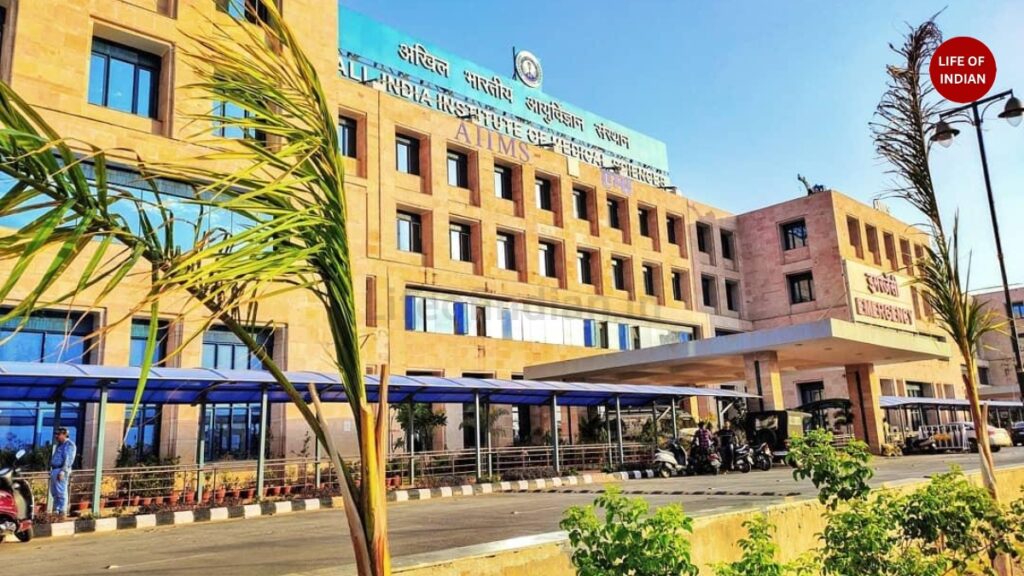
When it comes to high-quality and affordable medical treatment in India, the name All India Institute of Medical Sciences (AIIMS) is often the first that comes to mind. Known for advanced healthcare services, experienced doctors, and cutting-edge research, AIIMS institutions have become a lifeline for millions of patients across the country.
While many people associate AIIMS only with Delhi, the reality is far broader. Today, India has a growing network of AIIMS hospitals that provide world-class treatment at minimal cost, making quality healthcare accessible beyond the capital.
The Legacy of AIIMS Delhi
Established in 1956, AIIMS Delhi is the oldest and most renowned institution among all AIIMS hospitals. It is widely recognized not just in India but globally for its excellence in medical education, research, and patient care.
Every year, lakhs of patients from across the country travel to Delhi seeking treatment here. From super-specialty care to complex surgeries and advanced diagnostics, AIIMS Delhi has set a benchmark in public healthcare. Its affordability combined with high standards makes it one of the most trusted hospitals in the world.
Expansion of AIIMS Across India
Over the years, the Government of India has expanded the AIIMS network to ensure that people do not have to travel long distances for quality treatment. Today, around 20 AIIMS institutions are operational across different regions of the country.
In Central India, hospitals like AIIMS Bhopal, AIIMS Raipur, and AIIMS Nagpur are providing advanced medical services, including cardiology, neurology, and trauma care.
In Eastern India, institutions such as AIIMS Bhubaneswar, AIIMS Patna, and AIIMS Kalyani are helping millions access modern healthcare with skilled doctors and advanced equipment.
Northern India also has several well-equipped AIIMS centers, including AIIMS Rishikesh, AIIMS Gorakhpur, AIIMS Jodhpur, AIIMS Bathinda, and AIIMS Raebareli. These hospitals are especially beneficial for people living in rural and remote areas.
Growth in Southern, Western, and Northeastern Regions
The expansion of AIIMS is not limited to a few regions. In South and West India, institutions like AIIMS Mangalagiri, AIIMS Bibinagar, and AIIMS Rajkot are strengthening healthcare access.
Additionally, newer institutions such as AIIMS Bilaspur, AIIMS Vijaypur, AIIMS Guwahati, and AIIMS Deoghar are expanding quality treatment facilities to previously underserved regions.
Even AIIMS Madurai is becoming operational, further strengthening the healthcare network in the country.
AIIMS Under Construction: What Lies Ahead
India is continuously working to improve healthcare accessibility. Currently, several new AIIMS institutions are under construction, including projects in Darbhanga (Bihar), Rewari and Manethi (Haryana), Awantipora (Jammu & Kashmir), and Manipur.
Once completed, the total number of AIIMS institutions in India will rise significantly, ensuring that even more citizens can access affordable and advanced treatment within their own states.
Why AIIMS Matters for India
The expansion of AIIMS hospitals represents more than just infrastructure—it reflects a commitment to equitable healthcare. Earlier, patients had to travel to Delhi for specialized treatment, often facing long waiting times and logistical challenges.
Today, with multiple AIIMS institutions across India, people can receive high-quality care closer to home. This not only reduces the burden on AIIMS Delhi but also ensures timely treatment for patients nationwide.
AIIMS has transformed India’s public healthcare system by making world-class treatment accessible and affordable. While AIIMS Delhi remains the most prestigious, the growing network of AIIMS hospitals across the country is bridging the gap between demand and availability of quality healthcare.
For millions of Indians, AIIMS is not just a hospital—it is a symbol of hope, trust, and life-saving care.