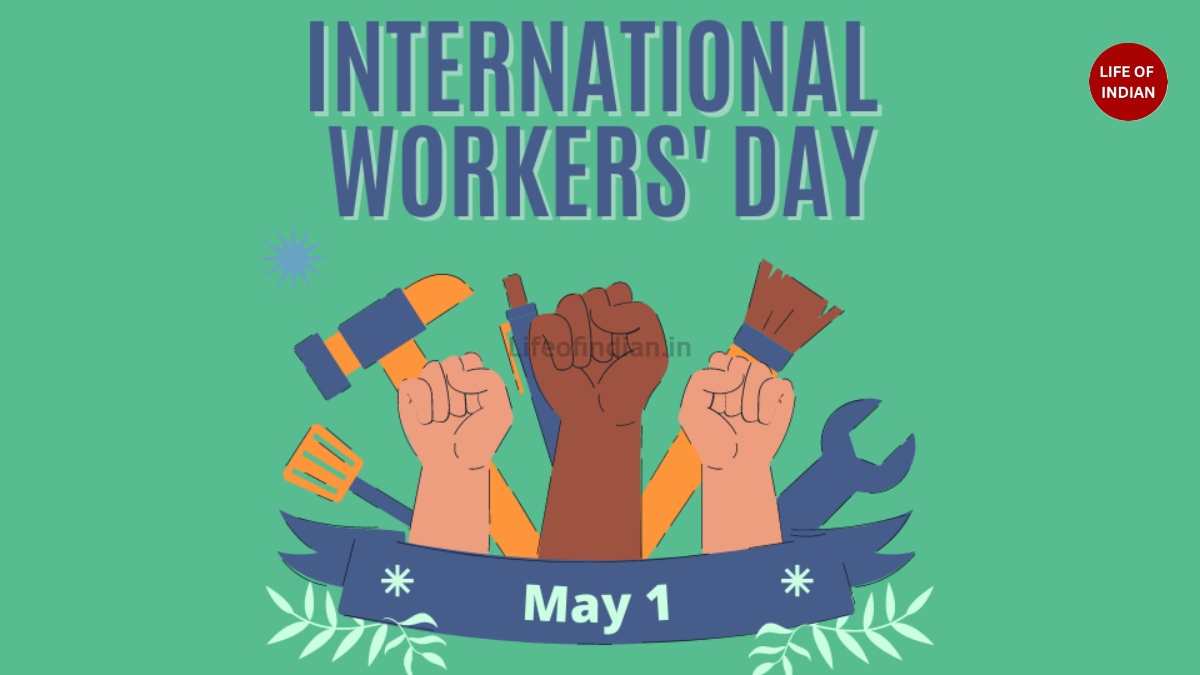
There are days we celebrate with joy, and then there are days we observe with gratitude. International Workers Day is one such day—a day that reminds us of the invisible strength behind everything we see around us.
From the buildings we live in to the roads we travel, from factories to farms—every part of our daily life exists because of the hard work of millions of workers. Yet, their struggles, sacrifices, and contributions are often taken for granted. Labor Day is not just a holiday. It is a reminder of a time when workers had to fight—not for luxury, but for dignity.
A Time When Workers Had No Rights
To understand International Workers’ Day, we must go back to the 19th century, during the rise of industrialization.
Factories were growing rapidly, but workers were suffering silently. They worked for 10 to 16 hours a day, often in unsafe conditions, with very low wages. There were no fixed working hours, no safety rules, and no job security. Even children were made to work in factories. Workers were treated as replaceable parts of machines—not as human beings. But slowly, this began to change.
The Movement That Changed Everything
In the late 1800s, workers across the world started demanding better conditions. Their main demand was simple yet powerful:
“8 hours work, 8 hours rest, 8 hours for ourselves.”
This movement gained momentum in the United States. On May 1, 1886, thousands of workers went on strike, demanding an 8-hour workday. The protests continued for days, leading to a tragic event known as the Haymarket Affair in Chicago, where violence broke out between workers and police.
Though the protest ended in tragedy, it became a turning point in history. It brought global attention to workers’ rights and became the foundation of Labor Day.
Why 1 May Became Labour Day
After the events of 1886, workers’ movements spread across countries. In 1889, an international organization of socialist and labor groups declared May 1st as International Workers’ Day to honor the struggle of workers and their fight for fair rights.
Since then, 1 May is observed globally as Labour Day, also known as International Workers’ Day. It is a day that belongs not to one country, but to workers everywhere.
Labor Day in India: A Step Towards Worker Rights
In India, Labor Day was first celebrated in 1923 in Chennai, organized by labor leader Singaravelu Chettiar.
At that time, workers in India were also facing harsh conditions, especially under colonial rule. The celebration of Labor Day marked the beginning of organized efforts to improve worker rights in the country.
Over time, laws were introduced to ensure the following:
- Fixed working hours
- Minimum wages
- Safer working conditions
- Protection against exploitation
Today, Labor Day in India is a symbol of respect for workers across industries—whether they are factory workers, farmers, daily wage laborers, or professionals.
More Than a Holiday: The Meaning of Labour Day Today
For many people, Labor Day is just a day off. But its meaning goes much deeper.
It is a day to:
- Recognize the value of hard work
- Respect those who build and support society
- Remember the struggles that gave workers their rights
Every right that workers have today—fixed hours, weekends, safety rules—came after years of struggle and sacrifice.
Labor Day reminds us that these rights were not given easily.
The Workers We Often Forget
When we think of workers, we often imagine factory employees or construction laborers. But the truth is every profession involves labor.
- The farmer growing food
- The delivery person bringing essentials
- The cleaner maintaining hygiene
- The driver ensuring transportation
These are the people who keep life moving. Yet, they are often the least recognized. Labor Day gives us a chance to acknowledge them—not just in words, but in respect and understanding.
The Challenges That Still Exist
Despite all the progress, many workers around the world still face challenges.
Issues like:
- Low wages
- Unsafe working conditions
- Job insecurity
- Lack of social protection
still exist in many places. Labor Day is not just about celebrating progress—it is also about recognizing what still needs to change.
The Emotional Truth Behind Labour Day
If you look closely, Labor Day is not about history—it is about people.
It is about the father working long hours to support his family.
It is about the mother balancing work and home.
It is about the worker who continues despite challenges.
It is about effort, resilience, and hope. And perhaps that is why this day matters. Because behind every achievement, there is someone working silently.
Day of Respect and Awareness
Labor Day is more than a date on the calendar. It is a reminder that every comfort we enjoy today is built on someone’s hard work. It teaches us to respect labor—not just as a concept, but as a human effort. In a world that often celebrates success, Labor Day asks us to appreciate the journey behind it. Because progress is not made by machines alone—it is made by people.
FAQ
Q1. Why is Labor Day celebrated on 1 May?
Labor Day is celebrated on 1 May to honor the workers’ movement, especially the 1886 Chicago protests demanding an 8-hour workday.
Q2. What is the significance of Labor Day?
Labor Day recognizes the contributions of workers and reminds us of the struggles that led to fair wages, working hours, and rights.
Q3. When was Labor Day first celebrated in India?
Labor Day was first celebrated in India in 1923 in Chennai by labor leader Singaravelu Chettiar.
Q4. What was the main demand of workers during the labor movement?
The main demand was an 8-hour workday, along with better wages and safer working conditions.
Q5. Is Labor Day just a holiday?
No, Labor Day is not just a holiday. It is a reminder of workers’ rights, dignity, and the importance of fair working conditions.