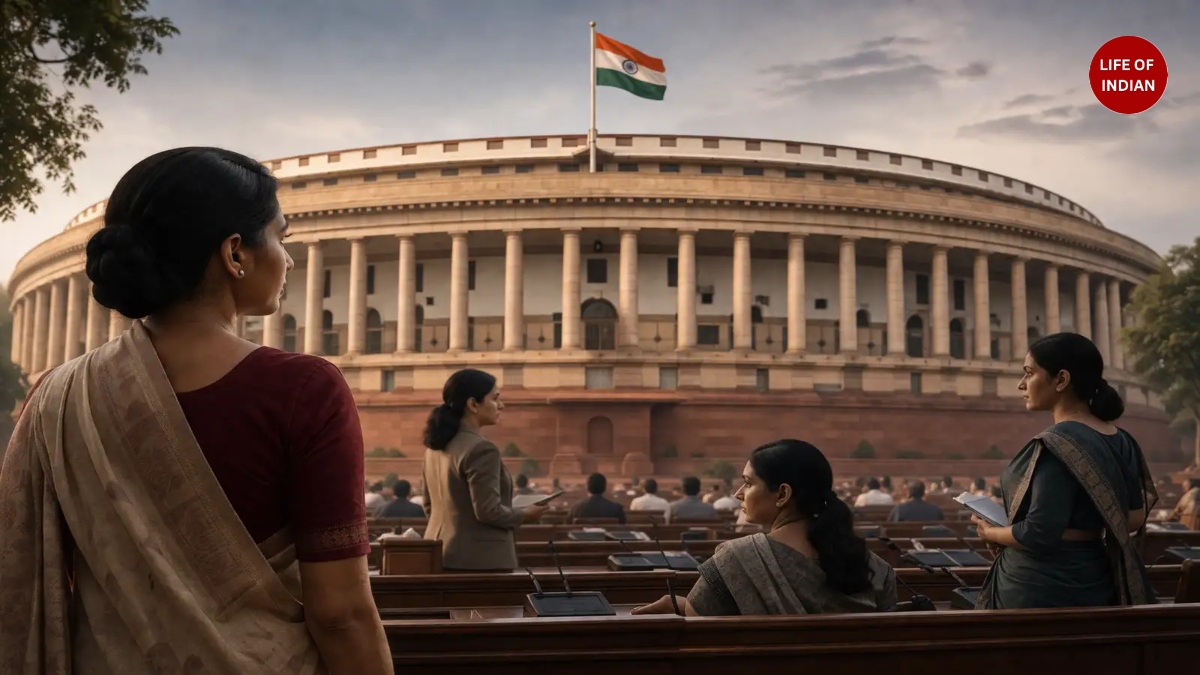
Women Reservation Bill 2026 Explained: India’s democratic system has always aimed to ensure equality, but representation of women in politics has remained limited. To address this gap, the Women Reservation Bill—popularly known as Nari Shakti Vandan Adhiniyam—was introduced as a historic step toward empowering women in governance.
In recent times, this bill has once again come into sharp focus, making headlines across the country due to political developments and debates around its implementation.
International Women’s Day 2026: Meaning of Purple, White and Green Colours Explained
What is the Women Reservation Bill?
The Women Reservation Bill is a constitutional amendment that aims to reserve 33% seats for women in:
- Lok Sabha
- State Legislative Assemblies
- Delhi Assembly
This provision was formally passed through the 106th Constitutional Amendment Act, 2023, marking a major milestone in Indian political history.
The goal of the bill is to increase women’s participation in law-making bodies, where their representation has historically been very low.
Key Features of the Bill
One of the most important aspects of the law is that it proposes one-third reservation for women seats, which will be rotational in nature—meaning seats will change after each delimitation.
Another critical provision is that the implementation of this reservation is linked to the next Census and delimitation exercise, which has delayed its actual enforcement.
This means that even though the bill has been passed, its full implementation may take time.
History of the Women Reservation Bill
The idea of reserving seats for women in Parliament is not new. It has been debated for nearly three decades:
- First introduced in 1996
- Passed in Rajya Sabha in 2010 but lapsed later
- Finally passed in 2023 after years of political discussion and consensus
The long delay reflects the complexity of Indian politics and the challenges of achieving agreement across parties.
Why is the Women Reservation Bill Important?
India has a large female population, yet their representation in Parliament remains relatively low—around 14–15% in Lok Sabha.
The bill aims to:
- Ensure gender equality in politics
- Increase women’s participation in decision-making
- Strengthen democracy by making it more inclusive
Experts believe that more women in leadership roles can bring better focus on issues like education, healthcare, and social justice.
Why is the Bill in News (2026)?
The Women Reservation Bill is currently in the news due to major political developments in April 2026:
- A new amendment (131st Constitutional Amendment Bill, 2026) was introduced to implement women’s reservation faster.
- However, this bill failed to pass in Lok Sabha due to lack of required majority.
- The debate became controversial because the government linked women’s reservation with delimitation (seat redistribution).
- Opposition parties supported reservation but opposed linking it with delimitation and census issues.
This political clash has made the issue a major national debate once again.
Key Controversies Around the Bill
Despite its positive intent, the bill has sparked several debates:
1. Delay in Implementation
Since it depends on census and delimitation, critics say it may take years to actually come into effect.
2. Delimitation Issue
Linking the bill with delimitation has raised concerns about political representation and regional imbalance.
3. Demand for OBC Reservation
Some political parties demand separate quota for OBC women, which is not included in the current bill.
Impact on Indian Politics
If implemented, the Women Reservation Bill could bring a major transformation in Indian politics:
- Around one-third of MPs and MLAs would be women
- Political parties would need to promote more female candidates
- Governance could become more inclusive and balanced
It is often described as a historic reform for gender equality in India.
The Women Reservation Bill represents a significant step toward building a more inclusive and equal democracy in India. While the law has been passed, its implementation remains a subject of political debate and procedural delays.
The current developments in 2026 show that while there is broad agreement on women’s empowerment, the path to achieving it is still complex and contested.
Ultimately, the success of this bill will depend not just on legislation, but on political will and timely execution.
FAQ
1. What is the Women Reservation Bill in India?
The Women Reservation Bill, officially known as the Nari Shakti Vandan Adhiniyam, is a constitutional amendment that aims to reserve 33% seats for women in the Lok Sabha and State Legislative Assemblies.
2. When was the Women Reservation Bill passed?
The bill was passed in 2023 as the 106th Constitutional Amendment after being pending for nearly three decades.
3. Why is the Women Reservation Bill in news in 2026?
The bill is in news due to ongoing political debates about its implementation timeline, especially its linkage with census and delimitation, and a recent attempt to fast-track it through a new amendment.
4. What is delimitation and why is it linked to the bill?
Delimitation is the process of redrawing electoral constituencies. The implementation of women’s reservation will happen only after this process, which has raised concerns about delays.
5. What are the benefits of the Women Reservation Bill?
The bill aims to increase women’s participation in politics, ensure gender equality, and make governance more inclusive and balanced.
6. What are the main controversies around the bill?
The key issues include delay in implementation, linkage with delimitation, and demand for a separate quota for OBC women.
7. Is the Women Reservation Bill implemented yet?
No, the bill has been passed but not fully implemented yet, as it depends on the completion of census and delimitation processes.