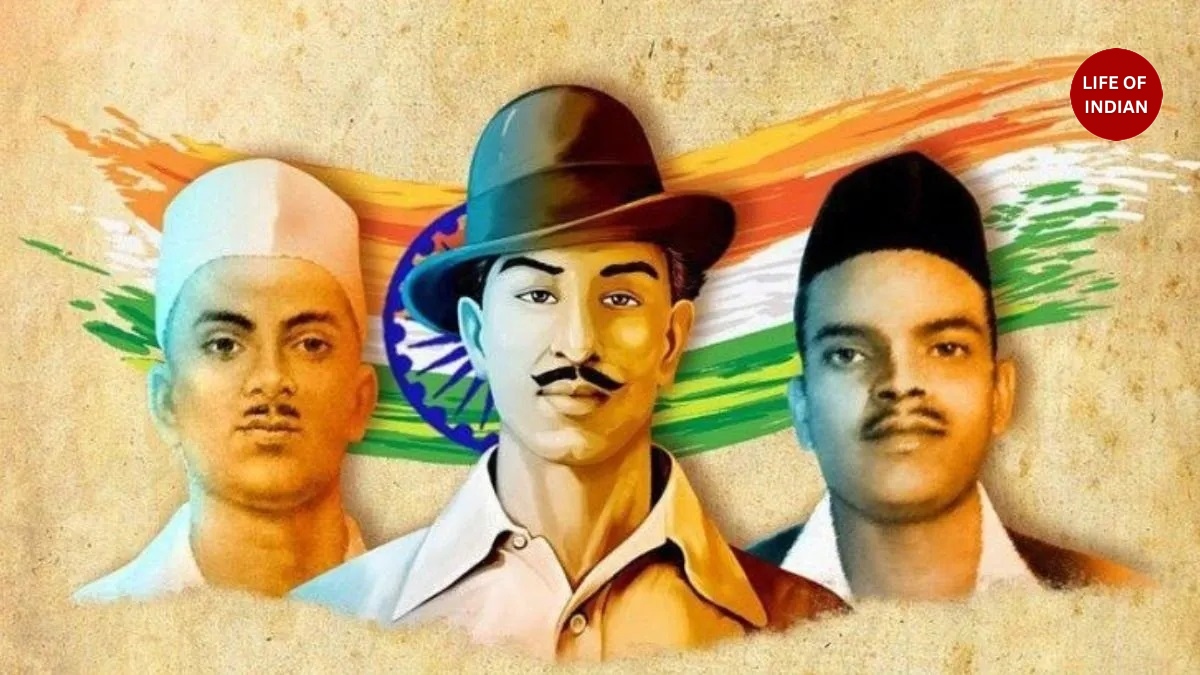
Shaheed Diwas: Every year on 23 March, India observes Shaheed Diwas to remember the courage, sacrifice, and patriotism of three young revolutionaries who shook the British Empire and inspired millions of Indians to fight for freedom. The day marks the martyrdom of Bhagat Singh, Rajguru, and Sukhdev, who were executed by the British government in 1931 for their revolutionary activities against colonial rule.
Shaheed Diwas is not just a date in history; it is an emotional reminder of the price of freedom. These young men were in their early twenties when they sacrificed their lives for the country. They did not fight for personal gain or power; they fought for a free India, a nation where people could live with dignity and self-respect.
Their sacrifice continues to inspire generations, reminding us that freedom was earned through courage, determination, and unimaginable sacrifice.
What is Shaheed Diwas?
Shaheed Diwas, also known as Martyrs’ Day, is observed in India on 23 March to honor the martyrdom of Bhagat Singh, Rajguru, and Sukhdev. On this day in 1931, the British colonial government executed the three revolutionaries in Lahore Central Jail.
The day is dedicated to remembering all freedom fighters who sacrificed their lives for India’s independence, but it especially highlights the bravery and revolutionary spirit of these three heroes.
Across India, people pay tribute by organizing memorial events, educational programs, patriotic gatherings, and cultural activities to remember their contribution to the freedom struggle.
Why 23 March is Observed as Shaheed Diwas
On 23 March 1931, Bhagat Singh, Rajguru, and Sukhdev were hanged by the British authorities in Lahore (now in Pakistan). Their execution was carried out secretly in the evening, ahead of the scheduled date, to avoid public outrage and protests.
The British government feared massive protests and rebellion if the execution was delayed or publicly conducted. Therefore, the hanging was carried out quietly, and their bodies were secretly taken to the banks of the Sutlej River and cremated.
However, local villagers discovered the partially burned bodies and informed people, which led to widespread anger and protests across India.
This incident turned the three revolutionaries into national heroes and strengthened the freedom movement.
British Rule and the Background of the Freedom Movement
During the early 20th century, India was under British colonial rule, and people were suffering due to oppressive laws, economic exploitation, and lack of basic rights.
The British government controlled:
- Indian economy
- Political system
- Administration
- Resources
- Civil liberties
Peaceful protests were often suppressed with violence. One of the most shocking incidents was the Jallianwala Bagh Massacre in 1919, where British troops killed hundreds of unarmed Indians.
This incident deeply affected young revolutionaries like Bhagat Singh and pushed them toward revolutionary action against British rule.
Bhagat Singh: The Revolutionary Thinker
Bhagat Singh was born on 28 September 1907 in Banga village (now in Pakistan) in a patriotic Sikh family. His family was actively involved in the freedom struggle, which influenced his thinking from a young age.
As a child, he was deeply affected by the Jallianwala Bagh Massacre and decided to dedicate his life to India’s independence. He was not just a revolutionary but also a thinker, writer, and intellectual who believed in freedom, equality, and social justice. Bhagat Singh joined revolutionary organizations and became a member of the Hindustan Socialist Republican Association, which aimed to overthrow British rule and establish a free and just society. He believed that revolution was not just about violence but about awakening people’s minds and challenging injustice.
Rajguru and Sukhdev: The Brave Companions
Shivaram Rajguru was born in Maharashtra and was known for his bravery and shooting skills. He was a committed revolutionary who believed in direct action against British oppression. Sukhdev Thapar, born in Punjab, was a close associate of Bhagat Singh and played a key role in organizing revolutionary activities. Together, these three young men formed a strong revolutionary team dedicated to India’s freedom. Their unity, courage, and determination made them symbols of resistance against British rule.
Lahore Conspiracy Case and the Saunders Assassination
In 1928, British officer James A. Scott ordered a brutal lathi charge during protests against the Simon Commission, which led to the death of Indian leader Lala Lajpat Rai. To avenge his death, Bhagat Singh, Rajguru, and Sukhdev planned to assassinate Scott. However, due to mistaken identity, they killed British officer J.P. Saunders instead. This incident became known as the Lahore Conspiracy Case. After the assassination, the revolutionaries went underground but continued their activities.
Central Legislative Assembly Bombing
In 1929, Bhagat Singh and Batukeshwar Dutt threw non-lethal bombs in the Central Legislative Assembly in Delhi. The purpose was not to kill anyone but to protest against oppressive British laws and make their voices heard. This incident is known as the Central Legislative Assembly Bombing.
After throwing the bombs, they shouted slogans:
“Inquilab Zindabad”
“Down with British Imperialism”
They deliberately surrendered to spread their message through the court and media.
Trial and Execution
Bhagat Singh, Rajguru, and Sukhdev were arrested and put on trial. The British government charged them with murder and conspiracy against the empire. Despite public protests and appeals for mercy, the British court sentenced them to death. People across India demanded clemency, but the British government refused. Finally, on 23 March 1931, the three revolutionaries were executed.
The Last Night in Jail
According to historical records, Bhagat Singh was calm and fearless on his last day. He was reading a book by Lenin when the jail authorities came to take him for execution. Instead of fear, he smiled and walked toward the gallows with courage. It is said that the three revolutionaries shouted “Inquilab Zindabad” before being hanged. Their bravery shocked even the British officers present there. They died with dignity, becoming immortal in India’s history.
Impact on India’s Freedom Movement
The execution of Bhagat Singh, Rajguru, and Sukhdev created massive outrage across India. People organized protests, strikes, and demonstrations. Their sacrifice inspired thousands of young Indians to join the freedom movement. They became symbols of courage, sacrifice, and patriotism. Their ideology influenced future leaders and revolutionaries.
Why Shaheed Diwas Still Matters Today
Shaheed Diwas is not just about remembering the past.
It reminds us of:
- The value of freedom
- The importance of sacrifice
- The need for unity
- The responsibility of citizens
- The power of youth
In today’s world, their message of courage, equality, and justice is still relevant. Their life teaches us to stand against injustice and work for a better society.
Shaheed Diwas is a day of remembrance, respect, and gratitude. Bhagat Singh, Rajguru, and Sukhdev sacrificed their lives at a very young age for the freedom of the country. They showed that true patriotism means putting the nation above everything.
Their courage, ideas, and sacrifice continue to inspire millions of Indians. As we remember them on 23 March, we should not only pay tribute but also follow their values and work toward building a strong and just India. Shaheed Diwas reminds us that freedom was not free — it was earned through sacrifice, courage, and unwavering determination.
FAQ
1. What is Shaheed Diwas?
Shaheed Diwas is observed on 23 March in India to honor the martyrdom of Bhagat Singh, Rajguru, and Sukhdev, who were executed by the British in 1931.
2. Why is Shaheed Diwas celebrated on 23 March?
It is celebrated on 23 March because Bhagat Singh, Rajguru, and Sukhdev were hanged on this day in 1931 in Lahore Central Jail during the British rule.
3. Who were Bhagat Singh, Rajguru and Sukhdev?
Bhagat Singh, Rajguru, and Sukhdev were Indian revolutionary freedom fighters who sacrificed their lives to fight against British colonial rule and inspire the independence movement.
4. What was the Lahore Conspiracy Case?
The Lahore Conspiracy Case was the trial in which Bhagat Singh and his companions were charged for the assassination of British officer Saunders and revolutionary activities against British rule.
5. What is the significance of Shaheed Diwas today?
Shaheed Diwas reminds Indians about the sacrifices made for freedom and inspires people to follow the values of patriotism, courage, and justice.
6. How is Shaheed Diwas observed in India?
Shaheed Diwas is observed through tribute ceremonies, patriotic programs, school events, and memorial gatherings across the country.